Guide 2026: The best hybrid cars for city driving
 Iván Navarro
23 April 2026
8 min.
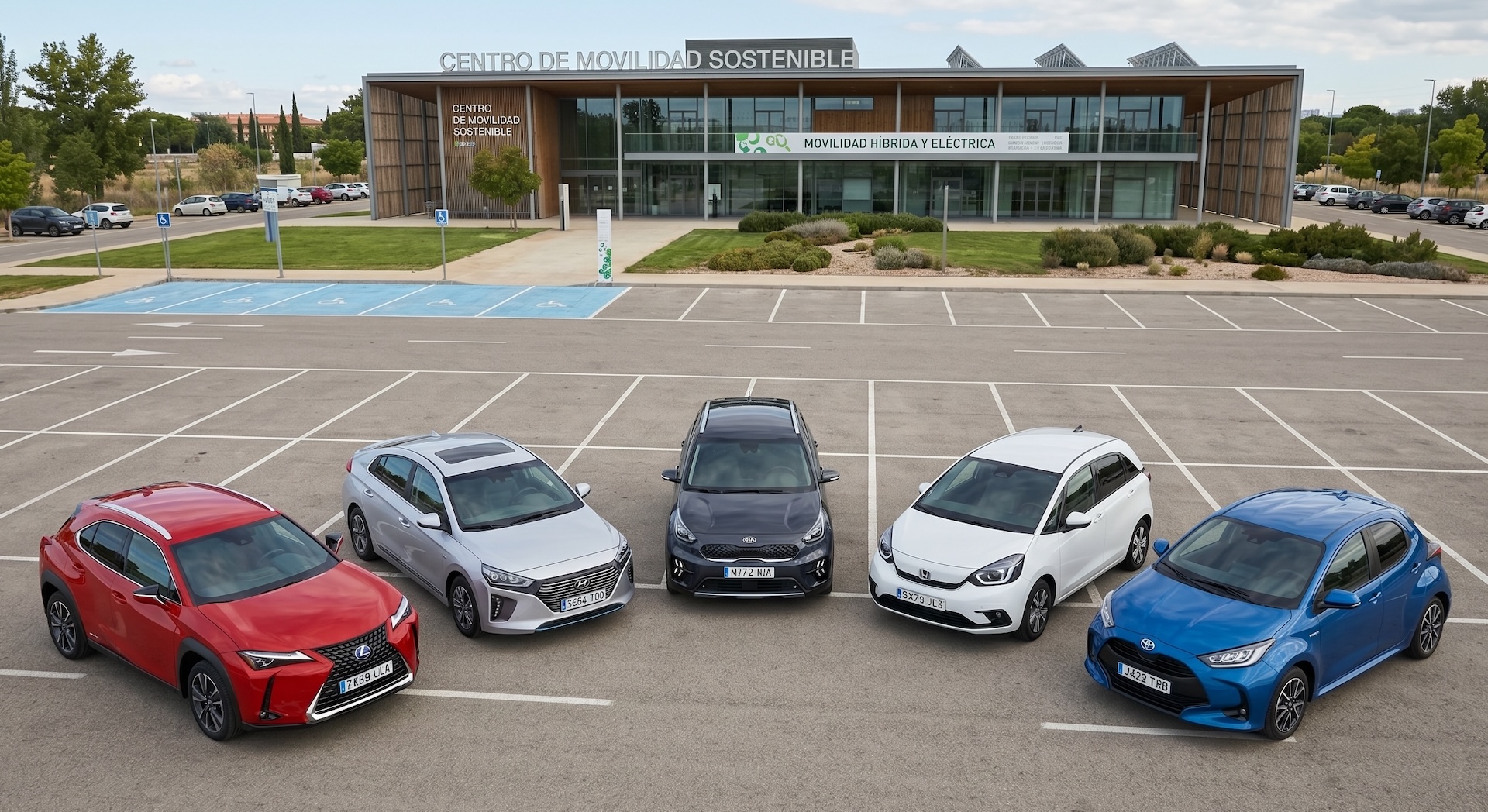
In this article we will analyse in detail five undisputed references of hybrid technology, especially suited for getting around urban areas with them.
Urban mobility in 2026 calls for cars that balance fuel consumption, agility and running costs. On the streets and car parks of Spanish cities, hybrid models that optimise energy use without giving up practicality or assistance technology are becoming the norm. This guide brings together a selection of hybrid vehicles designed for daily journeys, short intercity trips and manoeuvrability in central areas. You will find options that prioritise efficiency, compact size and equipment useful for the city, as well as real differences in technical approach between mild hybrids, full hybrids and compact cars with larger boots.
Who is this ranking for?
This ranking is based on market data, official specifications and published road tests.
If you make many urban journeys, if you prioritise spending less each day on fuel and maintenance, or if you want a full hybrid so you don’t always depend on a plug, this selection helps you compare practical and realistic alternatives within the urban segment.
What details have we analysed?
We have considered market positioning, official technical data such as power and WLTP consumption, dimensions and ergonomics for urban use, electric range where applicable, and the value for money/technical approach, all with attention to the real efficiency expected in city driving.
Ranking of the best hybrid cars for city driving
Toyota Yaris Hybrid (from 21,500 €*)
Indicative price without applying public aid or the brand’s commercial discounts.
Why it’s here: The Yaris Hybrid combines compact dimensions and efficiency with a proven full hybrid system and reduced consumption in urban cycles. Its platform favours manoeuvrability and low running costs, which makes it representative of the urban hybrid segment.
Ideal for: Drivers who need a nimble car for the city and occasional road trips without giving up everyday economy.
Pros:
- Low consumption in urban use.
- Size and turning radius suited to narrow environments.
- Well-established and reliable hybrid system.
Cons:
- Limited boot space compared with larger compacts.
- Basic standard equipment on the cheapest versions.
Honda Jazz Hybrid (from 23,900 €*)
Indicative price without applying public aid or the brand’s commercial discounts.
Why it’s here: The Jazz offers unusual interior space for its segment and a setup designed for the city, with a hybrid system that prioritises responsiveness and efficiency at low speeds. Its interior versatility is an asset for urban families.
Ideal for: Those seeking maximum usable space and passenger comfort on urban journeys.
Pros:
- Modular cabin and flexible cargo space.
- Efficient response on urban journeys.
- Comfortable ride in the city.
Cons:
- Less dynamic design than compact alternatives.
- Entry price higher than some small city cars.
Kia Niro Hybrid (from 29,900 €*)
Indicative price without applying public aid or the brand’s commercial discounts.
Why it’s here: The Niro Hybrid strikes a balance between size, boot space and efficiency, with a crossover orientation that aids urban visibility and practical family capability. It is an option for those who prioritise versatility over sheer compact size.
Ideal for: Users who need more space and versatility without giving up moderate consumption in the city.
Pros:
- Boot and interior space superior to compact city cars.
- Efficient set-up for mixed urban/extra-urban use.
- Good safety equipment and driver assistance.
Cons:
- Larger size complicates manoeuvres in narrow car parks.
- Weight and price above small cars.
Hyundai Ioniq Hybrid (from 26,900 €*)
Indicative price without applying public aid or the brand’s commercial discounts.
Why it’s here: The Ioniq Hybrid offers a technical balance focused on efficiency and aerodynamics, with competitive consumption and an interior designed for comfort in the city. Its technical approach aims to reduce the energy cost of everyday journeys.
Ideal for: Drivers who value overall efficiency and a design focused on comfort on daily journeys.
Pros:
- Efficient consumption in combined and urban cycles.
- Good balance between interior space and exterior dimensions.
- Modern assistance technologies.
Cons:
- Platform less agile than a small city car.
- Prices and versions can rise with options.
Lexus UX 250h (from 39,900 €*)
Indicative price without applying public aid or the brand’s commercial discounts.
Why it’s here: The UX 250h offers a premium alternative among urban hybrids: greater acoustic insulation, equipment and a hybrid system geared towards comfort. It is relevant for those seeking refinement in the city.
Ideal for: Users who prioritise finish, equipment and comfort over entry price.
Pros:
- Ride quality and insulation in urban environments.
- Finishes and technology in the cabin.
- Hybrid system oriented towards comfort and smooth operation.
Cons:
- High purchase price compared with small cars.
- Higher maintenance and repair costs in the premium segment.
The prices shown in this ranking are indicative, without applying public aid or the brand’s commercial discounts.
Technical comparison
| Model | Range | Consumption | |||
|---|---|---|---|---|---|
These data are official and taken from the brands’ official websites.
Purchase aid in 2026: Plan Auto+ and tax benefits
The Plan Auto+ 2026 replaces the previous MOVES programmes and establishes a new system of direct aid for purchasing electrified vehicles in Spain. It is designed to encourage fleet renewal with incentives linked to electrification and industrial origin criteria.
Main amounts of the Plan Auto+ 2026
– Direct aid of up to 4,500 € for electric passenger cars.
– Up to 5,000 € for light vans in category N1.
– Retroactive effect from 1 January 2026.
– Approximate budget allocation of 400 million euros.
Who can benefit and priority criteria
Beneficiaries: private individuals, self-employed workers and companies. The EEE criterion (Electric, Economic and European) applies, with a greater incentive for pure electric vehicles compared with plug-in hybrids. Vehicles priced below 35,000 € receive higher aid; between 35,000 € and 45,000 € they qualify for reduced aid. Final assembly or EU-origin batteries are prioritised.
Additional requirements and tax advantages
There is a mandatory minimum discount of 1,000 € from the dealer. In addition, a 15% deduction on income tax (IRPF) is established, up to a maximum of 3,000 €. The fiscal validity of these measures extends until 31 December 2026.
Management and possible regional aid
Management is coordinated by the Ministry of Industry together with the Autonomous Communities. Additional regional programmes may exist; for example, the Plan Cambia 360 in the Community of Madrid. At the time of writing, it is not officially confirmed whether these regional aids are fully compatible with the Plan Auto+ 2026.
FAQ · The 5 questions everyone asks
What advantage does a hybrid have over a petrol car in the city?
A hybrid reduces consumption and emissions in urban traffic by using the electric motor when setting off and at low speeds, which usually translates into lower fuel spending and less wear on the combustion engine on frequent journeys and constant stops.
Do I need to plug it in to make it work well in the city?
Full hybrids do not need a plug: the battery recharges through braking energy and the combustion engine itself. However, PHEVs do require external charging to make the most of their electric range.
Is maintenance more expensive than a conventional car?
Maintenance can be similar or slightly higher due to the added complexity, but the lower wear on the combustion engine and the fuel savings usually offset part of that difference in intensive urban use.
How does this affect taxes and urban circulation?
Hybrids usually benefit from lower registration taxes and, in some municipalities, from preferential access or temporary exemptions from traffic restrictions, although local rules vary and it is advisable to check them before buying.
Is a hybrid recommended if I often make long journeys?
Yes, many hybrids are designed for mixed use. If long journeys predominate, consider power, comfort and motorway consumption; some urban compacts sacrifice comfort or sound insulation at high speeds.
Expert’s conclusion
This set of models shows that in 2026 the urban hybrid segment offers alternatives ranging from extremely efficient small cars to more spacious compact crossovers. For the buyer, the meaning is clear: there are solutions adapted to different urban routines, and choosing well means prioritising what you use most, not just which model offers the best figure on the spec sheet.
If you want to stretch your money, first look at the real entry price and what comes as standard. If you prefer to play it safe, consider models with greater market traction and service network. If your use is mainly urban, prioritise city consumption and manoeuvrability. To get the most from every euro, first look at the real entry price and what comes as standard. If a model is in high demand, it is usually also easier to sell later. And if you cover many kilometres, energy cost and efficiency matter more than the power figure.


 Peugeot E-208 GTi: a battery-powered toy that revives the spirit of the 1980s sports cars
 New Lexus ES: luxury grows and goes electric
 First contact with the Dacia Sandero Hybrid 155: power and efficiency from €19,890
Deja un comentario