2026 Ranking: The 5 Large SUVs with the Best Value for Money Against Their Premium Rivals
 Dani Montesinos
23 July 2026
5 min.
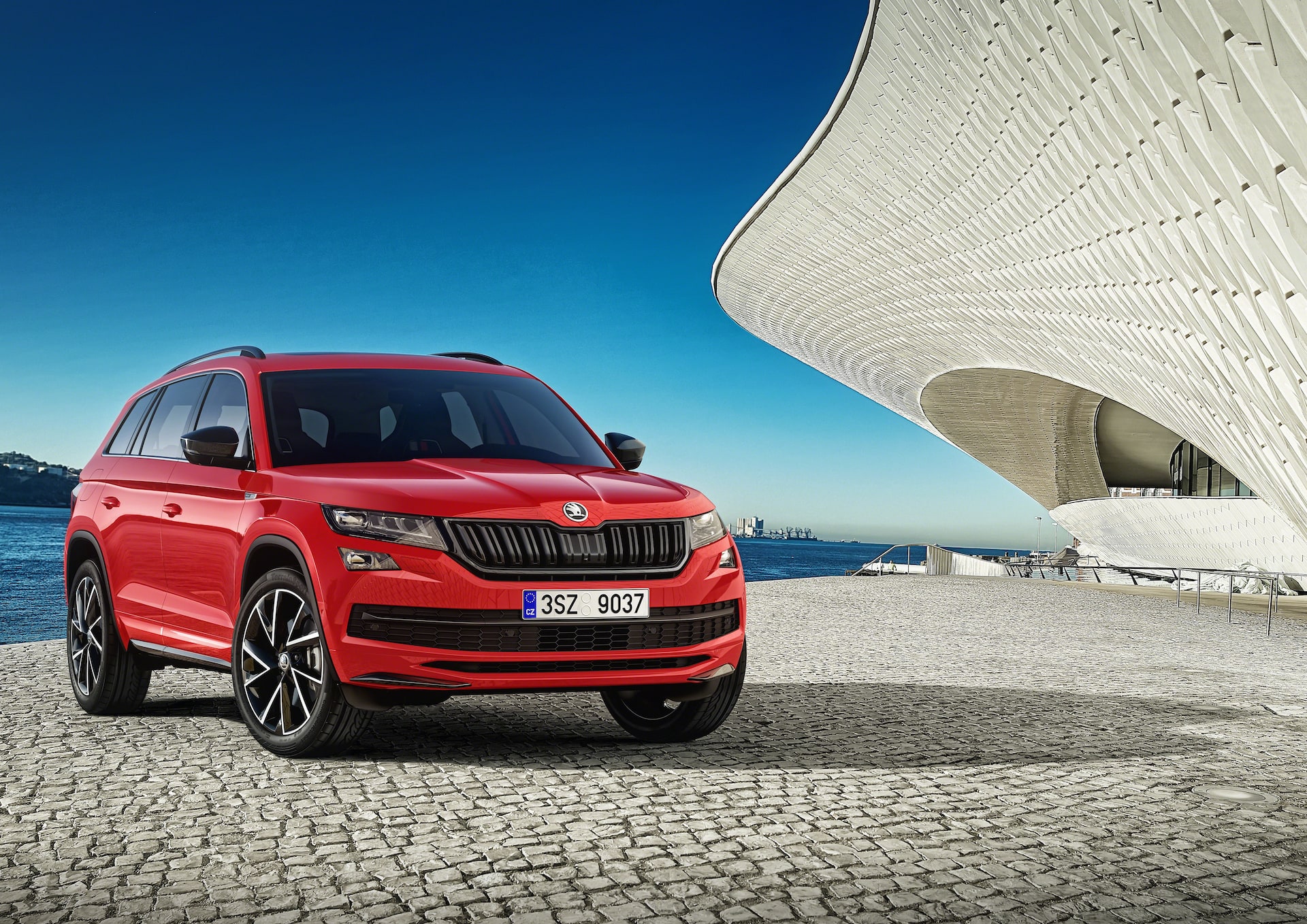
We analyse the five mainstream large SUVs of 2026 that best stand up to premium brands in Spain, with data on price, equipment and cost per seat.
The large SUV segment is living an interesting paradox in 2026: while German premium brands push their price lists above €80,000 starting price, a handful of mainstream makers have refined their products so much that the line separating them from Ingolstadt or Munich has become blurred. Materials, technology, active safety and acoustic refinement have gained ground, and today the conversation is no longer about “whether it’s worth it” to pay the premium surcharge, but about how much it is worth. This ranking puts the numbers on the table.
Why mainstream large SUVs are gaining ground on premium rivals in 2026
Inflation in premium ranges has opened a market gap that mainstream brands have known how to exploit. A well-equipped large SUV with seven real seats, all-wheel drive and a plug-in hybrid engine can be bought today for less than €55,000. Its equivalent from Audi, BMW or Mercedes rarely falls below €85,000. That €30,000 difference buys many things: home chargers, insurance, servicing for the vehicle’s entire life… or outright a second car.
Ranking criteria: price, warranty, equipment, cost per seat and depreciation
For this analysis we weighted five quantifiable variables: starting price (30%), official warranty (15%), standard equipment (20%), cost per approved seat (20%) and estimated three-year depreciation (15%). Korean brands start with an advantage thanks to their extended warranties; mainstream German brands (the Volkswagen Group) thanks to their after-sales network; French and Japanese brands for their balance of price and technology.
1. Skoda Kodiaq — from €51,800 (rival: Audi Q7)
The second-generation Kodiaq is the clearest example of internal cannibalisation within the Volkswagen Group. It shares the MQB Evo platform with vehicles that cost twice as much, offers seven seats, Laurin & Klement trims worthy of an Audi, and interior space that humbles the Q7 in the third row. Against the more than €90,000 of the Q7 55 TFSI e, the Kodiaq iV plug-in hybrid comes in at around €52,000.
| Power kW | Power CV | Top speed | Range | Consumption | Label | Fuel |
|---|---|---|---|---|---|---|
| 150 kW | 204 CV | 210 km/h | 121 km electric | 1.7 l/100 km | 0 emissions | PHEV |
Peugeot 50082. Peugeot 5008 — from €44,500 (rival: BMW X5)
The new Peugeot 5008 on the STLA Medium platform has made a dramatic qualitative leap. Its curved panoramic i-Cockpit, upholstery in recycled fabric and its 100% electric e-5008 version with around 500 km of WLTP range make it the logical French alternative to an BMW X5 that starts above €95,000.
| Power kW | Power CV | Top speed | Range | Consumption | Label | Fuel |
|---|---|---|---|---|---|---|
| 157 kW | 210 CV | 170 km/h | 500 km | 17.8 kWh/100 km | 0 emissions | Electric |
3. Kia Sorento — from €49,290 (rival: Volvo XC90)
The Kia Sorento is probably the best case of cost per seat on the market. Seven seats, a seven-year warranty, HTRAC all-wheel drive, and a PHEV version with a 0 label that competes directly with an Volvo XC90 Recharge whose price is double its own. Here the Korean argument is called refinement without a toll.
| Power kW | Power CV | Top speed | Range | Consumption | Label | Fuel |
|---|---|---|---|---|---|---|
| 195 kW | 265 CV | 193 km/h | 57 km electric | 1.6 l/100 km | 0 emissions | PHEV |
4. Hyundai Santa Fe — from €49,910 (rival: Mercedes-Benz GLE)
The radical redesign of the Hyundai Santa Fe has turned it into an object of desire with Land Rover-style aesthetics and a mainstream price. Against a Mercedes GLE costing around €90,000 with comparable equipment, the plug-in hybrid Santa Fe offers seven seats, an XXL tailgate and a perceived quality that no longer leaves room for excuses.
| Power kW | Power CV | Top speed | Range | Consumption | Label | Fuel |
|---|---|---|---|---|---|---|
| 211 kW | 288 CV | 187 km/h | 54 km electric | 1.6 l/100 km | 0 emissions | PHEV |
Nissan X-Trail6. Nissan X-Trail — from €35,050 (rival: Lexus RX)
The Nissan X-Trail with e-Power technology (a petrol engine that only generates electricity to drive electric wheels) is a very unusual technical alternative to the hybrid Lexus RX. It offers seven seats, e-4orce traction and surprisingly quiet driving for less than half the price.
| Power kW | Power CV | Top speed | Range | Consumption | Label | Fuel |
|---|---|---|---|---|---|---|
| 152 kW | 204 CV | 180 km/h | — | 5.7 l/100 km | ECO | Hybrid |
Summary table and 2026 score
| Model | Price from | Seats | Warranty | Premium rival | Score /10 |
|---|---|---|---|---|---|
| Skoda Kodiaq | €41,900 | 4 years | Audi Q7 | 9.2 | |
| Peugeot 5008 | €39,500 | 3 years | BMW X5 | 8.7 | |
| Kia Sorento | €49,900 | 7 years | Volvo XC90 | 9.4 | |
| Hyundai Santa Fe | €48,700 | 5 years | Mercedes-Benz GLE | 9.1 | |
| Nissan X-Trail | €40,200 | 3 years | Lexus RX | 8.4 |
Frequently asked questions
Which large SUV offers the best value for money in 2026 in Spain?
The Kia Sorento tops the ranking thanks to its combination of a seven-year warranty, seven real seats, PHEV engines with a 0 label and a price up to 45% lower than a comparable Volvo XC90.
Is it worth buying a mainstream SUV rather than a premium one?
In purely rational terms, yes. The price difference between a Skoda Kodiaq iV and an Audi Q7 e-tron with equivalent equipment exceeds €35,000, a figure that more than compensates for the mainstream model’s lower residual value.
Which large SUV has the lowest cost per seat?
The SEAT Tarraco offers the best approved price-per-seat ratio in the ranking, closely followed by the Peugeot 5008 in its entry-level version.
Which large SUV has the longest electric range?
The Peugeot e-5008 with the large battery, which exceeds 660 km WLTP in its Long Range version, makes Peugeot the only mainstream brand today offering a competitive 100% electric large SUV against premium rivals.


 Peugeot E-208 GTi: a battery-powered toy that revives the spirit of the 1980s sports cars
 New Lexus ES: luxury grows and goes electric
 First contact with the Dacia Sandero Hybrid 155: power and efficiency from €19,890
Deja un comentario