2026 Ranking: the 7 best-value hybrid B-SUVs for urban use, based on consumption, equipment and price
 Iván Navarro
9 July 2026
5 min.
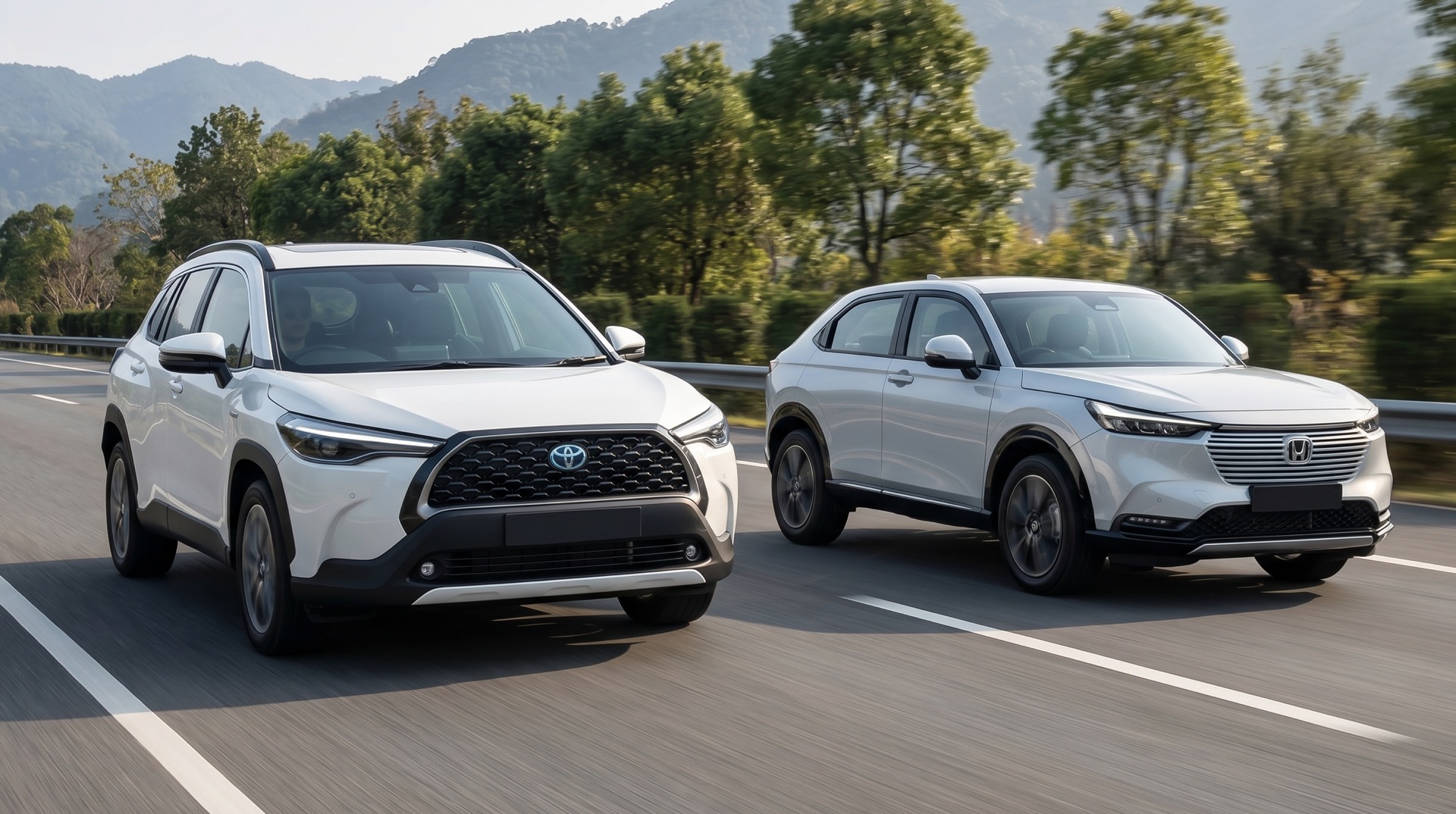
We analyse the best hybrid B-SUVs of 2026 sold in Spain across three criteria: real urban consumption, standard equipment and final price. Objective ranking based on WLTP data, entry-level trims and recommendations by user profile.
The hybrid B-SUV segment has become the epicentre of rational car buying in Spain in 2026. With low-emission zones (ZBE) now firmly established in the major cities, the average petrol price stubbornly high and an offer of full hybrids more mature than ever, choosing the right small SUV is no longer a matter of fashion: it is a practical engineering decision. This ranking analyses the seven best hybrid B-SUVs in 2026 across three verifiable criteria—WLTP and real urban consumption, standard equipment of the entry trim and final price including usual dealer discounts—to guide the demanding urban buyer.
Why the hybrid B-SUV is the king of urban use in 2026
In the city, the conventional hybrid excels where diesel struggles and where pure electric cars demand charging routines. Constant regeneration during braking, EV-mode starts below 40 km/h and the absence of a plug make the urban hybrid B-SUV the most efficient solution for anyone driving 40-60 km a day through traffic lights. Add the ECO label—essential for driving without restrictions in Madrid, Barcelona or Bilbao—and it is clear why this segment has overtaken compact and mid-size saloons in registrations.
Ranking methodology: consumption, equipment and price
Each model is scored from 1 to 10 across three blocks:
- Consumption: WLTP combined and real consumption measured on dense urban journeys (4.2-5.8 l/100 km observed).
- Equipment: Level 2 ADAS, air conditioning, touchscreen ≥8", rear camera and alloy wheels in the entry trim.
- Price: RRP including usual financing discounts and brand campaigns in November 2026.
1. Toyota Yaris Cross Hybrid — from €27,500
The undisputed benchmark. Toyota’s fifth-generation HSD system delivers 130 CV combined with a smoothness of running its rivals cannot match. In the city it averages 4.1 l/100 km real-world, an unbeatable figure in the segment. The Active Plus trim includes Toyota Safety Sense 3.0, rear camera and air conditioning. Built in Valenciennes, with a warranty extendable to 10 years with official maintenance.
| Power kW | Power CV | Top speed | Range | Consumption | Label | Fuel |
|---|---|---|---|---|---|---|
| 96 kW | 130 CV | 170 km/h | ~900 km | 4.4 l/100 km | ECO | Hybrid |
2. Honda HR-V e:HEV — from €30,400
Honda’s i-MMD system works like an electric car with a range extender: the petrol engine rarely drives the wheels directly. The result: premium refinement, 131 CV and urban consumption of 4.6 l/100 km. Very complete standard equipment with Honda Sensing, Magic Seat rear seats and a 9" screen. Its weak point is price, the highest in the ranking.
| Power kW | Power CV | Top speed | Range | Consumption | Label | Fuel |
|---|---|---|---|---|---|---|
| 96 kW | 131 CV | 170 km/h | ~850 km | 5.4 l/100 km | ECO | Hybrid |
3. Renault Captur E-Tech Full Hybrid — from €25,600
Renault’s clutchless multi-mode gearbox remains a fascinating piece of engineering. 145 CV, always starting in electric mode and up to 80% of urban driving time in EV mode. The entry Techno trim includes a 10.4-inch vertical screen, navigation with integrated Google and full ADAS. Modular interior with sliding rear bench.
| Power kW | Power CV | Top speed | Range | Consumption | Label | Fuel |
|---|---|---|---|---|---|---|
| 105 kW | 145 CV | 170 km/h | ~880 km | 4.7 l/100 km | ECO | Hybrid |
4. Hyundai Kona HEV — from €33,800
The second generation of the hybrid Kona combines 139 CV, futuristic design and outstanding interior space. Dual 12.3-inch panoramic screens, wireless charging and a 5-year warranty with unlimited mileage. Real urban consumption held to 5.1 l/100 km.
| Power kW | Power CV | Top speed | Range | Consumption | Label | Fuel |
|---|---|---|---|---|---|---|
| 104 kW | 139 CV | 170 km/h | ~800 km | 5.0 l/100 km | ECO | Hybrid |
5. Kia Niro HEV — from €28,900
Dedicated hybrid platform, 451-litre boot and consumption of 4.8 l/100 km. The most practical in the ranking, although its body places it between B and C. Concept trim with dual-zone climate control, Level 2 ADAS and curved 10.25-inch screens.
| Power kW | Power CV | Top speed | Range | Consumption | Label | Fuel |
|---|---|---|---|---|---|---|
| 104 kW | 139 CV | 165 km/h | ~900 km | 4.8 l/100 km | ECO | Hybrid |
6. Nissan Juke Hybrid — from €26,100
It shares technology with the Captur E-Tech but with its own, sportier calibration. 143 CV, a strong personality and Nissan ProPILOT ADAS in the N-Connecta trim. Its rear seat is the tightest in the group.
| Power kW | Power CV | Top speed | Range | Consumption | Label | Fuel |
|---|---|---|---|---|---|---|
| 105 kW | 143 CV | 166 km/h | ~850 km | 4.9 l/100 km | ECO | Hybrid |
7. Suzuki Vitara Hybrid — from €23,400
The most affordable in the ranking and the only one with optional AllGrip all-wheel drive. Its hybrid system is more modest (115 CV, lower-voltage mild hybridisation rather than the rivals’ full hybrid set-up), but it carries the ECO label and consumes 5.3 l/100 km. Generous GLX equipment for the price.
| Power kW | Power CV | Top speed | Range | Consumption | Label | Fuel |
|---|---|---|---|---|---|---|
| 85 kW | 115 CV | 180 km/h | ~780 km | 5.3 l/100 km | ECO | Hybrid |
Comparative summary table: score 1-10
| Model | Consumption | Equipment | Price | Total |
|---|---|---|---|---|
| Toyota Yaris Cross | 10 | 8 | 9 | 9.0 |
| Honda HR-V e:HEV | 8 | 10 | 6 | 8.0 |
| Renault Captur E-Tech | 9 | 9 | 8 | 8.7 |
| Hyundai Kona HEV | 8 | 9 | 8 | 8.3 |
| Kia Niro HEV | 9 | 9 | 7 | 8.3 |
| Nissan Juke Hybrid | 8 | 8 | 8 | 8.0 |
| Suzuki Vitara Hybrid | 7 | 7 | 10 | 8.0 |
Recommendation by user profile
- Maximum efficiency without compromise: Toyota Yaris Cross.
- Premium refinement: Honda HR-V e:HEV.
- Best overall balance: Renault Captur E-Tech.
- Tight budget with ECO label: Suzuki Vitara Hybrid.
- Family with luggage: Kia Niro HEV.
Frequently asked questions
Which hybrid B-SUV uses the least fuel in the city in 2026?
The Toyota Yaris Cross leads with real urban consumption between 4.1 and 4.4 l/100 km, thanks to its fifth-generation HSD system that prioritises electric mode below 40 km/h.
Is a self-charging hybrid worth it compared with a PHEV for urban use?
Yes, if you have no home charging point. The self-charging hybrid removes the dependence on a plug and offers urban consumption very close to a PHEV in mixed mode, at a lower purchase price.
Do all hybrid B-SUVs have the ECO label?
Yes, all seven models in the ranking carry the DGT ECO label, which allows driving without restrictions in the ZBE zones of all Spanish cities.
Which offers the best value for money in 2026?
The Renault Captur E-Tech Full Hybrid is the most balanced option: 145 CV, low consumption, full technology equipment and a moderate price with financing discounts.


 Peugeot E-208 GTi: a battery-powered toy that revives the spirit of the 1980s sports cars
 New Lexus ES: luxury grows and goes electric
 First contact with the Dacia Sandero Hybrid 155: power and efficiency from €19,890
Deja un comentario