Electric Cars Compact Comparisons
Comparison of 2026 compact electric cars: Volvo EX30, BYD Dolphin and Omoda E5 head to head
 Iván Navarro
7 May 2026
6 min.
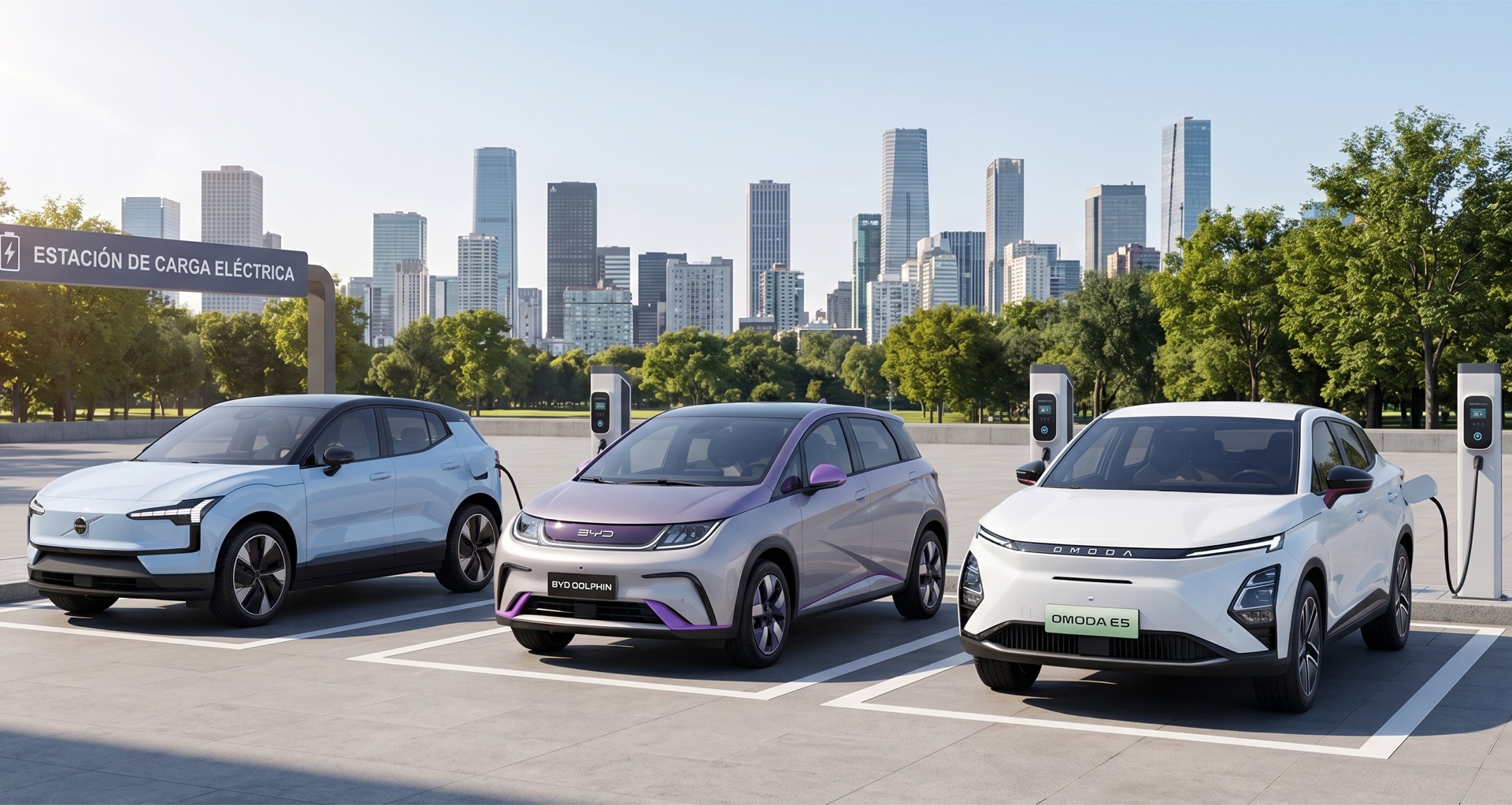
Three compact electric cars, three different philosophies and one same question: who offers the best combination of range, charging and price in 2026?
The compact electric segment is going through its most competitive phase in 2026. Mature dedicated platforms, an open battle over the cost of the kWh and the massive arrival of Asian manufacturers in Europe have boosted supply and squeezed prices. On this board, three models account for a large share of registrations and almost all of the technical debate: the Volvo EX30, the BYD Dolphin and the Omoda E5. Three philosophies, three industrial origins and one common goal: covering daily routines without giving up long journeys.
Why 2026 marks a turning point
The comparison of compact electric cars in 2026 is no longer about whether an electric car does or does not exceed 300 real-world kilometres. The debate has shifted to the management of fast charging, sustained efficiency at 120 km/h and standard equipment. Each of the three protagonists embodies a different strategy: Volvo bets on compact premiumisation on the Geely group’s SEA platform; BYD arrives with its Blade Battery and an unrivalled vertical integration in the sector; Omoda, under the umbrella of Chery, builds its proposal on an architecture adapted to Europe and a clearly aggressive price.
Volvo EX30: the Swedish premium gets smaller
The range of the Volvo remains one of the strongest arguments of the Swedish brand in the segment. The Single Motor Extended Range version fits an NMC battery of 69 kWh usable which is rated at 480 km WLTP. The Twin Motor Performance variant, with all-wheel drive and 428 hp, drops to around 460 km, justified by an acceleration of 3.6 seconds from 0 to 100 km/h. The entry-level version, with LFP chemistry of 51 kWh, stays at 344 km rated.
Charging, equipment and price in Spain
In DC fast charging, the EX30 accepts up to 153 kW in its Extended Range version, which allows a 10-80% charge in approximately 26 minutes. The minimalist philosophy of the interior, dominated by a 12.3-inch central screen that centralises almost everything, divides opinions, but the level of standard active safety still sets it apart: Pilot Assist, autonomous emergency braking with junction detection and Park Pilot Assist across the entire range. Starting price in Spain: 38,290 €, without grants.
BYD Dolphin: the Chinese technological muscle
The main features of the BYD Dolphin revolve around the famous Blade Battery LFP, a cell-to-body architecture that reduces weight and improves thermal safety. The Comfort version fits 60.4 kWh and claims 427 km WLTP with a 204 hp front motor. The more affordable Active variant drops to 44.9 kWh and 340 km, enough for urban and suburban use.
Interior space and DC charging
At 4.29 metres long and with a 2.70-metre wheelbase, the Dolphin surprises with interior space: the rear seats exceed many compact petrol cars in legroom. Fast charging is more modest at 88 kW DC, which penalises long journeys: 30-80% requires around 29 minutes. In return, the price in Spain starts at 29,990 €, with a six-year general warranty and a heat pump as standard.
Omoda E5: the newcomer that attacks on price
The technical sheet of the Omoda E5 reveals a 4.42-metre crossover SUV approach with a single mechanical configuration for Europe: a 204 hp front motor and a 61 kWh NMC battery. The rated range is 430 km WLTP, a competitive figure which in real use translates to 330-360 km depending on driving style.
Charging and value proposition
With a maximum DC charging power of 80 kW, the E5 does not shine on the motorway, but it compensates with generous equipment: dual 12.3-inch screens, dual-zone climate control, wireless charger and a complete ADAS package. Its great asset is price: 33,400 € in Comfort trim, with a seven-year warranty. It is, today, one of the best-equipped compact electric SUVs of 2026 below 35,000 euros.
Comparison table: figures against figures
| Specification | Volvo EX30 ER | BYD Dolphin Comfort | Omoda E5 Comfort |
|---|---|---|---|
| Usable battery | 69 kWh (NMC) | 60.4 kWh (LFP Blade) | 61 kWh (NMC) |
| WLTP range | 480 km | 427 km | 430 km |
| Power | 272 hp | 204 hp | 204 hp |
| 0-100 km/h | 5.3 s | 7.0 s | 7.6 s |
| Max DC charging | 153 kW | 88 kW | 80 kW |
| 10-80% DC | ~26 min | ~29 min | ~28 min |
| AC charging | 22 kW | 11 kW | 11 kW |
| Length | 4.23 m | 4.29 m | 4.42 m |
| Boot | 318 L | 345 L | 380 L |
| Price in Spain | 38,290 € | 29,990 € | 33,400 € |
| Warranty | 5 years / battery 8 | 6 years / battery 8 | 7 years / battery 8 |
Efficiency and behaviour on real roads
In rated average consumption, the EX30 claims 16.7 kWh/100 km, the Dolphin 15.9 kWh/100 km and the E5 17.4 kWh/100 km. On the motorway at 120 km/h and mild temperature, independent tests place the Swede at around 20-21 kWh/100 km, the BYD at 19-20 kWh/100 km and the Omoda at 21-22 kWh/100 km. Aerodynamics explain much of the split: the Dolphin boasts a Cx of 0.29, the EX30 matches it, and the E5, with its SUV bodywork, accepts a logical penalty.
Safety, ADAS and software
Here Volvo maintains its hallmark. The EX30 includes as standard a package of assistance systems that in the rest of the comparison are optional or reserved for higher trims. BYD and Omoda have notably closed the gap: the Dolphin earned five Euro NCAP stars at its latest review and the E5 four, with room for improvement in pedestrian protection. In infotainment, the Volvo bets on natively integrated Google, while BYD and Omoda rely on Android Auto and Apple CarPlay, now wireless after the 2026 updates.
Verdict: range, price and real-world use
Declaring the best electric car in terms of range among the trio depends on usage. For whoever seeks the most efficient and best-equipped traveller in safety, the Volvo EX30 remains the benchmark, with a justified premium for its 153 kW charging and 480 km WLTP. For those who prioritise value for money without giving up solid technology, the BYD Dolphin —with its Blade Battery and a starting point close to 30,000 euros— offers one of the most balanced proposals on the market. And if the SUV format weighs more, the generous boot and extended warranty, the Omoda E5 closes the most generous dossier below 34,000 euros.
This duel between compact electric cars confirms that in 2026 the choice is not decided by which offers more kilometres, but which offers them better: with agile charging, real efficiency and a coherent cost per kilometre over five years. Three different ways of answering the same question, and a market that, at last, allows us to choose.

 Peugeot E-208 GTi: a battery-powered toy that revives the spirit of the 1980s sports cars
 New Lexus ES: luxury grows and goes electric
 First contact with the Dacia Sandero Hybrid 155: power and efficiency from €19,890
Deja un comentario