How to choose a hybrid car in 2026 according to your budget and lifestyle
 Iván Navarro
2 April 2026
7 min.
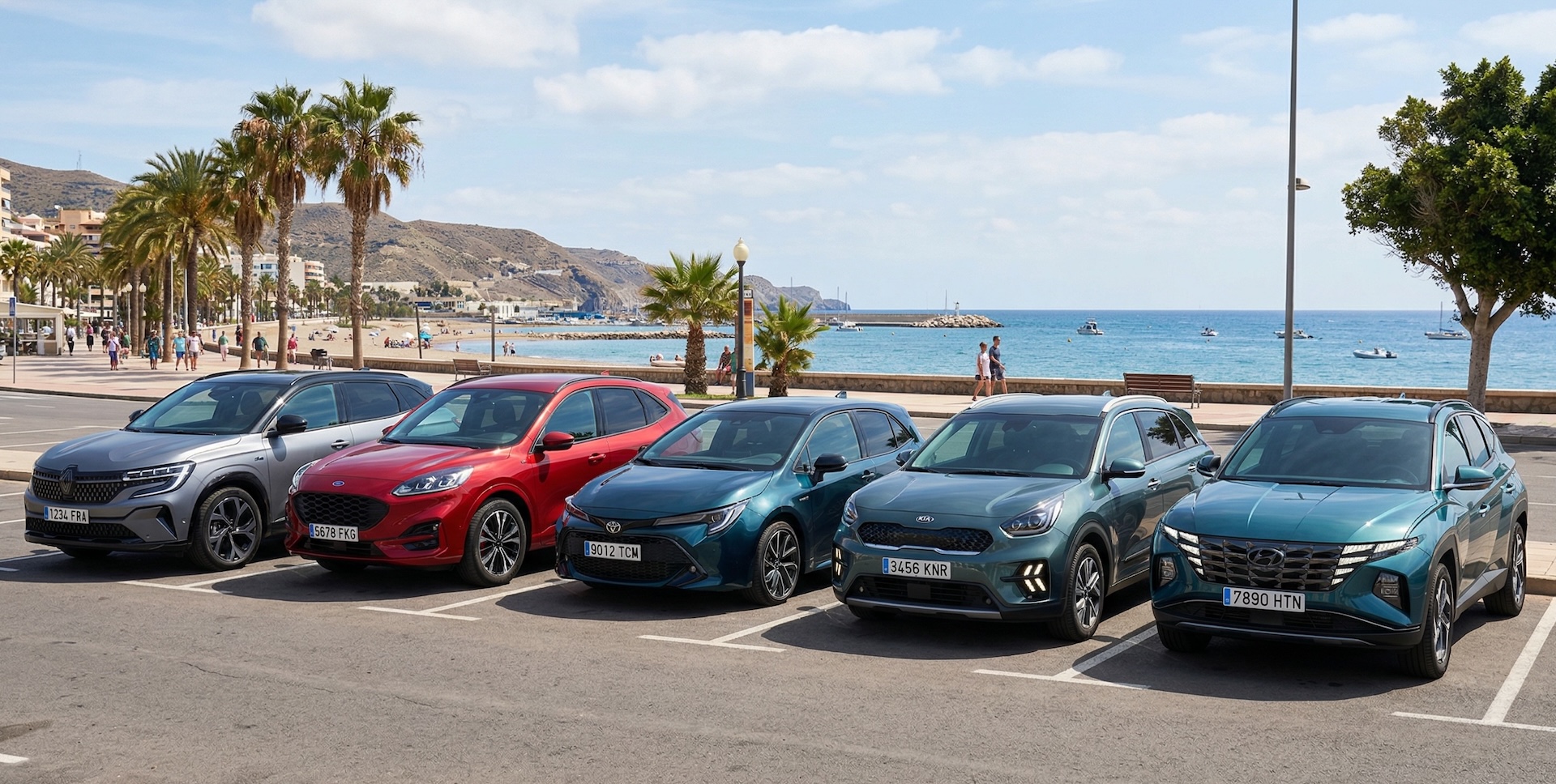
Discover below our comprehensive comparison of the most versatile and efficient vehicles on today’s market.
The hybrid market in 2026 combines mild hybrids, full hybrids and plug-in hybrids, which makes the decision harder for the average buyer. The range is wide, and the gap between homologated and real-world consumption remains the main source of doubt. Two key questions can sum up the choice: do I need external charging, or is energy recovery and the thermal-electric combination enough for me? And what is my real budget, including maintenance and fuel? These statements work as anchor questions for comparing alternatives and prioritising technical features over looks or equipment.
This buying guide is for…
This guide is aimed at drivers who want to reduce consumption and emissions without giving up practical range. It suits families who make mixed journeys, professionals with urban and peri-urban routes, and users who want flexibility without complicated charging routines. It is not the best option for those who can always charge at home and seek maximum daily electric efficiency: in that case, pure electric vehicles remain the most rational alternative.
Common options within the segment
The market offers three approaches: full hybrids (HEV), plug-in hybrids (PHEV) and light mild-hybrid systems (MHEV). HEVs offer reduced consumption in town and simplicity of use; PHEVs allow 100% electric stretches if regular charging points are available; MHEV solutions optimise starts and recovery at minimal cost and weight. Each approach involves trade-offs in mass, purchase cost and charging planning needs.
Key criteria for choosing well
Realistic versus homologated range: the electric range of a PHEV in real conditions is usually lower than the WLTP figure, so it is worth checking independent tests and your usual routes.
Power and charging speed: for plug-in hybrids, charging power and recharge time condition daily use; for HEVs, the combined power delivery defines response when overtaking and on motorways.
Stability and comfort on the road: the integration of batteries changes weight distribution; assess the suspension, boot capacity and behaviour at sustained speeds.
Technology that is genuinely useful: prioritise systems that improve efficiency (battery thermal management, driving modes) over purely cosmetic or superfluous features.
Total cost of purchase and use: compare purchase price, real consumption, maintenance and possible incentives; a model that looks expensive may prove cheaper over five years thanks to fuel savings.
It depends on how you drive
If you drive mainly in town and cannot charge regularly, a well-managed HEV is practical and avoids planning. If you have daily access to a charging point and make short journeys, a PHEV can cover most trips in electric mode.
Climate matters: low temperatures reduce electric range and affect combined range; batteries require more thermal management, which can increase consumption in winter.
For frequent long trips, prioritise larger support batteries and an effective thermal architecture; for urban use, agility, size and visibility become more important.
Real price: what you should know
The difference between the financed and cash price can be significant because of interest and promotions. Separate the “from” price of the basic version from the final cost when selecting options and packs; equipment can add several thousand euros.
The “from” price is the base price homologated by the manufacturer without extras, promotions or aid, and usually corresponds to the minimum engine and trim level. Always check the price including taxes and extras, and ask the dealer for a breakdown to avoid surprises.
The total cost includes consumption, servicing, depreciation and possible tyre replacement due to greater weight or performance; include this calculation before deciding whether to finance or pay in cash.
Reference models on the market
Hyundai Tucson (from €36,200*)
Compact SUV approach with full hybridisation aimed at those who need interior space and a balance between consumption and performance on mixed routes.
The best
Battery thermal management and stable performance on motorways and in town, with balanced driving feel.
Room for improvement
Weight and luggage space slightly reduce versatility compared with lighter rivals in the compact segment.
Kia Niro (from €27,900*)
Compact model designed for efficiency and low running costs; suits buyers who prioritise real economy in town and short regular journeys.
The best
Low consumption in urban use and a technology package focused on efficiency.
Room for improvement
Trim levels and overall dynamism lag behind premium options in the segment.
Toyota Corolla (from €25,900*)
A benchmark full hybrid, focused on reliability and low operating costs for drivers who prioritise long-term economy.
The best
Excellent efficiency record and extensive service networks in Spain.
Room for improvement
Conservative interior design and standard equipment that may fall short compared with recent alternatives.
Ford Kuga (from €33,500*)
Hybrid SUV offered with PHEV and HEV options; designed for users who alternate long journeys with frequent urban driving.
The best
Variety of drivetrains and solid road behaviour.
Room for improvement
Better-equipped versions noticeably increase the final price.
Renault Austral E-Tech (from €31,300*)
Aimed at efficiency and comfort, focusing on optimising real consumption and offering a comfortable day-to-day experience.
The best
Balance between interior space and consumption in realistic mixed driving.
Room for improvement
Boot capacity and certain mechanical options penalise the price compared with rival alternatives.
Purchase aid
Purchase aid in 2026: Plan Auto+ and tax benefits. The Plan Auto+ 2026 replaces the previous MOVES programmes and establishes a new system of direct aid for buying electrified vehicles in Spain.
Main amounts of the Plan Auto+ 2026
- Direct aid of up to €4,500 for electric passenger cars.
- Up to €5,000 for light vans in category N1.
- Retroactive effect from 1 January 2026.
- Approximate budget allocation of €400 million.
Who can benefit and priority criteria
Beneficiaries: private individuals, self-employed workers and companies, with differentiated conditions depending on use and vehicle type.
Application of the EEE criterion (Electric, Economic and European): greater incentive for battery electric vehicles (BEV) than for plug-in hybrids (PHEV), and priority when assembly or batteries come from the EU.
Vehicles priced below €35,000 receive higher aid, while those between €35,000 and €45,000 access reduced aid.
Additional requirements and tax advantages
Mandatory minimum discount of €1,000 from the dealer.
15% income tax deduction up to a maximum of €3,000.
Tax validity until 31 December 2026.
Management and possible regional aid
Management is coordinated by the Ministry of Industry together with the Autonomous Communities. Additional regional programmes may exist; for example, the Plan Cambia 360 in the Community of Madrid. At the time of writing it is not officially confirmed whether these regional aids are compatible with the Plan Auto+ 2026.
Common buying mistakes
Not matching the type of hybridisation to real use: choosing a PHEV without regular access to charging reduces its advantage.
Relying only on WLTP figures without considering real-use tests and weather conditions.
Underestimating the impact of equipment on the final price and on range due to additional weight.
Overlooking recurring costs: insurance, servicing and possible battery replacement in the long term.
With the practical information and criteria set out here, the reader has a framework for prioritising requirements. The logical next step is to check these criteria against up-to-date analyses and current dealer price lists to make a decision that fits your budget and lifestyle.


 Peugeot E-208 GTi: a battery-powered toy that revives the spirit of the 1980s sports cars
 New Lexus ES: luxury grows and goes electric
 First contact with the Dacia Sandero Hybrid 155: power and efficiency from €19,890
Deja un comentario