How to Choose a Hybrid SUV for the City in 2026: Criteria, Consumption and ECO Label
 Iván Navarro
18 May 2026
5 min.
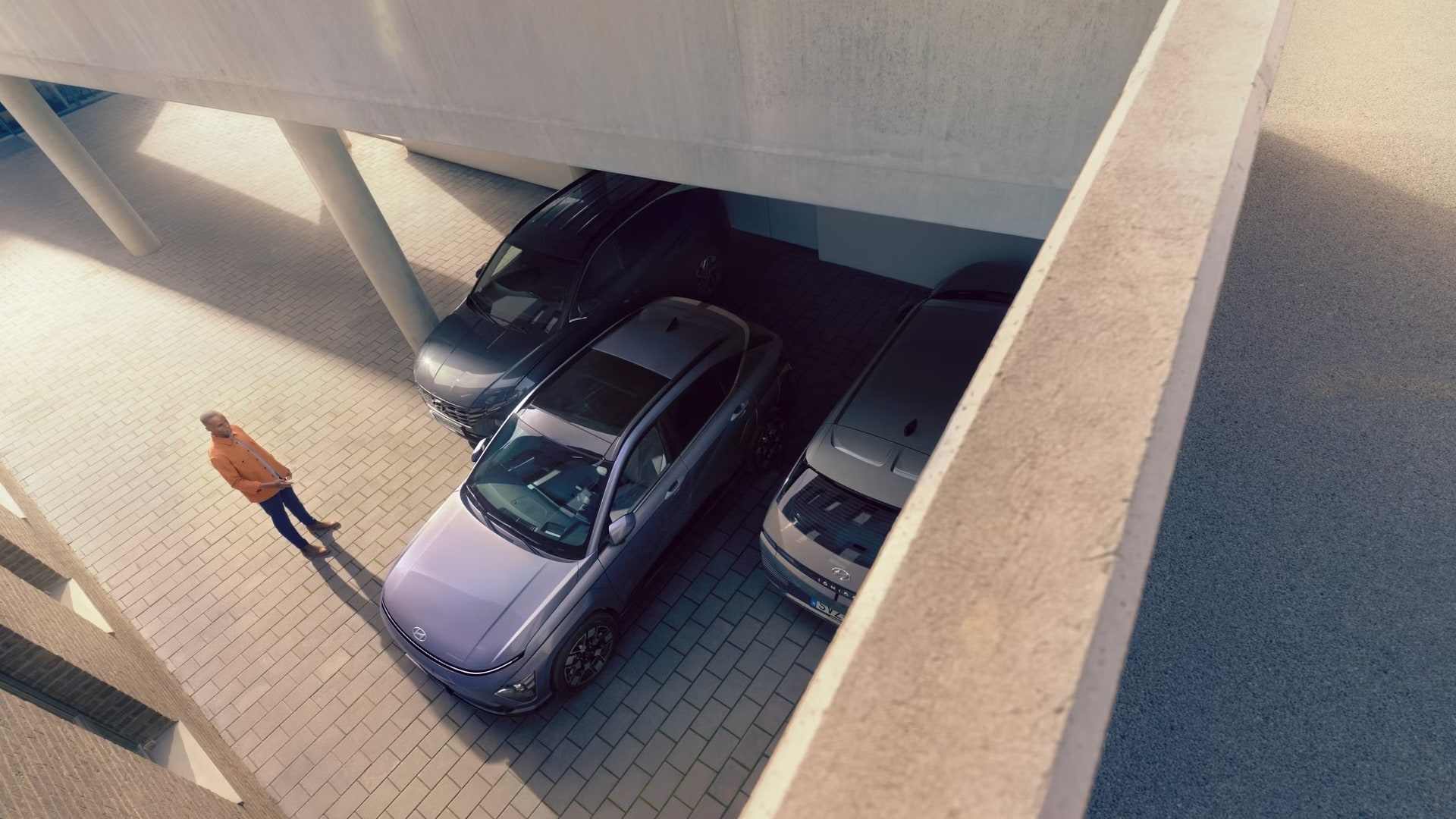
Premium guide to choosing the best urban hybrid SUV 2026 in Spain: types of hybridisation, real-world consumption, ECO label and recommended models.
The hybrid SUV has become the go-to rational car for Spanish cities in 2026. It offers the elevated driving position that the average buyer wants, the efficiency of an electrified system and, above all, an environmental label that opens the doors to the Low Emission Zones already operating in Madrid, Barcelona, Valencia, Seville or Bilbao. But choosing well requires understanding what lies under the bonnet, how each architecture behaves in dense traffic and what real-world consumption we can expect far from the WLTP cycle.
Why a hybrid SUV makes sense in the city in 2026
Urban traffic punishes the combustion engine: cold starts, constant stops, low speeds. This is exactly where the hybrid system shines. A hybrid SUV for the city in 2026 recovers energy on every braking event, runs in electric mode up to 50-60 km/h in many situations and cuts consumption by between 30 and 45% compared with an equivalent pure petrol model.
To this we add the tax advantages: ECO or ZERO label, free access to LEZs, discounted parking in SER zones and, in some municipalities, reductions in the vehicle circulation tax.
Types of hybridisation: MHEV, HEV and PHEV
- MHEV (mild hybrid, 48V): minimal assistance, ECO label only in some cases. Useful but limited.
- HEV (conventional hybrid): the car charges its battery by itself and runs on electric power at low speeds. ECO label guaranteed.
- PHEV (plug-in hybrid): larger battery, 40-100 km of real electric range. ZERO label if it exceeds 40 homologated km.
For purely urban use without a garage, the conventional hybrid SUV is the most sensible choice. If you have a plug at home, a plug-in hybrid SUV in the city multiplies efficiency.
ECO label versus ZERO label: what changes in practice
The ECO label allows you to drive in LEZs and park in green and blue zones at a reduced rate. The ZERO label adds full exemption in many regulated zones and preferential access. For mixed city-outskirts use, ECO is enough; for Madrid Centro or Barcelona, the ZERO label makes the difference.
Hybrid SUV city consumption: WLTP versus reality
The urban WLTP cycle homologates figures of 4.5-5.5 l/100 km for compact HEVs. In practice, in dense traffic and with smooth driving, the best ones drop below 5 l/100 km in real use. PHEVs with a charged battery can run below 2 l/100 km; with a depleted battery, they rise to 6-7.
Best urban hybrid SUVs 2026 sold in Spain
Toyota C-HR 2.0 Hybrid — from 33,900 €
The benchmark of the segment. The fifth generation of the hybrid system of Toyota sharpens response and refinement. In the city it spends over 70% of the time in electric mode and its real consumption is around 4.8 l/100 km.
| Power kW | Power CV | Top speed | Range | Consumption | Label | Fuel |
|---|---|---|---|---|---|---|
| 144 | 196 | 180 km/h | ≈900 km | 4.9 l/100 km | ECO | Hybrid |
Hyundai Kona Hybrid — from 28,500 €
Bold design, very high perceived quality and a well-executed 1.6-litre HEV system. Comfortable, quiet and with a generous boot for the B-SUV segment.
| Power kW | Power CV | Top speed | Range | Consumption | Label | Fuel |
|---|---|---|---|---|---|---|
| 104 | 141 | 165 km/h | ≈850 km | 5.3 l/100 km | ECO | Hybrid |
Kia Niro Hybrid — from 29,700 €
A dedicated platform for electrified vehicles, outstanding interior space and urban consumption below 4.5 l/100 km in relaxed driving. Seven years of warranty as an added argument.
| Power kW | Power CV | Top speed | Range | Consumption | Label | Fuel |
|---|---|---|---|---|---|---|
| 104 | 141 | 165 km/h | ≈900 km | 4.7 l/100 km | ECO | Hybrid |
Renault Captur E-Tech Full Hybrid — from 27,400 €
The most urban of them all. Its multi-mode gearbox with toothed clutches always starts in electric mode and, on short cycles, runs 80% of the time without petrol. Aggressive pricing and exemplary manoeuvrability.
| Power kW | Power CV | Top speed | Range | Consumption | Label | Fuel |
|---|---|---|---|---|---|---|
| 105 | 145 | 170 km/h | ≈900 km | 4.8 l/100 km | ECO | Hybrid |
Cupra Formentor e-Hybrid — from 42,500 €
For those seeking performance with a ZERO label. A PHEV with over 100 km of homologated electric range and dynamic behaviour well above average. Ideal if there is a charging point at home.
| Power kW | Power CV | Top speed | Range | Consumption | Label | Fuel |
|---|---|---|---|---|---|---|
| 200 | 272 | 210 km/h | ≈800 km (100 electric) | 0.8 l/100 km | ZERO | PHEV |
Peugeot 3008 Hybrid — from 38,900 €
Light 48V hybrid with e-DCS6 dual-clutch gearbox. Refined, with a trendsetting panoramic i-Cockpit interior. ECO label and restrained consumption for its size.
| Power kW | Power CV | Top speed | Range | Consumption | Label | Fuel |
|---|---|---|---|---|---|---|
| 100 | 136 | 200 km/h | ≈850 km | 5.6 l/100 km | ECO | Hybrid |
Summary table and comparative ranking
| Model | Type | CV | Real consumption | Label | Price from | Score /10 |
|---|---|---|---|---|---|---|
| Toyota C-HR Hybrid | HEV | 196 | 4.9 l | ECO | 33,900 € | 9.2 |
| Kia Niro Hybrid | HEV | 141 | 4.7 l | ECO | 29,700 € | 9.0 |
| Renault Captur E-Tech | HEV | 145 | 4.8 l | ECO | 27,400 € | 8.8 |
| Hyundai Kona Hybrid | HEV | 141 | 5.3 l | ECO | 28,500 € | 8.5 |
| Cupra Formentor e-Hybrid | PHEV | 272 | 0.8 l* | ZERO | 42,500 € | 9.1 |
| Peugeot 3008 Hybrid | MHEV | 136 | 5.6 l | ECO | 38,900 € | 8.2 |
*With a charged battery in mixed use.
Conclusion: what to buy and which profile it suits
For the purely urban buyer without a garage, the Toyota C-HR and the Kia Niro are the finest options. For a tight budget, the Renault Captur E-Tech is unbeatable. If a plug is available and performance is sought, the Cupra Formentor e-Hybrid offers the most complete combination with a ZERO label.
Frequently asked questions
Which hybrid SUV consumes the least in the city in 2026?
The Kia Niro Hybrid and the Toyota C-HR lead with real figures below 5 l/100 km in urban use, thanks to HEV systems optimised for low speeds.
Is a plug-in hybrid SUV worth it if I live in the city?
Yes, provided you have a domestic or workplace charging point. It lets you make most urban journeys in pure electric mode and earns the ZERO label, with tax and parking advantages.
Do all hybrid SUVs have an ECO label?
No. Self-charging (HEV) models and plug-in models with under 40 electric km carry the ECO label. PHEVs homologated with over 40 km of electric range obtain the ZERO label. Some 48V MHEVs may only qualify for the C label.
Is a hybrid SUV or an electric one better for urban use?
If you drive fewer than 50 km a day and have a plug, the electric car is unbeatable. Without a garage or with frequent long journeys, the self-charging hybrid SUV offers the best versatility-efficiency balance without depending on charging infrastructure.


 Kia offers an electric range of 10 models, 50 versions and 400 possible combinations
 The seven finalists for the 2027 European Car of the Year (COTY) are exclusively electric
 Peugeot E-208 GTi: a battery-powered toy that revives the spirit of the 1980s sports cars
Deja un comentario