How to Choose a Seven-Seat Family SUV in 2026 Without Paying the Premium Brand Surcharge
 Iván Navarro
1 July 2026
4 min.
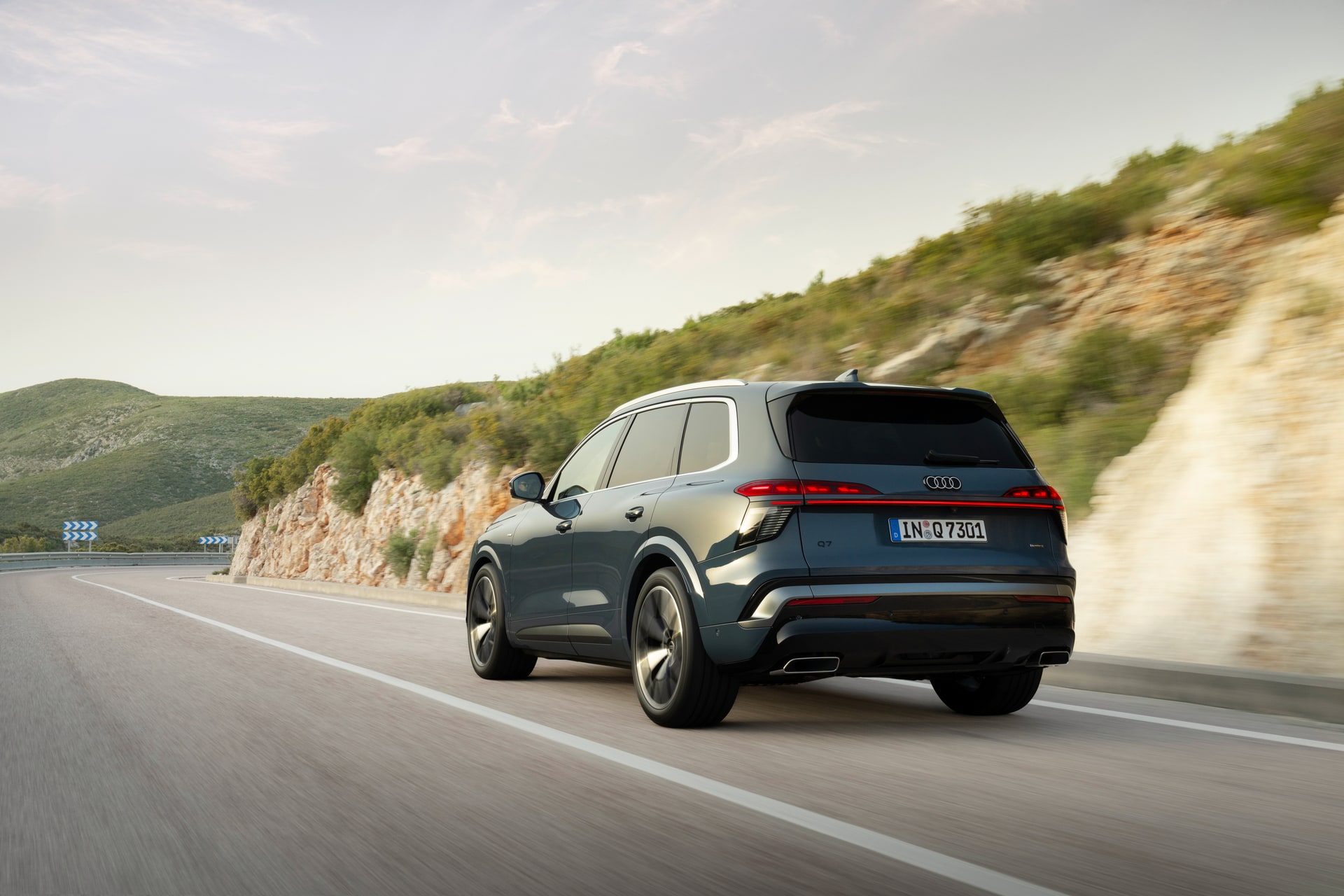
A practical guide to choosing a seven-seat SUV in 2026 using objective criteria: real-world usable space, DGT environmental label, total cost of ownership and mainstream alternatives to Audi, BMW or Mercedes.
Buying a seven-seat family SUV in 2026 has become an exercise in budget restraint. The premium badge —Audi Q7, BMW X7, Mercedes GLS— still exerts a powerful emotional pull, but the reality is that a well-equipped Q7 comfortably exceeds €90,000, while a well-chosen mainstream model covers the same family needs for less than half that. The point is not to give up, but to choose with judgement.
What defines a good seven-seat family SUV in 2026?
The segment has matured. A seven-seat family SUV 2026 is no longer measured solely by length or ground clearance, but by the real usability of the third row, the electrification available and the total cost of ownership over five years. Mainstream brands have closed the gap in finish, infotainment and driver assistance to the point where the difference with a premium model is, in many cases, purely symbolic.
Real-world third-row space
Not every third row is usable. An average adult needs at least 80 cm of legroom and reasonable headroom. Models such as the Kia Sorento or the Hyundai Santa Fe offer third-row seats fit for long journeys; others, however, are better reserved for children.
DGT label and total cost of ownership
The environmental label determines access to ZBE low-emission zones and residual value. Plug-in hybrid versions earn the ZERO label; conventional hybrids and mild hybrids earn ECO. In 2026, buying a non-electrified diesel for urban use is financially short-sighted.
Skoda Kodiaq — from €46,000
The second-generation Kodiaq is arguably the rational benchmark of the segment. Sober finish, a gigantic boot with five seats in use and a third row suitable for children and teenagers. The 1.5 TSI mHEV version combines smoothness with restrained consumption.
| Power kW | Power CV | Top speed | Range | Consumption | Label | Fuel |
|---|---|---|---|---|---|---|
| 110 kW | 150 CV | 207 km/h | ~900 km | 6.4 l/100 km | ECO | Mild hybrid petrol |
Peugeot 5008 — from €46,000
The new 5008 has made the leap to the STLA Medium platform with hybrid and 100% electric versions. Striking design, a renewed i-Cockpit and surprising interior space for its 4.79 metres. It is the choice for those who want to stand out without giving up practicality.
| Power kW | Power CV | Top speed | Range | Consumption | Label | Fuel |
|---|---|---|---|---|---|---|
| 165 kW | 225 CV | 200 km/h | ~850 km | 5.8 l/100 km | ZERO | PHEV |
Kia Sorento — from €47,000
The Sorento PHEV is arguably the best value seven-seat SUV if the ZERO label is a priority. Seven years of warranty, premium-level interior presentation and sufficient electric range for the daily commute.
| Power kW | Power CV | Top speed | Range | Consumption | Label | Fuel |
|---|---|---|---|---|---|---|
| 195 kW | 265 CV | 193 km/h | 57 km electric / ~800 km total | 1.6 l/100 km WLTP | ZERO | PHEV |
Hyundai Santa Fe — from €49,500
Radical design, high perceived quality and a third row that accommodates adults on medium-distance trips. The Santa Fe HEV is the balanced choice for families with mixed mileage.
| Power kW | Power CV | Top speed | Range | Consumption | Label | Fuel |
|---|---|---|---|---|---|---|
| 158 kW | 215 CV | 187 km/h | ~950 km | 6.3 l/100 km | ECO | Petrol hybrid |
Dacia Jogger — from €25,550
The big surprise of the segment. It is not a SUV in the strict sense, but it offers seven genuine seats for less than €20,000. The Hybrid 155 version proves that a cheap large family SUV can be bought without sacrificing the essentials.
| Power kW | Power CV | Top speed | Range | Consumption | Label | Fuel |
|---|---|---|---|---|---|---|
| 103 kW | 140 CV | 167 km/h | ~900 km | 4.8 l/100 km | ECO | Petrol hybrid |
Nissan X-Trail — from €40,500
The X-Trail with e-Power technology offers a unique solution: an electric motor at all times, with petrol as a generator. Electric refinement without plugging anything in.
| Power kW | Power CV | Top speed | Range | Consumption | Label | Fuel |
|---|---|---|---|---|---|---|
| 150 kW | 204 CV | 170 km/h | ~900 km | 6.1 l/100 km | ECO | Petrol hybrid |
Summary table and scoring
| Model | Label | Adult 3rd row | Warranty | Score /10 |
|---|---|---|---|---|
| Skoda Kodiaq | ECO | Yes (short trips) | 5 years | 9.0 |
| Peugeot 5008 | ZERO | Limited | 3 years | 8.2 |
| Kia Sorento | ZERO | Yes | 7 years | 9.3 |
| Hyundai Santa Fe | ECO | Yes | 5 years | 9.1 |
| Dacia Jogger | ECO | Yes | 3 years | 8.8 |
| Nissan X-Trail | ECO | Limited | 3 years | 8.4 |
Recommendations by profile
- Family on a tight budget: Dacia Jogger Hybrid. Unbeatable.
- Urban use with ZBE zones: Kia Sorento PHEV, ZERO label.
- Frequent long journeys: Hyundai Santa Fe or Skoda Kodiaq.
- Design and differentiation: Peugeot 5008.
Frequently asked questions
Is a premium seven-seat SUV worth it over a mainstream one?
For pure family use, no. The extra cost of a Audi Q7 or BMW X7 over a Kodiaq or a Sorento PHEV is not justified in usable space or essential equipment; only in image and marginal refinement.
What is the best value seven-seat SUV in 2026?
The Kia Sorento PHEV stands out for its seven-year warranty, ZERO label and finish very close to premium. If budget is the priority, the Dacia Jogger Hybrid is impossible to beat.
Are the third rows in these SUVs usable?
It depends on the model. The Sorento, Santa Fe and Kodiaq allow adults to travel on short or medium trips; in others such as the Peugeot 5008 they are better reserved for children.
Should you buy a diesel seven-seat family SUV in 2026?
Only if you drive more than 25,000 km a year mainly on motorways and do not enter ZBE zones. In any other scenario, a hybrid or PHEV is more cost-effective over five years.


 Peugeot E-208 GTi: a battery-powered toy that revives the spirit of the 1980s sports cars
 New Lexus ES: luxury grows and goes electric
 First contact with the Dacia Sandero Hybrid 155: power and efficiency from €19,890
Deja un comentario