How to Choose an Urban Electric City Car in 2026: Real-World Range, Charging and Running Costs That Make the Difference
 Dani Montesinos
5 June 2026
7 min.
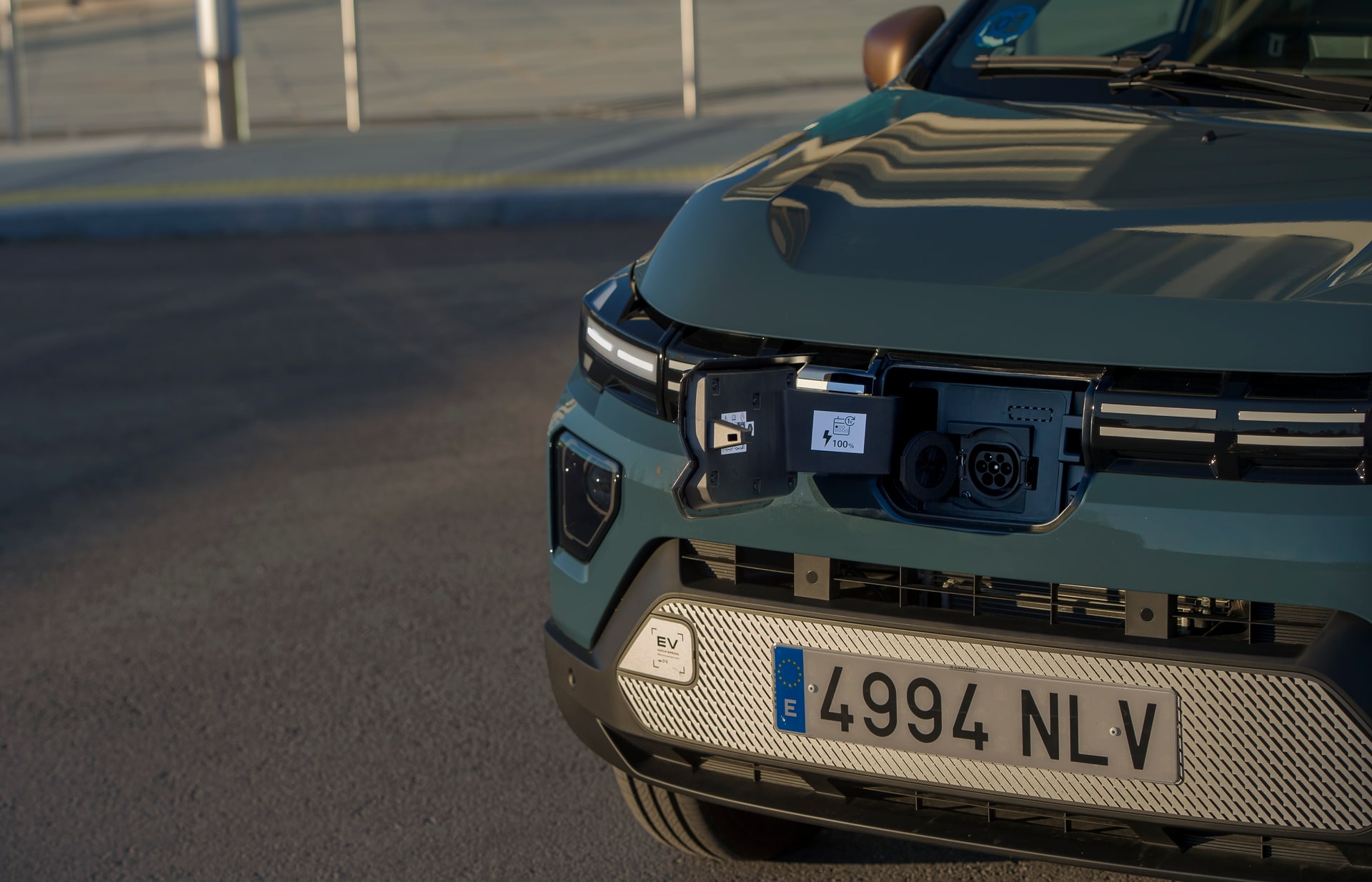
Premium guide to choosing the best urban electric city car in 2026 in Spain: real-world range, AC/DC charging and total cost of ownership compared with petrol.
The electric B-segment has stopped being a promise and has become the most competitive category in the Spanish market. In 2026, choosing an urban electric city car is no longer a matter of technological faith but of mathematics: real-world range, charging power and cost per kilometre. This guide breaks down the three factors that separate a good decision from a regret, with the models a buyer can test today at a dealership in Spain.
The urban electric city car in 2026: why this is the year of the leap
Three factors converge this year: the sustained drop in LFP battery prices, a public charging network that has finally passed 35,000 points in Spain, and a B-segment offer covering prices from €17,000 to €30,000. The result is a scenario in which the best electric city car 2026 already competes head-to-head with an equivalent petrol car on three-year TCO.
What defines a good electric car for the city
It is not the WLTP figure but the sum of three variables: real consumption between 13 and 15 kWh/100 km in urban use, three-phase AC charging capacity of 11 kW to fill up in a community garage, and a DC peak of no less than 80 kW for occasional trips outside the M-30 or the Ronda Litoral.
Real-world range: what really delivers in the city
Why WLTP does not tell the whole truth
The WLTP cycle mixes urban, extra-urban and motorway driving. In pure city driving, with regenerative braking and low speeds, an electric car exceeds its homologated range; on the motorway at 120 km/h, the penalty is around 25-30%. The real-world range of an urban electric car tends to sit 10-15% above the WLTP figure on journeys below 60 km/h.
Typical real consumption of the electric B-segment
A reasonable expectation in 2026: 12-14 kWh/100 km in the city, 15-17 kWh/100 km mixed, 19-22 kWh/100 km on the motorway. With a 40 kWh net battery, that means between 280 and 320 real urban kilometres.
Charging: the ecosystem you need at home and on the street
Domestic AC charging: 3.7, 7.4 or 11 kW
A 7.4 kW single-phase wallbox fills a 40 kWh city car in about 6 hours. If your installation supports three-phase, 11 kW reduces that time to 4 hours. For a community garage, make sure the car accepts three-phase as standard: it makes the difference between charging overnight and needing two nights.
Public DC charging: the peak that matters and the curve
The magic number is not the peak but the average power between 10% and 80%. A car that advertises 100 kW but averages 55 kW will take as long as a well-managed 80 kW one. Electric car charging in the city rarely exceeds 50 kW at mixed urban AC/DC points.
Total cost of ownership: from the plug to the insurance
Purchase price and current aid in Spain
With the MOVES III plan extended and the scrappage discount, a €25,000 city car can drop to €18,000. The cheap electric city car in Spain starts at €17,000 for the entry version of the Dacia Spring.
Energy: kWh at home vs. equivalent petrol
At €0.15/kWh at night, 100 km costs €2. An equivalent petrol car at 7 l/100 km and €1.55/l: €10.85. The annual difference over 15,000 km exceeds €1,300.
Maintenance, insurance and residual value
Servicing every 30,000 km or two years, with no oil, no filters, no clutch. Insurance is usually 5-10% more expensive, more than offset by everything else.
The protagonists of the electric B-segment in 2026
Dacia Spring — from €16,242
The entry-level A-B. 26.8 kWh, ideal for a second car or strictly urban use. DC charging at 30 kW: not for travelling, it is for not spending.
| Power kW | Power CV | Top speed | Range | Consumption | Label | Fuel |
|---|---|---|---|---|---|---|
| 52 kW | 70 CV | 125 km/h | 225 km WLTP | 12.4 kWh/100 km | Zero | Electric |
Renault 5 E-Tech — from €28,909
The iconic revival. AmpR Small platform, 40 or 52 kWh battery, DC charging up to 100 kW and three-phase 11 kW AC. The most balanced electric city car of the year.
| Power kW | Power CV | Top speed | Range | Consumption | Label | Fuel |
|---|---|---|---|---|---|---|
| 110 kW | 150 CV | 150 km/h | 416 km WLTP | 14.8 kWh/100 km | Zero | Electric |
Citroën ë-C3 — from €19,700
LFP, 44 kWh, Advanced Comfort suspension. The most comfortable over urban speed bumps.
| Power kW | Power CV | Top speed | Range | Consumption | Label | Fuel |
|---|---|---|---|---|---|---|
| 83 kW | 113 CV | 132 km/h | 311 km WLTP | 17.3 kWh/100 km | Zero | Electric |
Opel Corsa Electric — from €30,800
e-CMP2 platform with 51 kWh net, 100 kW DC charging. The most German finish in the Stellantis group.
| Power kW | Power CV | Top speed | Range | Consumption | Label | Fuel |
|---|---|---|---|---|---|---|
| 115 kW | 156 CV | 150 km/h | 428 km WLTP | 14.2 kWh/100 km | Zero | Electric |
Peugeot e-208 — from €30,070
The most mature i-Cockpit, same technical block as the Corsa with a touch more premium feel.
| Power kW | Power CV | Top speed | Range | Consumption | Label | Fuel |
|---|---|---|---|---|---|---|
| 115 kW | 156 CV | 150 km/h | 433 km WLTP | 14.0 kWh/100 km | Zero | Electric |
Fiat 600e — from €31,950
Urban crossover, 54 kWh, higher seating position. Ideal for those seeking an electric car with the look of a small SUV.
| Power kW | Power CV | Top speed | Range | Consumption | Label | Fuel |
|---|---|---|---|---|---|---|
| 115 kW | 156 CV | 150 km/h | 406 km WLTP | 15.3 kWh/100 km | Zero | Electric |
BYD Dolphin — from €36,690
Blade LFP battery of 60.4 kWh in the Comfort version, 88 kW DC charging. Very complete standard equipment.
| Power kW | Power CV | Top speed | Range | Consumption | Label | Fuel |
|---|---|---|---|---|---|---|
| 150 kW | 204 CV | 160 km/h | 427 km WLTP | 15.9 kWh/100 km | Zero | Electric |
MG4 — from €38,190
Rear-wheel drive, 51 or 64 kWh, DC charging up to 140 kW in the larger version. The most aggressive price-to-content ratio in the segment.
| Power kW | Power CV | Top speed | Range | Consumption | Label | Fuel |
|---|---|---|---|---|---|---|
| 125 kW | 170 CV | 160 km/h | 452 km WLTP | 15.5 kWh/100 km | Zero | Electric |
Quick comparison: summary table with score
| Model | Price from | WLTP range | DC charging | Consumption | Score /10 |
|---|---|---|---|---|---|
| Dacia Spring | €16,242 | 225 km | 30 kW | 14.6 kWh | 6.5 |
| Renault 5 E-Tech | €28,909 | 416 km | 100 kW | 14.7 kWh | 9.2 |
| Citroën ë-C3 | €19,700 | 311 km | 100 kW | 16.4 kWh | 8.0 |
| Opel Corsa Electric | €30,800 | 428 km | 100 kW | 14.7 kWh | 8.3 |
| Peugeot e-208 | €30,070 | 433 km | 100 kW | 14.5 kWh | 8.4 |
| Fiat 600e | €31,950 | 406 km | 100 kW | 15.6 kWh | 7.8 |
| BYD Dolphin | €36,690 | 427 km | 88 kW | 15.9 kWh | 8.5 |
| MG4 | €38,190 | 452 km | 140 kW | 15.5 kWh | 9.0 |
How to decide according to your usage profile
Second urban car for less than 40 km a day: Dacia Spring. Single car that combines city driving and weekend getaways: Renault 5 E-Tech or MG4. Family that values comfort: Citroën ë-C3. Maximum equipment per euro: BYD Dolphin. Demanding driver who values feel: Peugeot e-208.
Conclusion: the 2026 electric city car already makes economic sense
The electric city car comparison this year confirms that the segment has matured: there are real options below €25,000, ranges exceeding 400 km and a electric car running cost that recovers the purchase premium within three or four years of intensive use.
FAQ
Which electric city car should I buy in Spain in 2026 if I only use it in the city?
The Dacia Spring for price and the Citroën ë-C3 for comfort are the most sensible choices for strictly urban use without frequent long trips.
What is the real-world range of an electric city car?
Between 280 and 380 real kilometres in the 40-52 kWh models of the B-segment, even exceeding the WLTP figure when driving below 60 km/h with active regeneration.
Is an urban electric car viable without a private garage?
Yes, if you have access to a public AC point within 1 km or charge weekly at a fast DC station. With a Renault 5 or an MG4, a 30-minute session per week is enough.
How much do you save compared with an equivalent petrol car?
Between €1,200 and €1,500 a year in energy over 15,000 km, plus around €300-400 in maintenance. Over three years, the accumulated saving exceeds €5,000.


 Kia offers an electric range of 10 models, 50 versions and 400 possible combinations
 The seven finalists for the 2027 European Car of the Year (COTY) are exclusively electric
 Peugeot E-208 GTi: a battery-powered toy that revives the spirit of the 1980s sports cars
Deja un comentario