Hyundai Tucson plug-in hybrid vs OMODA 5 PHEV: family plug-in SUVs head to head
 Iván Navarro
26 March 2026
8 min.
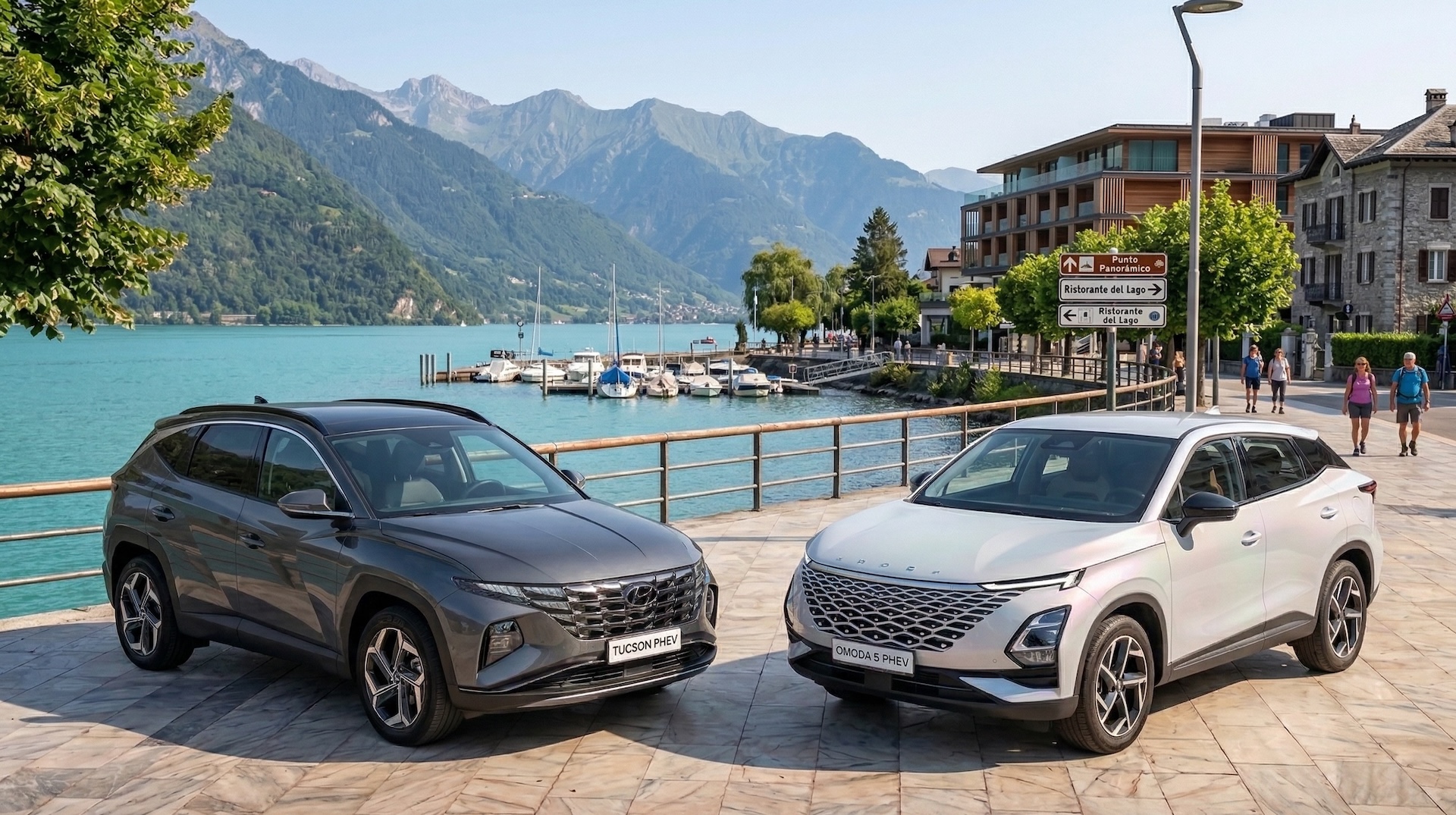
Among the huge range of family vehicles with plug-in hybrid powertrains, we wanted to highlight two specific models: the Hyundai Tucson PHEV and the Omoda 5 PHEV.
Family plug-in SUVs are establishing themselves as the preferred choice for drivers seeking a balance between day-to-day electric range and the versatility of a combustion car for long journeys. In this comparison we analyse two recent proposals competing in that niche: the Hyundai Tucson plug-in hybrid and the OMODA 5 PHEV. Both options are aimed at families who need space, efficiency and a certain capacity for electric driving in urban settings, but their technical and commercial approaches differ.
The typical buyer of these family plug-in SUVs looks for a practical boot, an electric range that covers daily journeys without petrol consumption, and a clear equipment-to-price ratio. The average price of this type of offer in Spain sits above conventional compact cars, though below premium alternatives; manufacturer data sheets and WLTP cycles provide the key technical references for comparing performance and WLTP range.
In the comparison that follows we evaluate electric range, efficiency, load capacity, equipment and starting price, with a practical orientation for anyone deciding between an established offer and a newer arrival on the market.
The most balanced models in the segment in 2026
To define the candidates that best balance price, performance and efficiency, we assessed the WLTP range, interior space, the starting price of equivalent versions and the quality of equipment. The aim is to offer a practical view: which delivers better real-world consumption, which offers greater usable electric capacity in town, and which provides the best overall value for a family. The result positions the Tucson as a benchmark thanks to its balance of quality and service network, while the OMODA 5 offers a notable equipment-to-price ratio and distinctive interior practicality solutions.
Hyundai Tucson plug-in hybrid
The Hyundai Tucson plug-in hybrid is the more established of the two, with a technical offer that prioritises ergonomics and finish. It stands out for a well-tuned powertrain and a setup geared towards comfort. On the road it offers predictable responses and an electrical integration that helps reduce urban consumption. The PHEV version is sold with an electric system designed to cover commuting and urban journeys, benefiting from the brand’s experience with hybrids. In terms of space, the Tucson keeps a competitive boot capacity for its size and adequate headroom and legroom for five occupants.
As for figures, the Tucson PHEV offers a reasonable combination of power and efficiency, with a WLTP range designed for daily use and a solid after-sales network that backs the purchase. In equipment it includes assistance and connectivity systems in line with the class, as well as comfort options that make family use easier. Against rivals such as the Kia Niro or the Toyota RAV4, the Tucson aims for a more traditional and refined driving experience.
Strengths
• Good mechanical integration and ride comfort.
• Service network and proven reliability.
• Practical interior space and boot for a family.
Weaknesses
• Starting price may be higher than newer alternatives.
• Design and character less bold than some rivals.
Which plug-in SUV is more reliable for intensive family use?
The Hyundai Tucson plug-in hybrid stands out for its balance between efficiency and service network, making it a safe choice for anyone who prioritises reliability and everyday use.
| Feature | Data | Score |
|---|---|---|
| Power | 265 CV | 9.0 |
| WLTP range | ~60 km | 8.4 |
| Top speed | 193 km/h | 8.5 |
| Boot | 558 litres | 8.8 |
| Starting price | 44,000 € | 8.0 |
score out of 10 based on the criteria analysed in this article
OMODA 5 PHEV
The OMODA 5 PHEV arrives as an alternative focused on offering an aggressive equipment-to-price ratio within the family plug-in SUVs segment. Its commercial approach rests on a broad technology package from entry versions and an interior layout designed to maximise a sense of spaciousness. In town the OMODA 5 PHEV aims to cover much of the driving on electric power and offers a set of assistants and connectivity features that appeal to technology-minded buyers.
Technically it comes with power sufficient for family use and an homologated electric range that favours urban trips and short journeys without fuel consumption. Its boot and interior space layout are competitive within the segment, although the perceived quality of some materials may trail more established alternatives. Compared with options such as the Hyundai Tucson or the Ford Kuga, the OMODA offers value through equipment and price, making it a candidate for those seeking quick amortisation of spending on technology features.
Strengths
• Excellent equipment-to-price ratio.
• Wide technology provision from base versions.
• Well-considered rear passenger space.
Weaknesses
• Perceived material quality below established brands.
• Smaller service and maintenance network.
Which plug-in offers the best technology-to-price ratio?
The OMODA 5 PHEV stands out for its equipment and value for money, positioning itself as a very attractive alternative if technology and upfront cost are the priority.
| Feature | Data | Score |
|---|---|---|
| Power | 190 CV | 8.0 |
| WLTP range | ~55 km | 8.0 |
| Top speed | 175 km/h | 7.6 |
| Boot | 512 litres | 8.0 |
| Starting price | 34,000 € | 8.6 |
score out of 10 based on the criteria analysed in this article
Quick technical comparison
In practical terms, the Tucson offers a more balanced package if you value the service network, finish and a setup geared towards comfort, while the OMODA 5 PHEV stands out for its more aggressive starting price and superior equipment in its segment. The crucial difference lies in perceived quality and aftersales policy: the Tucson starts with the advantage of known reliability and suitability for intensive family use; the OMODA better suits those who prioritise technology and lower initial outlay.
| Model | Power | Range | Price | Score |
|---|---|---|---|---|
| Hyundai Tucson PHEV | 265 CV | ~60 km | 44,000 € | 9.2 |
| OMODA 5 PHEV | 190 CV | ~55 km | 34,000 € | 8.4 |
score out of 10 based on the criteria analysed in this article
Which car to buy based on your profile
If you do a lot of city driving
Choose a model with good electric WLTP range and real-world efficiency: both cover urban journeys, but the OMODA 5 PHEV offers a technology package and a more attractive initial cost for frequent urban driving.
If you travel frequently
If you rack up motorway miles and need the backing of a service network, the Hyundai Tucson plug-in hybrid is the more balanced choice thanks to its ride comfort and aftersales reputation.
If you’re looking for the best price
The OMODA 5 PHEV usually offers a lower starting price and more equipment per euro invested, making it the logical option if the initial budget is the deciding factor.
If you prioritise technology
The OMODA 5 PHEV includes very comprehensive systems and connectivity in its entry versions, aimed at buyers who value assistants and screens over premium finishes.
FAQ
Which of the two has greater real-world electric range?
Both offer ranges geared to urban use; in homologated figures they sit in similar brackets, with the Hyundai Tucson providing a slightly higher figure on the WLTP cycle.
What impact does the battery have on the boot?
PHEV versions give up some volume compared with combustion variants; in this comparison the Tucson keeps a slightly more practical boot, although the difference is not huge for family use.
Which is cheaper on mixed consumption?
In mixed use the difference narrows: the Tucson tends to be more efficient on long journeys thanks to its mechanical tuning, while the OMODA excels on short trips due to its urban focus.
Which maintenance is cheaper?
Maintenance cost depends on the network and the brand’s policy; in general, an established brand tends to offer predictable costs and an extensive network, which benefits the Tucson.
Which alternative should I consider within the segment?
Models such as the Hyundai Kona or the Kia Niro, as well as options from Toyota, also belong to this family plug-in SUVs environment and are sensible recommendations for anyone seeking additional comparisons.
Expert opinion
Beyond the official figures, the choice between the Hyundai Tucson plug-in hybrid and the OMODA 5 PHEV depends on clear priorities. If the purchase is based on brand security, aftersales network and dynamic behaviour geared towards comfort on long journeys, the Tucson is the most balanced and predictable option. Its mechanical package and sense of finish convey a confidence that weighs heavily in family decisions.
Conversely, if the goal is to maximise technology equipment for the lowest upfront outlay and most use will be urban, the OMODA 5 PHEV offers a proposition that is hard to ignore: a lot of content for less money and attractive space for rear passengers.
In terms of real-world efficiency, both fulfil the role of reducing consumption day to day thanks to their electric capacity, so the final decision should weigh the service network, perceived quality and predominant use. For those who cover many interurban kilometres or travel frequently with occasional loads and towing, the recommendation is the Tucson; for urban families who prioritise technology and initial cost, the OMODA 5 PHEV represents a very competitive alternative. In any case, testing both options under real conditions and reviewing maintenance and dealer service costs locally is essential before deciding.


 Peugeot E-208 GTi: a battery-powered toy that revives the spirit of the 1980s sports cars
 New Lexus ES: luxury grows and goes electric
 First contact with the Dacia Sandero Hybrid 155: power and efficiency from €19,890
Deja un comentario