Mitsubishi Nissan Outlander X-Trail Hybrid Cars Comparisons Family Tests SUV
Nissan X-Trail vs Mitsubishi Outlander: hybrid seven-seat family SUV showdown in 2026
 Iván Navarro
11 November 2026
6 min.
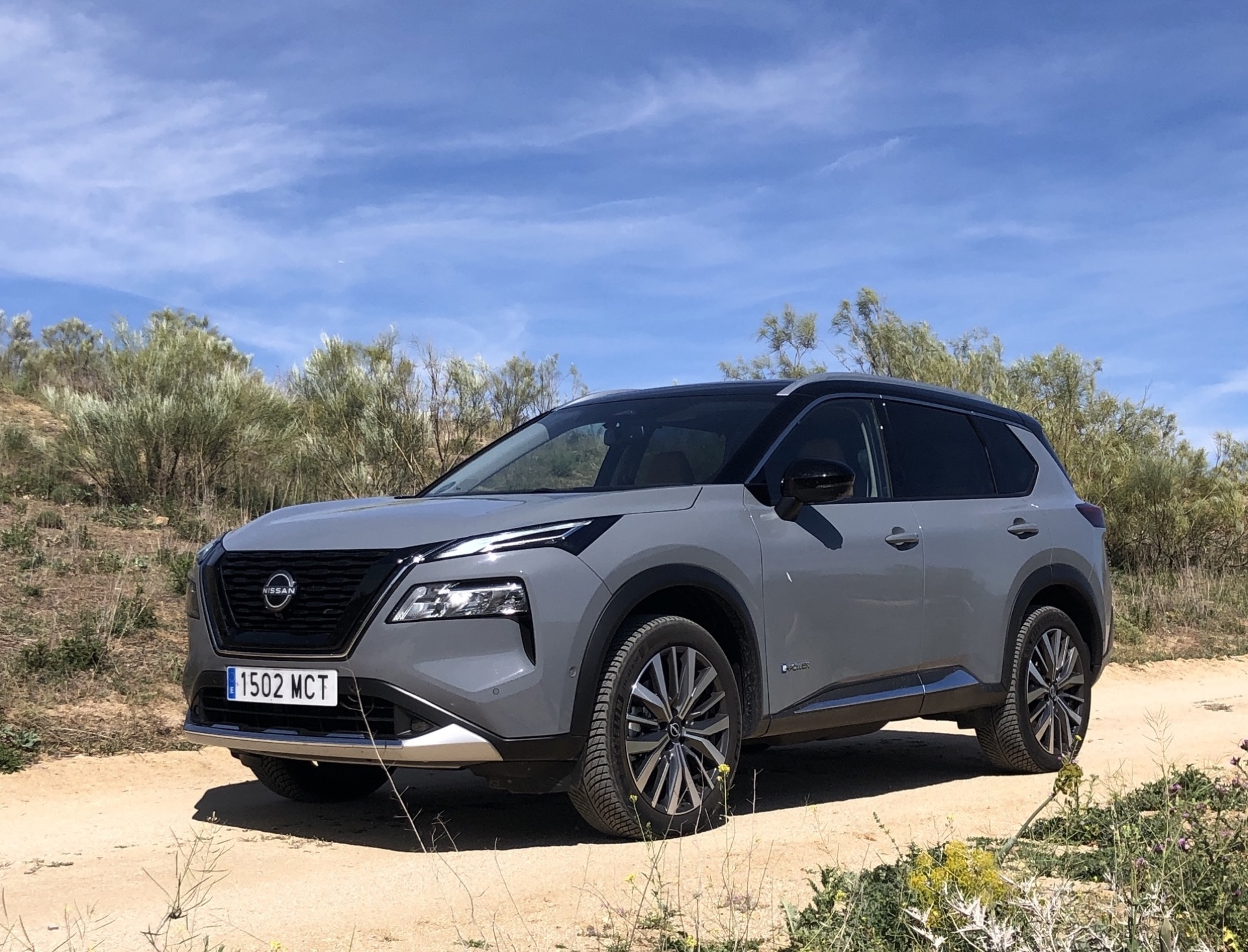
We compare the Nissan X-Trail mild hybrid and the Mitsubishi Outlander PHEV 4WD, two seven-seat SUVs with opposing philosophies for Spanish families. Power, consumption, electric range and indicative price, head to head.
Few purchasing decisions generate as much doubt as choosing a seven-seat family SUV in 2026. The Spanish market offers very different routes to solve the same problem—carrying five, six or seven people without giving up efficiency—and few duels illustrate this better than the Nissan X-Trail against the Mitsubishi Outlander. One bets on an affordable e-POWER series hybrid (no plug) with electric-style driving. The other on a PHEV with all-wheel drive and a battery capable of running the car in pure electric mode. There is no technical tie here: there are two philosophies worth understanding before signing.
Nissan X-Trail 2026: price from €42,000 indicative
The X-Trail sold today at Spanish dealerships uses the 204 hp e-POWER system (front-wheel drive) or 213 hp e-4ORCE (all-wheel drive), with Acenta and higher trims and a single-speed automatic gearbox. The 1.5 VC Turbo petrol engine works exclusively as an electricity generator; the wheels are always driven by the electric motor or motors, with a support battery of about 2.1 kWh. The result: an SUV that prioritises efficiency, smooth electric-style driving and the ECO label without needing to plug in, compared with the sophistication of a plug-in PHEV.
| Power (kW) | Power (hp) | Top speed | Consumption | Fuel |
|---|---|---|---|---|
| ≈150-157 kW | ≈204-213 hp | ≈170 km/h | ≈5.7 l/100 km | e-POWER hybrid (petrol/electric) |
At a homologated 5.7 l/100 km, the X-Trail e-POWER offers modest consumption without depending on daily charging. Its strength lies elsewhere: a long tank-based range, refuelling at any petrol station and driving very similar to a pure electric car in everyday use.
Mitsubishi Outlander PHEV 2026: price from €50,800 indicative
The Outlander plays a different game. The PHEV 306 Motion 4WD version combines a 2.4-litre petrol engine with two electric motors and a 22.7 kWh battery, delivering a combined output of 306 hp and all-wheel drive as standard. It is, by far, the more powerful of the two SUVs and the only one capable of running in pure electric mode for short trips.
| Power (kW) | Power (hp) | Top speed | Electric range | Consumption | Fuel |
|---|---|---|---|---|---|
| ≈225 kW | ≈306 hp | ≈170 km/h | ≈86 km | ≈0.8 l/100 km | PHEV (petrol/electric) |
That homologated 0.8 l/100 km is, of course, a laboratory figure that requires charging the car every day. Without plugging in, the Outlander is heavier and real consumption soars. With a plug and low-mileage urban trips, however, it can go weeks without visiting a petrol station.
Technical comparison: power, consumption and range
The power difference—204-213 hp versus 306 hp—is not a nuance, it is a leap in category. The Outlander accelerates better, pulls with more authority when loaded and tackles hills with a trailer or full luggage more easily. The X-Trail e-POWER, on the other hand, offers smoother and more efficient driving without the need to plug in, with a similar homologated top speed (≈170 km/h), something that in everyday Spanish driving matters less than it seems.
Where the paths truly diverge is in mixed consumption and electric range. The Nissan e-POWER always needs petrol but with modest consumption and no dependence on charging; the Mitsubishi may almost never need it, if the user has a wallbox or accessible domestic plug. The Outlander’s ≈86 km of electric range comfortably covers most daily journeys of an average Spanish family.
Space and third row: who are these 7 seats for?
Honestly, neither is an SUV designed to carry comfortable adults in the third row on long trips—for that, it is better to look at more generously bodied alternatives, which we already analysed in our guide to choosing a family SUV with a third row usable by adults. As an occasional solution for short trips or for children, both manage without fuss.
Hybrid technology: e-POWER without a plug vs PHEV 4WD
Here lies the real key to the duel. The X-Trail’s e-POWER is a series hybrid: the petrol engine only generates electricity and the wheels are always driven by the electric motor (no prolonged pure electric driving, as the battery is small). The Outlander’s PHEV does allow pure electric mode for tens of kilometres, and also adds permanent all-wheel drive as standard. For someone living in a mountain area or needing to tow a trailer with some regularity, that 4WD weighs on the decision as much as the battery.
Price and incentives: Plan Auto+
With the official figures on the table, the Outlander starts at around €50,800 indicative versus ≈€42,000 for the X-Trail e-POWER—a difference of over €8,000 that is not minor for any family economy. It is worth remembering that these figures are the manufacturer’s recommended RRP, without dealer discounts or one-off campaigns, so always check the current final price. The Plan Auto+ may reduce the outlay for the Outlander, given its plug-in nature; the exact amount currently in force should be checked on the official plan website before finalising any calculation.
Summary comparison table
| Model | Power | Consumption | Electric range | Price from | Score |
|---|---|---|---|---|---|
| Nissan X-Trail e-POWER | 204-213 hp | ≈5.7 l/100 km | — | ≈€42,000 | 7.5/10 |
| Mitsubishi Outlander PHEV | 306 hp | ≈0.8 l/100 km | ≈86 km | ≈€50,800 | 8.1/10 |
The Outlander’s score reflects its greater power, all-wheel drive and real electric range; the X-Trail’s score rewards its relatively accessible price, efficiency without a plug and ease of use, although it falls short on outright performance and plug-in electrification.
Which to choose according to your usage profile?
If the dominant use is urban or short trips with access to a plug, the Outlander recovers its price premium within a few years of unburnt petrol. If, instead, the car is mainly used for travelling without the possibility of daily charging, the X-Trail e-POWER proves more coherent: less dependent on infrastructure and with modest consumption. Anyone torn between both approaches can also review our ranking of the most comfortable family SUVs for long journeys before deciding.
Frequently asked questions
Which seven-seat hybrid SUV uses less in the city, the X-Trail or the Outlander?
The Outlander PHEV, provided it is charged daily: its homologated consumption of 0.8 l/100 km only makes sense with a full battery. Without charging, the X-Trail e-POWER may be more predictable in real consumption.
Does the Nissan X-Trail 2026 have a plug-in version in Spain?
No. The current range is e-POWER (a non-plug-in series hybrid) with 204 or 213 hp. It does not offer pure electric driving over tens of kilometres nor can it be charged from a domestic plug.
Is it worth paying more than €8,000 extra for the Outlander PHEV?
It depends on use. For short urban journeys with domestic charging, it pays off over time. For intensive motorway use without regular access to a plug, the saving is diluted.
Do the indicated prices include discounts or Plan Auto+ incentives?
No. They are the manufacturer’s recommended RRP, without dealer promotions or public aid. The final amount may vary and it is advisable to check the conditions in force for the Plan Auto+ on the official website.
Technical specifications of this car

 Kia offers an electric range of 10 models, 50 versions and 400 possible combinations
 The seven finalists for the 2027 European Car of the Year (COTY) are exclusively electric
 Peugeot E-208 GTi: a battery-powered toy that revives the spirit of the 1980s sports cars
Deja un comentario