Kodiaq Mitsubishi Nissan Outlander Skoda X-Trail Hybrid Cars Comparisons Family SUV
Peugeot 5008 vs. Skoda Kodiaq: a showdown between 7-seat family SUVs under €50,000
 Iván Navarro
17 November 2026
6 min.
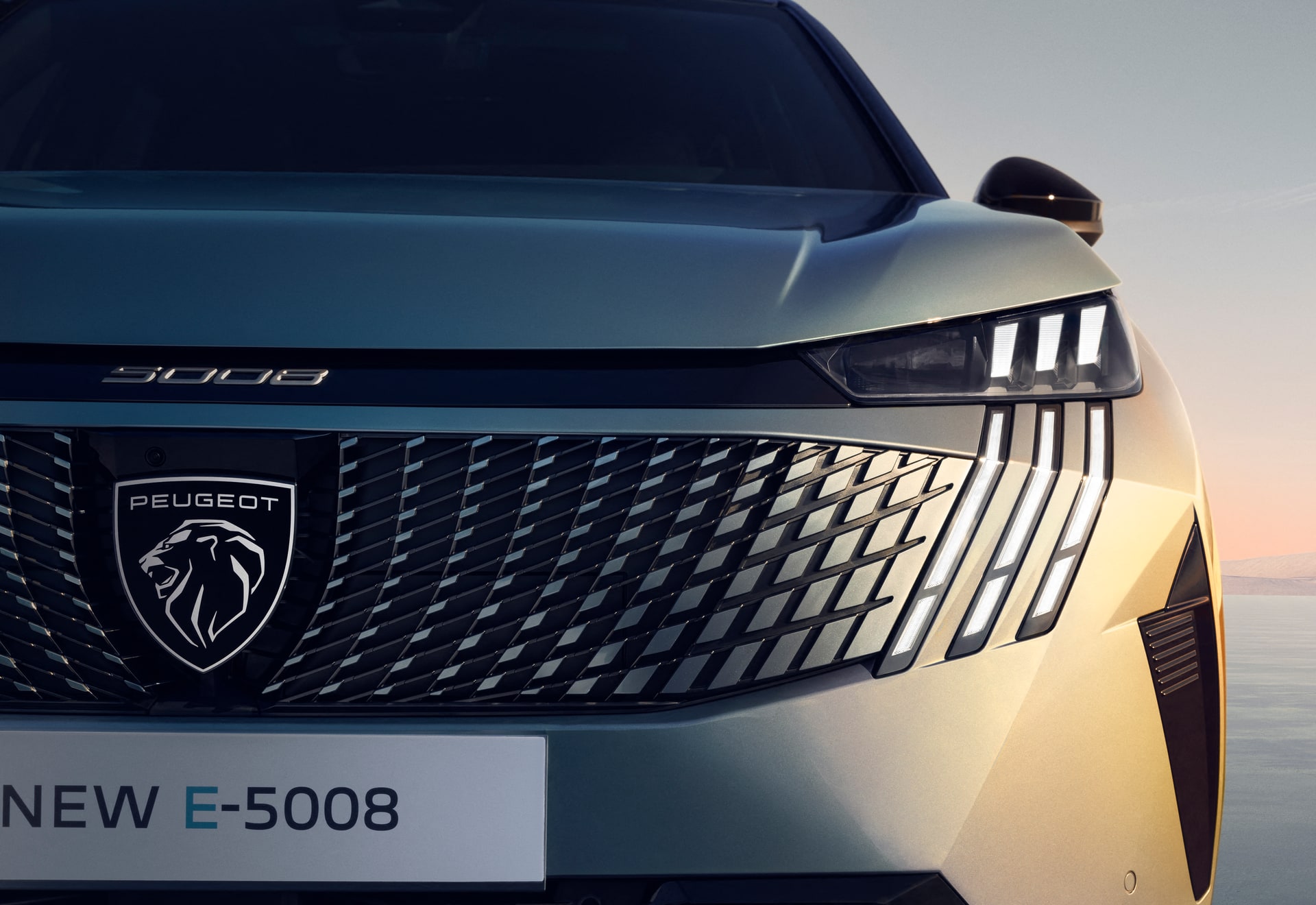
Two cars, one budget, two ways of understanding the large family. The Peugeot 5008 and the Skoda Kodiaq compete in the same price bracket, at around €47,660 and €47,500 respectively, but they get there by completely different routes. One bets on the plug and the ZERO emissions label. The other on the simplicity of a petrol mild hybrid with an ECO label and a tank that doesn’t force you to think about charging points. The question that really matters is not which car is better in the abstract, but which one fits your day-to-day life.
Peugeot 5008 Plug-in Hybrid 195, from €47,660: plug-in hybrid for the family
The 5008 joins this comparison in its Plug-in Hybrid 195 Allure version, with front-wheel drive, the e-DCS7 automatic gearbox and a 17.8 kWh usable battery (21 kWh gross) that is type-approved for up to 82 km in electric mode. It is Peugeot’s proposition for those who want to get around town without burning petrol and save the combustion engine for motorway or long-distance journeys. The powertrain delivers 195 CV (143 kW), enough to move a seven-seat SUV with ease and without drama when overtaking.
| Version | Power | Top speed | Electric range | Consumption | Label | Fuel |
|---|---|---|---|---|---|---|
| Plug-in Hybrid 195 Allure 7 seats | 143 kW / 195 CV | 215 km/h | ≈82 km | ≈2.7 l/100 km | ZERO | PHEV (petrol/plug-in) |
The homologated consumption figure of 2.7 l/100 km should be read with care: it is the figure for the cycle with a fully charged battery under the Euro 6e-bis regulation, not the one you will see with the tank half full after 400 km on the motorway. There the PHEV behaves like any petrol engine of its displacement, something we already explained in depth when discussing why the PHEV doesn’t always pay off if short journeys aren’t the norm.
Skoda Kodiaq mHEV 150 CV, from €47,500: the petrol mild-hybrid proposition
The Kodiaq offers a different take on the same problem. The 1.5 TSI 150 Selection version with 48V mild hybridisation promises no electric kilometres and no ZERO label, but it earns the ECO label and simplifies the equation: no plug, no need to think about overnight charging, with the savings delivered by the intelligent start-stop system and energy recovery during braking.
| Version | Power | Top speed | Consumption | Fuel |
|---|---|---|---|---|
| mHEV 1.5 TSI 150 Selection DSG | 110 kW / 150 CV | 205 km/h | ≈6.1 l/100 km | Mild hybrid (petrol/electric) |
Just over six litres per hundred kilometres is a reasonable figure for an SUV of this size, though far from the 2.7 l/100 km that the 5008 homologates with a full battery. The real difference comes down to use: if you charge every night, the 5008 wins hands down on urban fuel cost. If you have nowhere to plug in, the Kodiaq simply works, with no small print.
Price and versions: Peugeot 5008 Allure vs Skoda Kodiaq Selection
The Peugeot 5008 Allure starts at around €47,660 RRP, while the seven-seat Skoda Kodiaq Selection is around €47,500. Just one hundred and sixty euros apart, which on paper makes them rivals at virtually identical prices. It is worth remembering that these figures are the manufacturer’s recommended retail price, without dealer discounts or one-off promotions, so always check the current offer before deciding.
This is where the Plan Auto+ comes in, the Spanish public aid for buying electrified vehicles. The 5008 PHEV, as it carries the ZERO label, may benefit from this aid under the conditions in force at the time of purchase; check the official website for the exact amount, as it changes over time. The Kodiaq mHEV, with its ECO label, falls outside that scheme.
Mechanics and real-world consumption: PHEV vs mHEV
There is no contest on pure electric range: 82 km versus zero. But the Kodiaq needs no charger, and for many families that matters more than any range figure. The 5008 demands daily charging discipline for its numbers to make sense; without it, it ends up hauling a 17.8 kWh usable battery as dead weight on the motorway.
Interior space and boot: testing the third row
Both offer a seven-seat configuration, though with nuances. The Kodiaq, being larger externally, tends to be somewhat more generous for adults in the third row, something we already analysed when discussing seven-seat hybrid family SUVs in this same segment. The 5008, thanks to its platform designed from the outset to house batteries under the floor, keeps its boot capacity intact in the plug-in version compared with the mild-hybrid variants in the range.
Taxation and environmental label
The 5008 PHEV’s ZERO label opens the door to free parking in regulated zones in many cities and to driving without restrictions during high-pollution episodes. The Kodiaq, with its ECO label, also enjoys benefits and access to low-emission zones, though with greater parking limitations in city centres than a ZERO vehicle; even so, for a family that parks in a private garage that difference matters less than it seems on paper.
Comparative summary table
| Model | Power | Consumption | Label | Price from | Score |
|---|---|---|---|---|---|
| Peugeot 5008 PHEV 195 Allure | 195 CV | ≈2.7 l/100 km | ZERO | ≈€47,660 | 8.3/10 |
| Skoda Kodiaq mHEV 150 Selection | 150 CV | ≈6.1 l/100 km | ECO | ≈€47,500 | 7.9/10 |
Which 7-seat SUV under €50,000 suits you best?
If you have a garage with a plug and make daily urban journeys, the 5008 PHEV more than justifies its complexity and adds the ZERO label as a bonus. If your routine is more motorway, long trips and no charging points, the Kodiaq mHEV offers the same family seating with an ECO label without requiring you to change your habits. There is no absolute winner here, only the car that best reads your real mileage.
Frequently asked questions
Which is cheaper to maintain, the Peugeot 5008 or the Skoda Kodiaq?
It depends on use. If you charge the 5008 daily, its electricity and urban fuel cost may be lower than the Kodiaq’s. On long journeys without charging, the Kodiaq’s mHEV is more predictable and has no battery-related extra costs.
Does the Peugeot 5008 PHEV qualify for Plan Auto+ aid?
As it carries the ZERO label, it may be eligible for Plan Auto+ aid under the conditions in force at the time of purchase. Check the plan’s official website for the exact amount.
Which 7-seat SUV has more room in the third row?
The Skoda Kodiaq, due to its external dimensions, tends to be somewhat more comfortable for adults in the third row than the Peugeot 5008.
Is it worth paying more for the plug-in version over the petrol mild hybrid?
Only if you can charge the battery regularly. Without that charging discipline, the PHEV’s consumption approaches that of a conventional petrol engine of its displacement, losing much of its advantage.
Technical specifications of the cars in this article

 Kia offers an electric range of 10 models, 50 versions and 400 possible combinations
 The seven finalists for the 2027 European Car of the Year (COTY) are exclusively electric
 Peugeot E-208 GTi: a battery-powered toy that revives the spirit of the 1980s sports cars
Deja un comentario