The 4 best Chinese electric cars for 2026
 Carlos Romero
15 April 2026
8 min.
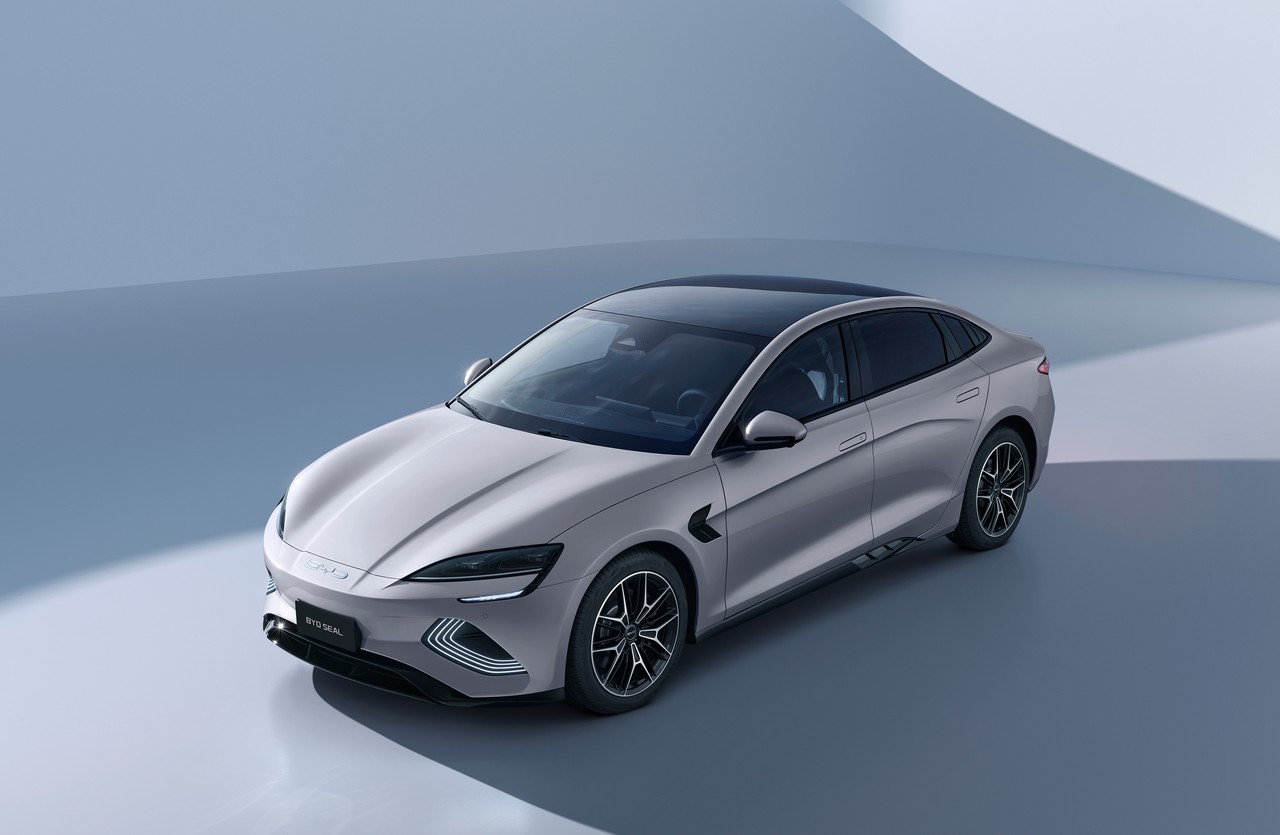
The Chinese electric car market in 2026 has established itself as a real and competitive alternative in Europe, with brands that have moved from the stage of ambition to that of a mature offering. This year’s proposals combine higher-density batteries, modular platforms and advanced driver assistance systems, and compete on range, efficiency and user experience. In this article you will find the four most relevant Chinese models of the year, compared in terms of range, power and technical approach, with explanations of their positioning and the type of user they suit best. Pros and cons will be shown to help make practical purchasing decisions.
Who is this ranking for?
This ranking is based on market data, official specifications and published road tests. It is designed for those who want to understand which Chinese offerings dominate the electric car supply in 2026, without subjective judgements.
If you do a lot of mileage and need good range, if you prioritise efficiency due to energy costs, or if you value technology and driving assistants, this selection of options will help you find your place. It is also useful if you are looking for alternatives to traditional European brands, focusing on equipment-to-price ratio and charging capability.
What details have we analysed?
We have considered market positioning, official technical data such as WLTP range and power, manufacturer-homologated consumption, dimensions and expected real-world use, as well as the price-to-technical-approach ratio of each model to reflect its suitability according to driving habits and family or professional needs.
Ranking of the 4 best Chinese electric cars for 2026
BYD Seal (from €41,990*)
Indicative price without applying public aid or the brand’s commercial discounts.
Why it’s here: The BYD Seal stands out for its combination of a Blade battery with good energy density and a chassis oriented towards dynamic comfort. It offers variants with competitive ranges and a focus on urban efficiency and intercity journeys, positioning itself as an affordable electric saloon compared with European alternatives.
Ideal for: Drivers looking for an electric car for mixed use (city and road) with priority on efficiency and cost per kilometre.
Pros:
- Good range in higher versions.
- Battery technology with a reputation for safety.
- Competitive technology equipment for the price.
Cons:
- After-sales network still expanding in some European markets.
- Finish quality varies by version.
NIO ET5 (from €48,900*)
Indicative price without applying public aid or the brand’s commercial discounts.
Why it’s here: The NIO ET5 offers a user experience centred on connectivity and services (including battery swap in markets where it is available) and a dynamic tuning oriented towards comfort and responsiveness. Its technical offer relies on advanced assistants and a software package that grows through OTA updates.
Ideal for: Users who value connected services, software updates and a premium interior experience.
Pros:
- Driver assistance systems and a consolidated digital ecosystem.
- Battery options and differentiated after-sales service.
- Comfort-oriented interior finish.
Cons:
- Entry price higher than other Chinese options.
- Availability of services will depend on the local market.
XPENG P7 (from €39,900*)
Indicative price without applying public aid or the brand’s commercial discounts.
Why it’s here: The XPENG P7 focuses on aerodynamic efficiency and assistance software, offering a good range-to-power balance in a sporty saloon body. Its technical proposition balances low consumption and dynamic response, with an autonomous driving package that continues to evolve.
Ideal for: Drivers seeking efficiency and agile driving without giving up range for long journeys.
Pros:
- Good balance between consumption and performance.
- Platform focused on software and assistance features.
- Competitive entry price.
Cons:
- Service and parts network may be limited depending on the country.
- Finish options with a notable difference in equipment.
Zeekr 001 (from €44,500*)
Indicative price without applying public aid or the brand’s commercial discounts.
Why it’s here: The Zeekr 001 represents the accessible premium segment within the Chinese offering, with a dedicated platform and high-performance variants. It competes on range and interior experience, with an aggressive commercial approach to connectivity and design.
Ideal for: Buyers looking for a premium look and a high level of equipment above the segment average.
Pros:
- Platform designed for electric from the outset.
- High-performance options available.
- Finishes and technology at a competitive level.
Cons:
- Intermediate-high price compared with other Chinese brands.
- Weight and consumption in more powerful versions.
The prices shown in this ranking are indicative, without applying public aid or the brand’s commercial discounts.
Technical comparison
| Model | Range | Power | Consumption | Top speed | Price (€*) |
|---|---|---|---|---|---|
| BYD Seal | up to 560 km WLTP | 220 kW | 14.5 kWh/100 km | 180 km/h | 41,990 |
| NIO ET5 | up to 520 km WLTP | 220 kW | 15.2 kWh/100 km | 200 km/h | 48,900 |
| XPENG P7 | up to 562 km WLTP | 196 kW | 14.0 kWh/100 km | 170 km/h | 39,900 |
| Zeekr 001 | up to 580 km WLTP | 360 kW | 16.0 kWh/100 km | 200 km/h | 44,500 |
These data are official and taken from the brands’ official websites.
Purchase aid in 2026: Plan Auto+ and tax benefits
The Plan Auto+ 2026 replaces the previous MOVES programmes and establishes a new system of direct aid for the purchase of electrified vehicles in Spain. The aim is to accelerate fleet renewal with incentives and tax measures for private individuals and companies.
Main amounts of Plan Auto+ 2026
– Direct aid of up to €4,500 for electric passenger cars.
– Up to €5,000 for light vans in category N1.
– Retroactive from 1 January 2026.
– Approximate budget allocation of €400 million.
Who can benefit and priority criteria
Beneficiaries: private individuals, self-employed workers and companies. Applying the EEE criterion (Electric, Economical and European) prioritises pure electric vehicles over plug-in hybrids. Passenger cars priced below €35,000 receive higher aid, and those between €35,000 and €45,000 access reduced aid. In addition, an extra incentive is given if the final assembly or the batteries come from the European Union.
Additional requirements and tax advantages
The Plan requires a mandatory minimum discount of €1,000 from the dealer. There is a 15% deduction on personal income tax (IRPF) up to a maximum of €3,000. The tax advantages are valid until 31 December 2026.
Management and possible regional aid
Management is coordinated by the Ministry of Industry together with the Autonomous Communities, and additional regional programmes may exist. One example is the Plan Cambia 360 in the Community of Madrid. At the time of writing, it is not officially confirmed whether these regional aids are compatible with Plan Auto+ 2026.
The 5 questions everyone asks
Which of these models offers the best real-world range?
Range depends on version and conditions of use, although the higher-battery variants of the Zeekr 001 and the BYD Seal usually offer the highest figures on the WLTP cycle; real consumption will vary according to speed, temperature and load.
Are these cars easy to maintain and repair in Europe?
After-sales networks are improving, but the availability of spare parts and services varies by country and brand; choosing a brand with an established presence in the local market reduces maintenance risks.
Which model is most efficient in consumption per kilometre?
The XPENG P7 and the optimised versions of the BYD Seal tend to record lower consumption in mixed use, thanks to their aerodynamic design and battery management strategies.
What differences are there in the driving experience between them?
NIO focuses on connected services and comfort; Zeekr on a premium feel and performance; BYD on efficiency and operating cost; XPENG on a balance between efficiency and driving dynamics.
How do Plan Auto+ aids affect the final price?
The Plan significantly reduces the cost of access for models below the established thresholds; adding the dealer discount and the tax deduction can make mid-priced options more competitive.
Expert’s conclusion
This ranking summarises what the Chinese electric car offering means in 2026: technical variety, emphasis on software and range options that cover most uses. For the buyer, the main lesson is that there are alternatives with a good range-to-price ratio that already compete on practical criteria with traditional manufacturers.
If you want to stretch your money, first check the real entry price and what comes as standard: the XPENG P7 and some configurations of the BYD Seal offer good value for money. If you prefer to play it safe for services and after-sales, consider brands with a larger presence in your country, such as NIO or Zeekr. And if your use is mainly on the road, prioritise versions with a larger battery and lower effective consumption. To stretch your euro, first check the real entry price and what comes as standard. If the model is in high demand, it is usually also easier to resell later. And if you cover a lot of kilometres, energy cost and efficiency matter more than the power figure. If you are not going to charge often, do not buy from the catalogue: buy according to your routine.

 Peugeot E-208 GTi: a battery-powered toy that revives the spirit of the 1980s sports cars
 New Lexus ES: luxury grows and goes electric
 First contact with the Dacia Sandero Hybrid 155: power and efficiency from €19,890
Deja un comentario