The 5 essential premium hybrid SUVs of 2026
 Iván Navarro
27 April 2026
9 min.
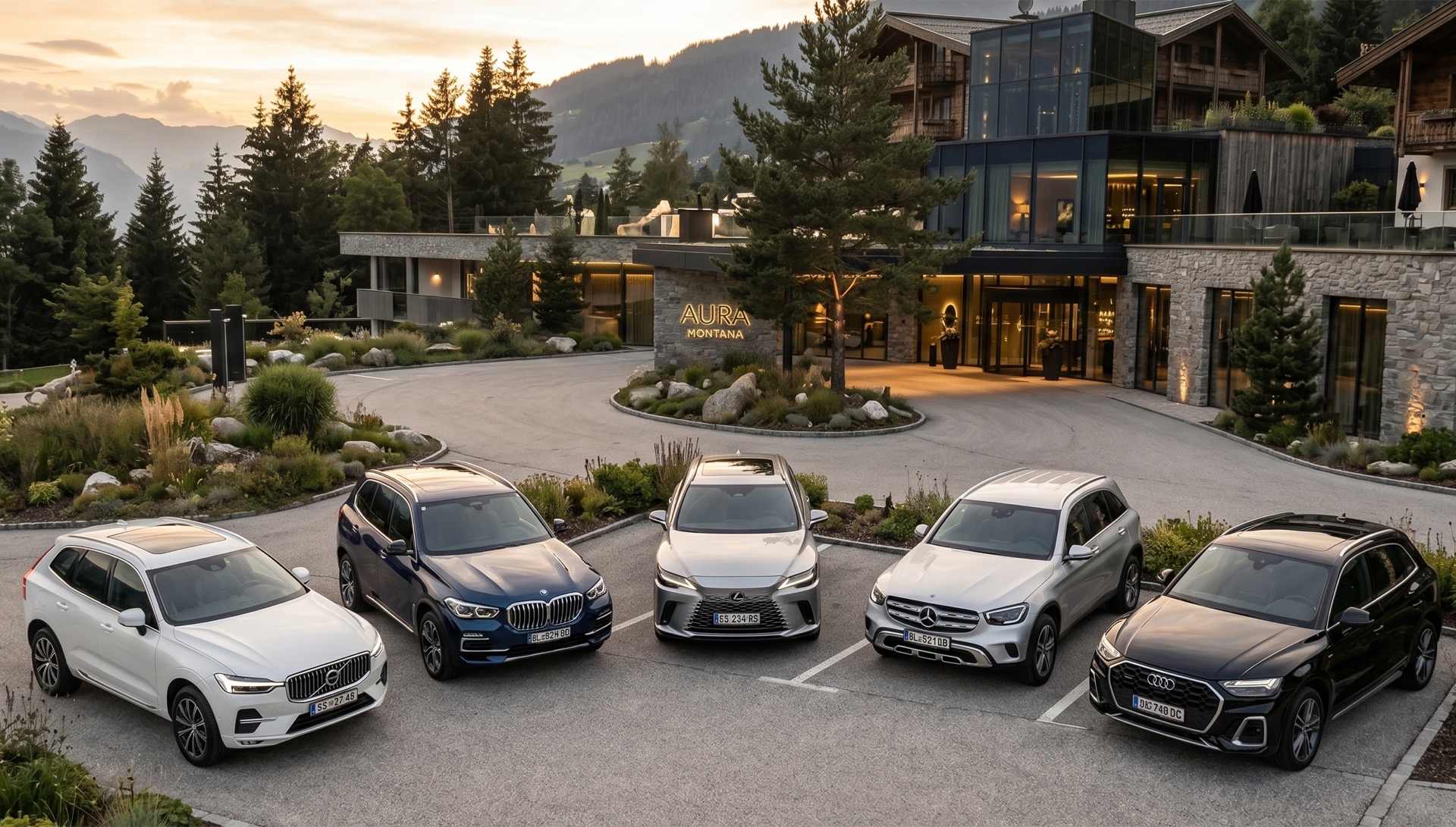
Below, we will analyse in detail how five SUVs selected for this comparison compete for supremacy in one of the most demanding markets in the world.
In 2026 the premium hybrid SUV segment has consolidated as the first choice for those seeking comfort, technology and efficiency without giving up performance. The market offers alternatives that prioritise different approaches: some models bet on plug-in systems with useful electric range, others on highly refined hybrids, and a few balance luxury and efficiency with larger-capacity batteries. Below, five representative proposals in the segment are described, with attention to their technical approach, positioning and recommended use, to better understand what suits according to driving habits and real needs.
Who is this ranking for?
This ranking is based on market data, official specifications and published tests. It presents models that hold relevant positions in the 2026 premium hybrid offering, with variety of technical approaches and equipment levels.
If you drive many kilometres every day, if you value interior finishes and active driver-assistance systems, or if you are looking for an SUV for trips and city use with moderate consumption, this selection will help you compare alternatives according to real use and priorities: luxury, efficiency or electric range depending on each model.
What details have we analysed?
We have looked at each model’s market positioning, official technical data such as power and WLTP range where applicable, expected real-world use depending on configuration (urban, family, long journeys), dimensions and interior space, and the price-to-technical-approach relationship to assess what each proposal offers for its entry price.
Ranking of the 5 essential premium hybrid SUVs of 2026
Lexus RX 450h+ (from €66,900*)
Indicative price without applying public aid or the brand’s commercial discounts.
Why it is here: The RX 450h+ combines the brand’s experience in hybridisation with an interior geared towards comfort and acoustic insulation. Its plug-in hybrid system provides electric assistance to reduce consumption in urban use and maintains a focus on refined driving.
Ideal for: Those seeking a comfortable, quiet premium SUV with some electric range for daily urban commuting.
Pros:
- Hybrid system focused on comfort and efficiency.
- Carefully finished interior and advanced safety equipment.
- Good response in relaxed driving and long journeys.
Cons:
- High entry price compared with some rivals.
- Load capacity somewhat limited by the battery in the boot area.
Volvo XC60 Recharge (from €69,900*)
Indicative price without applying public aid or the brand’s commercial discounts.
Why it is here: The XC60 Recharge offers a balanced platform between power and comfort, with a clear focus on safety and driver assistance. The plug-in hybrid version combines a medium-capacity battery with a powerful powertrain for versatile use.
Ideal for: Drivers who prioritise active safety, ergonomics and a balance between performance and efficiency.
Pros:
- Perceived quality and latest-generation driver aids.
- Powertrain with broad response and good finishes.
- Practical and comfortable interior for the family.
Cons:
- High weight that translates into higher consumption under intensive use.
- Equipment options can make the entry version more expensive.
BMW X5 xDrive45e (from €84,500*)
Indicative price without applying public aid or the brand’s commercial discounts.
Why it is here: The X5 xDrive45e represents an alternative with a clear focus on performance and dynamism. Its plug-in hybrid system offers a combination of power and electric autonomy aimed at users who want sportiness within luxury.
Ideal for: Users who want capacity for long journeys without giving up agile response and sporting performance.
Pros:
- Superior driving dynamics in the segment.
- Useful electric range for urban routes and medium distances.
- Extensive technological and comfort equipment.
Cons:
- High entry price.
- Maintenance cost and premium accessories can raise the final bill.
Mercedes-Benz GLE 350 de (from €79,900*)
Indicative price without applying public aid or the brand’s commercial discounts.
Why it is here: The hybrid variant of the GLE combines efficiency and flexible range, with a focus on comfort, space and equipment geared towards functional luxury. It is a solid option for those who value refinement and diverse engine choices.
Ideal for: Families who need interior space, ride comfort and a high level of driver assistance systems.
Pros:
- Spacious cabin and quality materials.
- Balance between hybrid range and ride comfort.
- Advanced assistance and connectivity systems.
Cons:
- Reduced boot volume in battery versions.
- Weight and size penalise consumption in demanding driving.
Audi Q5 55 TFSI e (from €62,000*)
Indicative price without applying public aid or the brand’s commercial discounts.
Why it is here: The Q5 55 TFSI e is an option that seeks a balance between handling, ride quality and occasional electric efficiency. Its approach is practical, with well-resolved interiors and high on-board electronics.
Ideal for: Those who want a versatile SUV for a mix of city and long-distance driving with good build quality.
Pros:
- Good balance between size, equipment and manoeuvrability.
- Mature platform and effective driver aids.
- Relatively competitive entry cost within the premium segment.
Cons:
- Limited electric range compared with alternatives with larger batteries.
- Standard equipment may fall short against more expensive rivals.
The prices shown in this ranking are indicative and do not apply public aid or the brand’s commercial discounts.
Technical comparison
| Model | Range | Power | Consumption | Top speed | Price (€*) |
|---|---|---|---|---|---|
| Lexus RX 450h+ | WLTP: 55–65 km (PHEV) | ~309 CV | ND | 200 km/h | 66,900 |
| Volvo XC60 Recharge | WLTP: 45–60 km (PHEV) | ~455 CV | ND | 180 km/h | 69,900 |
| BMW X5 xDrive45e | WLTP: 70–90 km (PHEV) | ~394 CV | ND | 230 km/h | 84,500 |
| Mercedes-Benz GLE 350 de | WLTP: 60–90 km (PHEV diesel) | ~286 CV | ND | 230 km/h | 79,900 |
| Audi Q5 55 TFSI e | WLTP: 45–60 km (PHEV) | ~299 CV | ND | 210 km/h | 62,000 |
These data are official and taken from the brands’ official websites.
Purchase aid in 2026: Plan Auto+ and tax benefits
The Plan Auto+ 2026 replaces the previous MOVES programmes and establishes a new system of direct aid for the purchase of electrified vehicles in Spain. It is designed to accelerate the renewal of the fleet towards solutions with lower energy impact.
Main amounts of the Plan Auto+ 2026
- Direct aid of up to €4,500 for electric passenger cars.
- Approximate budget allocation of €400 million.
Up to €5,000 for light vans in category N1.
Retroactive effect from 1 January 2026.
Who can benefit and priority criteria
Beneficiaries: individuals, self-employed workers and companies. The EEE criterion (Electric, Economical and European) applies, with priority for battery electric vehicles (BEV) over plug-in hybrids (PHEV). Vehicles priced below €35,000 receive greater aid; those between €35,000 and €45,000 receive reduced aid. Additional incentives are provided for final assembly or the origin of batteries within the European Union.
Additional requirements and tax advantages
The programme requires a mandatory minimum discount of €1,000 from the dealership. In addition, a 15% deduction on income tax (IRPF) is envisaged, up to a maximum of €3,000. The tax validity of these advantages extends until 31 December 2026.
Management and possible regional aid
Management is coordinated by the Ministry of Industry together with the Autonomous Communities. Additional regional programmes may exist and be managed in parallel; one example is the Plan Cambia 360 in the Community of Madrid. At the time of writing, it is not officially confirmed whether all those regional aids are compatible with the Plan Auto+ 2026.
FAQ · The 5 questions everyone asks
Is a premium plug-in hybrid worth it compared with a full hybrid?
It depends on use: if you can charge daily, a PHEV reduces consumption and emissions in the city; if you do not charge regularly, a full hybrid offers fewer concerns and a more consistent ownership cost.
What should I check in the technical sheet before buying?
Look at the electric WLTP range (if applicable), combined power, boot volume with the battery installed and homologated consumption. Also check charging options and battery warranties.
What impact does the battery have on the vehicle’s space and weight?
The battery usually slightly reduces boot space and increases total weight, which can affect consumption and dynamics. In premium models this is offset by suspensions and chassis tuned to maintain comfort.
Is it expensive to maintain a premium hybrid SUV?
Basic maintenance is usually not very different, but insurance and parts costs can be higher due to the level of equipment and technology; energy efficiency and the use of electricity reduce the cost per kilometre.
Which brand is most reliable in the premium hybrid segment?
Reliability depends on the model and the manufacturer’s track record. Brands with a history in hybridisation usually offer more established warranties and workshop networks, which reduces long-term uncertainty.
Expert Conclusion
This ranking summarises how the premium hybrid SUV offering is distributed in 2026: there are proposals geared towards comfort, others towards dynamics, and some that seek to maximise electric range within luxury. What this list means for the buyer is that there are alternatives for different uses, and that the choice should hinge on the balance between electric range, equipment level and total cost of ownership.
If you want to get the most for your money, first look at the real entry price and what comes as standard. If the model is in high demand, it is normally also easier to sell later. And if you drive many kilometres, energy cost and efficiency matter more than the power figure. If you will not charge often, do not buy from the brochure: buy for your routine. Consider value for money and market traction as a sign of confidence; both are reliable criteria when deciding between these five options without introducing new models.


 Peugeot E-208 GTi: a battery-powered toy that revives the spirit of the 1980s sports cars
 New Lexus ES: luxury grows and goes electric
 First contact with the Dacia Sandero Hybrid 155: power and efficiency from €19,890
Deja un comentario