The 5 most efficient seven-seat electric SUVs on the Spanish market
 Iván Navarro
23 July 2026
4 min.
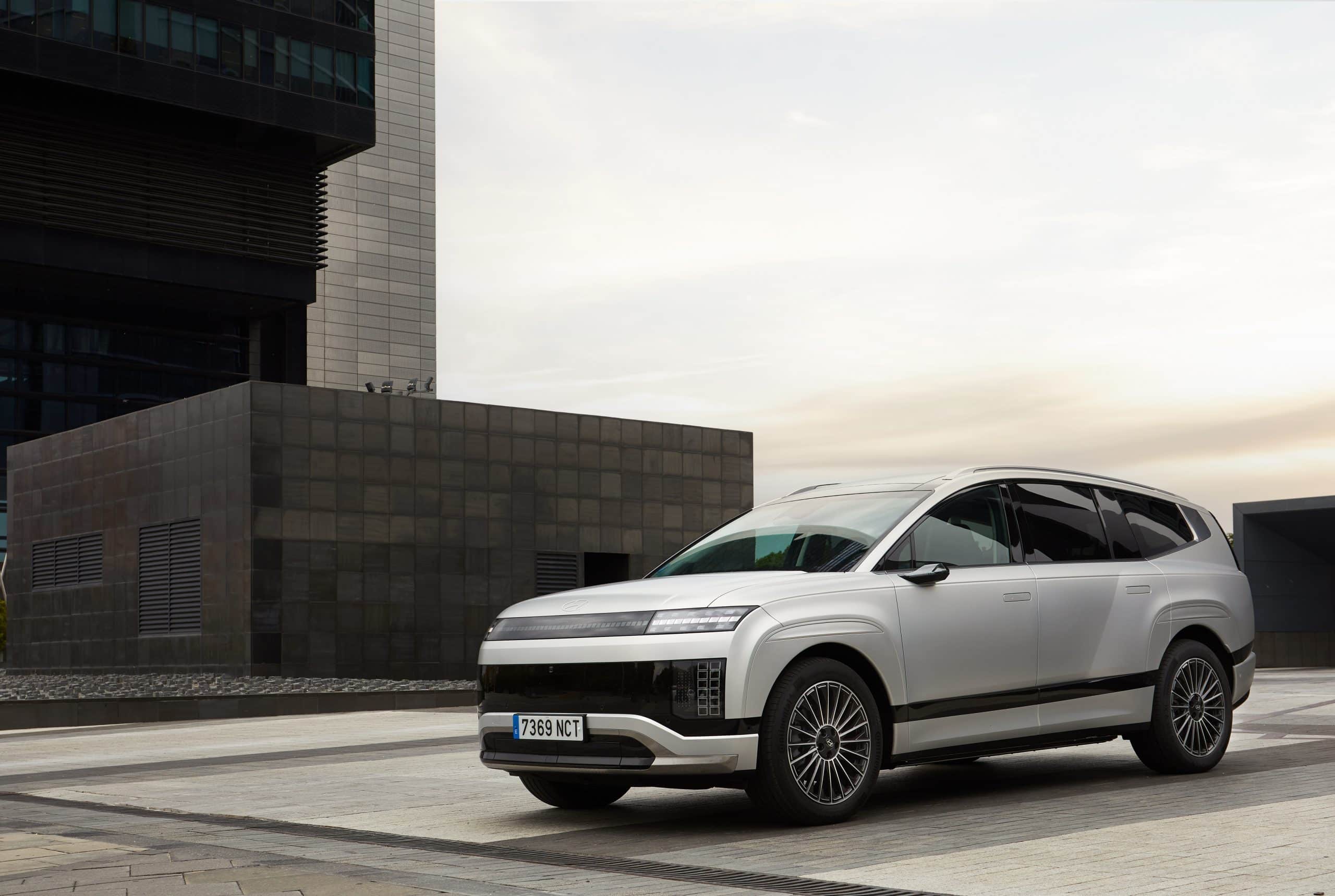
An editorial analysis of the five most efficient seven-seat electric SUVs on sale in Spain in 2026, ranked by WLTP consumption rather than gross range. Technical data, prices and the Highmotor verdict.
The electric family SUV has stopped being a promise and, in 2026, has become a mature category, with offerings capable of carrying two and a half tonnes, seven occupants and their luggage while consuming the same as a compact car from five years ago. At Highmotor we wanted to order the pack by a criterion we consider more honest than gross range: the homologated WLTP consumption in kWh/100 km.
How did we put together this ranking of the most efficient seven-seat electric SUVs in 2026?
The order reflects combined WLTP consumption. In the event of a technical tie, we weighed the relationship between usable battery capacity and real-world range, the declared aerodynamic efficiency and the consistency between power and weight. All the models cited are actually on sale at Spanish dealerships as of the closing date of this edition.
1. Hyundai Ioniq 9 — from 72,900 €
The Korean flagship arrives with the 800-volt E-GMP architecture taken to the extreme. With a Cx of 0.259 and a revised battery thermal management system, the Ioniq 9 posts consumption figures unbecoming of a car measuring 5.06 metres. The rear-wheel-drive Long Range version is the one that sets the best figure in the segment.
| Power kW | Power CV | Top speed | Range | Consumption | Label | Fuel |
|---|---|---|---|---|---|---|
| 160 kW | 218 CV | 185 km/h | 620 km | 19.4 kWh/100 km | ZERO | Electric |
2. Kia EV9 — from 73,365 €
A platform sibling of the Ioniq 9, the EV9 opts for a more emphatic design language and reference-level interior space. The RWD Long Range version is surprisingly efficient for a 2,300 kg car, and its 800 V charging allows charging from 10 to 80% in just over 24 minutes on a 350 kW charger.
| Power kW | Power CV | Top speed | Range | Consumption | Label | Fuel |
|---|---|---|---|---|---|---|
| 150 kW | 204 CV | 185 km/h | 563 km | 20.2 kWh/100 km | ZERO | Electric |
3. Peugeot e-5008 — from 51,400 €
The most affordable in the ranking and also the most compact, at 4.79 metres. It uses the STLA Medium platform of the Stellantis group and offers seven genuine seats, although with a third row better suited to children than to adults. Its efficiency relies on a carefully shaped front end and a well-utilised 73 kWh usable NMC battery.
| Power kW | Power CV | Top speed | Range | Consumption | Label | Fuel |
|---|---|---|---|---|---|---|
| 157 kW | 213 CV | 170 km/h | 502 km | 17.2 kWh/100 km | ZERO | Electric |
Note: the e-5008 posts the best absolute consumption, but drops places in the overall ranking as it does not compete in the same league of size, usable range and performance as the others.
4. Mercedes-Benz EQB — from 56,750 €
In 2026 the EQB remains the entry point to the premium seven-seat electric universe. Its boxy body penalises aerodynamics, but the tuning of the mechanicals and the 2024 revision have noticeably improved its real-world consumption. The third row is the tightest in the group, but for urban and family use it performs competently.
| Power kW | Power CV | Top speed | Range | Consumption | Label | Fuel |
|---|---|---|---|---|---|---|
| 140 kW | 190 CV | 160 km/h | 475 km | 18.9 kWh/100 km | ZERO | Electric |
5. Volvo EX90 — from 87,500 €
The spiritual successor to the XC90 abandons combustion and debuts the SPA2 platform with a 400-volt architecture and a 111 kWh battery. It is the largest and heaviest in the ranking, and that is paid for in consumption. In return it offers a cabin that redefines what family travel means and an active safety suite led by its standard LiDAR.
| Power kW | Power CV | Top speed | Range | Consumption | Label | Fuel |
|---|---|---|---|---|---|---|
| 300 kW | 408 CV | 180 km/h | 614 km | 20.9 kWh/100 km | ZERO | Electric |
Summary table and editorial score
| Model | WLTP consumption | Range | Price from | Highmotor score |
|---|---|---|---|---|
| Hyundai Ioniq 9 | 19.4 kWh/100 km | 620 km | 72,900 € | 9.3 |
| Kia EV9 | 20.2 kWh/100 km | 563 km | 73,365 € | 9.1 |
| Peugeot e-5008 | 17.2 kWh/100 km | 502 km | 51,400 € | 8.7 |
| Mercedes-Benz EQB | 18.9 kWh/100 km | 475 km | 56,750 € | 8.2 |
| Volvo EX90 | 20.9 kWh/100 km | 614 km | 87,500 € | 8.5 |
Highmotor verdict
If the criterion is energy efficiency with seven usable seats and a restrained price, the Peugeot e-5008 offers the best absolute figure in the ranking. If we look for the balance between efficiency, range and real space for seven adults, the Hyundai Ioniq 9 is today the most complete electric family SUV on the Spanish market. The Kia EV9 is hot on its heels with a more pronounced aesthetic proposal, while the Volvo EX90 plays in the premium league with different logics: family and safety versus performance and charging network.
FAQ
Which is the most efficient seven-seat electric SUV in Spain in 2026?
The Peugeot e-5008 leads in absolute WLTP consumption with 17.2 kWh/100 km. Among the large models with comfortable seven seats, the Hyundai Ioniq 9 posts the best figure with 19.4 kWh/100 km.
Is a seven-seat electric SUV worth it compared with a plug-in hybrid?
For mostly urban use and regular journeys below 400 km, an electric model such as the Ioniq 9 or the EV9 offers a lower cost per kilometre and a ZERO label. The PHEV keeps an advantage only if long distances are covered without frequent access to fast charging.
What real-world range should be expected from a seven-seat electric family SUV?
In mixed conditions and with seven occupants, the models in the ranking range between 380 and 520 real km. The WLTP figure is usually 10-15% higher than real consumption on the motorway at 120 km/h.


 Peugeot E-208 GTi: a battery-powered toy that revives the spirit of the 1980s sports cars
 New Lexus ES: luxury grows and goes electric
 First contact with the Dacia Sandero Hybrid 155: power and efficiency from €19,890
Deja un comentario