The best city cars on a low budget in 2026
 Dani Montesinos
10 March 2026
7 min.
If you are looking for a new car to get around the city but your budget is tight, we suggest five models that could suit you
The urban car market in 2026 remains the most pragmatic segment of the Spanish car park: it demands compact, economical vehicles that are easy to use in metropolitan environments. The combination of acquisition costs, real-world running costs and manoeuvrability in town raises frequent doubts among buyers on a tight budget. Two criteria often cited as decisive are real-world fuel efficiency and ease of parking. This type of purchase calls for comparing verifiable data (usable WLTP consumption, maintenance and warranty conditions) and understanding how well the vehicle fits daily journeys and the constraints of urban space.
This buying guide is for…
Those who need a car mainly for urban journeys and want to minimise both initial and running costs. It suits drivers who value ease of manoeuvring, low maintenance costs and modest consumption on short trips. It is not the ideal choice for those who make long daily motorway journeys, for families who need a lot of load space, or for those who depend exclusively on sporting performance.
Common options within the segment
In 2026 urban alternatives fall into three clear approaches: very affordable and simple cars geared towards saving money, compact city cars with better equipment and efficient engine options, and small models with a premium urban focus that trade price for comfort and technology. The usual compromises affect the vehicle’s weight (influencing consumption and braking), the battery size in electric versions — and therefore range —, the charging speed possible on alternating current and the interior quality. The initial purchase price is usually the first filter, but not the only one: service planning, real-world consumption and urban traffic restrictions also shape the choice.
Key criteria for choosing well
Realistic versus homologated range: on urban routes with frequent stops, consumption can be better or worse than WLTP depending on traffic and use of air conditioning; request mixed-cycle consumption data and independent tests where possible.
Power and charging speed: for the city, modest power levels are sufficient, but home charging capacity and maximum charging power determine usability if you opt for electric versions.
Stability and comfort on the road: although the environment is urban, occasionally you will tackle fast roads; suspension and behaviour at 90–120 km/h should be acceptable without compromising comfort.
Technology that is genuinely useful: parking assistance, rear camera and basic connectivity add real value in town; complex systems can make the car more expensive without improving daily use.
Total cost of purchase and use: calculate insurance, maintenance, consumption and possible local taxes for access to restricted zones.
It depends on how you drive
If you make many short journeys with stops, prioritise engines that are efficient when cold; diesel options are not advisable; in cold climates electric range is reduced and it is worth considering thermal or light hybrid versions. For mainly urban use with the occasional long trip, a small, well-balanced petrol or light hybrid is usually the most versatile option. If you park on the street and the climate is mild, an urban electric car may suit you, provided you have reliable access to overnight charging.
Real price: what you should know
The “from” price indicates the base rate without optional equipment or discounts. A car that seems cheap can become considerably more expensive once safety or comfort packs are added; always check the price with the minimum equipment level you consider essential. The difference between financed and cash price usually lies in interest and commissions: paying cash reduces the final price, but some financing offers include maintenance or warranties that may offset this. Understanding the total cost of ownership — including fuel/energy, servicing, taxes and depreciation — is more relevant than the initial figure.
Benchmark models on the market
Dacia Sandero (from 10,490 €*)
A practical and economical approach: a vehicle spacious for its size, aimed at buyers who prioritise purchase price and low running costs. It fits well in town and occasionally on secondary roads.
The best
Acquisition cost and ease of maintenance; good interior space relative to the segment.
The room for improvement
Simple finishes and limited technological equipment in the cheapest versions.
Fiat 500 (from 14,090 €*)
A distinctive urban design approach: compact and agile, intended for those who prioritise manoeuvrability and style in the urban environment without giving up basic technology.
The best
Reduced size that makes parking and driving in the city centre easier; range of efficient engine options.
The room for improvement
Limited rear seat space, and the final cost can rise quickly with options.
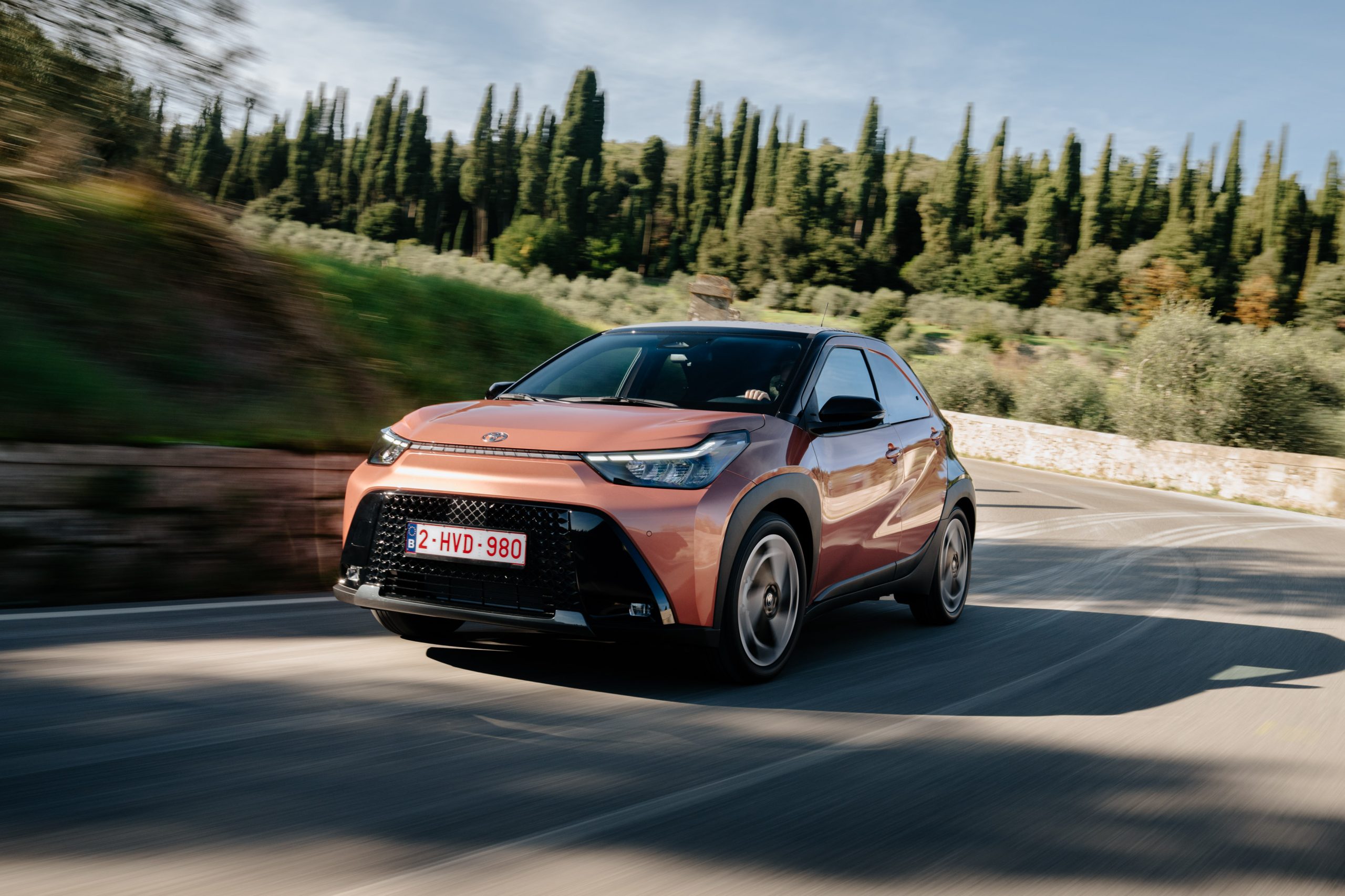
Toyota Aygo X (from 13,100 €*)
A practical urban micro-SUV: greater height and visibility than a supermini, aimed at users seeking comfortable everyday use in the city and short trips.
The best
Agile urban behaviour and a reputation for reliability; moderate consumption in real-world use.
The room for improvement
Boot and rear space are limited compared with some rivals in the B-segment.
Hyundai i10 (from 12,150 €*)
A compact city car with a sound balance between price, equipment and consumption; designed to be practical on daily journeys and easy to park.
The best
Equipment-to-price ratio at entry levels and good behaviour in town.
The room for improvement
Rear headroom is tight for adults on long journeys.
Volkswagen Polo (from 16,900 €*)
A solid option for those seeking an urban car with greater comfort and better finish; suited to mixed city/road use without sacrificing a more robust build.
The best
Finish and road behaviour superior to the rest of the segment.
The room for improvement
Higher entry price; well-equipped versions rise in cost quickly.
Purchase aid
Purchase aid in 2026: Plan Auto+ and tax benefits. The Plan Auto+ 2026 replaces previous programmes and establishes a system of direct aid for the purchase of electrified vehicles in Spain, with conditions that favour electrification and European assembly.
Main amounts of the Plan Auto+ 2026
- Direct aid of up to 4,500 € for electric passenger cars.
- Up to 5,000 € for light vans in category N1.
- Retroactive effect from 1 January 2026.
- Approximate budget allocation of 400 million euros.
Who can benefit and priority criteria
Beneficiaries: private individuals, self-employed workers and companies. The EEE criterion (Electric, Economical and European) applies, with greater incentives for 100% electric vehicles compared with plug-in hybrids. Vehicles priced below 35,000 € receive greater aid; between 35,000 € and 45,000 € the aid is reduced. Priority is also given to final assembly and the origin of the batteries within the European Union.
Additional requirements and tax advantages
A mandatory minimum discount of 1,000 € from the dealership. A 15% deduction on personal income tax (IRPF) up to a maximum of 3,000 €. These tax deductions are valid until 31 December 2026.
Management and possible regional aid
Management is coordinated by the Ministry of Industry together with the Autonomous Communities. Additional regional programmes may exist; one example is the Plan Cambia 360 in the Community of Madrid. At the time of writing, it is not confirmed whether all regional aid is compatible with the Plan Auto+ 2026.
Common buying mistakes
Buying only on the “from” price without calculating the added costs of equipment and accessories.
Ignoring the charging infrastructure available in your area when opting for an electric version.
Considering only homologated consumption without taking into account real urban conditions (climate, load, driving style).
Underestimating the impact of insurance and depreciation on the total cost of ownership.
Having reviewed the key points and several benchmark models, the reader now has a clear framework for deciding according to their real needs and budget. The logical next step is to compare these references with up-to-date analyses and listings that include consumption and equipment data for the trim levels that really interest you.


 The seven finalists for the 2027 European Car of the Year (COTY) are exclusively electric
 Peugeot E-208 GTi: a battery-powered toy that revives the spirit of the 1980s sports cars
 New Lexus ES: luxury grows and goes electric
Deja un comentario