The best premium urban electric SUVs you can buy in 2026
 Dani Montesinos
24 March 2026
8 min.
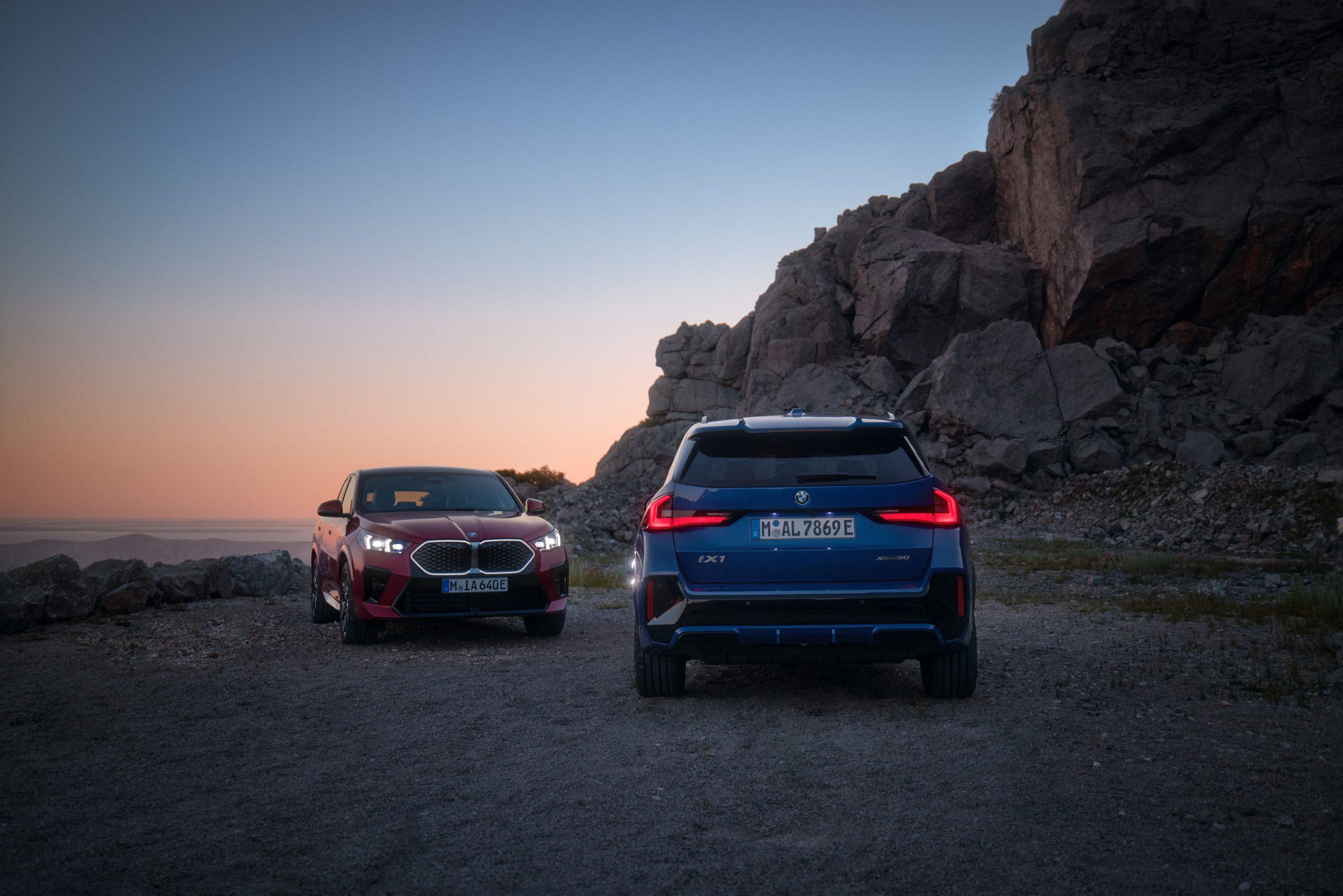
If you want to get around the city in an electric SUV with the best style that also works for travelling, we propose five premium models
The urban electric SUV market in 2026 offers a more defined range: compact models that combine growing range, fast charging and interior space designed for the city. Demand has shifted towards premium proposals, where equipment, connectivity and perceived quality weigh as much as energy efficiency. Here we compare compact alternatives from several relevant brands, with clear differences in positioning, technical approach and intended use, to help you choose according to priorities of running cost, comfort and ease of urban driving.
Who is this ranking for?
This ranking is based on market data, official specifications and published road tests. It is designed for buyers who value compact electric vehicles with a premium focus and want clear benchmarks on performance and upfront costs.
If you do a lot of urban mileage and need fast charging, if you prioritise comfort and finish over the lowest possible price, or if you are looking for a nimble city car that can also handle occasional trips, this set of models will help you compare real options before making a decision.
What details have we analysed?
We have taken into account market positioning, official technical data such as WLTP range and power, homologated consumption, dimensions useful for urban driving, and equipment elements that affect the daily experience, as well as the price/technical approach ratio that shapes each model’s value proposition.
Ranking of the most notable urban electric SUVs of 2026
Volvo EX30 (from €35,800*)
Indicative price without applying public aids or the brand’s commercial discounts.
Why it is here: A compact electric model focused on safety and interior design; its technology package and battery options place it in the accessible premium band of the urban segment.
Ideal for: Users looking for a balance between urban liveability and advanced driver-assistance technologies.
Pros:
- Platform designed for electrification with different battery options.
- Advanced safety equipment in line with the brand.
- Compact dimensions that make urban use easier.
Cons:
- Entry price at the upper end of the compact segment.
- Smaller cargo capacity compared with larger rivals.
BMW iX1 (from €49,800*)
Indicative price without applying public aids or the brand’s commercial discounts.
Why it is here: It represents BMW’s bet on a premium compact electric SUV, focused on driving dynamics and power options that differentiate its urban versions.
Ideal for: Drivers who value responsiveness and steering feel similar to the brand’s conventional models.
Pros:
- Configuration oriented to the driving experience.
- Finish and connectivity in line with the premium segment.
- Engine options that let you tailor performance.
Cons:
- Higher base price than alternatives in a similar segment.
- Maintenance and accessory costs in the upper-middle range of the segment.
Audi Q4 e-tron (from €44,000*)
Indicative price without applying public aids or the brand’s commercial discounts.
Why it is here: It combines a spacious interior with an established technical offering and a proven platform, positioning it as a practical premium option for urban use and medium-distance journeys.
Ideal for: Those looking for a compact SUV with good liveability and a premium interior finish.
Pros:
- Interior and fit typical of the brand.
- Variety of equipment levels and batteries.
- Platform with fast charging options.
Cons:
- Weight and volume penalise pure efficiency in the city.
- Price of certain versions can rise significantly with options.
Mercedes EQA (from €56,450*)
Indicative price without applying public aids or the brand’s commercial discounts.
Why it is here: It offers the Mercedes brand experience in a compact format, focused on comfort, driver-assistance technology and interior finish, aligned with the premium urban customer.
Ideal for: Drivers who prioritise ride comfort and a complete set of driving aids.
Pros:
- Comfort and tuning oriented to the urban user.
- Infotainment system and premium equipment options.
- Established service network and brand coverage.
Cons:
- High cost of accessories and optional packages.
- Range in base versions lower than rivals with larger batteries.
Polestar 2 (from €46,990*)
Indicative price without applying public aids or the brand’s commercial discounts.
Why it is here: Although it is a compact with a liftback/SUV body depending on the version, its technical approach and finish place it in the premium segment, with a distinctive driving experience and in-house software.
Ideal for: Users looking for a technology-focused proposition and a more direct emphasis on efficiency and connected driving experience.
Pros:
- Focus on software and OTA updates.
- Finishes and materials oriented to premium tech.
- Engine options with good performance.
Cons:
- Entry price higher than some compact competitors.
- Service network and distribution more limited than traditional manufacturers.
The prices shown in this ranking are indicative and do not apply public aids or the brand’s commercial discounts.
Technical comparison
| Model | Range | Power | Consumption | Top speed | Price (€*) |
|---|---|---|---|---|---|
| Volvo EX30 | up to 475 km | from 272 to 428 CV | around 17.2 kWh/100 km | 180 km/h | €35,800* |
| BMW iX1 | up to 516 km | 204 or 313 CV | around 17.2 kWh/100 km | 180 km/h | €49,800* |
| Audi Q4 e-tron | up to 562 km | 286 or 340 CV | around 16.6 kWh/100 km | 160-180 km/h | €44,000* |
| Mercedes EQA | up to 558 km | from 190 to 292 CV | around 16.9 kWh/100 km | 160 km/h | €56,450* |
| §4Mercedesh208§ | up to 659 km | from 272 to 421 CV | around 16.8 kWh/100 km | 205 km/h | €46,990* |
These data are official and taken from the brands’ official websites.
Purchase aid in 2026: Plan Auto+ and tax benefits
The Plan Auto+ 2026 replaces the former MOVES programmes and establishes a new system of direct aid for purchasing electrified vehicles in Spain. The scheme aims to encourage the adoption of BEVs and offers amounts and priority criteria linked to price and industrial origin.
Main amounts under Plan Auto+ 2026
– Direct aid of up to €4,500 for electric passenger cars.
– Up to €5,000 for light vans in category N1.
– Retroactive effect from 1 January 2026.
– Approximate budget allocation of €400 million.
Who can benefit and priority criteria
Beneficiaries: private individuals, self-employed workers and companies. The EEE criterion (Electric, Economic and European) is applied. Greater incentive for pure battery electric vehicles (BEVs) compared with PHEVs. Vehicles priced below €35,000 receive higher aid; between €35,000 and €45,000 they access reduced aid. Maximum incentive if the final assembly or the batteries are of European Union origin.
Additional requirements and tax advantages
Mandatory minimum discount of €1,000 from the dealer. 15% deduction in personal income tax up to a maximum of €3,000. Tax validity until 31 December 2026.
Management and possible regional aid
Management is coordinated by the Ministry of Industry together with the Autonomous Communities. Additional regional programmes may exist. Example: Plan Cambia 360 in the Community of Madrid. At the date of writing, it is not officially confirmed whether these regional aids are compatible with Plan Auto+ 2026.
FAQ · The 5 questions everyone asks
What is the practical difference between these urban SUVs?
Mainly the battery configuration and the brand’s orientation: some prioritise efficiency and range, others comfort and equipment or driving dynamics. Dimensions and cargo space also vary and affect urban use.
Which model offers the best value for money?
Value for money depends on the equipment included as standard and the real entry price; it is best to compare equivalent versions and charging costs rather than just the list price.
How much does WLTP range influence real urban use?
In the city, WLTP figures tend to be optimistic for low urban consumption, but they are useful for comparing versions. Real efficiency depends on temperature, driving style and air-conditioning use.
Are these purchases compatible with 2026 public aid?
Most compact BEVs meet the general requirements of Plan Auto+, although the amount depends on the final price and compliance with criteria on industrial origin and discounts applied by the dealer.
Which maintenance is most costly on these electric SUVs?
Preventive maintenance is generally lower than on combustion-engine cars, but the cost of tyres, brakes and possible software updates varies. Battery warranty and the service network influence the total cost of ownership.
Expert conclusion
This set shows that in 2026 the premium urban electric SUV segment offers alternatives with different approaches: efficiency, comfort, technology or dynamism. For the buyer it means having mature options; the decision depends more on real priorities (liveability, range, running cost) than on the brand alone.
If you want to stretch your money, first check the real entry price and what comes as standard. If you prefer to play it safe, consider models with a wide service network and strong demand; they tend to be easier to maintain and resell. And if you cover a lot of kilometres, energy cost and efficiency matter more than the power figure. If you won’t charge often, don’t buy from the catalogue: buy for your routine.


 The seven finalists for the 2027 European Car of the Year (COTY) are exclusively electric
 Peugeot E-208 GTi: a battery-powered toy that revives the spirit of the 1980s sports cars
 New Lexus ES: luxury grows and goes electric
Deja un comentario