The Lexus ES 300h will debut digital mirrors
 Redacción
13 February 2020
3 min.
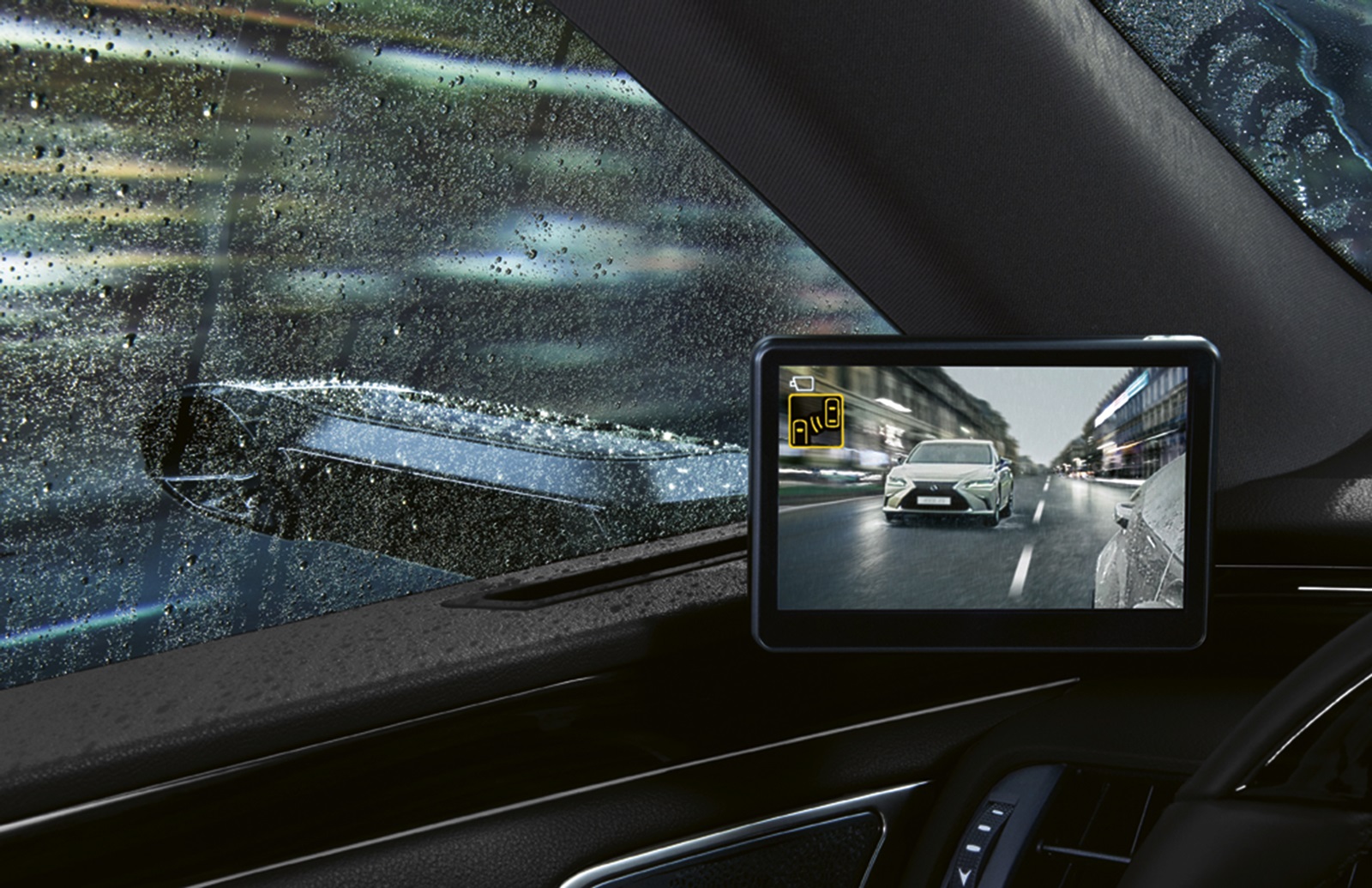
Lexus is replacing traditional mirrors with digital cameras in its premium hybrid saloon, the ES 300h. This technology will make its debut at the 2020 Geneva Motor Show.
The Japanese brand of the Toyota Group is always characterised by being at the forefront of technology. Mainly in the field of hybridisation, but also in equipment, assistance systems and connectivity. With this premise of constant work on evolution, Lexus has now unveiled its most eye-catching novelty: electric mirrors.
This system was first introduced in Japan a couple of years ago, as a novelty on a mass-production vehicle. The aim is to replace conventional mirrors with high-resolution external cameras connected to screens inside the vehicle. These cameras give the driver a full view, eliminating blind spots completely.
Lexus ES 300h: total spaciousness
Lexus’s primary goal is to make life easier for the driver inside the vehicle. For this reason, the design of these mirrors allows the driver to have better visibility through the monitors (5 inches each) with less head movement, thus optimising driving ergonomics.
As for the cameras themselves, they are housed in casings smaller than traditional mirrors. This reduces wind noise and increases driver visibility. The dashboard features an “anti-fog” button to defog the cameras. But this situation will occur rarely, since the cameras have integrated heaters and are positioned so that drops cannot fall on them and worsen visibility.
Maximum visibility
These cameras do not merely replace the function of the conventional mirror; they substantially improve the driver’s visibility. When you switch on the indicator or shift into reverse in the new Lexus ES 300h, the digital mirrors widen their field of view to extend the visibility range. In this way, blind spots are eliminated and the car helps you manoeuvre far more safely.
Once the parking, turning or lane-change manoeuvre is complete, the configuration returns to the standard setting. For purists and those reluctant to change, Lexus offers the option of manually deactivating the extended visibility function or, conversely, switching to extended view manually while driving.
The digital mirrors also perform the small function of a “parking camera”. We mention it this way because when parking, or even driving, the cameras display guide lines. These lines mark a distance of 50 cm on each side of the vehicle and 20 and 50 cm from the rear bumper. When driving on the road, the cameras show reference lines indicating 5, 10 or 15 metres ahead if you are travelling below 70 km/h. If that speed is exceeded, the lines will indicate 5, 10, 15 and 30 metres.


 Peugeot E-208 GTi: a battery-powered toy that revives the spirit of the 1980s sports cars
 New Lexus ES: luxury grows and goes electric
 First contact with the Dacia Sandero Hybrid 155: power and efficiency from €19,890
Comentarios cerrados