The perfect electric SUVs for getting around both in the city and on the highway
 Dani Montesinos
1 April 2026
8 min.
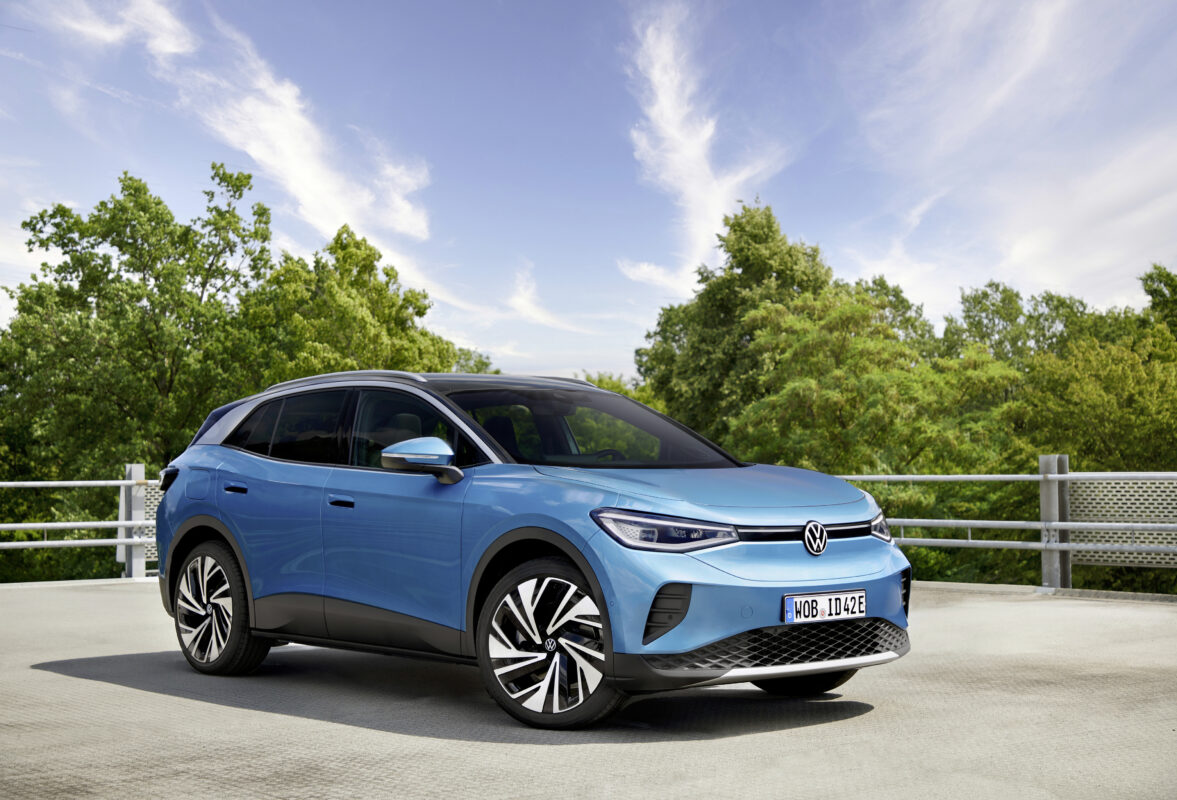
Here is a selection of five fully electric SUVs that strike a great balance for getting around both in the city and on the highway
The electric SUV market in 2026 shows a mature offering that ranges from efficient urban solutions to platforms designed for long journeys. Competition has placed models with realistic range and fast charging at the heart of the segment, while interior space and bidirectional charging are gaining weight for mixed city-highway use. Here you will find a selection of representative electric SUVs for their balance between performance, range and price, explaining in each case the technical approach and the type of use they suit best.
Who is this ranking for?
This ranking is based on market data, official specifications and published road tests. It is designed for buyers who value both urban versatility and the ability to tackle highway journeys without giving up range and comfort.
If you drive a lot of kilometres, you will be interested in optimising energy cost; if you need a car for the city with frequent weekend getaways, you will prioritise size and manoeuvrability; and if you are looking for the combination of efficiency and family space, you will want an SUV with good range and fast charging.
What details have we analysed?
We have considered market positioning, official technical data (battery and power), WLTP range, homologated consumption, dimensions and expected real-world use, as well as the price/technical approach ratio that determines value for money for each version.
Ranking of the perfect electric SUVs for city and highway
Hyundai Ioniq 5 (from €30,985*)
Indicative price without applying public aid or the brand’s commercial discounts.
Why it is here: Modular platform with a high-capacity battery, a good balance between range and efficiency, and high-power charging that reduces times on the road. Its electrical architecture prioritises interior space and comfort on long journeys.
Ideal for: Users looking for everyday versatility and frequent journeys with fast charging.
Pros:
- Competitive range in large-battery versions.
- Fast charging and good battery thermal management.
- Interior space and outstanding habitability for its class.
Cons:
- High weight in the versions with greater range.
- Relatively high entry price in well-equipped versions.
Kia EV6 (from €38,900*)
Indicative price without applying public aid or the brand’s commercial discounts.
Why it is here: Shared electric platform with a dynamic approach and efficiency; it offers versions with long range and power outputs aimed at a lively response on the highway, alongside good urban efficiency.
Ideal for: Drivers who want a balance between dynamism and economy on mixed routes.
Pros:
- Good motorway performance and efficiency in the combined cycle.
- High-power charging available in long-range versions.
- Practical and technological interior design.
Cons:
- Cost of the most capable versions.
- Boot somewhat less usable in some variants.
Tesla Model Y (from €40,970*)
Indicative price without applying public aid or the brand’s commercial discounts.
Why it is here: High range in its long-range versions and a very extensive charging network; software and over-the-air updates that optimise the user experience on long journeys.
Ideal for: Those who prioritise real-world range and access to a well-established charging infrastructure on long trips.
Pros:
- Range and efficiency on long routes.
- Extensive supercharger network optimised for routes.
- OTA updates that improve functions over time.
Cons:
- Entry price and optional extras that raise the final bill.
- Quality of some finishes below premium competitors.
Volkswagen ID.4 (from €40,755*)
Indicative price without applying public aid or the brand’s commercial discounts.
Why it is here: General-purpose approach that prioritises comfort, ease of use and contained costs; versions with sufficient range for daily commuting and highway getaways.
Ideal for: Families looking for a practical electric SUV with a moderate entry cost.
Pros:
- Competitive price in the mid-range.
- Ride comfort and ergonomics geared to everyday use.
- Established service and spare parts network.
Cons:
- Maximum range lower than some rivals with larger batteries.
- Very high-power charging limited in some versions.
Nissan Ariya (from €36,150*)
Indicative price without applying public aid or the brand’s commercial discounts.
Why it is here: Combination of compact design and practical solutions for mixed use; versions with two-wheel or all-wheel drive covering everything from the city to long journeys with a balance between consumption and performance.
Ideal for: Drivers who need a comfortable SUV for daily life and sufficient range for regular getaways.
Pros:
- Comfort and insulation on the highway.
- All-wheel drive options for greater versatility.
- Platform designed for family use and mixed routes.
Cons:
- The range of versions and equipment can be complex to choose from.
- Price rises quickly in the better-equipped options.
The prices shown in this ranking are indicative, without applying public aid or the brand’s commercial discounts.
Technical comparison
| Model | Range | Power | Consumption | Top speed | Price (€*) |
|---|---|---|---|---|---|
| Hyundai Ioniq 5 | up to 470 km WLTP | 170–325 CV | 15.2–18.2 kWh/100 km | 185–212 km/h | from €30,985* |
| Kia EV6 | up to 582 km WLTP | 170–650 CV | 16.4–20.9 kWh/100 km | 185–260 km/h | from €38,900* |
| Tesla Model Y | up to 657 km WLTP | 256–460 CV | 12.7–16.2 kWh/100 km | 250 km/h | from €40,970* |
| Volkswagen ID.4 | up to 561 km WLTP | 286-340 CV | 15.7–16.7 kWh/100 km | 160–180 km/h | from €40,755* |
| Nissan Ariya | up to 536 km WLTP | 218-389 CV | 17.6–20.3 kWh/100 km | 160–200 km/h | from €36,150* |
These data are official and taken from the brands’ official websites.
Purchase aid in 2026: Plan Auto+ and tax benefits
The Plan Auto+ 2026 replaces the previous MOVES programmes and establishes a new system of direct aid for the purchase of electrified vehicles in Spain. The initiative centralises incentives and seeks to prioritise pure electric vehicles and those options with greater European industrial content.
Main amounts of the Plan Auto+ 2026
– Direct aid of up to €4,500 for electric passenger cars.
– Up to €5,000 for light vans in category N1.
– Retroactive effect from 1 January 2026.
– Approximate budget allocation of €400 million.
Who can benefit and priority criteria
Beneficiaries: private individuals, self-employed workers and companies. The EEE criterion (Electric, Economic and European) applies, with a greater incentive for pure electric vehicles over plug-in hybrids. Vehicles priced below €35,000 receive higher aid; between €35,000 and €45,000 the aid is reduced. The final assembly or batteries originating in the European Union are especially incentivised.
Additional requirements and tax advantages
The plan requires a mandatory minimum discount of €1,000 from the dealer. There is also a 15% deduction on personal income tax (IRPF) up to a maximum of €3,000. The tax validity of these measures extends until 31 December 2026.
Management and possible regional aid
Management is coordinated by the Ministry of Industry together with the Autonomous Communities. Additional regional programmes may exist; for example, the Plan Cambia 360 in the Community of Madrid. At the time of writing, it is not officially confirmed whether all regional aid is compatible with the Plan Auto+ 2026.
FAQ · The 5 questions everyone asks
What range is sufficient for mixed city-highway use?
For comfortable mixed use, a real WLTP range of at least 350 km is advisable; it allows you to cover long days without continuous recharging and reduces dependence on fast stations on regional routes.
Which model is the most efficient in real-world consumption?
Efficiency depends on the version, battery size and type of drive; in general, models with rear-wheel drive and optimised batteries offer lower consumption in the combined cycle.
Is power relevant for everyday use?
Power affects acceleration and responsiveness on the motorway, but for urban use and energy savings the priority is the efficiency of the platform and battery management rather than maximum power figures.
How should I assess charging speed?
Charging speed directly influences usability on long journeys: charging at high power reduces stops and total journey time, so it is worth checking the maximum accepted power and the real charging curve.
What role do public aids play in the decision?
Aid reduces the initial cost and can change the value-for-money equation; it is worth calculating the final price including aid and mandatory discounts to compare alternatives correctly.
Expert’s conclusion
This ranking shows that in 2026 there are electric SUVs that convincingly cover both the city and the highway, but the choice depends on the balance you seek between range, cost and comfort. For the buyer, what matters is understanding how much real range and charging speed weigh in their routine, because that determines the experience outside the city.
If you want to stretch your money, first look at the real entry price and what comes as standard. If you prefer to play it safe, choose models with greater market share and service network; they tend to be easier to sell later on. And if you drive a lot of kilometres, energy cost and efficiency matter more than the power figure. If you won’t charge often, don’t buy from the catalogue: buy for your routine.

 Peugeot E-208 GTi: a battery-powered toy that revives the spirit of the 1980s sports cars
 New Lexus ES: luxury grows and goes electric
 First contact with the Dacia Sandero Hybrid 155: power and efficiency from €19,890
Deja un comentario