Top 5 premium compact SUVs with the most modern software architecture on sale in Spain
 Iván Navarro
30 June 2026
6 min.
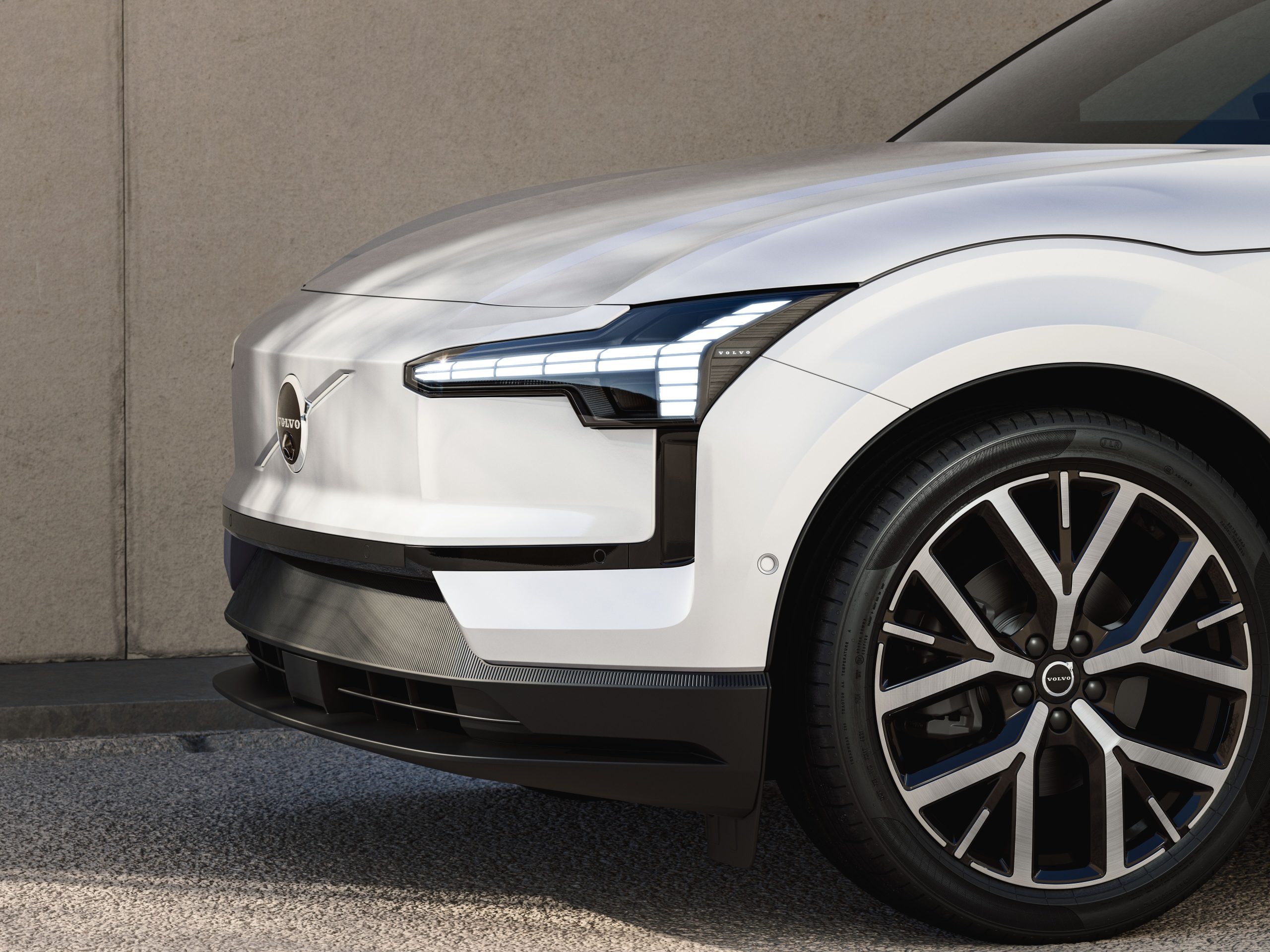
We analyse five premium compact SUVs with the most advanced software architecture on the Spanish market, from the Volvo EX30 to the Lexus UX, using verifiable technical criteria.
The concept of Software Defined Vehicle has moved beyond showroom promise to become the benchmark that separates truly contemporary premium compact SUVs from the rest. A good chassis and Nappa leather are no longer enough: what sets a high-end car apart today is how it is wired, how many electronic domains it integrates, which operating system runs the infotainment and, above all, whether it can improve over time through OTA updates.
At Highmotor we have selected the five premium compact SUVs with the most modern software available at Spanish dealerships, assessing domain architecture, remote update capability, ADAS integration and the digital experience on board.
Why does software architecture define the premium SUV?
For decades, a premium car was judged by its mechanics. Today, a compact SUV can carry 80 electronic control units (ECUs) or consolidate them into four or five high-performance domain controllers. That difference shapes everything: ADAS latency, the ability to receive new functions via OTA, HMI fluidity and even the energy consumption of the low-voltage electrical system itself.
Manufacturers that have moved to zonal or centralised domain architectures — with 1 Gbps automotive Ethernet buses and SoCs such as the Qualcomm Snapdragon Ride or NVIDIA Orin — can iterate the car much like a smartphone. Those still tied to traditional distributed CAN architecture depend on the workshop for any improvement.
1. Volvo EX30 — from €35,400
The Volvo EX30 is probably the premium compact SUV with the cleanest software architecture on the Spanish market. Built on Geely’s SEA platform, it integrates a core computing system based on the Snapdragon Cockpit Platform that unifies infotainment, instrument cluster and connectivity in a single SoC. It runs Android Automotive OS with native Google services and receives regular OTA updates, including improvements to the powertrain, battery management and new ADAS Pilot Assist functions.
Its 12.3-inch central screen concentrates virtually all interaction — a controversial decision, but coherent with the SDV philosophy — and the system responds with a fluidity unexpected in a car costing less than €40,000.
| Power kW | Power hp | Top speed | Range | Consumption | Label | Fuel |
|---|---|---|---|---|---|---|
| 200 kW | 272 hp | 180 km/h | 476 km | 16.7 kWh/100 km | ZERO | Electric |
2. BMW X1 — from €46,100
The current BMW X1 (U11) debuts the iDrive 9 system based on BMW Operating System 9, with an Android Open Source Project core. It is Munich’s first step towards a complete domain architecture, with a Sensor Integration Platform and a Vehicle Server managing ADAS and dynamics. It receives quarterly Remote Software Upgrades that have added functions since launch, including improvements to the Driving Assistant Professional.
The curved dual screen of 10.25″ + 10.7″ retains a touch/rotary duality, which is welcome against the minimalist trend. Available in petrol, diesel, PHEV (xDrive25e/30e) and electric (iX1), it covers the full propulsion spectrum without giving up the same stack digital experience.
| Power kW | Power hp | Top speed | Range | Consumption | Label | Fuel |
|---|---|---|---|---|---|---|
| 125 kW | 170 hp | 222 km/h | 900 km (tank) | 6.2 l/100 km | ECO | Hybrid (sDrive20i mild-hybrid) |
3. Mercedes-Benz GLA — from €47,260
The Mercedes GLA received the second-generation MBUX system with NTG7 in its latest update, on an architecture that prepares the ground for what MB.OS will bring. Although it is not yet a pure zonal car — that step comes with the electric CLA — it integrates OTA for infotainment, navigation and part of the ADAS, plus the Hey Mercedes assistant based on natural language understanding with generative AI in testing.
The integration of the Driving Assistance Package, with camera, radar and HD map fusion, ranks among the most refined in the segment. It is the classic premium brand that has digitised itself without losing its identity.
| Power kW | Power hp | Top speed | Range | Consumption | Label | Fuel |
|---|---|---|---|---|---|---|
| 120 kW | 163 hp | 215 km/h | 850 km (tank) | 6.5 l/100 km | ECO | Hybrid (GLA 200 mild-hybrid) |
4. Audi Q4 e-tron — from €52,500
The Audi Q4 e-tron is built on the MEB platform with the E³ 1.2 electronics of the Volkswagen group. After a difficult start, successive OTA packages have noticeably improved software behaviour, DC charging and ADAS. Its augmented-reality HUD remains a technical benchmark: it projects navigation directions and Lane Assist warnings onto the real road with sub-metre precision.
The MIB 3 infotainment is functional, though somewhat conservative compared with the Snapdragon in the Volvo. Even so, within the VAG universe, the Q4 e-tron is the most mature premium compact SUV available at dealerships today.
| Power kW | Power hp | Top speed | Range | Consumption | Label | Fuel |
|---|---|---|---|---|---|---|
| 210 kW | 286 hp | 180 km/h | 562 km | 16.6 kWh/100 km | ZERO | Electric |
5. Lexus UX 300h — from €41,750
The Lexus UX 300h represents a different approach: conservative but exceptionally reliable software, with Lexus Link and OTA updates focused on navigation, mapping and the safety functions of the Lexus Safety System+ 3. Its infotainment, after years of criticism, has taken a qualitative leap with a 12.3″ screen and a cloud architecture that natively integrates Google and Apple.
It is not the most avant-garde, but its ADAS — with motorcycle detection and improved intersection recognition — is among the most complete in the segment without extra charges.
| Power kW | Power hp | Top speed | Range | Consumption | Label | Fuel |
|---|---|---|---|---|---|---|
| 146 kW | 199 hp | 180 km/h | 1,000 km (tank) | 5.3 l/100 km | ECO | Hybrid |
Summary table and scoring
| Model | SW architecture | OTA | Infotainment OS | ADAS | Price from | Score /10 |
|---|---|---|---|---|---|---|
| Volvo EX30 | Centralised (Snapdragon) | Full | Android Automotive | Pilot Assist | €35,400 | 9.4 |
| BMW X1 | Domains (BMW OS 9) | Full | AOSP | Driving Assistant Pro | €46,100 | 9.0 |
| Mercedes GLA | Transition to MB.OS | Partial | MBUX NTG7 | Driving Assistance Pkg | €47,260 | 8.4 |
| Audi Q4 e-tron | MEB E³ 1.2 | Full | MIB 3 | Adaptive Drive Assist | €52,500 | 8.2 |
| Lexus UX 300h | Evolved distributed | Partial | Lexus Link | LSS+ 3 | €41,750 | 7.8 |
FAQ
What is a Software Defined Vehicle (SDV)?
A car whose main functionality is defined by software running on a centralised or domain-based electronic architecture, capable of receiving new functions and improvements via over-the-air updates without visiting a workshop.
Which premium compact SUV has the best software architecture in Spain today?
The Volvo EX30 leads through integration: a single Snapdragon SoC manages infotainment and the instrument cluster, runs native Android Automotive and receives full OTA updates affecting powertrain, battery and ADAS.
Can OTA updates improve the ADAS of a car already on the road?
Yes. Models such as the BMW X1, Volvo EX30 or Audi Q4 e-tron have received Lane Assist, automatic braking and motorway driving assistance improvements via OTA after registration, provided the hardware supports them.
Is it worth paying more for a premium SUV with modern architecture over a traditional one?
If you plan to keep the car for more than four years, yes: updateability extends the software’s useful life, protects residual value and allows safety functions to be added without changing vehicle.


 Peugeot E-208 GTi: a battery-powered toy that revives the spirit of the 1980s sports cars
 New Lexus ES: luxury grows and goes electric
 First contact with the Dacia Sandero Hybrid 155: power and efficiency from €19,890
Deja un comentario