Volvo XC90 Range / versions SUV Technology
Uber and Volvo unveil a fully autonomous XC90
 Mónica Redondo @MonicaRedondoD
13 June 2019
3 min.
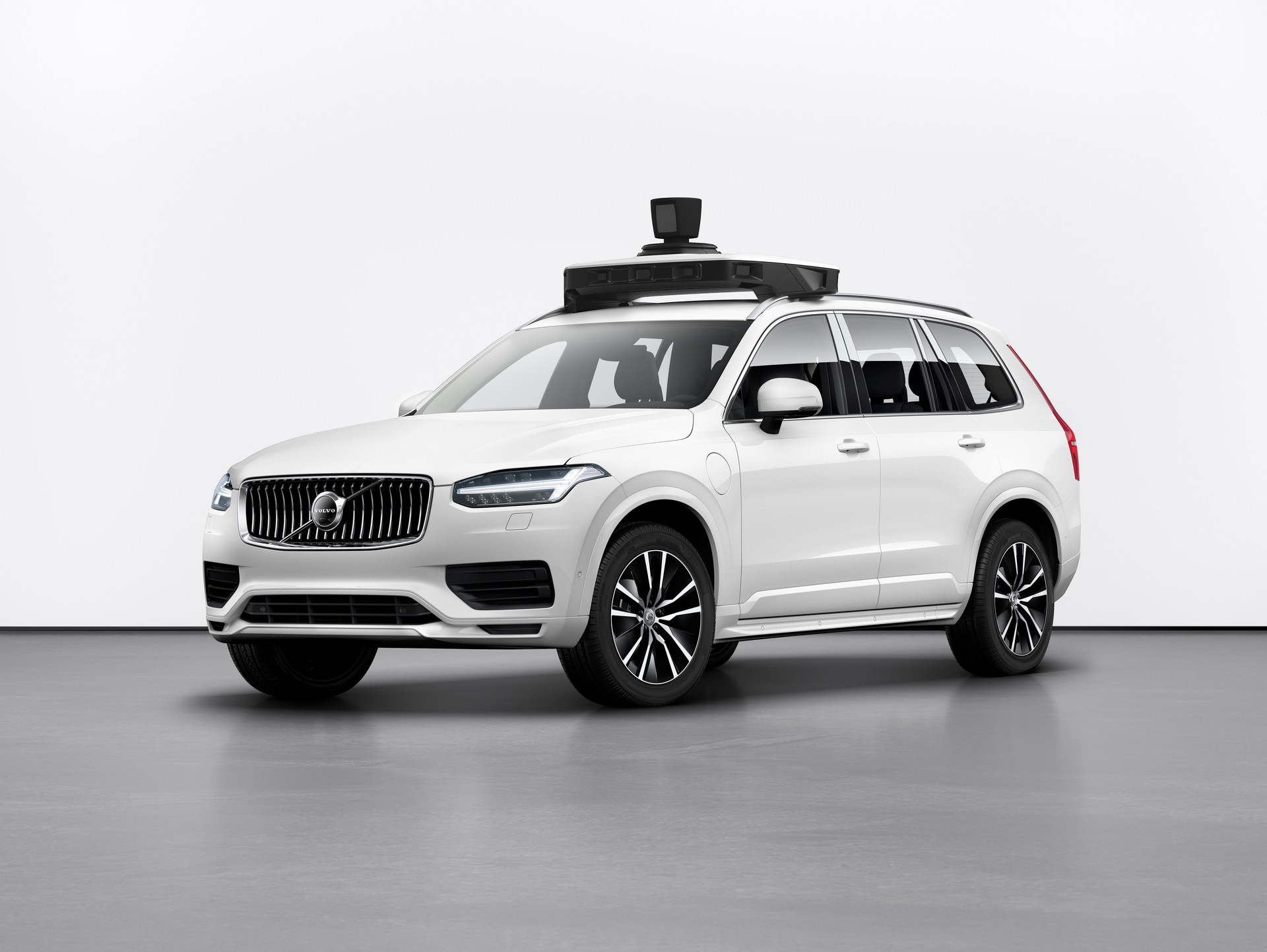
Uber and Volvo’s autonomous Volvo XC90 could reach production in 2020. Its platform will inspire the brand to create new autonomous models.
Uber and Volvo unveil a fully autonomous XC90. As part of a partnership that began in 2026, the Swedish brand and Uber have unveiled an autonomous Volvo XC90. The vehicle has been jointly developed by the two companies. It is a production-ready model equipped with intelligent systems that allow it to drive on its own.
The large Swedish SUV has been fitted with what the carmaker calls “key safety features” that have allowed the self-driving car company to easily install its own autonomous driving system
Safety is paramount for Volvo, so the vehicle features several backup systems for steering and braking, as well as battery backup. Should anything go wrong with the primary systems, they will bring the Volvo XC90 to an immediate stop. Some of the sensors mounted on the roof and built into the SUV enable autonomous driving in urban environments.
Eric Meyhofer, CEO of Uber Advanced Technologies Group, has stated that “working closely with companies like Volvo is a key ingredient in effectively building a safe, scalable, and autonomous fleet.”
Volvo fully autonomous XC90
“Volvo has long been recognised for its commitment to safety, which is the cornerstone of its new production-based self-driving vehicle. When combined with our automated driving technology, this vehicle will be a key ingredient in meeting demand for Uber’s autonomous products,” said Uber’s CEO.
Hakan Samuelsson, CEO of the Swedish brand, has said that “we believe autonomous driving technology will allow us to further improve safety, the foundation of our company.” “By the middle of the next decade, we expect one third of all the cars we sell to be fully autonomous. Our agreement with Uber underscores our ambition to be the supplier of choice for the world’s leading mobility companies.”
The alliance and the subsequent joint agreement are beneficial for both companies. Volvo will launch fully autonomous cars in early 2020 and aims to become a major player in this segment, while Uber’s goal is to offer safe, autonomous ride-sharing without the need for a specialist driver.
Volvo, for its part, plans to use a similar autonomous-ready vehicle concept to introduce its future cars from 2020 onwards. These technologies, which will be presented in the next generation of the Swedish brand’s models, will be based on the SPA2 vehicle architecture. They will include features designed to enable hands-off autonomous driving in fully designated areas, such as motorways and ring roads.
It is important to note that Volvo believes autonomous driving could bring significant potential benefits in terms of road safety. Until then, the technology can offer customers a better driving experience by eliminating mundane tasks such as emergency braking and stop-and-go traffic.
Technical specifications of this car


 The seven finalists for the 2027 European Car of the Year (COTY) are exclusively electric
 Peugeot E-208 GTi: a battery-powered toy that revives the spirit of the 1980s sports cars
 New Lexus ES: luxury grows and goes electric
Deja un comentario