Volvo 360C, the future concept of car travel
 Guillermo Lopez
5 September 2018
5 min.
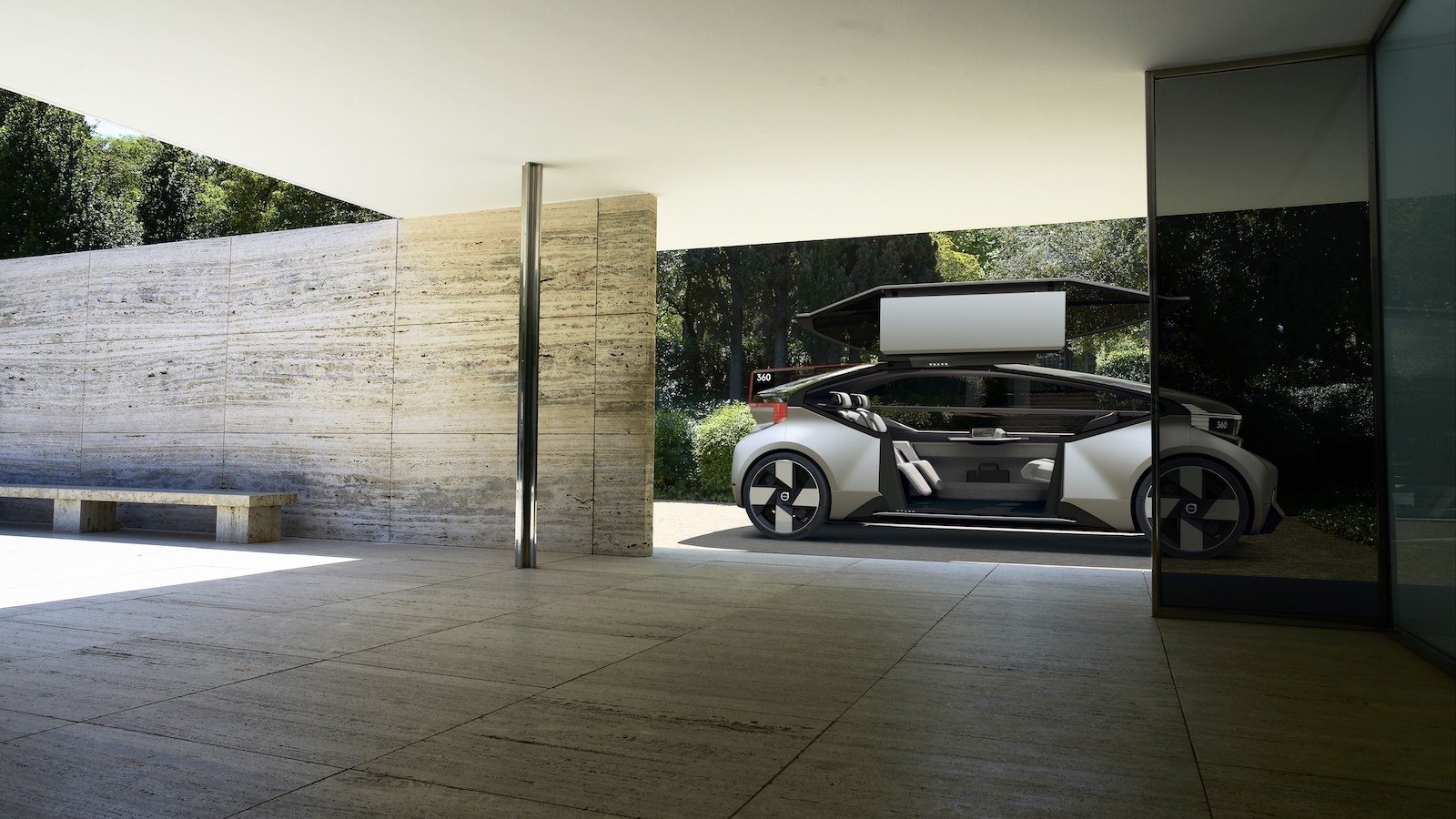
The Swedish brand is unveiling its concept car, in which it develops its holistic vision of what the future of mobility and road travel by car will look like
Autonomous, Connected, Electric and Shared. The future ACES vehicles that will begin reaching the market over the next decade are set to completely transform the concept of mobility and how passengers can make the most of their time while travelling on board them. Volvo Cars is already working on this, and a good example will be its new Volvo 360C, a concept car that showcases the holistic vision the Swedish company, part of the Chinese automotive group Geely, has of how car use will look in a future that is getting closer all the time.
The Volvo 360C will mark the future development of the brand’s upcoming new models at Volvo Cars. The new concept car from the Swedish brand clearly shows the company’s vision of what travelling in ACES models (autonomous, connected, electric and shared) will be like, and the major differences these pose compared with current models is something the Swedish manufacturer wants to take advantage of to strengthen its positioning and expand its market base.
The main change is a complete renewal of the very essence of the journey, which will bring significant changes to people’s lives by turning the time we spend travelling into productive, more useful and pleasant time than it is at present. “The 360C explores what is possible when we remove the human driver. To do so, it makes use of new freedoms in car design and in how passengers use the time they regain: it is a glimpse of how autonomous vehicle technology will change the world we currently know. The possibilities are mind-blowing,” says Marten Levenstam, Senior Vice President of Corporate Strategy at Volvo Cars.
The use of future electric self-driving vehicles that are about to reach the market offers a wide range of advanced benefits in both safety and environmental terms (less congestion, less pollution, improved quality of life and lifestyle, …), especially for those who live in cities but also for those who live outside them, since their arrival will create new possibilities by providing greater residential freedom, helping to reduce property prices and making housing more affordable: “People will increasingly depend less on living close to cities, and that is just one example of the impact of eliminating the burden of unproductive travel time,” said Marten Levenstam during the presentation of the Volvo 360C.
Volvo 360C: office, lounge and bedroom on wheels
“Vehicles like the 360C will make it feasible for people to live at greater distances from crowded cities and to use their time in a more pleasant and effective way,” says Levenstam. Electric and fully autonomous, meaning it requires no human supervision for its journeys, that is the 360C, a concept with which Volvo reimagines how people’s journeys will look and how passengers will interact with each other and with their family, friends and contacts from their moving car, a vehicle that will allow them to make better use of the time they spend on their journey.
Although there may be many more, Volvo has developed in the Concept 360C four potential uses for the car based on different possible usage environments: sleeping, mobile office, living room and entertainment. These situations open up new possibilities for road travel by car compared with other forms of transport (planes, buses, trains, …) with which they could compete by offering new advantages in terms of comfort, convenience and privacy. Thanks to these visions, the 360C also opens new doors for Volvo Cars and the rest of the automotive industry, as new and significant opportunities will be created to expand business models far beyond what is currently considered the scope of a mere car manufacturer.
https://youtu.be/XyS0S5hFpio
To give one example, ACES vehicles make door-to-door first-class travel possible without having to put up with airport security, long queues, and the discomfort of flying on short-haul routes, where to spend one hour in the air you have to lose three hours travelling to and from the airport, completing check-in and queuing to board.
Volvo is aware that this whole process is still in its infancy and has only just begun, so it encourages discussion on how society can make better use of the development of ACES vehicles: “We see the 360C as a new topic of conversation, which will offer more ideas and answers as we learn more,” says Levenstam. “We believe the fully autonomous drive has the potential to change the foundations of our society in many ways. It will have a profound impact on how people travel, how we design our cities and use infrastructure. But we are just one of the stakeholders, so we look forward to and invite other players to a broad discussion on the subject as society learns to make the most of this revolutionary technology.”

 The seven finalists for the 2027 European Car of the Year (COTY) are exclusively electric
 Peugeot E-208 GTi: a battery-powered toy that revives the spirit of the 1980s sports cars
 New Lexus ES: luxury grows and goes electric
Deja un comentario