Which SUV should you buy in 2026 in Spain if your budget is limited?
 Iván Navarro
8 May 2026
9 min.
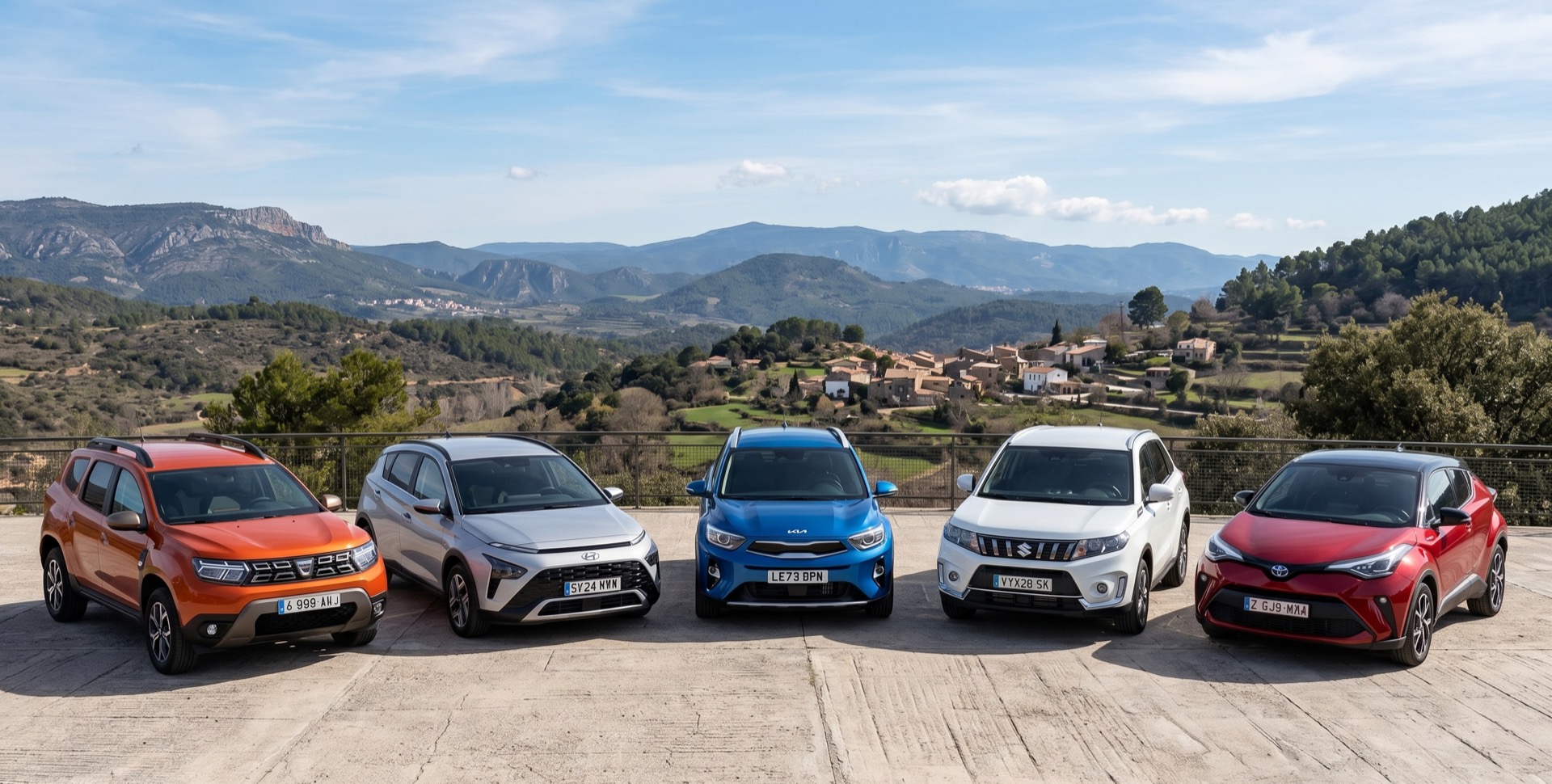
Each of these vehicles offers a unique proposition for different driver profiles, balancing fuel consumption with exceptional dynamic performance.
Choosing an SUV on a tight budget in Spain is today a pragmatic and common decision. Buyers are looking for a balance between real space, running costs and reliability, without giving up the SUV image and an elevated driving position. In 2025, the market remained dominated by this type of vehicle: according to ANFAC, SUVs accounted for more than 55% of registrations, which has kept the offer competitive across all segments.
The buyer with a limited budget usually targets entry-level models with simple engines (petrol and mild hybrids), although some low-consumption hybrids are beginning to become affordable thanks to the standardisation of the technology.
On average, entry-level SUVs in Spain range between €15,000 and €22,000 in their base versions; there are options below that bracket and more equipped alternatives up to €30,000 if hybrid efficiency is the priority. The market trend points to maintaining a broad offer: models such as the Dacia Duster or the Hyundai Bayon focus on value for money, while the Toyota C-HR offers hybrids with moderate consumption for those who can stretch the budget a little.
These are the most balanced models if you are looking for practical space, low cost per kilometre and reasonable maintenance.
If your priority is saving in the city or on mileage, the best options are usually modern petrol engines and light mild-hybrid systems; if you value consumption on the open road, conventional hybrids remain the benchmark. The key is to combine purchase cost, real-world consumption and space needs.
What a budget SUV should offer in 2026
A budget SUV should deliver three pillars: practical interior space, efficient engine and controlled running costs. Look for rear seats with usable room for child seats and a boot from 400 litres upwards; that usually makes the difference for family use. In terms of engines, modern petrol units and mild hybrids reduce urban consumption; full hybrids lower consumption in mixed driving, but raise the initial price.
It is important to check the load capacity, the WLTP consumption against the real-world figures reported by users, and the maintenance cost. As for the DGT label, most modern petrol engines will carry the C label, while hybrid proposals will display ECO. Also consider the availability of spare parts and the cost of insurance, factors that influence the cost per kilometre.
Model selection
Dacia Duster
The Dacia Duster is the benchmark when price matters most without giving up a spacious interior and a generous boot. Its value proposition is based on a simple, cost-efficient offer: 1.0 TCe petrol engines in entry versions, a robust chassis and a clear range of equipment. DGT label: C. It is ideal if you are looking for maximum value for money and low maintenance costs.
Why is it a good choice?
• Affordable entry price
• Space and boot above average
• Low maintenance costs
Families on a tight budget who prioritise space and cost per kilometre.
| Data | Value |
|---|---|
| Engine | Petrol |
| Environmental label | C |
| Power | 90 CV |
| Consumption | 6.2 l/100 km |
| Price from | €15,000 |
Hyundai Bayon
The Hyundai Bayon is a compact alternative with an SUV look, good interior space for its size and efficient petrol engines. It offers an interesting balance between agility and consumption in town and on the road. DGT label: C. It is a practical option if you want nimble handling in the city without giving up an acceptable boot and contained running costs.
Why is it a good choice?
• Agile urban handling
• Correct finish for its segment
• Moderate consumption in mixed driving
City dwellers who need a boot for weekends and good driving feel every day.
| Data | Value |
|---|---|
| Engine | Petrol |
| Environmental label | C |
| Power | 100 CV |
| Consumption | 5.6 l/100 km |
| Price from | €17,900 |
Kia Stonic
The Kia Stonic combines a modern presentation with petrol engines and mild-hybrid technologies in some versions. It offers balanced behaviour and an attractive warranty, which reduces risk for buyers concerned about long-term reliability. DGT label: C. A good option if you value warranty and cost of ownership.
Why is it a good choice?
• Good equipment-to-price ratio
• Mild-hybrid options to consume less in town
• Solid service network and warranty
Drivers who want a balance between upfront cost and short-term efficiency.
| Data | Value |
|---|---|
| Engine | Petrol / Mild hybrid |
| Environmental label | C |
| Power | 100 CV |
| Consumption | 5.2 l/100 km |
| Price from | €18,200 |
Suzuki Vitara
The Suzuki Vitara is a compact SUV with a long tradition in the market: tough, with good ergonomics and simple engine options. Its set-up focuses on practicality and durability; the versions with mild hybridisation help reduce urban consumption. DGT label: C. Recommended if you want a car with balanced behaviour and contained maintenance costs.
Why is it a good choice?
• Proven and reliable behaviour
• Options with reduced consumption
• Ease of maintenance
A versatile SUV for mixed road/city use with low maintenance costs.
| Data | Value |
|---|---|
| Engine | Petrol (mild hybrid available) |
| Environmental label | C |
| Power | 129 CV |
| Consumption | 5.8 l/100 km |
| Price from | €21,500 |
Toyota C-HR Hybrid
The Toyota C-HR Hybrid sits a step higher in price, but its self-charging hybrid technology offers very low consumption in real use, especially in town and slow traffic. DGT label: ECO. It is the alternative for those who can stretch the budget and want the lowest consumption without depending on plugs.
Why is it a good choice?
• Very low consumption in mixed use
• Proven and reliable hybrid technology
• Good insulation and urban comfort
Reducing fuel consumption and spending without moving to a PHEV or electric car.
| Data | Value |
|---|---|
| Engine | Hybrid |
| Environmental label | ECO |
| Power | 184 CV |
| Consumption | 4.8 l/100 km |
| Price from | €30,000 |
Which car to choose for your situation
If you do a lot of city driving
Prioritise mild hybrids or light hybrids that reduce consumption in traffic jams and frequent starts. Models such as the Kia Stonic or the Toyota C-HR Hybrid help lower daily spending and offer better comfort in town.
If you do high mileage
Look for engines that are efficient in mixed cycle and have good aerodynamics: the Dacia Duster for its real-world economy and the Suzuki Vitara for its reliability are sensible alternatives.
If you want to save money
The main criterion should be real consumption and maintenance cost: the Dacia Duster usually offers the lowest cost per kilometre among entry-level models.
If you want technology
If your priority is efficiency through technology, opt for self-charging hybrids such as the Toyota C-HR Hybrid, which reduce spending without the need for charging points.
Interesting alternatives within the same budget
Models such as the Renault Captur, the Peugeot 2008 or the SEAT Arona are good alternatives if you find a suitable offer; all provide good ergonomics and engine options suited to urban use and travel.
You could also consider the Hyundai Kona or the Kia EV3 if you are thinking of moving to electrification to reduce energy spending, although that changes the initial cost equation.
FAQ – FREQUENTLY ASKED QUESTIONS
Which SUV is the cheapest to maintain?
The Dacia Duster usually leads on maintenance cost and parts availability; its mechanical simplicity is an advantage in the long run.
Is it worth paying more for a hybrid?
If you do a lot of urban journeys, yes: a hybrid such as the Toyota C-HR Hybrid reduces real fuel consumption and spending. If you mainly drive on motorways, the advantage is smaller.
What DGT label can I expect on these models?
In general, modern petrol engines carry a C label and hybrids carry ECO. Electric or PHEV vehicles (not included in the main selection) would have CERO.
Which SUV has the best boot for a family?
The Dacia Duster offers one of the largest boots in the selection, useful for families who prioritise load capacity.
Are these options reliable in the long run?
Models such as the Suzuki Vitara and the Kia Stonic have a proven reliability record; choosing versions with recorded maintenance reduces risks.
Is a small SUV or a traditional compact better if I want to save money?
A compact may offer lower pure consumption, but a well-chosen small SUV (efficient engine, controlled weight) can be competitive thanks to its versatility and lower need to change cars for space.
Expert opinion
Beyond official figures, the choice of a budget SUV 2026 in Spain depends on real use and the buyer’s priorities. If your goal is to minimise total spending, the Dacia Duster is hard to beat on purchase price and maintenance cost; it offers the best balance for families who need space and practicality without complications. For urban drivers who value handling and consumption in traffic, the Kia Stonic and the Hyundai Bayon deliver good driving feel with moderate consumption and sufficient equipment. If you can stretch the budget in exchange for lower real-world consumption, the Toyota C-HR Hybrid is compelling for its proven hybrid technology, and its ECO label makes urban life easier.
In terms of budget: up to ~€18,000 focus on the Dacia Duster or Hyundai Bayon; between €18,000 and €24,000 you will find the Kia Stonic and Suzuki Vitara with better finishes; if your priority is efficiency per litre, move your investment towards hybrids such as the Toyota C-HR Hybrid. Think about the cost per kilometre, your family’s real capacity needs and the availability of after-sales service. And remember: comparing WLTP consumption with real-use testimonials and checking practical safety equipment usually adds more value than being swayed by pure figures.
In short: if your budget is limited, prioritise practical space and running costs; if you can pay more, opt for conventional hybrids to reduce city consumption. Models such as the Dacia Duster, the Kia Stonic and the Toyota C-HR Hybrid cover most buying profiles without compromising reliability.


 Peugeot E-208 GTi: a battery-powered toy that revives the spirit of the 1980s sports cars
 New Lexus ES: luxury grows and goes electric
 First contact with the Dacia Sandero Hybrid 155: power and efficiency from €19,890
Deja un comentario