2026 buyer's guide: which is better, a hybrid or an electric car?
 Dani Montesinos
27 February 2026
8 min.
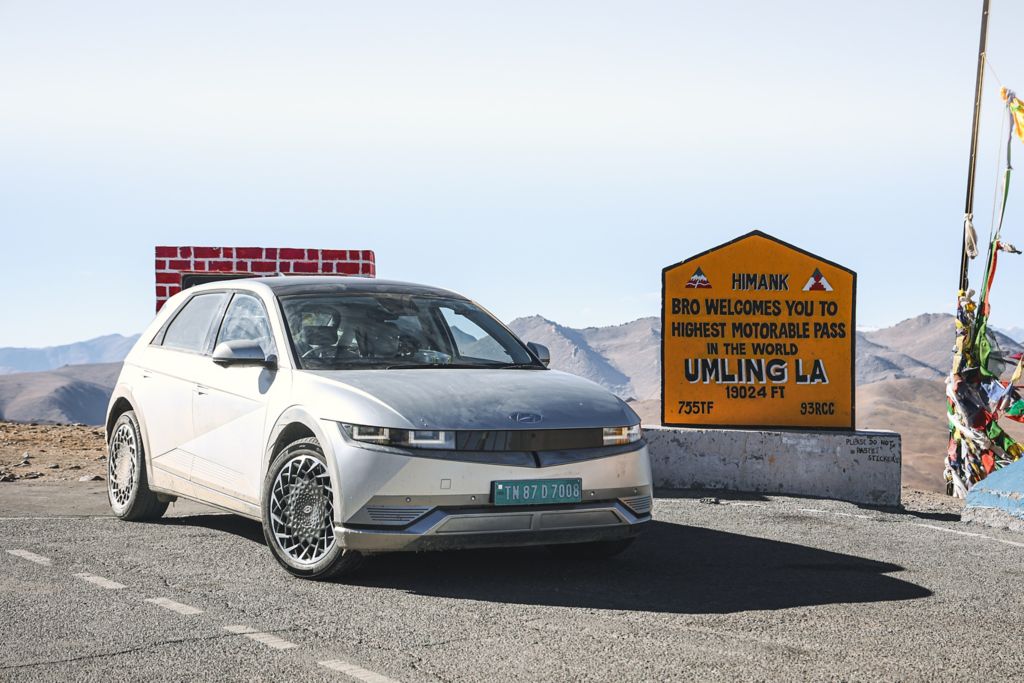
If you want to get into the world of electric cars and don’t know whether to opt for a hybrid or a pure electric, this guide will answer your questions.
In 2026, the choice between a hybrid and an electric car remains one of the most frequent questions for buyers in Spain. The maturity of the charging network, the evolution of prices and the wider range of models have reduced uncertainty, but real doubts persist about practical range, long-term costs and the actual environmental impact. Two points sum up the debate: the homologated range does not always translate into real-world range, and the total cost of use depends both on daily driving and on how the battery is managed. This guide offers useful criteria and clear usage scenarios to help you decide which option best suits different driver profiles, without resorting to generic recommendations.
This buying guide is for…
For drivers who value efficiency in their daily routine and want to reduce running costs: the electric car excels on urban journeys and for those who can charge regularly. It is also for those who frequently make long journeys and need flexibility: hybrids, particularly non-plug-in or full hybrids, allow you to travel without planning charging stops and with low consumption in town.
It is not a good idea for those who do not have stable access to charging at home or at work and make intercity journeys without the possibility of fast charging; in those cases an efficient petrol car or a conventional hybrid remain more practical options.
Common options within the segment
The market offers different approaches: mild hybrids (MHEV) that reduce consumption in town; full hybrids (HEV) with greater efficiency in mixed traffic; plug-in hybrids (PHEV) that combine limited electric range with a combustion engine; and pure electric cars (BEV) with different battery capacities and charging powers. Each approach involves trade-offs: PHEVs add weight and cost due to the battery, BEVs require planning of charges and suffer a climate-related penalty, and HEVs offer simplicity but without access to all the tax advantages of pure electric cars.
Key criteria for choosing well
Realistic versus homologated range: the WLTP figure serves as a reference, but real consumption can vary by 10–30% depending on speed, weather and use of the climate control. Consider usable range after deducting a safety margin.
Charging power and speed: the maximum charging power determines comfort on long journeys; a large battery with low charging power reduces the practical advantage.
Stability and comfort on the road: the weight distribution from the batteries influences handling; some electric cars feel heavy, while well-calibrated hybrids maintain balance on long roads.
Genuinely useful technology: safety assistants, range maps and battery thermal management are more valuable than dispensable comfort extras.
Total cost of purchase and use: includes depreciation, maintenance, the cost of electricity or fuel and possible battery replacement in the long term.
It depends on how you drive
If you usually make short urban journeys and have home charging, the electric car usually fits best because of lower running costs and less maintenance. If you alternate city driving with regular weekend trips without reliable fast-charging access, a hybrid or a PHEV with limited electric range may offer the best of both worlds.
Climate is a factor: in winter, electric range can drop significantly if heating and defrosting are used; hybrids lose less efficiency in this respect. In addition, driving behaviour (aggressive pace versus efficient driving) changes the economic and practical equation.
Real price: what you should know
The “from” price reflects the base version without options and without incentives. Equipment significantly increases the final cost on many electric models, where batteries and fast charging push up the price.
Difference between financed and cash price: financing offers often lower the initial outlay, but increase the total cost through interest. Calculate the monthly payment and the total cost over the term before deciding.
Impact of equipment: items such as bidirectional charging systems, larger-capacity batteries or advanced assistants are usually in optional packs that raise the price more than equivalent combustion models.
Reference models on the market
Toyota Corolla (from €27,400*)
The Corolla in its traditional hybrid version is a proposition focused on everyday efficiency and reliability; it suits drivers who prioritise low running costs and do not depend on home charging.
The best
Efficiency in urban use and a reliable hybrid system that reduces real consumption without the need for plugging in.
The room for improvement
Limited pure electric capacity; it does not achieve the tax advantages or the zero-emission range of a BEV.
Renault Mégane E-Tech (from €35,800*)
A compact electric car with competitive range for mixed use; aimed at those seeking an electric car with practical design and a battery sufficient for everyday journeys.
The best
A balance between range and size, suitable for urban users who also make weekend trips.
The room for improvement
Charging speed and the availability of fast chargers can limit its use on long routes.
Hyundai IONIQ 5 (from €41,500*)
A general-purpose electric car with a larger-capacity battery and fast-charging options; designed for those who prioritise long journeys with fast recharging and interior comfort.
The best
Good charging power and interior space that favour use on intercity journeys.
The room for improvement
Higher price on versions with large batteries and advanced equipment.
Tesla Model 3 (from €47,990*)
An electric saloon focused on performance and the experience of pure electric driving; suited to users who value the supercharger network and integrated technology.
The best
Solid real-world range and access to its own fast-charging network, which makes long journeys easier.
The room for improvement
High initial cost and variability in equipment options that make the model more expensive.
Volkswagen ID.3 (from €32,200*)
A compact electric car designed for urban and suburban use, with a practical approach and accessible charging solutions; aimed at drivers seeking a reasonable entry point into the BEV world.
The best
A good price/range balance in the compact segment, practical for daily use.
The room for improvement
Performance on very fast journeys or in extreme conditions can noticeably reduce range.
Purchase incentives
The Plan Auto+ 2026 replaces the previous MOVES programmes and establishes a new system of direct aid for the purchase of electrified vehicles in Spain. The rules aim to prioritise more efficient vehicles with an EU-linked value chain.
Main amounts under the Plan Auto+ 2026
– Direct aid of up to €4,500 for electric passenger cars.
– Up to €5,000 for light vans in category N1.
– Retroactive effect from 1 January 2026.
– Approximate budget allocation of €400 million.
Who can benefit and priority criteria
Beneficiaries: private individuals, self-employed workers and companies can access the aid, with priority according to the EEE criterion (Electric, Economic and European). BEVs are favoured over PHEVs, and there is greater incentive for vehicles priced below €35,000, while those priced between €35,000 and €45,000 receive reduced aid. Additional incentives are granted if the final assembly or the batteries are of European Union origin.
Additional requirements and tax advantages
A mandatory minimum discount of €1,000 from the dealer is required. There is also a 15% deduction on income tax (IRPF), up to a maximum of €3,000, valid for tax purposes until 31 December 2026.
Management and possible regional aid
Management is coordinated by the Ministry of Industry together with the Autonomous Communities. Additional regional programmes may exist; for example, the Plan Cambia 360 in the Community of Madrid. At the time of writing, it is not officially confirmed whether these regional aids are compatible with the Plan Auto+ 2026.
Common buying mistakes
Buying based solely on the WLTP range without considering real-world use or climate, which leads to overestimating the practical range of an electric car.
Ignoring the costs of installing home charging or assuming that fast chargers will conveniently be available on all the routes you use.
Choosing the most fully equipped version without a real need: battery or fast-charging packs often increase the price more than their practical value for many users.
Not calculating depreciation and total cost of ownership, including maintenance, insurance and possible battery replacement very far in the future.
With these elements clear, the reader now has practical criteria for deciding based on real use and personal profile. The next step is to check these considerations against analyses and updated model listings to compare costs, equipment and availability at dealerships.


 The seven finalists for the 2027 European Car of the Year (COTY) are exclusively electric
 Peugeot E-208 GTi: a battery-powered toy that revives the spirit of the 1980s sports cars
 New Lexus ES: luxury grows and goes electric
Deja un comentario