Kia Niro PHEV: is the jump to plug-in worth it for an urban family?
 Dani Montesinos
27 February 2026
4 min.
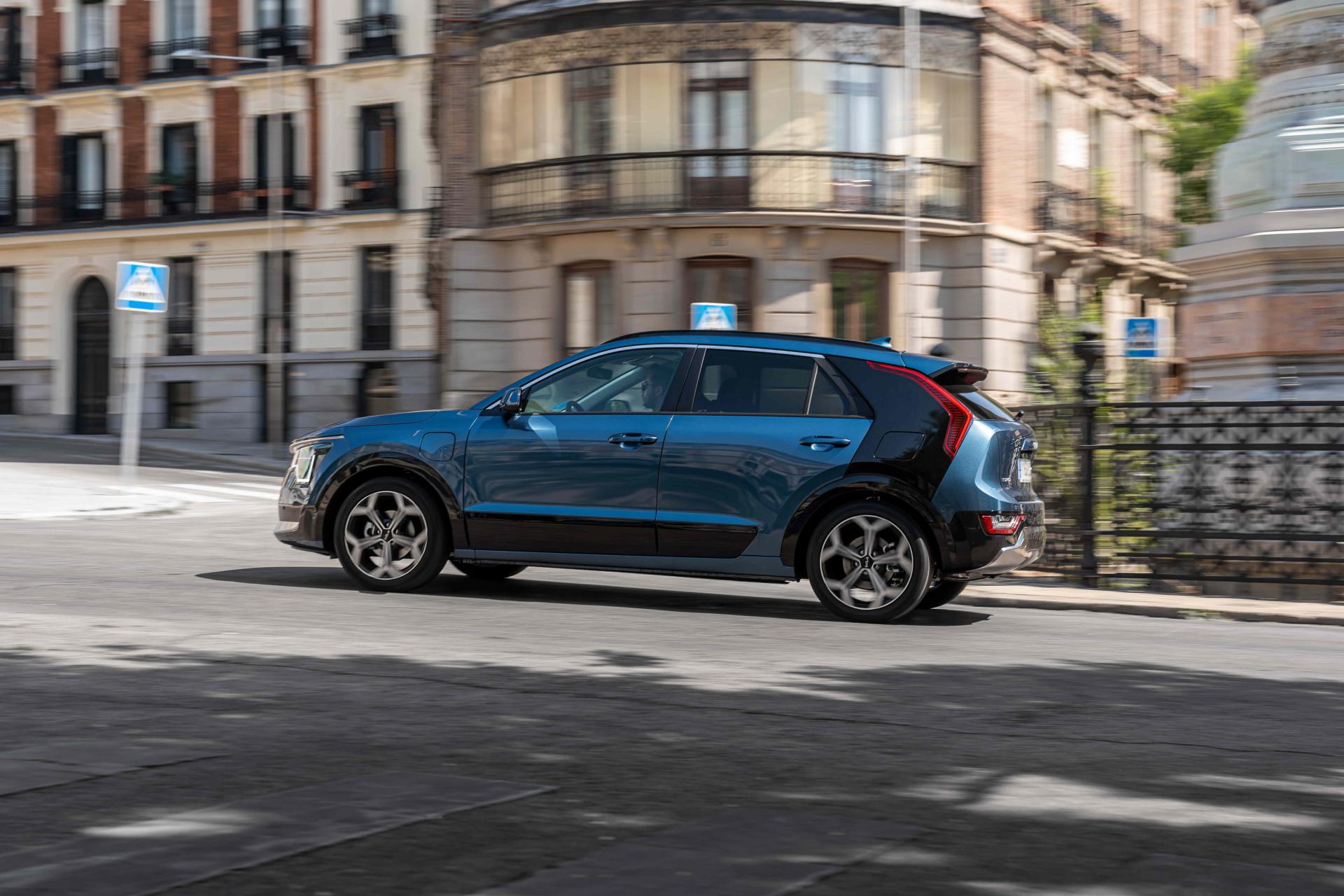
What makes the Kia Niro PHEV a vehicle worth considering? If you want to get a plug-in hybrid, the Niro PHEV is a proposal worth considering.
Is it really worth paying around €31,000–€35,000 for a Kia Niro PHEV when there are full hybrids and pure electrics on the market? If your day-to-day mixes city driving and weekend trips on the open road, this question is not theoretical: it directly affects your budget and your charging habits.
What nobody tells you at first glance: the Niro PHEV promises electric range for everyday routines, but its real value depends on how and where you charge it. Is it worth buying now with the current incentives? Does it save petrol or just dress up your spending? Let’s get to the point.
Quick answer (key data)
Price from: around €31,000 (basic trim, before incentives or promotions).
Electric range: between 45 and 65 km WLTP (typical urban use: 30–50 km real-world).
Approximate real consumption: 1–3 l/100 km if you use electric charge heavily; 5–6 l/100 km on long trips without frequent charging.
Approximate combined output of 183 CV (petrol engine + electric motor).
Who it’s a good buy for: urban and suburban drivers who can charge regularly and want to cut petrol use without moving to a pure electric car.
Why it matters now
The Kia Niro PHEV is on the radar because it combines the comfort of a compact SUV with enough electric range for most daily journeys. That makes it a natural candidate for families who want to reduce fuel costs without depending on public charging infrastructure.
Market context drives its appeal: demand for SUVs remains high and anti-pollution regulations push towards plug-in solutions. In addition, incentives and discounts for plug-in models make the starting price more attractive compared with an expensive electric car.
On price-performance against rivals, the Niro PHEV usually sits in the mid-range; it is neither the cheapest nor the most powerful, but it offers a competitive combination of space, warranty and reasonable real-world consumption.
Real-life usage scenarios
Urban use
If you commute and do your shopping 10–20 km from home, the Niro can cover the day in electric mode almost every time. It parks easily, you reduce local emissions and you barely use petrol if you charge every night from a domestic socket.
Family use
For taking children to school, after-school activities and short getaways, the Niro’s boot and interior space are sufficient. The advantage is peace of mind: if one weekend you need more range, the combustion engine is there.
Long journeys
On the motorway the PHEV behaves like a conventional hybrid: the battery runs down and consumption rises, but the experience is civilised. Don’t expect miracles in fuel consumption on 400–600 km routes without recharging.
Charging reality
With a 3.7 kW domestic socket, charging usually takes 2–4 hours depending on the battery model. If you rely exclusively on fast public charging, you will find points, but the economic and convenience advantage diminishes.
The big question: does it make sense for you?
Buy it if: your day-to-day driving is below the real electric range, you can charge at home or at work, and you want to reduce spending and emissions without changing your driving habits.
It’s not for you if: you do many intercity kilometres without the possibility of regular charging, you’re looking for the lowest possible cost per km on the road, or you prefer the simplicity of an efficient diesel for long journeys.
Alternatives to consider: a non-plug-in hybrid for those who don’t want to charge, a fully electric car if you intend to eliminate petrol completely, and a diesel if you only do long trips.
3 things that surprise people
- Real savings depend more on your charging discipline than on the label: without frequent plugging in, you lose the advantage.
- In the city it significantly reduces local emissions and noise, something passengers notice from day one.
- Residual value may be better than that of a simple hybrid if the market continues to favour plug-in models.
Conclusion: smart purchase or wasted money
The initial question returns to the centre: is it worth paying more for the Kia Niro PHEV? Yes, if your usage pattern fits its electric range and you have somewhere to charge regularly. It is not the best option if you depend on frequent long journeys without recharging.
It’s a smart purchase if you want to reduce petrol use and emissions without giving up the flexibility of a combustion engine. It’s not for you if you prioritise the lowest cost per km on the motorway or maximum maintenance simplicity.
The market keeps moving: public incentives, electricity prices and the charging network will change the equation in the coming years. Today, the Niro PHEV represents a pragmatic middle ground between daily savings and peace of mind.


 Peugeot E-208 GTi: a battery-powered toy that revives the spirit of the 1980s sports cars
 New Lexus ES: luxury grows and goes electric
 First contact with the Dacia Sandero Hybrid 155: power and efficiency from €19,890
Deja un comentario