2026 ranking: the 5 best urban electric SUVs for turning radius and agility in dense traffic
 Dani Montesinos
3 August 2026
6 min.
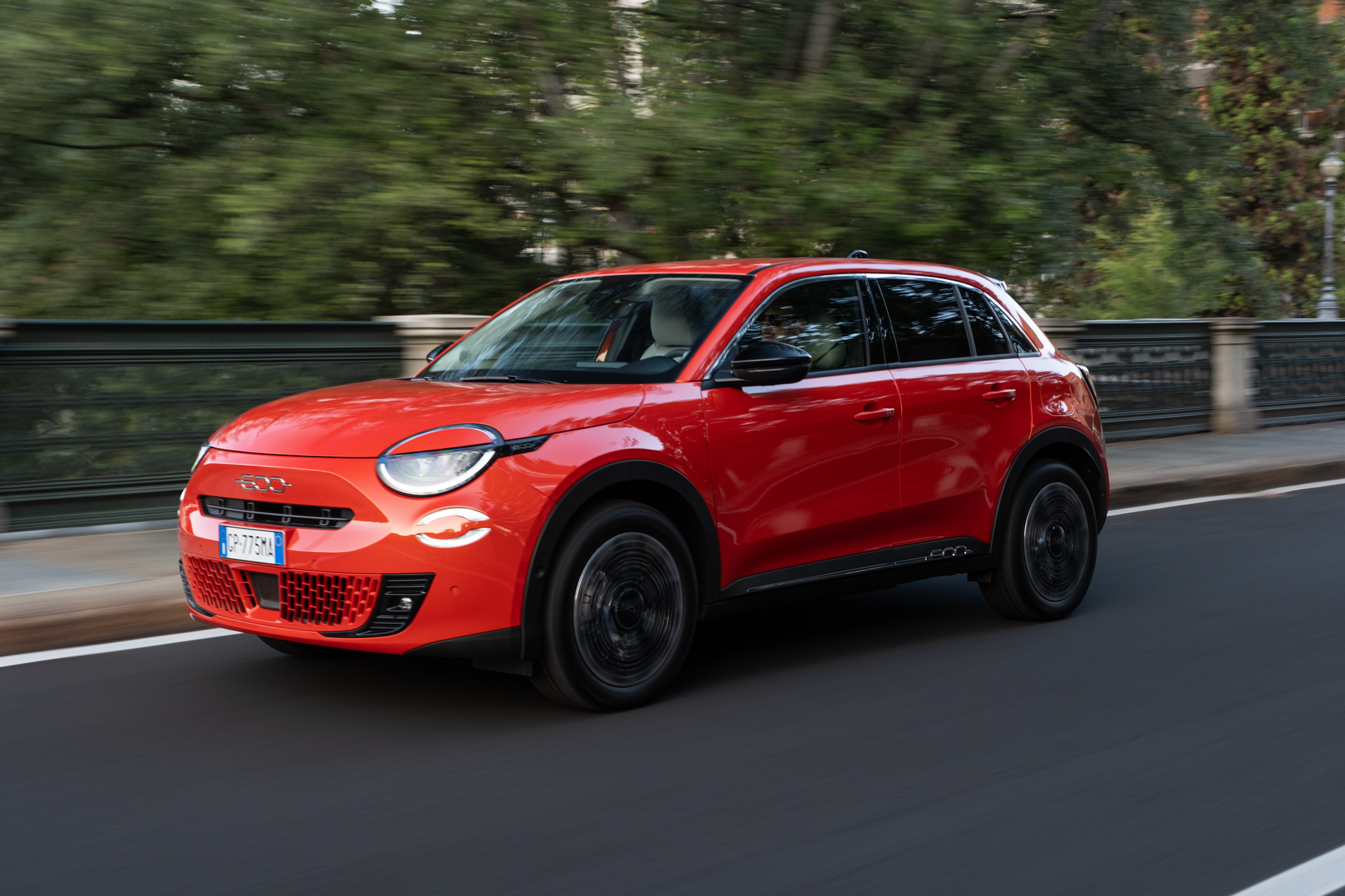
Technical comparison of urban electric SUVs with the best turning radius currently on sale. Ranking based on kerb-to-kerb turning circle, wheelbase and real-world manoeuvrability.
An urban electric SUV is put to the test in two square metres: the space between the kerb and the mirror of the car next to you when you have to reverse-park on a street in the Salamanca district. There, the 0-100 time doesn’t matter, nor the peak kW of fast charging, nor the augmented-reality head-up display. What matters is the turning radius. And on that front, there are more differences between apparently identical models than the spec sheet lets on.
We have cross-checked official data on kerb-to-kerb turning circle, wheelbase and overall length of the best-turning-radius urban electric SUVs sold in Spain in 2026. The result doesn’t always match what you would expect from looking at the silhouette.
Why turning radius defines the urban life of an electric SUV
The battery, placed under the floor, pushes the wheels towards the ends of the car. This lengthens the wheelbase and, as a consequence, penalises the turning circle. An electric SUV that is 4.20 metres long can have the same turning radius as a 4.60-metre combustion estate. This is not a minor point: it is the reason many drivers find themselves making two manoeuvres where they used to make one.
To this is added a little-discussed detail: the maximum steering angle of the front wheels is often limited on electric cars so as not to compromise the driveshafts when the motor is mounted on the front axle. On paper, agility. In practice, not always.
Methodology: how we measured urban agility
Four variables, all from official manufacturer sources:
- Kerb-to-kerb turning circle (the genuinely useful figure, not wall-to-wall).
- Wheelbase, as it conditions the geometry of the turn.
- Overall length, which decides whether you fit in the space.
- Width without mirrors, for narrow streets in the old town.
Each model receives a score from 1 to 10 weighting these four variables, with 40% of the weight on the kerb-to-kerb turning circle. Only B-segment electric SUVs on sale in Spain in 2026 are included.
1. Fiat 600e — from €31,950
The smallest on the list and, unsurprisingly, the most agile. At 4.17 metres long and with a kerb-to-kerb turning circle of 10.5 metres, the 600e moves through Malasaña like few electric SUVs can. The steering is light — perhaps too light in our view on open roads — but in the city it is appreciated.
| Power kW | Power CV | Top speed | Range | Consumption | Label | Fuel |
|---|---|---|---|---|---|---|
| 115 kW | 156 CV | 150 km/h | 409 km | 15.3 kWh/100 km | ZERO | Electric |
2. Jeep Avenger — from €43,100
It shares the STLA Small platform with the Fiat, but Jeep has calibrated the steering with more weight and has kept a kerb-to-kerb turning circle of 10.54 metres. The feel at the wheel is different: more planted, slightly less playful. For someone looking for an urban SUV with occasional off-road aspirations, it makes sense. Mind you, in practice the radius does not differentiate it from the 600e.
| Power kW | Power CV | Top speed | Range | Consumption | Label | Fuel |
|---|---|---|---|---|---|---|
| 115 kW | 156 CV | 150 km/h | 391 km | 15.6 kWh/100 km | ZERO | Electric |
3. Peugeot e-2008 — from €33,545
Here things get interesting. The e-2008 measures 4.30 metres — 13 cm more than the Fiat — and its kerb-to-kerb turning circle rises to 10.9 metres. It remains a reasonable figure for its size, and the compact steering wheel of the i-Cockpit helps the feeling of agility. But on narrow streets you notice that you are no longer a pure urbanite.
| Power kW | Power CV | Top speed | Range | Consumption | Label | Fuel |
|---|---|---|---|---|---|---|
| 115 kW | 156 CV | 150 km/h | 406 km | 15.5 kWh/100 km | ZERO | Electric |
4. Hyundai Kona Electric — from €42,450
The Kona has grown in its latest generation — 4.36 metres — and its kerb-to-kerb turning circle sits at 10.6 metres, a surprisingly modest value for its 2.66-metre wheelbase. Hyundai has done its homework on geometry, and it shows. Front visibility is among the best in the group, which helps as much as, or more than, the radius itself. For the daily 40 km commute with a stop in a low-emission zone, it fits well.
| Power kW | Power CV | Top speed | Range | Consumption | Label | Fuel |
|---|---|---|---|---|---|---|
| 150 kW | 204 CV | 172 km/h | 510 km | 14.7 kWh/100 km | ZERO | Electric |
5. Kia EV3 — from €36,188
The newest in the group and the largest, at 4.30 metres with a generous 2.68 m wheelbase. Kia declares a kerb-to-kerb turning circle of 10.6 metres, a notable figure considering it offers up to 605 km of range — something already analysed in detail in the full EV3 review. The steering asks for more weight than the Kona’s; it convinces us less in quick turns. But for dense traffic, it does the job.
| Power kW | Power CV | Top speed | Range | Consumption | Label | Fuel |
|---|---|---|---|---|---|---|
| 150 kW | 204 CV | 170 km/h | 605 km | 14.9 kWh/100 km | ZERO | Electric |
Summary table: target ranking with weighted score
| Model | Length | Wheelbase | Kerb-to-kerb turning circle | Range | Starting price | Score /10 |
|---|---|---|---|---|---|---|
| Fiat 600e | 4.17 m | 2.56 m | 10.5 m | 409 km | €31,950 | 9.2 |
| Jeep Avenger | 4.08 m | 2.56 m | 10.54 m | 391 km | €43,100 | 9.0 |
| Kia EV3 | 4.30 m | 2.68 m | 10.6 m | 605 km | €36,188 | 8.5 |
| Hyundai Kona Electric | 4.36 m | 2.66 m | 10.6 m | 510 km | €42,450 | 8.3 |
| Peugeot e-2008 | 4.30 m | 2.67 m | 10.9 m | 406 km | €33,545 | 7.8 |
Recommendations by use case
Old town and 3-metre streets: Fiat 600e or Jeep Avenger. No debate, length rules.
Daily kerbside parking in a big city: Fiat 600e. Its 4.17 m fits where a Kona doesn’t.
Urban use + weekend getaway: Kia EV3. It is the one that best balances agility and real-world range. If you’re doing Madrid–Cádiz once a month, the 605 km make up for the extra 13 cm over the 600e.
Family with two rear seats used daily: Hyundai Kona Electric. Interior space one step up, and a turning radius kept modest for its size.
It remains to be seen whether the segment will evolve towards active rear-wheel steering — technology already seen on premium models — which would allow the real turning circle to be reduced without sacrificing wheelbase. It would be the logical next step. For now, whoever measures less will still be the one in charge of urban agility.
Frequently asked questions
Which urban electric SUV has the best turning radius in 2026?
The Fiat 600e, with a kerb-to-kerb turning circle of 10.5 metres, is the most agile of the B-segment electric SUVs sold in Spain in 2026. It shares its platform with the Jeep Avenger, which trails by just 4 centimetres.
Why do electric SUVs usually have a worse turning radius than an equivalent combustion model?
The battery forces a longer wheelbase and limits the front wheels’ steering angle to protect the driveshafts when the motor is mounted on the front axle. The result: for the same length, an electric car usually turns worse than its combustion equivalent.
Is it enough to look only at turning radius when choosing an urban SUV?
No. The kerb-to-kerb turning circle is the key metric, but it should be combined with overall length, width without mirrors and front visibility. A car with a good radius but poor rear visibility is harder to park than one that is balanced across all the variables.
What is the difference between kerb-to-kerb and wall-to-wall turning circle?
The first measures the circle the wheels draw at full lock; the second includes the body overhang. For real urban use — parking, U-turns — the valid figure is the kerb-to-kerb one, which is between 60 cm and 1 metre smaller.

 Peugeot E-208 GTi: a battery-powered toy that revives the spirit of the 1980s sports cars
 New Lexus ES: luxury grows and goes electric
 First contact with the Dacia Sandero Hybrid 155: power and efficiency from €19,890
Deja un comentario