Electric Cars Hybrid Cars Comparisons Tests
Toyota C-HR vs Honda ZR-V: a showdown between hybrid compact SUVs for the demanding urban driver
 Dani Montesinos
3 August 2026
6 min.
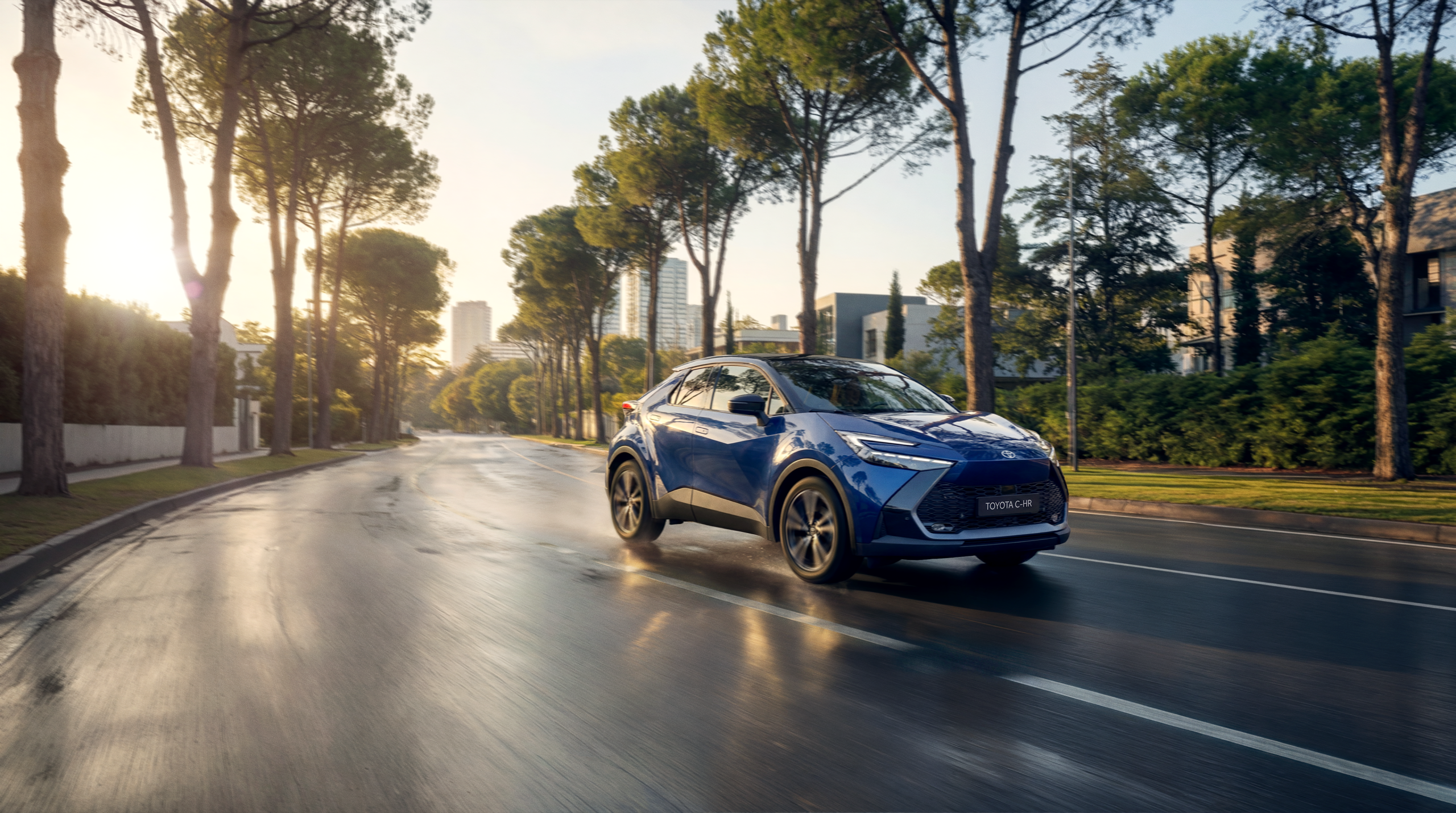
We compare the Toyota C-HR Electric 250 and the Honda ZR-V Hybrid Sport, two electrified compact SUVs with opposing philosophies for getting around the city
Two compact SUVs, two very different ways of understanding electrification. The Toyota C-HR vs Honda ZR-V is, at heart, a debate about concepts rather than spec sheets: plug-in versus self-charging, disruptive design versus classic Japanese formality, pure urban car versus versatile crossover. And yes, both aim at the same customer — the demanding driver who wants a CERO or ECO label, a decent screen and an SUV that doesn’t make them apologise when parking in Chamberí.
Before we get into it: the prices you’ll see throughout the article are indicative manufacturer RRPs, without dealer discounts, campaigns, scrappage schemes or one-off aid. In practice, the figure you sign for usually comes down. But the base reference is what it is.
What’s at stake: two philosophies, one urban customer
The new-generation C-HR has taken a notable leap in ambition. Toyota has decided its most urban crossover deserves a genuinely 100% electric variant, not just a hybrid with pretensions. The ZR-V, by contrast, remains faithful to the Honda creed: i-MMD self-charging hybrid, no cables, no charging anxiety, and no sacrifice of a usable boot.
Which makes more sense for an urban driver who covers 15,000 km a year, with or without access to a plug at home? That’s the heart of the matter.
Toyota C-HR Electric 250 Advance — from 36,975 €
The electric C-HR is, to my taste, the most daring Toyota in years. Sharp styling, a near-coupé sloping roofline, headlights that look laser-cut. The Electric 250 version fits a 77 kWh battery that homologates at around 600 km WLTP — a theoretical figure, of course, which drops considerably on the motorway at 120 km/h.
The 220 CV translate into strong acceleration from standstill, with that linear delivery so characteristic of electric cars. In town it moves with an ease almost unexpected for an SUV of this size. Mind you, rear visibility remains compromised, a direct legacy of the design. Reversing without a camera is an act of faith.
| Potencia kW | Potencia CV | Vel. máx. | Autonomía | Consumo | Etiqueta | Combustible |
|---|---|---|---|---|---|---|
| 165 kW | 224 CV | 160 km/h | 607 km | 13.4 kWh/km | CERO | Eléctrico |
If you’re interested in how this generation stacks up against the rest of the pure urban segment, there’s plenty to dig into in the guide to compact electric SUVs for urban use in 2026.
Honda ZR-V Hybrid Sport 2.0 i-MMD — from 44,950 €
The ZR-V plays in a different aesthetic league. Serious front end, classic SUV proportions, lines that don’t shout. It’s a car that will age better, though it lacks visual impact today. Under the bonnet, Honda’s i-MMD system with a 2.0 naturally aspirated engine and two electric motors: in town it essentially works like an EV, with the petrol engine generating power only when needed.
On the road it convinces more than it looks on paper. The combined 184 CV push with ease, the e-CVT gearbox avoids the “rubber band” effect of other continuously variable transmissions, and real-world consumption hovers around 6 l/100 km in mixed use. Not bad for 1,700 kg and a car that doesn’t need a plug.
| Potencia kW | Potencia CV | Vel. máx. | Autonomía | Consumo | Etiqueta | Combustible |
|---|---|---|---|---|---|---|
| 135 kW | 184 CV | 173 km/h | ≈900 km real-world | 5.8 l/100 km | ECO | Híbrido |
The ZR-V belongs to the same technical family as the brand’s other self-charging hybrids — an approach we already analysed in detail in the comparison of Toyota and Honda family hybrid SUVs.
Real urban use: where each one makes the difference
On a typical Madrid city-centre-to-outskirts route, with 40 km a day and stops in ZBE zones, the electric C-HR is unbeatable: zero local emissions, a ridiculously low cost per km if you charge at home, absolute silence. The ZR-V, on the same route, holds its own with dignity — the i-MMD runs in EV mode most of the time at low speeds — but it can’t compete on running costs if the rival has a home plug.
That said, without a private garage the equation flips. Relying on the public network in Madrid or Barcelona remains an exercise in patience, and there the Honda asks no questions: you refuel with petrol in five minutes and carry on.
Interior, technology and perceived quality
Toyota has given the C-HR’s cabin a clear boost: 12.3″ central screen, clean digital instrumentation, soft-touch materials where it matters. Even so, the sense of rear space is tight — the sloping roof takes its toll on adults sitting in the back.
The ZR-V offers more air in the rear seats and a more practical boot (around 380 litres usable), although its multimedia interface sits a step behind in resolution and fluidity. A matter of priorities: form or substance.
Summary table and score
| Modelo | Potencia | Autonomía | Consumo | Etiqueta | Precio desde | Puntuación /10 |
|---|---|---|---|---|---|---|
| Toyota C-HR Electric 250 | 224 CV | 607 km | 13.4 kWh/km | CERO | 36,975 € | 8.4 |
| Honda ZR-V Hybrid Sport | 184 CV | ≈900 km | 5.8 l/100 km | ECO | 44,950 € | 7.9 |
Verdict: which to choose based on your profile
If you have a plug at home and your life is urban, the C-HR Electric 250 is the most coherent choice. CERO label, unbeatable cost per kilometre and an image that doesn’t go unnoticed. For those who live without a garage parking space or travel long distances frequently, the ZR-V Hybrid offers an operational peace of mind that no electric car can match today — at the cost of 5,000 € more upfront and an ECO label instead of CERO.
There is no universal winner. There is an informed decision.
FAQ
Is the Toyota C-HR still sold as a hybrid in Spain as well?
Yes. The C-HR range keeps self-charging hybrid and PHEV versions alongside the Electric 230 variant analysed here. Each powertrain has its own price and label.
How long does the C-HR Electric 250 take to charge on a fast charger?
Toyota homologates DC charging at up to 150 kW, which allows going from 10 to 80% in roughly half an hour under optimal conditions. On a domestic 11 kW charger, a full recharge takes around 7-8 hours.
Does the Honda ZR-V need to be plugged in?
No. It is a pure self-charging hybrid: the battery is charged by the petrol engine and regenerative braking. It does not accept external charging. You refuel with petrol and that’s it.
Which holds its resale value better?
Historically, Toyota and Honda self-charging hybrids show very limited depreciation thanks to their proven reliability. Electric cars still have a more volatile used market, although the new C-HR starts with the brand image in its favour.


 Peugeot E-208 GTi: a battery-powered toy that revives the spirit of the 1980s sports cars
 New Lexus ES: luxury grows and goes electric
 First contact with the Dacia Sandero Hybrid 155: power and efficiency from €19,890
Deja un comentario