2026 Ranking: The 5 hybrids with the best prices and performance on the market
 Iván Navarro
24 April 2026
7 min.
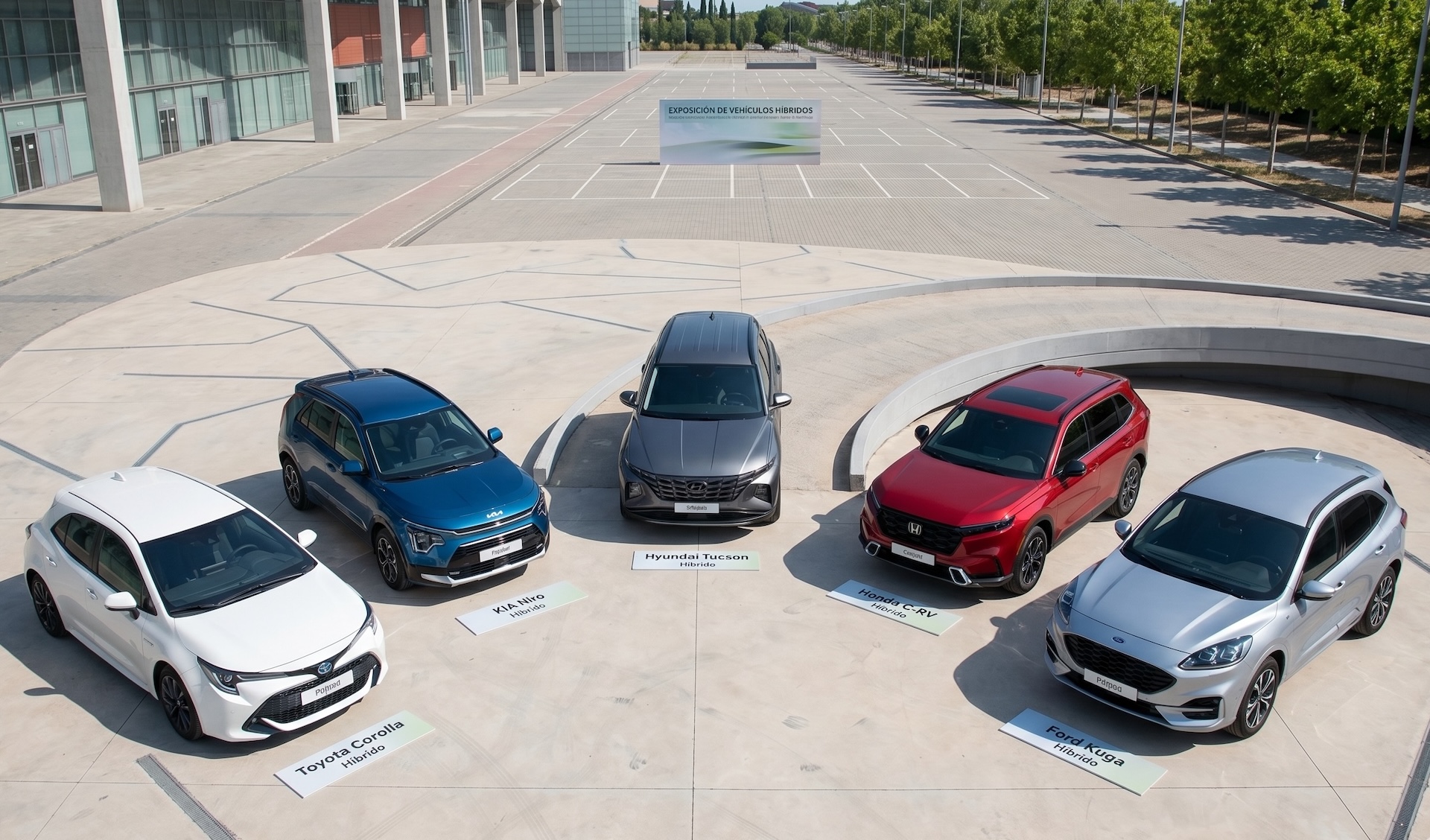
Below we set out the points to consider when choosing the hybrid that best suits your lifestyle at a price that fits your budget.
The hybrid market in 2026 shows a consolidated offer that prioritises efficiency and running costs without giving up safety and connectivity technology. The alternatives range from economical compacts to mid-size SUVs competing to offer the best balance between real-world consumption and purchase cost. Here we describe five representative models that combine competitive pricing and technical performance, highlighting differences in use, positioning and mechanical approach that guide the choice according to city, long-distance or mixed-use needs.
Who is this ranking for?
This ranking is based on market data, official specifications and published road tests. It is designed for buyers who value long-term efficiency and seek a balance between initial outlay and energy cost.
If you drive many kilometres a day and want to reduce fuel spending, if you prioritise contained maintenance costs, or if you are looking for a hybrid for family use with capacity for long trips, you will find practical references in this selection.
What details have we analysed?
We have considered market positioning, official technical data such as power and homologated consumption, expected real-world use by segment, price-to-technical-package ratio, relevant range in electrified versions, and dimensions to assess space and suitability for family or urban use.
Ranking of the 5 hybrids with the best prices and performance on the market
Toyota Corolla Hybrid (from 28,000 €*)
Indicative price without applying public aid or manufacturer commercial discounts.
Why it is here: Compact model with a long track record in mild hybrids, balancing consumption and reliability thanks to a proven full hybrid architecture and an extensive service network across Europe.
Ideal for: Urban and peri-urban drivers seeking low running costs and simple maintenance.
Pros:
- Combined-cycle efficiency verifiable in independent tests.
- Extensive service and spare parts network in European markets.
- Active safety equipment in entry-level trims.
Cons:
- Moderate power output for intensive overtaking.
- Less spacious cabin than alternatives in the compact C-segment.
Kia Niro Hybrid (from 26,500 €*)
Indicative price without applying public aid or manufacturer commercial discounts.
Why it is here: Compact crossover designed to maximise real-world economy and offer good interior space; its hybrid configuration optimises consumption without the need for a plug.
Ideal for: Users who combine city driving with regular medium-distance journeys and value habitability.
Pros:
- Good balance between interior space and exterior size.
- Contained consumption in mixed driving.
- Wide range of safety equipment in mid-level trims.
Cons:
- Driving dynamics geared more towards comfort than performance.
- Some versions add a high cost through optional equipment.
Hyundai Tucson Hybrid (from 36,000 €*)
Indicative price without applying public aid or manufacturer commercial discounts.
Why it is here: Compact SUV with a hybrid engine that prioritises efficiency and performance for families; it combines hybrid propulsion technology with space and modern driver assistance systems.
Ideal for: Families who need boot space and comfort on long journeys, with reasonable consumption on the road.
Pros:
- Competitive interior and boot space in its segment.
- Modern safety equipment and driver assistance.
- Good balance between power and consumption in hybrid versions.
Cons:
- Higher entry price than compact hybrids.
- Weight affects dynamism compared with lighter compacts.
Honda CR‑V Hybrid (from 38,000 €*)
Indicative price without applying public aid or manufacturer commercial discounts.
Why it is here: Mid-size SUV with a hybrid system geared towards comfort and efficiency on long journeys; it stands out for its ergonomics and versatility for intensive family use.
Ideal for: Drivers looking for a hybrid for long mixed journeys and regular family use.
Pros:
- Ergonomics and interior space for passengers and luggage.
- Stable behaviour on the road.
Cons:
- Entry price and maintenance costs higher than compact alternatives.
- Equipment options can push up the overall price.
Ford Kuga Hybrid (from 34,000 €*)
Indicative price without applying public aid or manufacturer commercial discounts.
Why it is here: Offers a balance between performance and efficiency, with well-balanced dynamic behaviour for its size and hybrid engine options that favour versatile use.
Ideal for: Drivers who mix city and road driving and value handling and ergonomics.
Pros:
- Well-balanced dynamic behaviour.
- Equipment options focused on driver assistance technology.
Cons:
- Entry cost higher than the most economical compacts.
- Consumption varies depending on version and driving style.
The prices shown in this ranking are indicative and do not apply public aid or manufacturer commercial discounts.
Purchase aid in 2026: Plan Auto+ and tax benefits
The 2026 Plan Auto+ replaces the previous MOVES programmes and establishes a new system of direct aid for the purchase of electrified vehicles in Spain.
The programme centralises incentives to encourage fleet renewal and prioritises vehicles with a higher degree of electrification and European industrial origin.
Main amounts of the 2026 Plan Auto+
– Direct aid of up to 4,500 € for electric passenger cars.
– Up to 5,000 € for N1 light vans.
– Retroactive from 1 January 2026.
– Approximate budget allocation of 400 million euros.
Who can benefit and priority criteria
Beneficiaries: individuals, self-employed workers and companies. The EEE criterion (Electric, Economic and European) is applied to prioritise deliveries. The Plan favours BEVs over PHEVs; vehicles priced below 35,000 € receive higher aid, and those between 35,000 € and 45,000 € qualify for reduced aid. An additional incentive is granted if final assembly or batteries come from the EU.
Additional requirements and tax advantages
Mandatory minimum discount of 1,000 € from the dealership. 15% deduction on personal income tax (IRPF) up to a maximum of 3,000 €. Tax validity until 31 December 2026.
Management and possible regional aid
Management is coordinated by the Ministry of Industry together with the Autonomous Communities. Additional regional programmes may exist. Example: Plan Cambia 360 in the Community of Madrid. At the time of writing it is not officially confirmed whether these regional aids are compatible with the 2026 Plan Auto+.
FAQ · The 5 questions everyone asks
What real savings can I expect from a hybrid compared with a pure petrol car?
Savings depend on the type of use: in regular city driving and short trips a hybrid can cut consumption significantly; on motorways the difference narrows. Counting annual kilometres and driving pattern is key to estimating the payback.
Do hybrids need special maintenance?
Hybrids have servicing schedules similar to combustion-engine cars, with greater attention to electrical components and the battery system according to warranty. In general, periodic maintenance costs are comparable or slightly lower due to lower load on the combustion system.
Can I apply for public aid with these models?
Yes: the 2026 Plan Auto+ and regional aids may apply depending on price and type of electrification. Full hybrid models usually receive lower incentives than BEVs or PHEVs, unless they meet economic and origin criteria.
Are hybrids easy to resell in Spain?
Demand for hybrids remains stable in the used market; models with a documented service history and a good brand network tend to be easier to sell. Their popularity is sustained by their suitability for daily use.
What should I prioritise when choosing between these models?
Prioritise total cost of ownership (price, consumption, maintenance) and ergonomics according to use. If you need space for a family, an SUV is the better choice; if low running costs are the priority, compact hybrids offer the advantage.
Expert Conclusion
This 2026 ranking summarises how the hybrid segment offers valid alternatives for different uses: from efficient compacts to family SUVs. What this ranking means for the buyer is having clear reference points on what to expect in terms of running costs and real-world usefulness, allowing comparison of proposals that balance entry price and technical performance.
If you want to get the most for your money, first look at the real entry price and what comes as standard. If the model is in high demand, it is usually also easier to sell later. And if you drive many kilometres, energy cost and efficiency matter more than the power figure. If you won’t charge often, don’t buy from the brochure: buy for your routine. In practice: for pure urban use, look at compacts such as the Corolla or Niro; for travel and family, the Tucson or CR‑V are more coherent options; if you want a mix of dynamism and comfort, the Kuga can balance both needs.


 Peugeot E-208 GTi: a battery-powered toy that revives the spirit of the 1980s sports cars
 New Lexus ES: luxury grows and goes electric
 First contact with the Dacia Sandero Hybrid 155: power and efficiency from €19,890
Deja un comentario