Top 5 economical hybrid SUVs for 2026: efficiency without overspending
 Iván Navarro
24 April 2026
8 min.
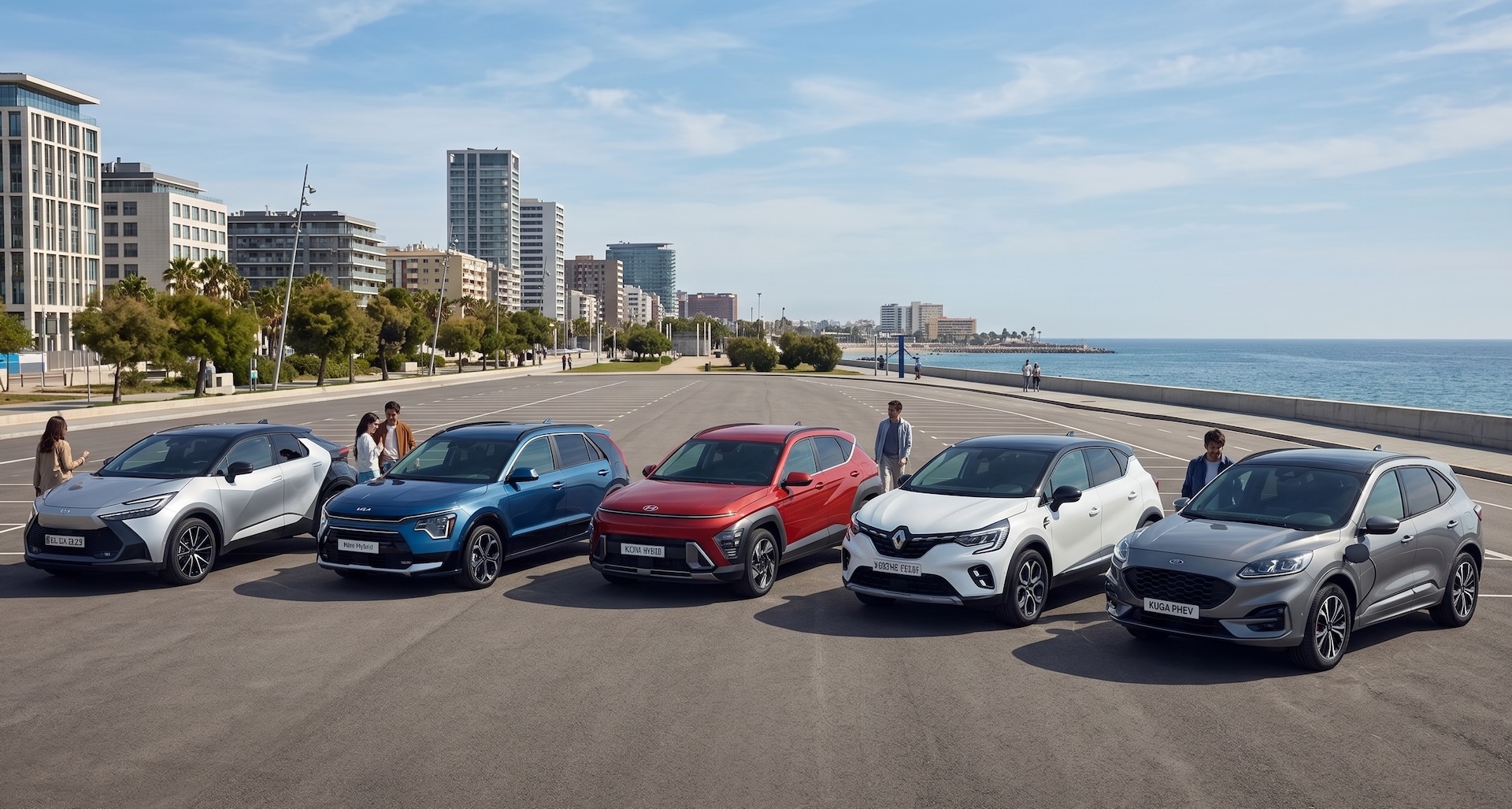
The current offer of electrified SUVs stands out for its great versatility and technological efficiency. The models we analyse below represent the smart transition towards more sustainable mobility adapted to each lifestyle.
The hybrid SUV market in 2026 continues to seek a balance between consumption and affordability. Between new tax measures and a more mature offer, alternatives emerge that prioritise low running costs without giving up driver-assistance and connectivity technologies. This article selects five representative models by efficiency and entry price, describes their technical advantages and points out usage scenarios to help compare options within the urban-suburban and light family segment.
Who is this ranking for?
This ranking is based on market data, official specifications and published road tests. It is designed for drivers who want to minimise the daily cost of mobility without making the leap to a full electric car, and for those who want an SUV with low consumption, practical size and current technology.
If you do a lot of urban mileage and want to reduce fuel spending; if you prioritise a car with a boot and a raised driving position but low consumption; or if you need a vehicle for a small family with a good balance between price and efficiency, here you will find clear, comparable options.
What details have we analysed?
We have considered market positioning, official technical data such as power and homologated consumption, WLTP electric range where applicable, dimensions and the real use expected according to the mechanical configuration, as well as the price/technical approach ratio to assess initial cost against efficiency.
Ranking of economical hybrid SUVs for 2026
Toyota C-HR Hybrid (from €29,900*)
Indicative price without applying public aid or the brand’s commercial discounts.
Why it is here: The C-HR Hybrid represents Toyota’s approach to a compact SUV with self-charging hybrid technology, aimed at reducing consumption in urban driving thanks to its proven hybrid system. It is relevant for its balance between size and efficiency.
Ideal for: Urban and peri-urban drivers looking for low daily consumption and a practical car for a small family.
Pros:
- Hybrid system with a reliability track record.
- Good urban behaviour and low consumption.
- Modern safety equipment in the base versions.
Cons:
- Boot space somewhat limited compared with segment rivals.
- Design and driving position less oriented to long-distance comfort.
Kia Niro Hybrid (from €28,500*)
Indicative price without applying public aid or the brand’s commercial discounts.
Why it is here: The Niro Hybrid combines a crossover-type body with an efficient hybrid powertrain designed to minimise consumption in everyday use. Its interior space and low cost per kilometre make it a practical option within the segment.
Ideal for: Those seeking a clear balance between interior space and efficiency without the complications of external charging.
Pros:
- Good balance between interior space and consumption.
- Driving oriented to comfort and efficiency.
- Wide range of equipment options.
Cons:
- Less premium finishes in the entry versions.
- Less sporty dynamics compared with other compact SUVs.
Hyundai Kona Hybrid (from €26,900*)
Indicative price without applying public aid or the brand’s commercial discounts.
Why it is here: The hybrid version of the Kona offers a compact and affordable alternative within the SUV range, with competitive consumption and a small size that makes urban use easy without giving up certain technological features.
Ideal for: Urban users who need a compact, manageable and economical SUV in consumption.
Pros:
- Size and agility in the city.
- Adjusted consumption in combined cycle.
- Good equipment/price ratio in the base version.
Cons:
- Rear seats somewhat tight for adults on long journeys.
- Boot capacity limited compared with larger rivals.
Renault Captur E-Tech Plug-in (from €30,000*)
Indicative price without applying public aid or the brand’s commercial discounts.
Why it is here: The Captur E-Tech PHEV extends the proposal towards partly electric mobility, with a WLTP electric range useful for daily journeys and reduced consumption on mixed trips, which improves the running cost for many users.
Ideal for: Those who alternate city and motorway driving and can charge daily to take advantage of the electric range.
Pros:
- Adequate electric range for urban commuting.
- Thermal flexibility for long trips.
- Practical and modular interior configuration.
Cons:
- Entry price higher than self-charging hybrids.
- Extra weight from batteries which slightly reduces load capacity.
Ford Kuga PHEV (from €34,500*)
Indicative price without applying public aid or the brand’s commercial discounts.
Why it is here: The Kuga PHEV combines a mid-size platform with plug-in hybrid technology, offering a reasonable electric range and performance aimed at families who need more space and versatility.
Ideal for: Families who make frequent trips and want to reduce consumption on daily journeys by charging with some regularity.
Pros:
- Versatility and generous interior space.
- Good electric range in the city to reduce consumption.
- Comfortable driving on long journeys.
Cons:
- Higher purchase cost than non-plug-in hybrids.
- More complex maintenance and repairs due to the plug-in hybrid drivetrain.
The prices shown in this ranking are indicative and do not apply public aid or the brand’s commercial discounts.
Technical comparison
| Model | Range | Consumption | Top speed | Price (€*) | |
|---|---|---|---|---|---|
| Toyota C-HR Hybrid | ND | ND | 4.7 L/100 km (combined, manufacturer) | ND | 29,900 |
| Kia Niro Hybrid | ND | ND | 4.4 L/100 km (combined, manufacturer) | ND | 28,500 |
| Hyundai Kona Hybrid | ND | ND | 4.5 L/100 km (combined, manufacturer) | ND | 26,900 |
| Renault Captur E-Tech Plug-in | 50 km WLTP | ND | 1.3 L/100 km (combined, PHEV, manufacturer) | ND | 30,000 |
| Ford Kuga PHEV | 56 km WLTP | ND | 1.2 L/100 km (combined, PHEV, manufacturer) | ND | 34,500 |
These data are official and taken from the brands’ official websites.
Purchase aid in 2026: Plan Auto+ and tax benefits
The Plan Auto+ 2026 replaces the MOVES programmes and establishes a new system of direct aid for the purchase of electrified vehicles in Spain. The aim is to encourage electrification without completely eliminating the option of plug-in hybrids, with clear priorities towards more efficient vehicles.
Main amounts of the Plan Auto+ 2026
– Direct aid of up to €4,500 for electric passenger cars.
– Up to €5,000 for light vans in category N1.
– Retroactive effect from 1 January 2026.
– Approximate budget allocation of €400 million.
Who can benefit and priority criteria
Beneficiaries: private individuals, self-employed workers and companies. The EEE criterion (Electric, Economic and European) prioritises BEVs over PHEVs, with a greater incentive for vehicles below €35,000 and reduced aid between €35,000 and €45,000. The manufacture or assembly of batteries in the European Union is favoured.
Additional requirements and tax advantages
There are requirements such as a mandatory minimum discount of €1,000 from the dealer and a 15% deduction in personal income tax up to a maximum of €3,000, valid for tax purposes until 31 December 2026.
Management and possible regional aid
Management is coordinated by the Ministry of Industry together with the Autonomous Communities. Additional regional programmes may exist, for example the Plan Cambia 360 in the Community of Madrid. At the time of writing, it is not confirmed whether all regional aid is compatible with the Plan Auto+ 2026.
FAQ · The 5 questions everyone asks
Is a self-charging hybrid worth it compared with a PHEV?
It depends on use: if you charge daily and do short urban trips, a PHEV reduces the energy cost; if you don’t usually charge, a self-charging hybrid offers simplicity and low consumption without depending on a plug.
What extra maintenance does a hybrid involve?
Hybrids keep the usual maintenance of the combustion engine, with additional electrical components such as the battery and electronics; in general they do not require more frequent interventions, although the batteries have specific warranties.
How does hybridisation affect space and payload?
Plug-in hybrids usually have batteries that take up some boot capacity and add weight; self-charging hybrids have less impact on volume but still add elements that affect modularity.
What real fuel saving can I expect?
Savings vary according to use: in the city a hybrid can reduce consumption by 20–40% compared with a similar petrol car; a PHEV can nearly eliminate consumption if it is charged and used for short daily trips.
How does demand influence the purchase decision?
Models with high demand usually offer advantages such as easier resale and a more established service network; popularity is a practical sign for those who value future liquidity.
Expert Conclusion
This ranking shows that in 2026 there are hybrid alternatives for different profiles without having to raise the initial budget excessively. It means you can prioritise real efficiency and running cost while keeping a practical SUV: hybrids offer simplicity and low consumption in the city, while PHEVs allow you to cut spending even further if you can charge frequently.
If you want to make your money go further, first look at the real entry price and what comes as standard. If you prefer to play it safe, choose models with sustained demand; they tend to be easier to sell later. And if you do a lot of mileage, energy cost and efficiency matter more than power.


 Peugeot E-208 GTi: a battery-powered toy that revives the spirit of the 1980s sports cars
 New Lexus ES: luxury grows and goes electric
 First contact with the Dacia Sandero Hybrid 155: power and efficiency from €19,890
Deja un comentario