2026 ranking: the 6 compact SUVs with the most technological interior on the market
 Bruno Salvatierra
17 May 2026
7 min.
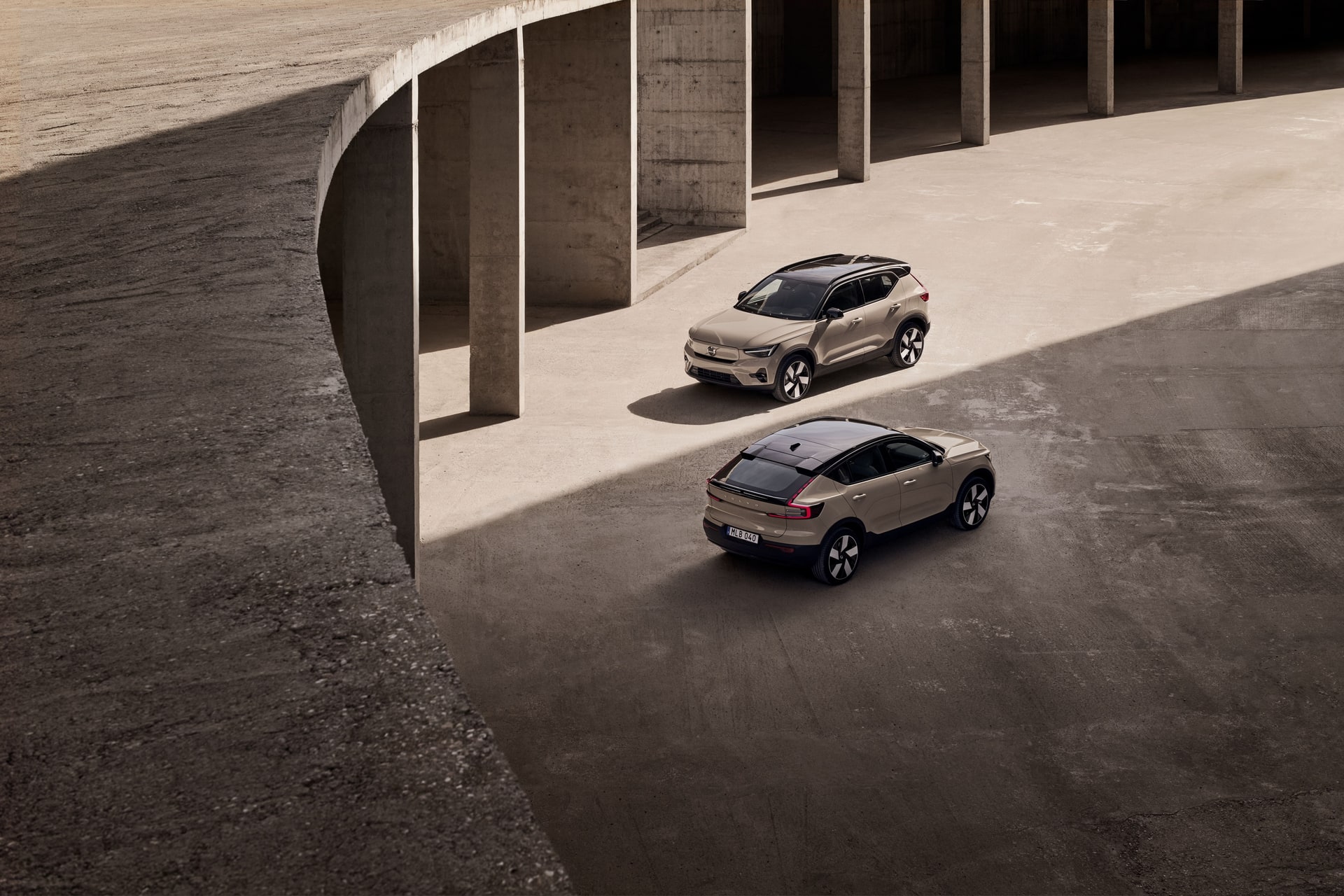
Editorial analysis of the six compact SUVs with the most technological interior on sale in Spain in 2026, comparing screens, digital cockpit, OTA updates and voice assistants.
The C-SUV segment has become the true technological battleground of the mainstream car. Where ground clearance or boot space once ruled, today the conversation revolves around screen inches, proprietary operating systems, remote updates and voice assistants capable of understanding natural language. We have analysed the compact SUVs with the most technological interior sold in Spain in 2026 to build a rigorous ranking, using data verified against official specifications and indicative manufacturer RRP prices (excluding dealer discounts, one-off campaigns and purchase incentives).
How we evaluated interior technology in 2026
To define what counts today as a reference digital SUV interior, we scored six variables: screen size and resolution, operating system fluidity, voice assistant integration, OTA update capability, head-up display quality and cockpit personalisation level. A giant screen alone is not enough: what matters is how the software communicates with the hardware and how well that cabin ages thanks to updates.
What we mean by a “digital cockpit” in a C-SUV
A modern digital SUV cockpit integrates the instrument cluster, central screen, HUD and, in many cases, a third screen for the passenger. The key lies in the electronic architecture: models with centralised (zonal) domain control allow genuine OTA updates to vehicle functions, not just to the infotainment.
The role of OTA updates and voice assistants
In 2026 a car that receives no remote improvements is no longer acceptable. Conversational intelligence, powered by on-board or cloud-based LLMs, makes the difference between an assistant that switches on the heating and one that understands “it’s a bit cold in the back”.
1. Volvo EX40 — from approximately €56,000
The successor to the XC40 Recharge retains its status as the benchmark for native Google integration. Android Automotive runs without an intermediate layer, with Google Maps as the main navigator, Google Assistant recognising natural language and an app ecosystem updatable via the Play Store. The 12.3-inch central screen and the 12.3″ digital instrument cluster share a minimalist, very Scandinavian interface. OTA updates cover both infotainment and driving modules.
| Power kW | Power hp | Top speed | Range | Consumption | Label | Fuel |
|---|---|---|---|---|---|---|
| 185 kW | 252 CV | 180 km/h | ~573 km WLTP | ~16.7 kWh/100 km | 0 emissions | Electric |
2. Cupra Terramar — from approximately €38,000
The first C-SUV born entirely under the new Cupra era offers one of the most theatrical interiors in the segment. A 12.9-inch central screen with the latest-generation Group MIB, a configurable digital cluster, head-up display and the light signature “Cupra Endurance” that interacts with the dashboard ambience. The online voice assistant understands context, and the Martorell brand has notably improved touch responsiveness compared with the first Cupra Formentor. Available in mild-hybrid and PHEV variants with significant electric range.
| Power kW | Power hp | Top speed | Range | Consumption | Label | Fuel |
|---|---|---|---|---|---|---|
| 110 kW | 150 CV | 207 km/h | ~900 km tank | ~6.2 L/100 km | ECO | Hybrid (MHEV) |
Cupra also keeps the Formentor as its coupé sibling, but the Terramar now concentrates the brand’s most advanced software.
3. Renault Scenic E-Tech — from approximately €41,500
Renault has played its hand strongly with the AmpR Medium platform and an OpenR Link system based on Android Automotive with Google services built in from the factory. The pair of L-format screens (12-inch vertical for infotainment, 12.3-inch horizontal for the cluster) is one of the best-resolved in the segment. The Reno assistant, with customisable voice, offers surprisingly natural contextual interactions, and OTA updates arrive regularly. Renault also features one of the crispest HUDs in its class.
| Power kW | Power hp | Top speed | Range | Consumption | Label | Fuel |
|---|---|---|---|---|---|---|
| 160 kW | 218 CV | 170 km/h | ~625 km WLTP | ~16.3 kWh/100 km | 0 emissions | Electric |
4. Peugeot 3008 i-Cockpit Panoramic — from approximately €39,500
The new 3008 redefines what we understand by compact SUV screens: a floating curved surface of 21 inches that integrates the cluster and infotainment under a single pane of glass, with HD resolution and a cinematic graphic finish. The new generation of the i-Cockpit adds customisable i-Toggles (user-configurable touch shortcuts) and the ChatGPT assistant integrated as standard on the top trims. STLA Medium platform with native OTA capability.
| Power kW | Power hp | Top speed | Range | Consumption | Label | Fuel |
|---|---|---|---|---|---|---|
| 157 kW | 213 CV | 170 km/h | ~525 km WLTP | ~17.0 kWh/100 km | 0 emissions | Electric |
5. Hyundai Tucson — from approximately €32,500
In its recent update, the Tucson introduced a panoramic curved dual-screen set of 12.3 + 12.3 inches with the latest generation of ccNC, the group’s new Korean operating system. It supports OTA updates, natural voice recognition, gesture control over the centre console and complete user profiles. The hybrid and PHEV line-up reinforces its position as one of the best compact SUVs 2026 for those seeking technology without jumping to an electric car.
| Power kW | Power hp | Top speed | Range | Consumption | Label | Fuel |
|---|---|---|---|---|---|---|
| 171 kW | 232 CV | 193 km/h | ~1,000 km tank | ~5.6 L/100 km | ECO | Hybrid (HEV) |
6. BMW X1 with BMW Curved Display — from approximately €47,000
| Power kW | Power hp | Top speed | Range | Consumption | Label | Fuel |
|---|---|---|---|---|---|---|
| 230 kW | 313 CV | 180 km/h | ~440 km WLTP | ~17.3 kWh/100 km | 0 emissions | Electric |
Summary table of the 2026 compact SUV ranking
Highmotor editorial score from 1 to 10, weighting screens, operating system, voice, OTA, HUD and personalisation.
| Pos. | Model | Screens | OS / OTA | HUD | Voice / AI | From (indicative RRP) | Score /10 |
|---|---|---|---|---|---|---|---|
| Volvo EX40 | 12.3″ + 12.3″ | Android Automotive · full OTA | Yes | Google Assistant | ~€56,000 | 9.4 | |
| Cupra Terramar | 12.9″ + digital cluster | Latest-gen MIB · OTA | Yes | Contextual online voice | ~€38,000 | 9.1 | |
| Renault Scenic E-Tech | 12″ + 12.3″ | OpenR Link Android · OTA | Yes | Reno assistant | ~€41,500 | 9.0 | |
| Peugeot 3008 | Curved 21″ panoramic | STLA Medium · OTA | Optional | Integrated ChatGPT | ~€39,500 | 8.9 | |
| Hyundai Tucson | 12.3″ + 12.3″ curved | ccNC · OTA | Yes | Natural voice | ~€32,500 | 8.6 | |
| 6 | BMW X1 | Curved 10.25″+10.7″ | iDrive 9 · OTA | Yes (benchmark) | Personal Assistant 3D | ~€47,000 | 8.5 |
Trends that will shape the cabin in 2026
Curved and panoramic screens
The curve has displaced the tablet format. Peugeot, BMW and Hyundai are betting on continuous surfaces that reduce visual fatigue and unify the graphic language between cluster and infotainment.
On-board generative AI
ChatGPT in Peugeot, Renault’s assistants and Google with contextual responses in Volvo: generative AI has stopped being an experiment. In 2026 it already distinguishes intent and context, not just commands.
Proprietary operating systems versus Android Automotive
While BMW evolves iDrive on AOSP and Hyundai rolls out ccNC, Volvo, Renault and others adopt full Android Automotive with Google services. Two philosophies coexist in this compact SUV ranking.
Conclusion: the cabin has become the car
In this analysis of technological compact SUVs, the hierarchy is less and less determined by the chassis and more and more by the software. Volvo leads thanks to the maturity of its Google ecosystem, Cupra and Renault impress with their balance between emotional design and digital depth, and Peugeot raises the visual bar with its curved panoramic screen. Please note that all prices quoted are manufacturer RRP, without discounts, campaigns or purchase incentives.
Frequently asked questions
Which compact SUV has the largest screen in 2026?
The Peugeot 3008, with its curved 21-inch Panoramic i-Cockpit that integrates the cluster and infotainment under a single pane of glass, is currently the compact SUV with the largest screen area on the Spanish market.
Which compact SUVs receive genuine OTA updates to car functions?
Volvo EX40, Renault Scenic E-Tech, Peugeot 3008, BMW X1, Cupra Terramar and Hyundai Tucson all support OTA, though the depth varies: Volvo, BMW and Renault are the most complete, updating driving and efficiency modules as well as the infotainment.
Is it worth paying for a head-up display in a compact SUV?
Yes, especially on motorway and dense urban use. The HUDs of the BMW X1, Renault Scenic and Volvo EX40 project navigation, ADAS and speed clearly, reducing distraction compared with looking at the central screen.
Which car operating system is better in 2026, Android Automotive or proprietary development?
It depends on the user. Android Automotive (Volvo, Renault) offers native integration with Google, the Play Store and frequent updates. Proprietary systems (BMW iDrive 9, Hyundai ccNC) usually have a more refined graphic layer and greater coherence with the rest of the vehicle, but depend on the manufacturer’s schedule to evolve.


 Peugeot E-208 GTi: a battery-powered toy that revives the spirit of the 1980s sports cars
 New Lexus ES: luxury grows and goes electric
 First contact with the Dacia Sandero Hybrid 155: power and efficiency from €19,890
Deja un comentario