5 perfect hybrids for the city in 2026
 Adrián Valcázar
17 February 2026
8 min.
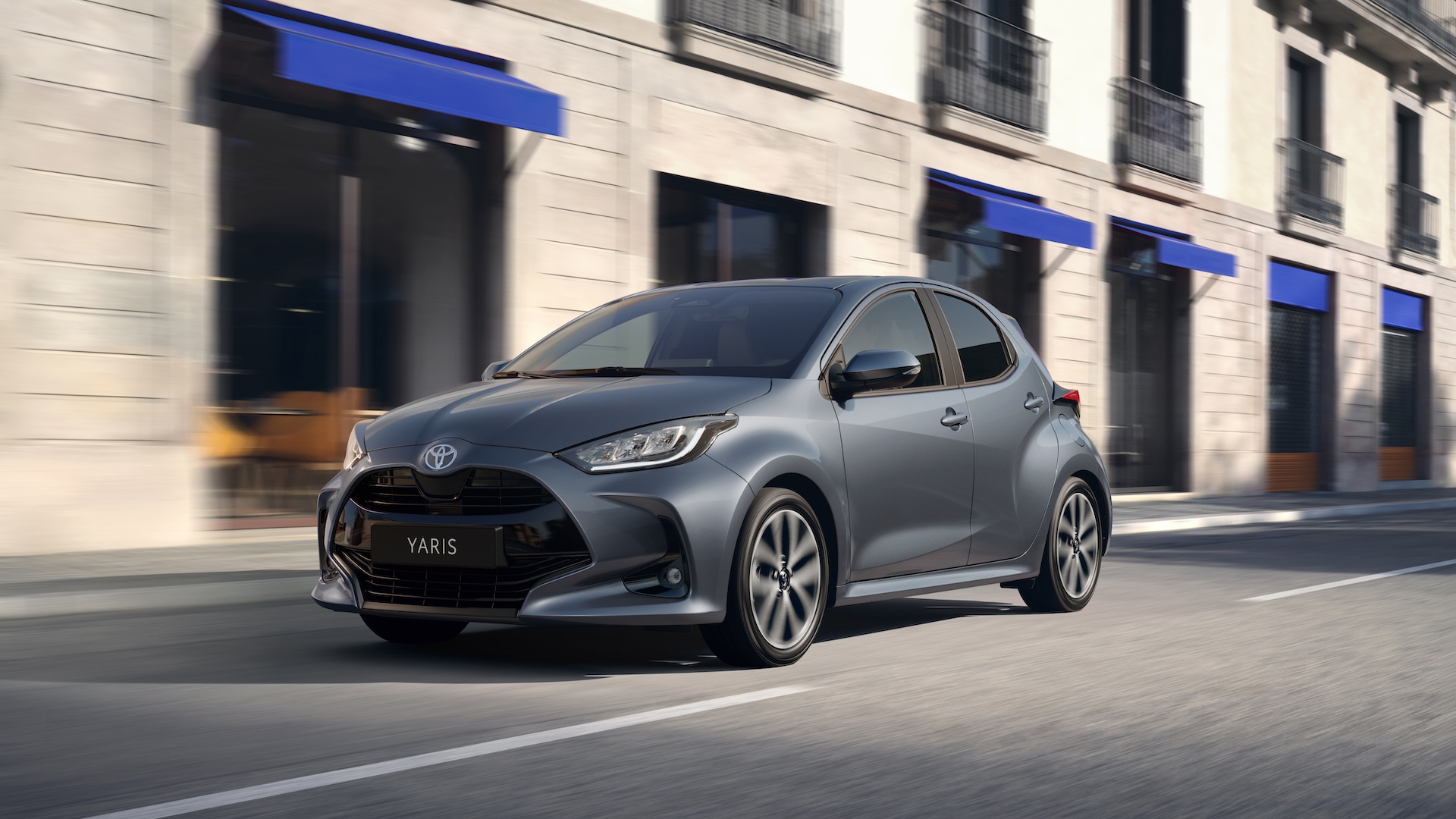
In 2026, demand for urban hybrid cars continues to shape the priorities of many drivers: efficiency on short journeys, ease of parking and contained running costs. The current range combines compact platforms with lightweight electric systems that optimise consumption in town without sacrificing comfort. Here you will find five hybrid models designed for urban environments, comparing their technical approach, size and everyday usability, as well as differences in consumption and equipment. Options are highlighted for those seeking a low cost per kilometre, those who need family versatility in the city and those who prioritise ease of use and maintenance.
Who is this ranking for?
This ranking is based on market data, official specifications and published road tests.
If you mostly drive in urban environments and value low consumption, easy parking and agile handling in dense traffic, this selection is for you. It is also useful if you want a vehicle that reduces daily spending without depending on constant access to charging infrastructure, or if you need a second car for the city with low running costs.
What details have we analysed?
We have considered market positioning, power and propulsion types, WLTP-certified consumption for mixed urban/road use, usable dimensions for manoeuvring and parking, comfort and equipment geared to daily use, as well as the price-to-technical-package ratio to assess the cost of use in urban contexts.
Ranking of the 5 perfect hybrids for the city in 2026
Toyota Yaris Hybrid (from €21,500*)
Indicative price without applying public aid or the brand’s commercial discounts.
Why it’s here: The Yaris Hybrid retains an efficient self-charging hybrid setup, with compact size and low consumption in urban driving. Its third-generation hybrid system prioritises efficiency and responsiveness in traffic, and its bodywork makes parking easier in restricted areas.
Ideal for: Urban drivers looking for everyday practicality on short journeys and contained energy spending.
Pros:
- Low urban consumption and smooth response when pulling away.
- Compact size and good visibility for city driving.
- Maintenance and an established service network.
Cons:
- Limited interior space for families on long journeys.
- Less dynamic handling on the road than larger models.
Hyundai Kona Hybrid (from €24,900*)
Indicative price without applying public aid or the brand’s commercial discounts.
Why it’s here: The Kona Hybrid offers a compact crossover alternative with an urban focus: greater height and interior space without penalising consumption thanks to its hybrid system. It is practical for those who combine city driving with peri-urban trips.
Ideal for: Users who want a versatile city vehicle with easier access and greater load capacity.
Pros:
- More interior space than a city car without sacrificing efficiency.
- Raised driving position that improves visibility in traffic.
- Equipment geared to urban comfort.
Cons:
- Consumption slightly higher than pure hybrid city cars.
- Larger dimensions make some very narrow parking spaces difficult.
Kia Niro Hybrid (from €27,000*)
Indicative price without applying public aid or the brand’s commercial discounts.
Why it’s here: The Niro combines efficiency and practicality in a compact-sophisticated format; its hybrid approach strikes a balance between low urban consumption and space for everyday use. A good choice for those who need cargo flexibility and comfort.
Ideal for: Small families or couples who make mixed journeys with frequent urban trips.
Pros:
- Good interior and boot space for its segment.
- Balanced driving between city and road.
- Hybrid system that reduces consumption in urban use.
Cons:
- Entry price higher than some hybrid city cars.
- Weight and size that hamper manoeuvrability on narrow streets.
Honda Jazz e:HEV (from €23,000*)
Indicative price without applying public aid or the brand’s commercial discounts.
Why it’s here: The Jazz stands out for its interior modularity and the efficiency of its e:HEV system in town. Its layout maximises practical capacity in an urban format and offers low running costs for daily journeys.
Ideal for: Drivers who prioritise interior versatility and economy on daytime urban trips.
Pros:
- Very usable and flexible interior layout.
- Low consumption in urban use and smooth response.
- Easy handling in urban environments.
Cons:
- Trim levels less geared toward the premium segment.
- Boot capacity varies depending on configuration.
Renault Clio E-Tech Hybrid (from €22,000*)
Indicative price without applying public aid or the brand’s commercial discounts.
Why it’s here: The Clio E-Tech strikes a balance between compact design and an efficient hybrid system, with a comfortable set-up for the city and low consumption on frequent journeys.
Ideal for: Users seeking a stylish city car with contained running costs in urban environments.
Pros:
- Compact design and competitive consumption in town.
- Good ergonomics and technology geared to everyday use.
- Competitive entry price within the segment.
Cons:
- Limited rear space on long trips.
- Less refined engine behaviour at high speeds.
The prices in this ranking are indicative, without applying public aid or the brand’s commercial discounts.
Technical comparison
| Model | Range | Power | Consumption | Top speed | Price (€*) |
|---|---|---|---|---|---|
| Toyota Yaris Hybrid | ≈900 km (est.) | 116 CV (system) | ≈3.6–4.0 l/100 km WLTP | ≈175 km/h | €21,500* |
| Hyundai Kona Hybrid | ≈850–950 km (est.) | ≈141 CV (system) | ≈4.5–5.0 l/100 km WLTP | ≈185 km/h | €24,900* |
| Kia Niro Hybrid | ≈900–1,000 km (est.) | ≈141 CV (system) | ≈4.2–4.8 l/100 km WLTP | ≈170–180 km/h | €27,000* |
| Honda Jazz e:HEV | ≈900 km (est.) | ≈109–116 CV (system) | ≈3.7–4.0 l/100 km WLTP | ≈170 km/h | €23,000* |
| Renault Clio E-Tech Hybrid | ≈850–950 km (est.) | ≈140 CV (system) | ≈4.3–4.7 l/100 km WLTP | ≈180 km/h | €22,000* |
These data are official and taken from the brands’ official websites.
Purchase aid in 2026: Plan Auto+ and tax benefits
The 2026 Plan Auto+ replaces the previous MOVES programmes and establishes a new system of direct aid for purchasing electrified vehicles in Spain. The aim is to encourage fleet renewal towards models with lower energy impact and emissions.
Main amounts of the 2026 Plan Auto+
– Direct aid of up to €4,500 for electric passenger cars.
– Up to €5,000 for light vans in category N1.
– Retroactive effect from 1 January 2026.
– Approximate budget allocation of €400 million.
Who can benefit and priority criteria
Beneficiaries: private individuals, self-employed workers and companies. The EEE criterion (Electric, Economic and European) applies, and there is a greater incentive for pure battery electric vehicles (BEV) compared with plug-in hybrids (PHEV). Vehicles priced below €35,000 receive higher aid. Vehicles between €35,000 and €45,000 access reduced aid. Maximum incentive is prioritised if the final assembly or the batteries are of European Union origin.
Additional requirements and tax advantages
A mandatory minimum discount of €1,000 from the dealership is required. There is a 15% deduction on personal income tax (IRPF) up to a maximum of €3,000. The tax validity of these measures remains in force until 31 December 2026.
Management and possible regional aid
Management is coordinated by the Ministry of Industry together with the Autonomous Communities. Additional regional programmes may exist. Example: the Plan Cambia 360 in the Community of Madrid. At the time of writing, it is not officially confirmed whether these regional aids are compatible with the Plan Auto+ 2026.
FAQ · The 5 questions everyone asks
Is a hybrid a good option if I can’t charge at home?
Yes. Self-charging hybrids do not require charging points and recover energy during braking and stop-and-go traffic, reducing consumption in town compared with pure petrol engines.
What is the main real saving of an urban hybrid?
The saving comes from lower consumption in urban cycles and less wear on the braking system. On short journeys and in heavy traffic the difference compared with a conventional petrol car is usually noticeable.
Are hybrid systems expensive to maintain?
Maintenance costs are usually comparable to petrol cars; the battery is covered by specific warranties, and the system reduces the workload on the combustion engine, which can reduce wear in the medium term.
What should I prioritise if I drive a lot in the city?
Prioritise certified urban consumption, ease of manoeuvring and size. A compact design with good efficiency will give you a better cost per kilometre than raw engine power.
Is it worth buying a hybrid if I want to sell it later?
Popular hybrids usually retain their appeal in the second-hand market thanks to their efficiency and versatility; models with a good service network and a reputation for reliability are easier to resell.
Expert Conclusion
This set of hybrids for 2026 reflects how the urban market is moving towards efficient and practical solutions: compact cars or light crossovers that balance consumption, space and comfort. The value of the ranking lies in comparing options designed specifically for the city, from very economical city cars in use to versions offering greater versatility for urban families.
If you want to make your money go further, first look at the real entry price and what comes as standard; the Toyota Yaris and the Clio usually offer value for money in urban environments. If you prefer to play it safe, opt for models with a wide service network such as Hyundai or Kia; if a model is in high demand, it is normally also easier to sell later. And if you do a lot of mileage, energy cost and efficiency matter more than the power figure. And if you don’t charge often, don’t buy from the catalogue: buy according to your routine.


 Peugeot E-208 GTi: a battery-powered toy that revives the spirit of the 1980s sports cars
 New Lexus ES: luxury grows and goes electric
 First contact with the Dacia Sandero Hybrid 155: power and efficiency from €19,890
Deja un comentario