Haval H7 Hybrid Cars ECO Tests SUV
Behind the wheel of the GWM Haval H7: an SUV with the soul of an off-roader and a price that makes you wonder where the catch is?
 Antonio Roncero @roncero_antonio
29 November 2026
14 min.
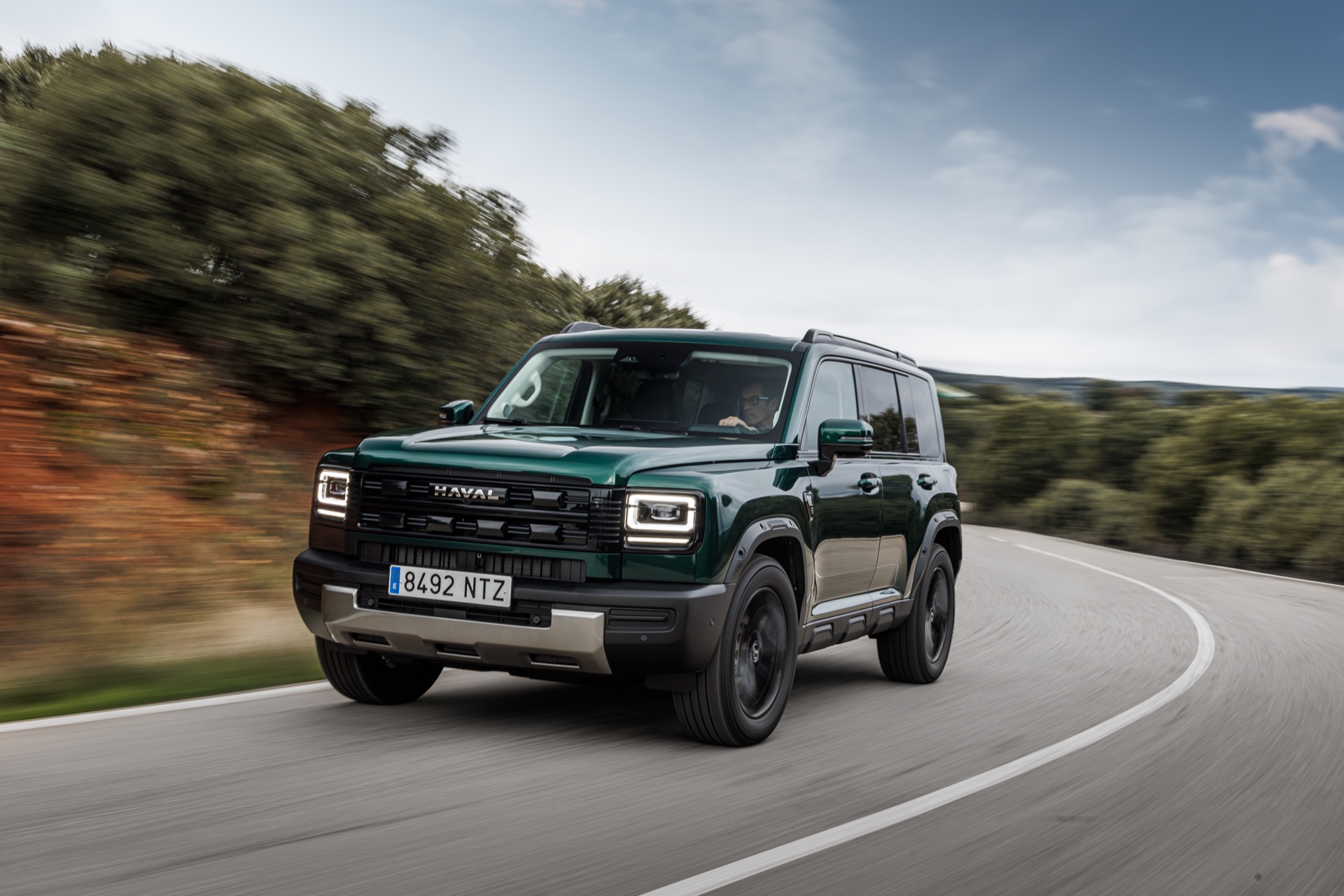
The GWM Haval H7 looks like an off-roader, but it’s an SUV with plenty of 4×4 in it. And its price is surprising: from 28,000 euros with financing. I’ll tell you why the HEV makes the most sense and when the PHEV is worth it.
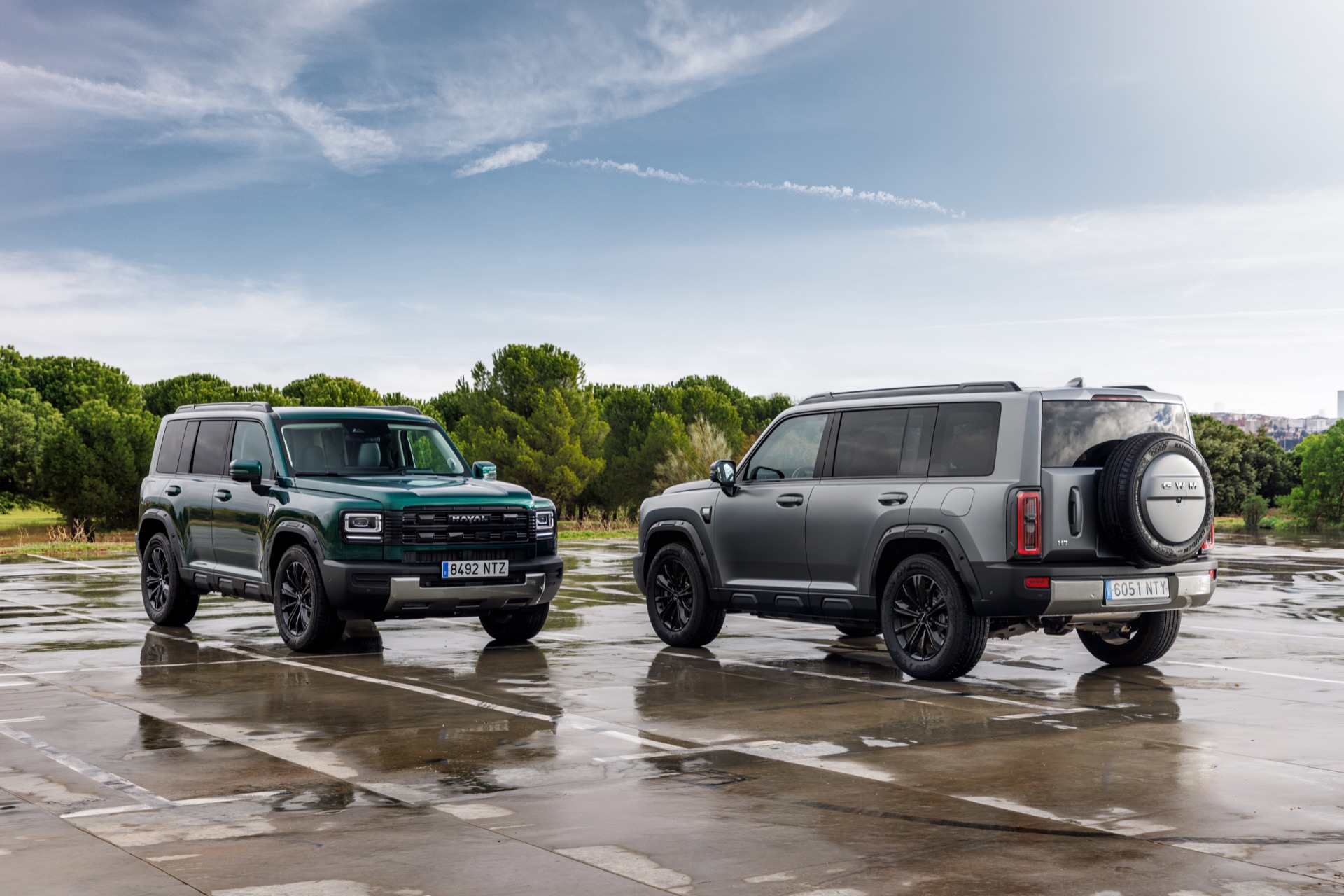
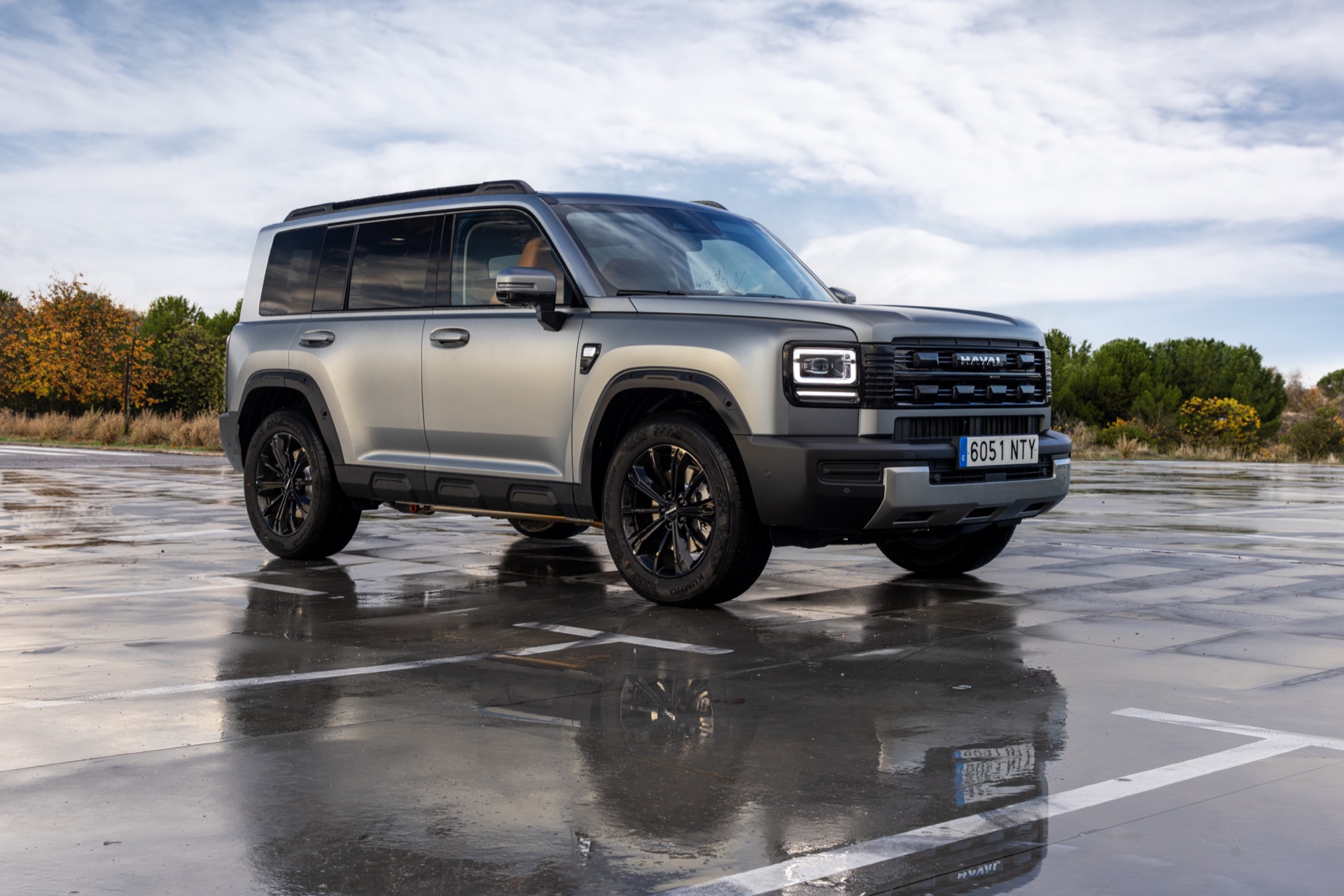
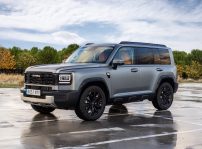
With those squared-off shapes, a very upright front end, pronounced wheel arches and the spare wheel mounted on the tailgate, the first thing you think when you see the Haval H7 is that we’re looking at an off-roader of the old school. When you look at its specifications and price list, the question is whether it’s a mistake or there’s a catch. Well, no, the H7 is not an old-school off-roader, but we could say it’s one of the SUVs in its category with the most off-road soul. As for the price, there’s no mistake: the GWM Haval H7 starts at 28,000 euros in its hybrid version. We’ll go into the prices in detail later and I’ll tell you whether or not there’s a catch.
For now I’ve been able to drive the HEV and PHEV versions at the national presentation of the model, and although a more thorough test is still to come, I can already tell you that the H7 pleasantly surprised me.
An SUV disguised as an off-roader, or a 4×4 with the soul of an SUV?
I’d say the H7 plays both sides – you only have to watch the advertising campaign with the TV spot – and it does so very well. By design it goes for “tough”, and not just on the outside. Sitting behind the wheel, you see almost the whole bonnet, which is long, flat and prominent. On the passenger side there’s a grab handle on the windscreen pillar, the kind fitted to off-roaders so you can hold on when the track gets tricky. The dashboard and doors have a more robust and less minimalist feel than almost any Chinese SUV. And outside, the full-size spare wheel mounted on the side-hinged tailgate completes the 4×4 look.
The vehicle’s dimensions reinforce that impression: it measures 4.80 metres with the spare wheel (4.68 without it), 1.95 wide and 1.84 tall. It has 21 centimetres of ground clearance, a wading depth of 58 centimetres and approach and departure angles of 25 and 32 degrees. All 4×4 versions have an electronic rear differential lock, a selector with up to eight driving modes (including the typical sand, mud, snow… programmes), hill descent control and a 360-degree camera with a “transparent chassis” function. And it can tow up to 2,300 kg in the case of the 2.0T 4×4 petrol, a figure that drops to 1,500 kg for the HHEV and PHEV versions with 4×2 drive, and rises to 1,800 kg in the electrified 4x4s.
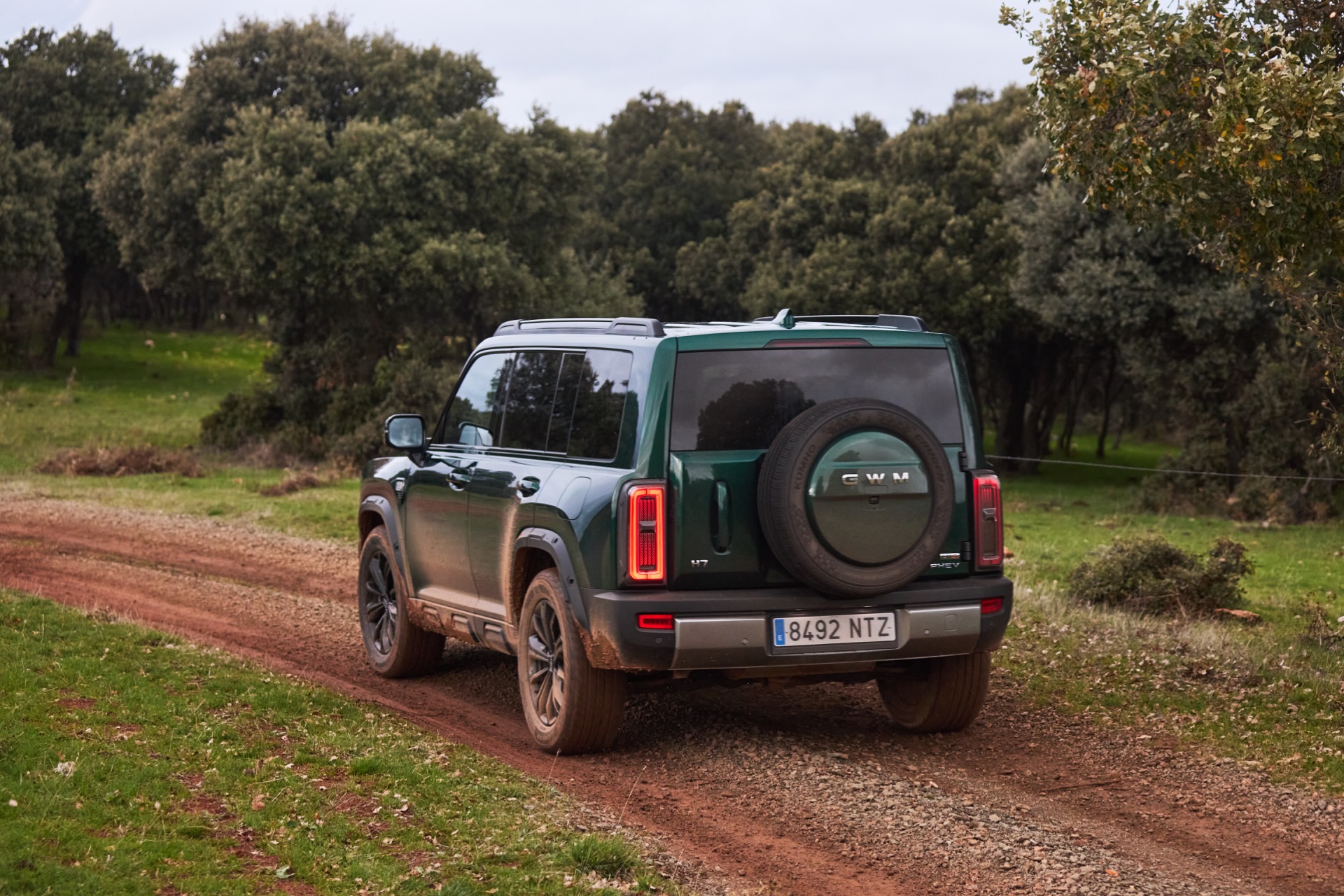
All of this on paper. But on the move, and we’ll go into this in more detail, it also is more of an off-roader than any SUV in its class, in terms of off-road capability and the way it feels underfoot, with a strong sense of robustness, without being uncomfortable on the road or insufficiently agile to get around the city with ease. And no, under the bodywork there’s no ladder-frame chassis. It’s a monocoque, like any SUV, with multi-link suspension. In the two hybrid versions with all-wheel drive, identified as Hi4, the rear axle is not driven by a propshaft; an electric motor provides the drive. It’s a quick and effective system, but not as much as the mechanical four-wheel-drive systems of the “old days”. And inside it’s a genuine family car, with excellent finish, plenty of space for passengers although boot capacity is a little tight, and first-class safety and comfort equipment.
In short, I’m getting carried away a little: is the Haval H7 an SUV or an off-roader? For me, both, depending on how you use it. On tarmac it’s a large and very well-equipped SUV. In the countryside it’s an SUV with capabilities that go beyond what its label promises.
The Haval H7 range at a glance
There are five powertrains and two trim levels, as is usual with Chinese cars, very well equipped from the base. The Explore already comes with 18-inch wheels, a panoramic roof, synthetic leather upholstery, heated front seats, a 15.6-inch screen, a 360-degree camera, seven airbags and a whole battery of driver assistance systems. This trim is reserved for the Hi2 front-wheel-drive hybrids. The Advance trim adds 19-inch wheels, a spare wheel, ventilated seats, heated rear seats, a head-up display, a 10-speaker sound system and automatic parking. It is the only one available for the petrol version, which is always 4×4, and it is also offered as an alternative to the Explore on the 4×2 hybrids, while it is the only trim available for the Hi4 hybrids. Where you can choose (the 4×2 HEV and PHEV), the Advance trim costs 2,000 euros more.
The available powertrains are as follows:
- 2.0T petrol. 215 hp, 9-speed automatic gearbox, 4×4. Label C
- HEV (hybrid): 247 hp and 535 Nm with front-wheel drive, 670 Nm with 4×4. ECO label
- PHEV (plug-in hybrid): 326 hp and 535 Nm with 4×2 drive; 435 hp and 670 Nm with 4×4. ZERO label
Mechanically, the petrol has a 2-litre engine, a 9-speed dual-clutch automatic gearbox and mechanical all-wheel drive with a multi-plate centre differential. The petrol engine in the hybrids is always a 1.5 Turbo producing 150 hp and 250 Nm of torque, combined with an electric motor on the front axle producing 177 hp for the 4×2 and 109 hp for the 4×4. The difference between the HEV and PHEV is that the rear electric motor that handles all-wheel drive produces 177 hp in the HEV and 204 hp in the PHEV. The transmission is a single-ratio DHT in the 4×2 and a three-ratio DHT in the 4×4. The battery in the plug-in versions is LFP and has a 33.7 kWh capacity. It accepts AC charging of up to 6.6 kW, and up to 85 kW DC.
Some interesting performance figures. For example, the petrol accelerates from 0 to 100 km/h in 7.9 seconds and has a homologated combined consumption of 9.6 l/100 km. The HEV needs 8.1 seconds to go from 0 to 100 km/h in the 4×2 version and 7.0 in the 4×4, with homologated consumption of 6.5 and 7.0 l/100 km respectively. In the PHEV, the acceleration figures are 7.9 seconds for the 4×2 and 4.9 seconds for the 4×4, and the homologated electric range reaches 150 km for the 4×2 and 129 km for the 4×4. Top speed is 200 km/h for the petrol, 170 km/h for the HEV and 190 km/h for the PHEV.
Why the 2.0T makes no sense
That may sound like a very bold statement, but you don’t need to drive it to conclude that the petrol version, at least at current prices, isn’t worth it. The homologated consumption difference of almost 3 l/100 km compared with the HEV will be closer to 4 l/100 km in real driving, with everything that implies in cost per kilometre… and in range. And with its almost 30 hp more and considerably more torque, except for top speed, the HEV not only doesn’t fall behind in performance, but has greater acceleration and recovery capability, and is more enjoyable to drive, especially in town. Furthermore, the petrol carries a C label versus the ECO label of the self-charging hybrid.
On top of that, the HEV also lets you choose between 4×2 and 4×4 drive, while the petrol forces you to “carry” full-time all-wheel drive. But the definitive argument against the petrol H7 is that it costs exactly the same as the 4×4 HEV with the same trim. Any reason to choose the petrol? Only one: it tows up to 2,300 kilos versus the hybrid 4×4’s 1,800. If you often tow a heavy caravan, that makes sense. For everyone else, there’s no debate. Because not
Self-charging hybrid HEV or plug-in hybrid PHEV: the real question
This is where a reasonable doubt can arise. And it’s worth doing the sums calmly. Without the Plan Auto+ aid, which is currently exhausted, and this is how it’s best to do the sums, the 326 hp PHEV costs about 3,875 euros more than the HEV with the same trim. It doesn’t matter whether you look at the RRP, the cash price or the financed price: the difference is the same. What do you get for those almost 4,000 euros? Well, quite a lot, in reality. You go from 247 to 326 hp in the 4×2, and to 435 hp in the 4×4. You gain the DGT ZERO label. You get up to 150 km of homologated electric range (around 200 in town) thanks to a battery that can be charged from 30 to 80% in about 19 minutes on DC, and a 6 kW V2L function to power tools or a fridge. And it homologates 1.5 l/100 km (2.2 l/100 km for the 4×4) versus the HEV’s 6.5 (7.0 for the 4×4).
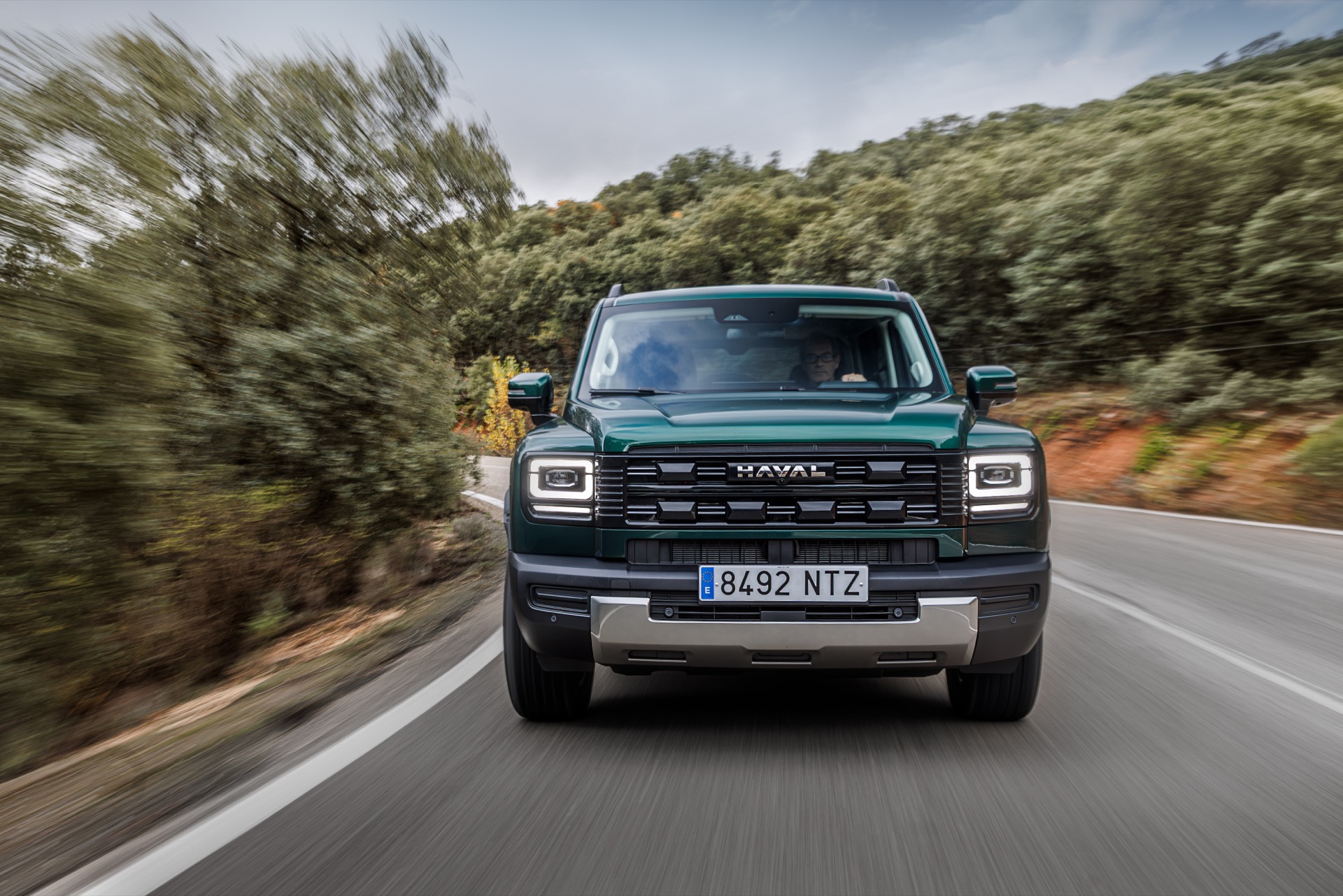
But there’s small print. If we talk about the 4×2, those 326 hp don’t actually make it much quicker: 7.9 seconds from 0 to 100 compared with the HEV’s 8.1; logically, this is because the PHEV weighs about 190 kilos more. Things change if we compare the 4×4 versions, because with its more than 400 hp the PHEV is a “rocket”, and its 0-100 km/h time is 4.9 seconds. As for consumption, you know what happens with plug-in hybrids. Forget the homologated consumption: once the battery runs out you’re in a two-tonne car whose petrol engine often works as a generator, and perhaps not much more, but you will use somewhat more than the HEV.
Mind you, the HEV isn’t a champion of frugality either. The homologated 6.5 litres fall well short in real use: on a route mainly on motorway, the trip computer showed between 8.5 and 9 l/100 km during our first drive, both in the front-wheel-drive version and the 4×4. That’s rather high for a hybrid SUV of this power. In town it drops quite a lot, but if you do a lot of road driving, don’t expect miracles. On the same route and under the same traffic and driving conditions, the PHEV settled at a similar consumption, to which you would have to add the equivalent of depleting the battery.
The summary of all these figures is almost the same as always when comparing HEV and PHEV versions of the same car: the plug-in hybrid is only worth it if you have somewhere to plug it in every day: a garage with a socket – even a domestic one, recharging every night with slow charging – or a charge point at work. If not, you’re paying for a huge battery that you carry around without using. Another matter is if you particularly value performance, in which case the 4×4 PHEV makes a difference. For those who can’t plug in, the HEV is the H7 that makes the most sense. It has more than enough power and is a very pleasant car to drive.
And now comes the second part of the equation: with the Plan Auto+, the PHEV benefits from 2,250 euros of aid, and those 3,875 euros drop to around 1,600. That’s how the H7 is currently being promoted, and with that difference, the PHEV stops being a whim and becomes almost a smart purchase if you can charge it. We’ll have to see what happens if these aids are reinstated and these prices remain
How it drives: behind the wheel of the Haval H7
Compared with other SUVs in its category, the H7 is neither the smoothest nor the most refined. But it is by no means crude or as rough as its exterior image might suggest. It doesn’t have the smoothness of a Geely Starray, a Omoda 7 or a BYD Seal U DM-i, to name a few SUVs from Chinese brands. And if you travel “light”, aerodynamic noise also gets into the cabin sooner than in more road-oriented cars. But that’s no reason to rule it out, not at all. It may not be the most comfortable SUV on the market for covering a lot of kilometres, but I like its feel, the solidity and robustness it offers and, above all, that duality: I think it’s one of the best options in its category if you occasionally want to leave the tarmac and explore tracks and trails with confidence. On the motorway the steering feels light but not imprecise, and driven smoothly you soon feel at ease.
The performance of the 247 hp HEV is more than enough for everyday driving, with an acceleration reserve in any situation. I’m left wanting to check in a longer test how it behaves in demanding conditions, such as a long, steep motorway climb with the battery already depleted. For now I haven’t been able to take the H7 into off-road situations that a less rugged SUV couldn’t handle, but it shows promise even with tyres clearly aimed at tarmac. The TT figures help, with 25 degrees of approach angle, 32 of departure and up to 210 mm of ground clearance.
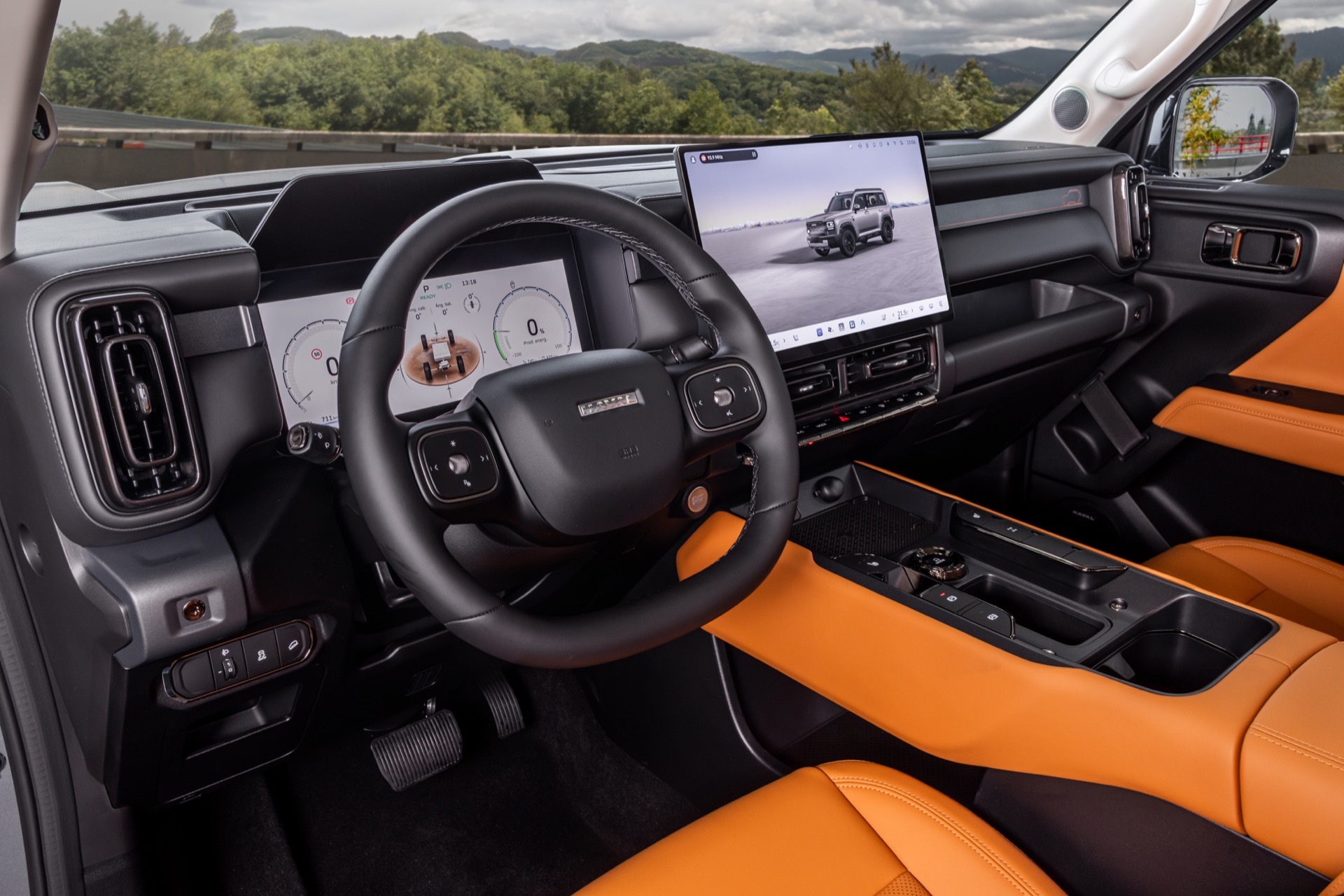
Inside, the perceived quality is more than good. The whole thing feels well put together, the more exposed materials have a pleasant feel and the controls operate pleasantly. And in terms of space, the headroom stands out, greater than almost any rival. Front width is very generous and rear is adequate, with plenty of legroom for passengers, although the floor is a little high. The boot, at 341 litres, is tight (it has the same capacity regardless of engine and transmission type), and the loading lip is high, so lifting heavy objects takes effort. If you load up to the roof, capacity rises to about 580 litres, which gives much more room to manoeuvre. And with the side-hinged tailgate, you’ll need to leave space behind when parking.
How much does the Haval H7 cost: is there a catch?
GWM quotes three prices for the Haval H7. The list or tariff price (RRP), the cash price after discounts, and the price you get if you add the additional discount the brand offers when you finance the purchase. In this last case, the financing discounts require financing a minimum of 20,000 euros with Banco Cetelem, with a minimum term of 36 months. But watch the small print, because GWM specifies that the prices with discounts include the brand’s, the dealer’s and a discount linked to trading in a used vehicle, without specifying the conditions, so it’s worth confirming this with the dealer.
These are the prices of the hybrid versions (for the PHEVs, excluding the Plan Auto+):
| Version | RRP | Cash | Financed |
|---|---|---|---|
| HEV Explore (247 hp) | 35,000 € | 30,500 € | 28,000 € |
| HEV Advance (247 hp) | 37,000 € | 32,500 € | 30,000 € |
| HEV 4×4 Advance (247 hp) | 39,500 € | 35,000 € | 32,500 € |
| PHEV Explore (326 hp) | 40,000 € | 34,375 € | 31,875 € |
| PHEV Advance (326 hp) | 42,000 € | 36,375 € | 33,875 € |
| PHEV 4×4 Advance (435 hp) | 44,500 € | 38,875 € | 36,375 € |
Even so, the 28,000 euros for the HEV Explore with financing is a highly competitive price for an SUV of this size with this equipment. And the same can be said of the plug-in hybrid versions. Just over 36,000 euros for the range-topping 4×4 with 435 hp and Advance trim is a price that will make its main rivals nervous.
Alternatives to the Haval H7
If you like the rugged look of the H7 and want a hybrid without a plug, I’d look at the KGM Torres HEV, especially if you need more boot space. For lots of motorway driving and with a charge point at home, I’d look at, for example, the BYD Seal U DM-i and the Geely Starray EM-i. Other cars I wouldn’t lose sight of are the Toyota RAV4, the Jaecoo 8, the Mitsubishi Outlander and the Geely Monjaro EM-i.
GWM Haval H7 – Photo gallery


 Kia offers an electric range of 10 models, 50 versions and 400 possible combinations
 The seven finalists for the 2027 European Car of the Year (COTY) are exclusively electric
 Peugeot E-208 GTi: a battery-powered toy that revives the spirit of the 1980s sports cars
Deja un comentario