E-308 Megane Peugeot Renault Electric Cars Compact Comparisons Tests
Renault Megane E-Tech vs Peugeot e-308: French electric compact showdown under 40,000 euros
 Iván Navarro
29 November 2026
5 min.
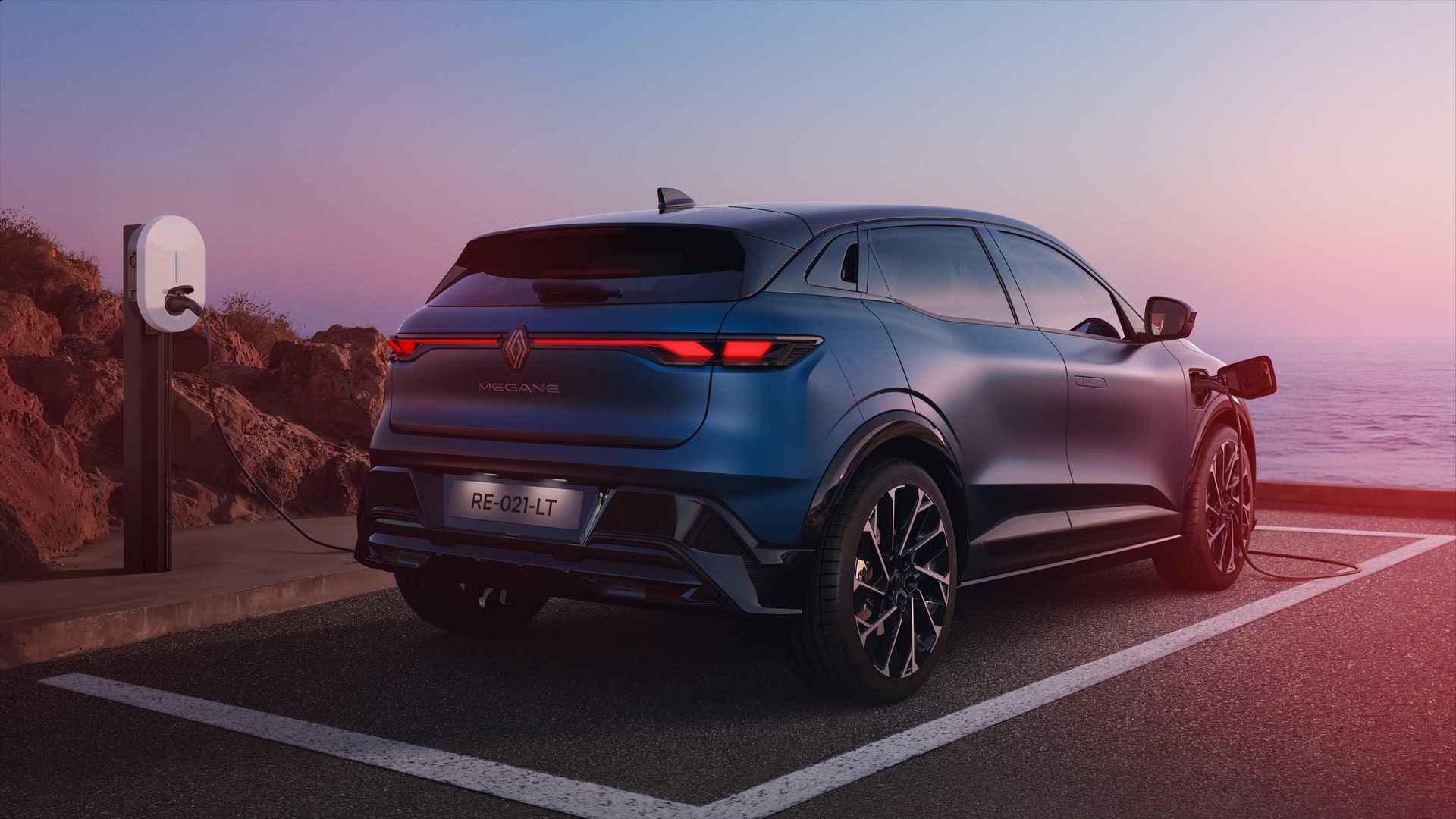
We compare the Renault Megane E-Tech and the Peugeot e-308, two French electric compacts with RRP prices under 40,000 euros. Range, power and equipment head to head.
Two French brands, two different takes on the same problem: how to fit an electric segment C car below the psychological 40,000-euro barrier. Renault and Peugeot have been competing in the Spanish market for years with proposals that, on paper, look quite similar. In practice, not so much.
The Megane E-Tech and the e-308 are built on different architectures (the dedicated CMF-EV platform in the case of the Renault and the multi-energy EMP2 in the case of the Peugeot) and arrive at different results in range, power and price. Let’s break it down using the official data from both manufacturers.
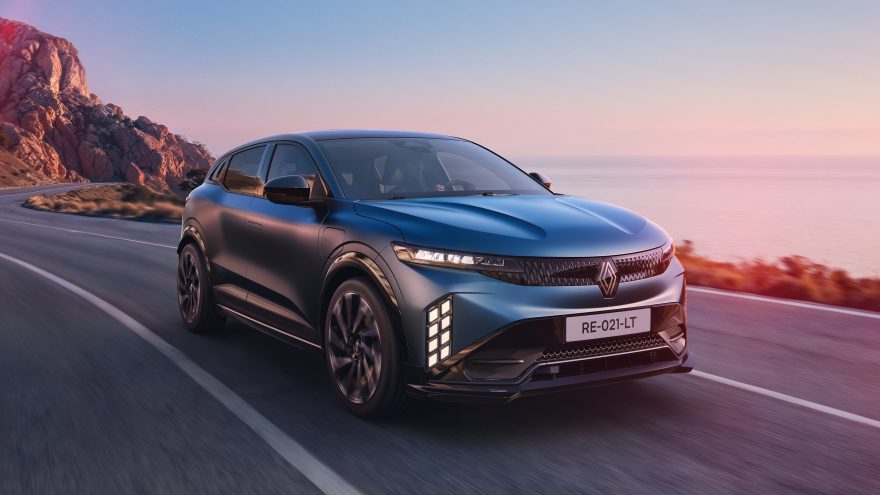
Renault Megane E-Tech, from approximately 40,700 € RRP: technical data sheet
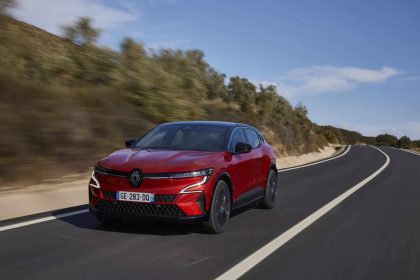
The version we are analysing is the E-Tech Electric Autonomía Confort 220 60 kWh Techno 5p Aut., the sensible entry point within the French compact’s electric range. With 160 kW (220 CV) of power and a 60 kWh usable battery, the Renault is homologated for a WLTP range of up to 470 kilometres, a figure that places the Megane among the compact electric cars with the longest range per charge in its category.
| Model | Fuel | Power (kW) | Power (CV) | Top speed | Range | Battery | Price from |
|---|---|---|---|---|---|---|---|
| Renault Megane E-Tech Electric Autonomía Confort 220 60kWh Techno | Electric | 160 kW | 220 CV | 160 km/h | 470 km | 60 kWh | 40,700 € |
On paper, it is the more powerful of the two. And you can tell: the Megane pulls harder in overtaking and mid-range acceleration, something drivers who use the car on the open road, and not just in town, will appreciate.
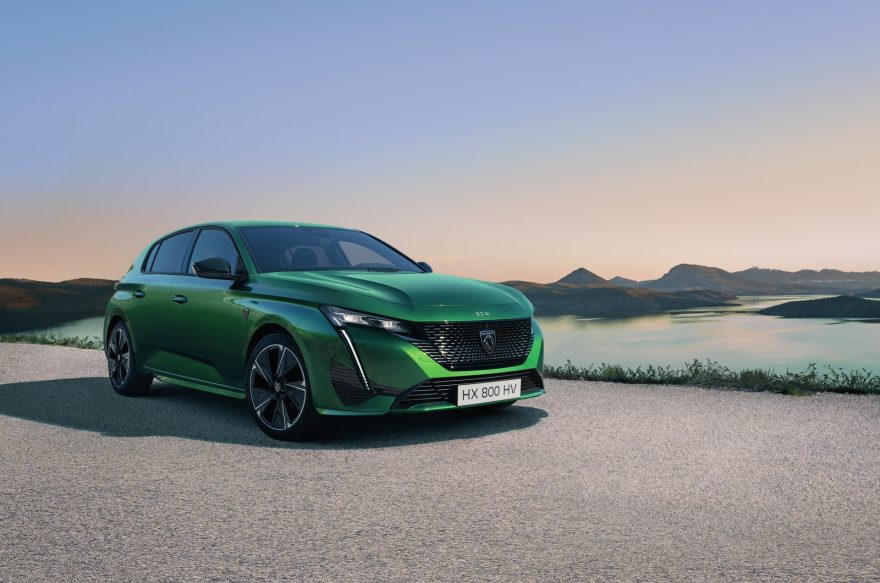
Peugeot e-308, from approximately 38,400 € RRP: technical data sheet
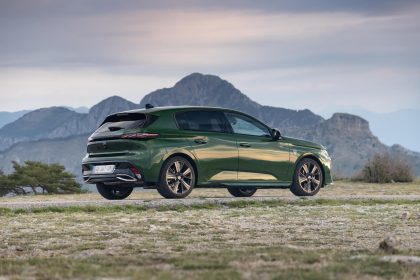
The e-308 competing here is the 156 58.3kWh Style 5p Aut., with 115 kW (156 CV) and a 58.3 kWh gross battery (55.4 kWh usable). The Peugeot declares a WLTP range of up to 450 kilometres, just 20 km less than the Megane but with a noticeably lower starting price.
| Model | Fuel | Power (kW) | Power (CV) | Top speed | Range | Battery | Price from |
|---|---|---|---|---|---|---|---|
| Peugeot e-308 156 58.3kWh Style | Electric | 115 kW | 156 CV | 170 km/h | 450 km | 58.3 kWh | 38,400 € |
Interestingly, the e-308 reaches a higher top speed (170 km/h versus the Megane’s 160 km/h) despite having less power. A tuning detail that says something about each brand’s priorities: the Peugeot has opted for a gear ratio geared more towards motorway driving, while the Renault prioritises instant response and pulling power.
Range and battery: who gets more out of each kWh?
Here lies one of the keys to this showdown. The Megane E-Tech offers 470 km with a 60 kWh usable battery; the e-308, 450 km with 58.3 kWh gross (55.4 kWh usable). Doing the sums on usable capacity, both models deliver very similar figures—around 7.8 km/kWh for the Renault versus roughly 8.1 km/kWh for the Peugeot—allowing the e-308 to come very close in total range despite fitting a slightly smaller battery.
In my view, the 20-kilometre difference is not decisive in real-world use. What does weigh more is cost: the Megane’s larger battery and more powerful motor partly explain why its range figure is higher.
Price and versions: which is more affordable?
The e-308 starts from around 38,400 € RRP, while the Megane E-Tech starts at around 40,700 €. That is roughly 2,300 euros of difference, not to be sniffed at in this price segment. These figures are the manufacturer’s recommended RRP, without dealer discounts, one-off campaigns or purchase incentives such as the Plan Auto+, whose exact amount should always be checked on the official website before closing a purchase.
If budget is the deciding factor, the Peugeot has the advantage. That does not rule out the Megane, with its greater power and range, justifying the higher price for drivers who cover more kilometres.
Design, interior space and boot
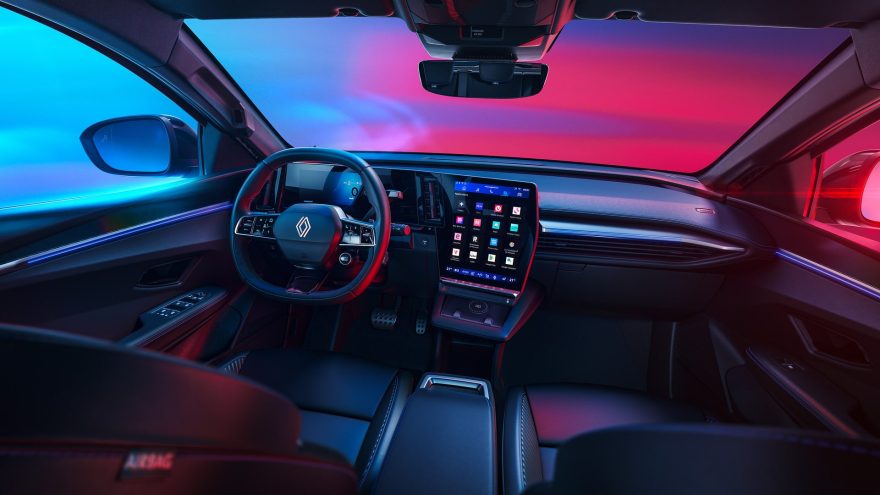
The e-308 keeps the more conservative line of the 308 range, with an i-Cockpit digital dashboard that requires getting used to the small steering wheel and the raised instrument positioning. The Megane E-Tech, by contrast, opts for a more futuristic interior design, with its L-shaped double screen and the OpenR Link software developed together with Google. In day-to-day use, the Renault comes across as a step ahead in interface and usability, something we already noted when analysing how to choose a family electric compact in 2026.
Technology and standard equipment
Both trims—Techno on the Megane, Style on the e-308—include level 2 driver assistance systems, automatic climate control and smartphone connectivity. The Peugeot compensates for its smaller screen with a quality of materials that, in my opinion, remains a notch above in the touch points. The Renault, on the other hand, wins on screen area and menu logic.
Comparative summary table
| Model | Power | Range | Price from | Score |
|---|---|---|---|---|
| Renault Megane E-Tech 220 60kWh Techno | 220 CV | 470 km | 40,700 € | 8/10 |
| Peugeot e-308 156 58.3kWh Style | 156 CV | 450 km | 38,400 € | 7.5/10 |
Verdict: which one is worth buying?
There is no absolute winner, and it is questionable that there would be one in comparisons this tight. The Megane E-Tech offers more power, more range and a more modern technology experience, in exchange for paying a little more. The e-308 responds with a more restrained price and a perceived quality that does not disappoint. If the priority is keeping the budget down, the Peugeot wins on points. If range and technology are the priority, the Renault takes the showdown.
Frequently asked questions
Which has more range, the Renault Megane E-Tech or the Peugeot e-308?
The Megane E-Tech is homologated at around 470 km WLTP versus the e-308’s 450 km, a 20-kilometre difference in favour of the Renault.
Which is cheaper, the Megane E-Tech or the e-308?
The Peugeot e-308 starts from around 38,400 € RRP, compared with 40,700 € for the Megane E-Tech, both indicative prices without discounts or aid.
Which of these two French electric compacts has more power?
The Renault Megane E-Tech offers 220 CV (160 kW), above the 156 CV (115 kW) of the Peugeot e-308.
Are there public purchase incentives for these models in Spain?
Yes, both may benefit from the current Plan Auto+, although the exact amount and requirements should be checked on the plan’s official website before calculating the final price.
Technical specifications of the cars in this article


 Kia offers an electric range of 10 models, 50 versions and 400 possible combinations
 The seven finalists for the 2027 European Car of the Year (COTY) are exclusively electric
 Peugeot E-208 GTi: a battery-powered toy that revives the spirit of the 1980s sports cars
Deja un comentario