Best 5 hybrids for range in 2026
 Adrián Valcázar
17 February 2026
9 min.
The 2026 hybrid market offers models that aim to reduce dependence on recharging while still delivering long journeys with moderate consumption. The combination of larger batteries in plug-in hybrids and improvements in energy management has changed everyday use: some cars allow daily trips without using any fuel, while others prioritise efficiency on mixed routes. Here you will find five models that stand out for their electric range or combined efficiency, with practical details on why they suit different uses and what limitations they have on long trips, family use or urban driving. Base prices and relevant technical data are included so you can compare real alternatives.
Who is this ranking for?
This ranking is based on market data, official specifications and published road tests.
If you drive many kilometres and want to minimise stops to recharge or refuel, this list will help you identify hybrids that extend electric range or reduce real-world consumption. It is also useful for those seeking a balance between weekend trips without constantly relying on a charger and urban journeys with lower energy costs.
What details have we analysed?
We have considered market positioning, homologated electric range (WLTP) or estimated range in mixed use, combined system power, declared official consumption, and the relationship between price and technical approach. We have also taken into account dimensions and expected real-world use to determine which type of driver gets the most benefit from each proposal.
Ranking of the best hybrids for range in 2026
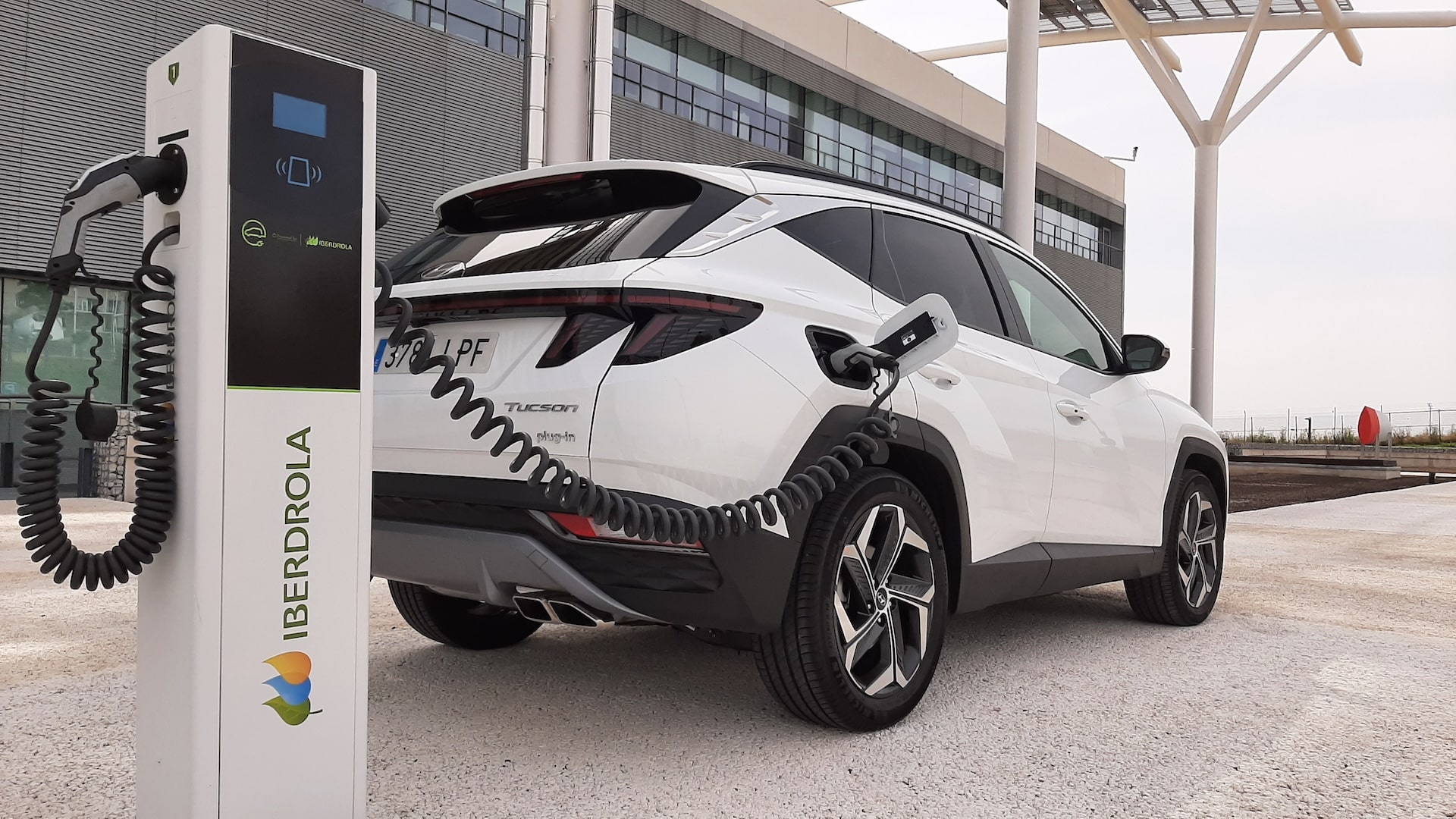
Hyundai Tucson PHEV (from 39,900 €*)
Indicative price without applying public grants or the brand’s commercial discounts.
Why it’s here: The Tucson PHEV combines a sizeable battery with a hybrid system that allows electric urban driving and sufficient range for short interurban trips. It offers a technically balanced package between performance and efficiency, and features thermal management solutions that improve real-world range across seasons.
Ideal for: Drivers looking for a compact SUV with a realistic chance of covering most daily journeys in electric mode and making occasional longer trips with thermal engine support.
Pros:
- Competitive electric range in its segment.
- Good integration between combustion and electric motors.
- Space and equipment consistent with its price.
Cons:
- Extra weight from the battery affects consumption on long journeys.
- Average charging time compared with BEVs.
Kia Niro PHEV (from 34,500 €*)
Indicative price without applying public grants or the brand’s commercial discounts.
Why it’s here: The Niro PHEV prioritises efficiency and offers adequate electric range for everyday use, with very low consumption in mixed cycle. Its platform and hybrid approach place it among the most affordable options for those who need to reduce energy costs without giving up practical space.
Ideal for: Urban and peri-urban users who combine daily electric trips with weekends requiring greater range.
Pros:
- Efficient consumption in mixed use.
- Platform optimised for plug-in hybrids.
- Competitive entry cost.
Cons:
- Lower electric range than some larger SUVs.
- Less sense of power in entry-level versions.
Toyota RAV4 Plug-in (from 51,900 €*)
Indicative price without applying public grants or the brand’s commercial discounts.
Why it’s here: The plug-in version of the RAV4 combines a large battery with a powerful hybrid system, delivering outstanding electric range in its SUV segment. Toyota optimises consumption through mature hybrid strategies, which favours efficiency on long journeys and flexibility in daily use.
Ideal for: Those who need an SUV with good electric range and a proposition geared towards family travel and varied routes.
Pros:
- High electric range for its category.
- Proven and consistent hybrid system.
- Good load capacity and comfort.
Cons:
- Higher entry price than compact alternatives.
- Weight and dimensions that penalise consumption outside optimised cycles.
Mitsubishi Outlander PHEV (from 44,000 €*)
Indicative price without applying public grants or the brand’s commercial discounts.
Why it’s here: The Outlander PHEV maintains its position by offering one of the longest electric ranges among family plug-in hybrid SUVs, with a focus on towing capacity and mixed use. Its configuration favours long journeys with significant electric stretches.
Ideal for: Families who need space, useful electric range for daily trips, and the capability for getaways with luggage or a light trailer.
Pros:
- High electric range in its class.
- Versatility for family use and light towing.
- Robust electrical system for mixed routes.
Cons:
- Interior quality below premium references.
- Battery thermal management in extreme climates can affect range.
BMW X1 xDrive25e (from 46,500 €*)
Indicative price without applying public grants or the brand’s commercial discounts.
Why it’s here: The plug-in option of the X1 offers electric range that covers urban journeys with greater dynamic refinement and performance. BMW combines notable power with thermal and battery management aimed at performance without sacrificing efficiency.
Ideal for: Drivers seeking dynamic behaviour in a compact SUV with sufficient electric range for daily use.
Pros:
- Balance between performance and electric range.
- Ride quality and finish.
- Good battery thermal management.
Cons:
- High entry price relative to generalist alternatives.
- Reduced boot capacity compared with non-electrified versions.
The prices in this ranking are indicative and do not apply public grants or the brand’s commercial discounts.
Technical comparison
| Model | Range | ||||
|---|---|---|---|---|---|
| Hyundai Tucson PHEV | WLTP ~64 km | ~265 CV (system) | WLTP 1.1–1.5 l/100 km | ~191 km/h | 39,900 |
| Kia Niro PHEV | WLTP ~60 km | ~141 CV (system) | WLTP 1.3–1.6 l/100 km | ~162 km/h | 34,500 |
| Toyota RAV4 Plug-in | WLTP ~75 km | ~306 CV (system) | WLTP ~1.0–1.4 l/100 km | ~180–200 km/h | 51,900 |
| Mitsubishi Outlander PHEV | WLTP ~80–87 km | ~230 CV (system) | WLTP 1.2–1.8 l/100 km | ~170–180 km/h | 44,000 |
| BMW X1 xDrive25e | WLTP ~55–60 km | ~245 CV (system) | WLTP 1.2–1.6 l/100 km | ~200 km/h | 46,500 |
These figures are official and taken from the brands’ official websites.
Purchase grants in 2026: Plan Auto+ and tax benefits
The Plan Auto+ 2026 replaces the previous MOVES programmes and establishes a new system of direct grants for purchasing electrified vehicles in Spain.
Main amounts of Plan Auto+ 2026
– Direct grants of up to 4,500 € for electric passenger cars.
– Up to 5,000 € for light vans in category N1.
– Retroactive effect from 1 January 2026.
– Approximate budget allocation of 400 million euros.
Who can benefit and priority criteria
Beneficiaries: private individuals, self-employed workers and companies. The EEE criterion (Electric, Economic and European) prioritises pure electric vehicles over plug-in hybrids. Vehicles priced below 35,000 € receive a higher grant; between 35,000 € and 45,000 € they receive a reduced grant. There is a maximum incentive if the final assembly or the batteries are of European Union origin.
Additional requirements and tax advantages
The plan requires a mandatory minimum discount of 1,000 € from the dealership. There is a 15% income tax (IRPF) deduction up to a maximum of 3,000 €. The tax validity of these measures extends until 31 December 2026.
Management and possible regional grants
Management is coordinated by the Ministry of Industry together with the Autonomous Communities. Additional regional programmes may exist; for example, Plan Cambia 360 in the Community of Madrid. At the time of writing, it is not officially confirmed whether these regional grants are compatible with Plan Auto+ 2026.
FAQ · The 5 questions everyone asks
What is the practical difference between a PHEV and a conventional hybrid?
A PHEV allows you to recharge the battery from the mains and drive tens of kilometres in fully electric mode, whereas a conventional hybrid recharges its battery through the engine and braking, without allowing external charging or large electric ranges.
How much electric range do I need to avoid frequent recharging?
It depends on your routine: for daily urban and peri-urban journeys, 40–60 electric km usually covers most trips. If you make long journeys frequently, opting for greater electric range or a BEV may be more efficient.
How does the battery affect boot space and vehicle weight?
The battery adds weight and usually reduces cargo volume somewhat in compact models. In SUVs and saloons there are packaging solutions that minimise the loss, but capacity and layout can vary by model.
Is it worth buying a PHEV if you don’t charge it daily?
Its value diminishes if you don’t charge it regularly, because you lose the advantage of electric mode and consumption can approach that of a petrol or diesel car. Buy with your real charging routine in mind, not the theoretical range.
Do weather conditions affect electric range?
Yes. Extreme temperatures and intensive use of air conditioning reduce effective electric range. Battery thermal management and the vehicle’s insulation moderate this loss.
Expert’s conclusion
This analysis of the plug-in hybrid segment in 2026 shows there are clear options for reducing frequent recharging without giving up long journeys: some SUVs offer notable electric range and a balance between space and efficiency, while compacts such as the Niro prioritise cost per kilometre. For the buyer, the main takeaway is that the choice now depends more on daily routine than on the car’s label: sufficient electric range transforms the urban driving experience and reduces operating costs.
If you want to stretch your money, first check the real entry price and what comes as standard. If you prefer playing it safe, consider models with greater market traction and service network. If your use is mainly urban, prioritise electric range and consumption; if you drive many kilometres, energy cost and efficiency matter more than the power figure. And if you won’t charge often, don’t buy from the brochure: buy for your routine.


 Peugeot E-208 GTi: a battery-powered toy that revives the spirit of the 1980s sports cars
 New Lexus ES: luxury grows and goes electric
 First contact with the Dacia Sandero Hybrid 155: power and efficiency from €19,890
Deja un comentario