Buying guide 2026: ideal SUVs for your holidays in Spain
 Iván Navarro
21 April 2026
7 min.
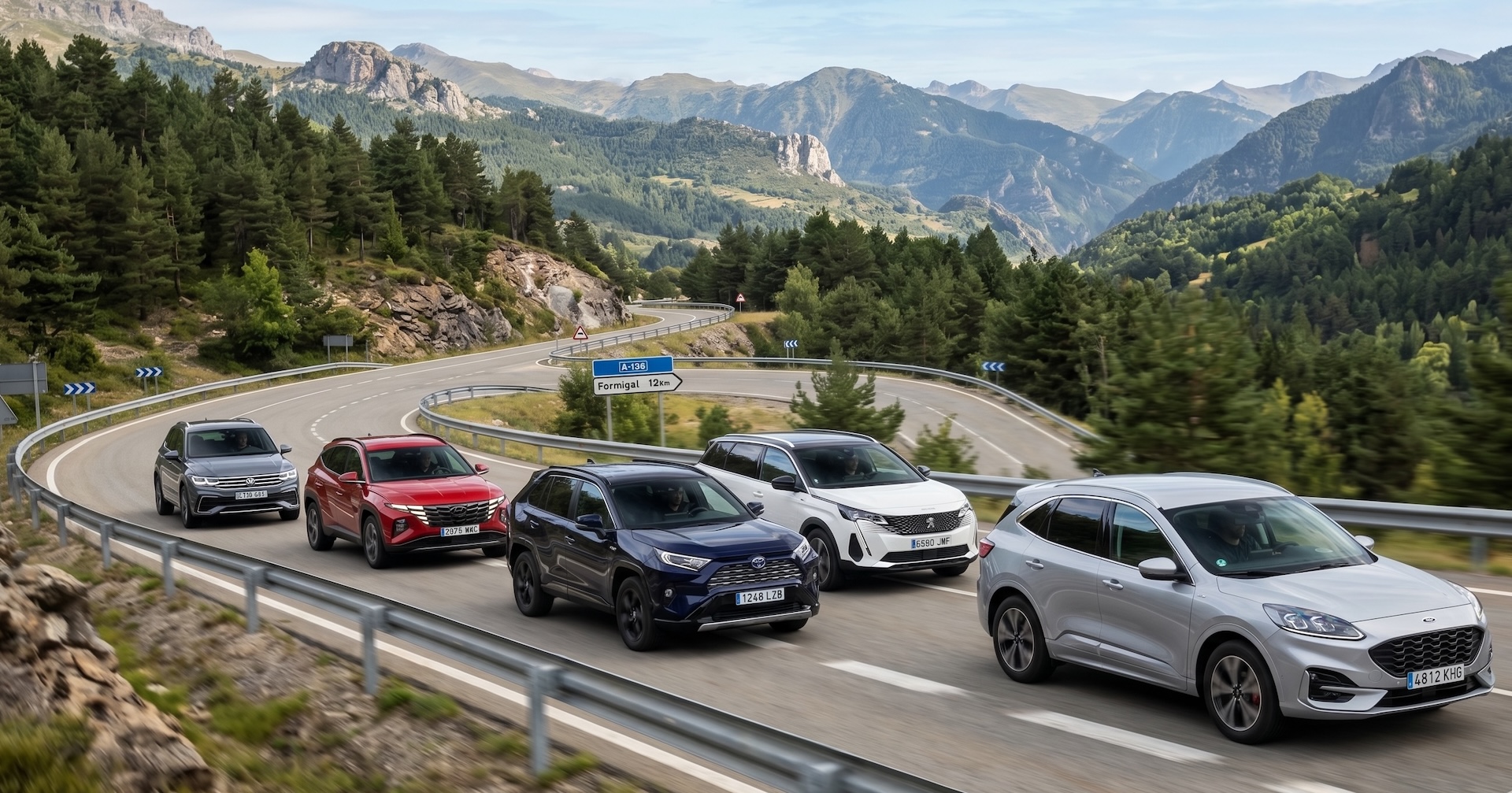
Each model analysed offers a unique perspective, ranging from hybrid and plug-in technologies to solutions designed to maximise interior space.
In 2026 SUVs continue to set the standard for those seeking comfort and versatility on holidays around Spain: generous boots, family-friendly configurations and efficient engines make everything from weekend getaways to long motorway journeys possible. This guide brings together current options with different approaches—from low-consumption hybrids to plug-in alternatives and efficient diesels—and puts their real-world use on trips into context: load capacity, comfort on the road and operating costs. You will find models suited to different budgets and needs, with equipment details, strengths and limitations designed to help you plan trips and tourist routes without surprises.
Who is this ranking for?
This ranking is based on market data, official specifications and published road tests. It is designed for drivers who value space and range on long journeys, families who need flexibility, and buyers who want a balance between running costs and on-the-road comfort.
If you drive a lot on holiday and want to cut down on refuelling stops, if you travel as a group and need boot volume, or if you prefer a plug-in alternative to reduce consumption in town and on the open road, this list will help you compare real, useful options.
What details have we analysed?
We have considered market positioning, official technical data (power, WLTP consumption), boot capacity and comfort on long journeys, estimated range or electric range in the case of plug-in models, and the price-to-technical-package ratio to assess the total cost of use on holiday trips.
Ranking of ideal SUVs for your holidays in Spain 2026
Toyota RAV4 Hybrid (from €39,900*)
Indicative price before applying any public aid or the brand’s commercial discounts.
Why it’s here: The RAV4 Hybrid combines a self-charging hybrid system with a setup geared towards on-road comfort and good interior space. Its powertrain reduces consumption on mixed routes, and its boot is well suited to family trips.
Ideal for: Those looking for reliability, low combined consumption and load capacity for families covering long distances on motorways and secondary roads.
Pros:
- Low consumption in mixed use.
- Load space and comfortable accommodation for four passengers.
- Mature safety systems and driver-assistance features.
Cons:
- Moderate performance compared with more sporty SUVs.
- Entry price higher than compact alternatives.
Volkswagen Tiguan (from €34,900*)
Indicative price before applying any public aid or the brand’s commercial discounts.
Why it’s here: The Tiguan offers a balance between motorway comfort, perceived quality and ease of driving. It is one of the most versatile options in the segment, with several engines to adjust consumption and performance.
Ideal for: Drivers who value neutral handling on the road and a practical interior for long trips with luggage.
Pros:
- Stable behaviour on the motorway.
- Wide range of engines and trim levels.
- Good ergonomics and comfortable seats.
Cons:
- Well-equipped versions raise the final price.
- Slightly smaller boot in some configurations compared with large rivals.
Hyundai Tucson (from €31,000*)
Indicative price before applying any public aid or the brand’s commercial discounts.
Why it’s here: The Tucson stands out for its value-for-money ratio and for offering efficient hybrid engines that reduce the cost per kilometre on long journeys. Its interior design focuses on functionality and comfort for occupants and luggage.
Ideal for: Buyers looking for an option with good standard equipment and contained running costs for frequent holiday trips.
Pros:
- Generous standard equipment.
- Efficient engines focused on real-world consumption.
- Competitive entry price.
Cons:
- Ride feels less filtered on very poor road surfaces.
- Some semi-autonomous aids are less advanced than in premium rivals.
Peugeot 5008 (from €37,600*)
Indicative price before applying any public aid or the brand’s commercial discounts.
Why it’s here: The 5008 is an alternative for families who occasionally need seven seats and a functional boot. Its architecture prioritises modularity and comfort on long journeys with several occupants.
Ideal for: Large families or those who need flexible accommodation for road trips and getaways with bulky luggage.
Pros:
- Optional seven seats and practical storage solutions.
- Suspension tuned for comfort on long journeys.
- Good visibility and ergonomics in the front seats.
Cons:
- Seven-seat versions reduce boot space.
- Engine range less focused on sporty performance.
Ford Kuga PHEV (from €33,900*)
Indicative price before applying any public aid or the brand’s commercial discounts.
Why it’s here: The plug-in version of the Kuga allows you to drive in electric mode in urban areas and tackle long stretches with the support of the combustion engine. It is useful for reducing consumption on mixed routes during holidays.
Ideal for: Those who combine long journeys with stays in urban areas where electric driving is practical.
Pros:
- Sufficient electric range for short trips without using petrol.
- Quiet driving in electric mode.
- A compromise between efficiency and versatility.
Cons:
- Extra weight from the battery slightly reduces payload capacity.
- Price of the best-equipped versions raises the initial cost.
The prices shown in this ranking are indicative, before applying any public aid or the brand’s commercial discounts.
Technical comparison
| Model | Range | Power | Consumption | Top speed | Price (€*) |
|---|---|---|---|---|---|
| Toyota RAV4 Hybrid | ND | 218 CV | 5.8–6.0 l/100 km (WLTP) | 180 km/h | €39,900* |
| Volkswagen Tiguan | ND | 150 CV | 6.1–6.5 l/100 km (WLTP) | 205 km/h | €34,900* |
| Hyundai Tucson | ND | 230 CV (HEV opt.) | 5.7 l/100 km (WLTP) approx. | 205 km/h | €31,000* |
| Peugeot 5008 | ND | 130 CV | 5.1 l/100 km (WLTP) | 195 km/h | €37,600* |
| Ford Kuga PHEV | ≈56 km (electric WLTP) | 225 CV (combined) | 1.2–1.6 l/100 km (WLTP combined cycle) | 200 km/h | €33,900* |
These figures are official and taken from the brands’ official websites.
FAQ · The 5 questions everyone asks
Which SUV is best for long motorway journeys?
Models with hybrid engines or low-displacement diesels and a good tank capacity tend to be more efficient on the motorway. Look for realistic WLTP consumption and suspension comfort to avoid fatigue on long trips.
Is a PHEV worth it for holidays if there is no charging point at the destination?
A PHEV offers an advantage if you can charge regularly; without charging points, the electric benefit diminishes and the vehicle behaves like a heavy hybrid with consumption that varies depending on use and the weight of the vehicle.
How important is the boot for family holidays?
Boot volume and seat flexibility are decisive. More volume and easy access make it easier to carry bulky luggage; seven-seat options can reduce boot space when all seats are in use.
Is it better to prioritise power or efficiency for holiday trips?
For long journeys, efficiency and comfort usually take precedence over raw power. Moderate power with low consumption offers better running costs and motorway comfort.
How does luggage weight affect consumption and range?
Carrying a lot of weight increases consumption and reduces range, especially in electric or plug-in hybrid models. Plan your load and distribute the weight to minimise the impact on consumption.
Expert’s conclusion
This list shows that in 2026 there is no single answer for holidays: hybrids offer a balance between consumption and range, PHEVs make it possible to separate urban and holiday journeys, and traditional SUVs remain valid thanks to their boot and flexibility. What this ranking means for a buyer is having clear alternatives depending on real use: long journeys, large families or a mix of city and road driving.
If you want to get the most out of your money, first look at the real entry price and what comes as standard. If the model is in high demand, it is usually also easier to sell later. And if you do a lot of kilometres, energy cost and efficiency matter more than the power figure.


 Peugeot E-208 GTi: a battery-powered toy that revives the spirit of the 1980s sports cars
 New Lexus ES: luxury grows and goes electric
 First contact with the Dacia Sandero Hybrid 155: power and efficiency from €19,890
Deja un comentario