Buying Guide 2026: The Best ECO Cars for Urban Driving
 Dani Montesinos
20 April 2026
6 min.
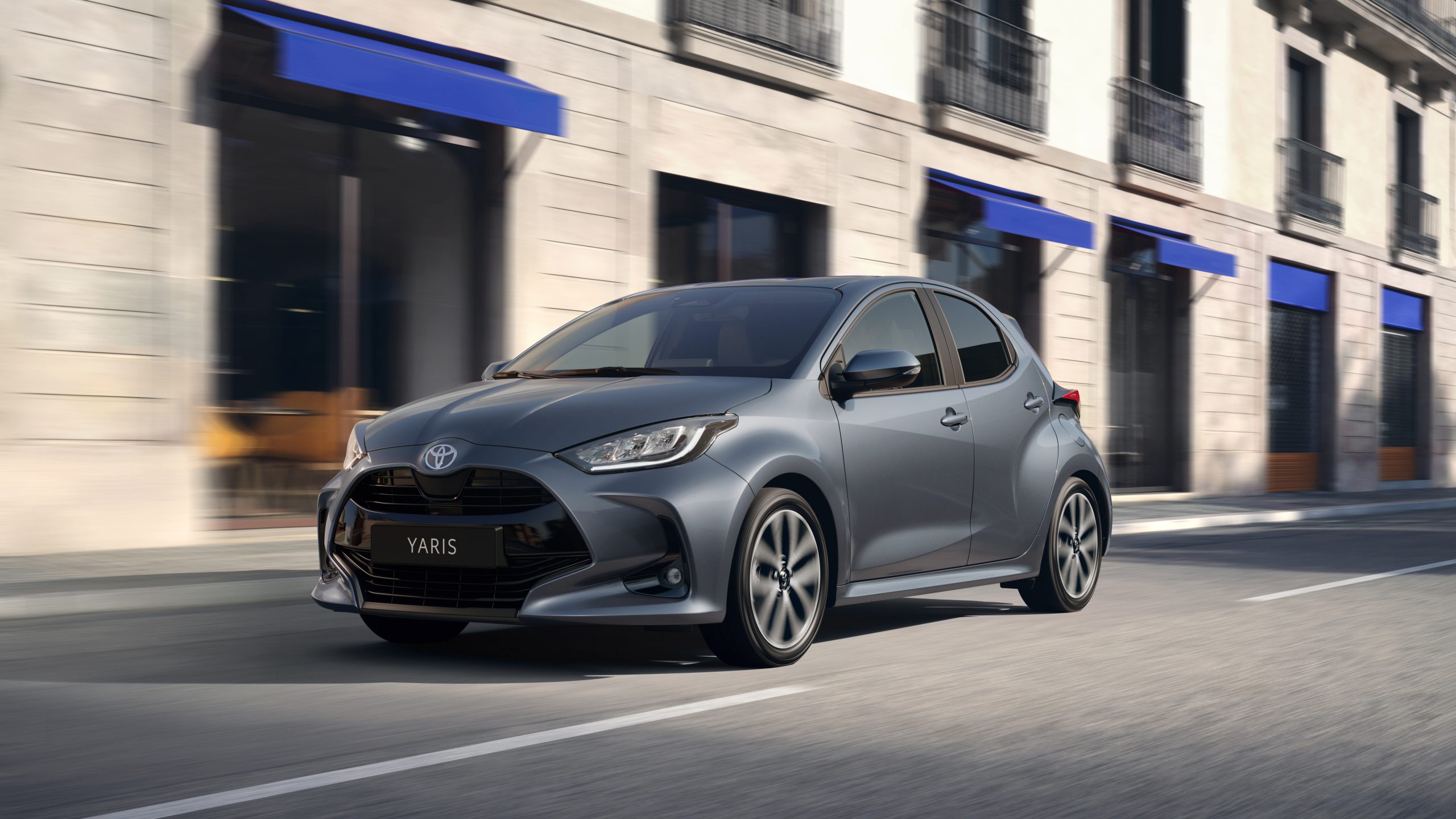
We propose five hybrid models to move nimbly around the city while also thinking about using as little fuel as possible
The urban market in 2026 maintains a pragmatic approach: lower consumption, local emissions and operating cost. In cities with traffic restrictions and emissions-based parking charges, cars with an ECO label offer a balance between daily mobility and access to favourable measures. This guide features compact, versatile models designed for short, frequent trips, comparing consumption, power and positioning to help you identify which one best fits your urban routine, according to use, budget and efficiency expectations.
Who is this ranking for?
This ranking is based on market data, official specifications and published road tests. It is designed for drivers who prioritise running economy and ease of mobility in urban environments, without giving up practical driving behaviour.
If you make many short trips around the city, if you want to reduce your daily fuel spending or if you need a car that allows you to enter emissions-restricted zones, this selection will help you compare real options suited to everyday urban driving.
What details have we analysed?
We have compared market positioning, official WLTP power and consumption figures, estimated real-world range in mixed use, dimensions and urban practicality, as well as the relationship between price and technical approach to understand what each model offers in its segment.
Ranking of the best ECO cars for urban driving 2026
Fiat 500 Hybrid (from €20,850*)
Indicative price before applying public grants or the brand’s commercial discounts.
Why it’s here: The Fiat 500 Hybrid combines a light, efficient powertrain with reduced dimensions suited to the urban environment. Its mild-hybrid system saves fuel in dense traffic and maintains adequate performance for daily use.
Ideal for: City journeys, easy parking and those who prioritise low running costs.
Pros:
- Low consumption in urban cycle
- Very compact size for manoeuvring and parking
- Modest purchase cost
Cons:
- Limited interior space for rear seats
- Adequate power on fast roads outside the city
KIA Niro Hybrid (from €23,880*)
Indicative price before applying public grants or the brand’s commercial discounts.
Why it’s here: The Niro Hybrid offers a balance between efficiency and versatility, with aerodynamics and a hybrid package that reduce consumption in mixed use, allowing frequent urban journeys with good total range.
Ideal for: Users who combine city and motorway driving and need greater habitability and boot space.
Pros:
- Competitive consumption in combined cycle
- Good load capacity and comfort
- Mature and reliable hybrid technology
Cons:
- Higher entry price
- Standard equipment varies by version
Toyota Yaris Hybrid (from €21,775*)
Indicative price before applying public grants or the brand’s commercial discounts.
Why it’s here: The Yaris Hybrid maintains a proven combination of low consumption and small size, with an efficient hybrid system for urban journeys and good manoeuvrability in narrow spaces.
Ideal for: Intensive urban driving, short trips and city parking.
Pros:
- Very low consumption in the city
- Reliability of the hybrid system
- Good behaviour in dense traffic
Cons:
- Somewhat tight rear seats
- Higher-spec equipment raises the price
Renault Clio E-Tech Hybrid (from €23,269*)
Indicative price before applying public grants or the brand’s commercial discounts.
Why it’s here: The Clio E-Tech applies a hybrid solution designed to improve city consumption without sacrificing liveliness. Its compact platform and practical approach make it relevant for urban users.
Ideal for: Drivers looking for a balance between comfort, agility and efficiency.
Pros:
- Hybrid system aimed at reducing consumption
- Good habitability-to-exterior-size ratio
- Agile driving in the city
Cons:
- Slightly reduced boot in hybrid versions
- Some versions require additional equipment for the desired comfort
Hyundai Bayon Mild Hybrid (from €19,560*)
Indicative price before applying public grants or the brand’s commercial discounts.
Why it’s here: The Bayon mild-hybrid offers an accessible formula to obtain an ECO label with good habitability in a small urban crossover format, providing visibility and comfort on city journeys.
Ideal for: Users who prefer an elevated driving position and urban practicality.
Pros:
- Good ergonomics and visibility
- Access to an ECO label at a modest price
- Versatility in the urban environment
Cons:
- Less efficient engine than full hybrids on the open road
- Performance varies with load and environment
The prices shown in this ranking are indicative and do not include public grants or the brand’s commercial discounts.
Technical comparison
| Model | Range | Power | Consumption | Top speed | Price (€*) |
|---|---|---|---|---|---|
| Fiat 500 Hybrid | approx. 700 km | 65 CV | 5.2 l/100km | 155 km/h | 20,850 |
| KIA Niro Hybrid | approx. 700 km | 138 CV | 4.5 l/100 km (WLTP) | 170 km/h | 23,880 |
| Toyota Yaris Hybrid | approx. 800 km | 116 CV | 3.9 l/100 km (WLTP) | 175 km/h | 21,775 |
| Renault Clio E-Tech Hybrid | approx. 1,000 km | 160 CV | 3.9 l/100 km (WLTP) | 180 km/h | 23,269 |
| Hyundai Bayon Mild Hybrid | approx. 800 km | 90 CV | 5.8 l/100 km (WLTP) | 175 km/h | 19,560 |
These data are official and taken from the brands’ official websites.
FAQ · The 5 questions everyone asks
What is the difference between an ECO and a ZERO label?
The ECO label identifies hybrid or mild-hybrid vehicles with reduced emissions, while ZERO corresponds to pure electric vehicles. The label determines access restrictions to urban zones and some tax benefits.
Does a mild-hybrid pay off compared with a full hybrid for the city?
A mild-hybrid reduces consumption when pulling away and in slow traffic, but a full hybrid usually offers greater savings in intensive urban use thanks to its ability to run on electric power at low speeds.
How do you choose between a compact and a small urban crossover?
The compact is easier to park and usually consumes less; the crossover offers better visibility and space. Consider your parking and boot needs before deciding.
How much does the purchase price influence the total cost of ownership?
The initial price affects depreciation, but energy and maintenance costs over time also matter: an efficient car can offset a higher purchase cost if you do many urban kilometres.
Is it difficult to resell a car with an ECO label?
ECO cars retain demand because they offer access to restricted urban zones; if a model is popular, it is usually easier to sell later, although regulatory changes may affect resale value in the long term.
Expert’s conclusion
The ECO segment in 2026 offers solid solutions for the city: from very compact city cars to small crossovers that prioritise comfort. This ranking means that, for most urban users, there are mature technical alternatives that reduce running costs without requiring specific charging infrastructure.
If you want to stretch your money, first look at the real entry price and what comes as standard. If you prefer to play it safe, choose models with strong sales records and a wide service network. If your use is mainly urban, prioritise efficiency and ease of parking. To get the most for your euro, first look at the real entry price and what comes as standard. If a model is in high demand, it is normally also easier to sell afterwards. And if you drive many kilometres, energy cost and efficiency matter more than the power figure. If you won’t charge often, don’t buy from the catalogue: buy for your routine.


 Peugeot E-208 GTi: a battery-powered toy that revives the spirit of the 1980s sports cars
 New Lexus ES: luxury grows and goes electric
 First contact with the Dacia Sandero Hybrid 155: power and efficiency from €19,890
Deja un comentario