BYD Dolphin Electric Cars Compact Comparisons
BYD Dolphin vs. Hyundai Kona Electric: which zero-emission compact offers better value for money
 Iván Navarro
30 May 2026
5 min.
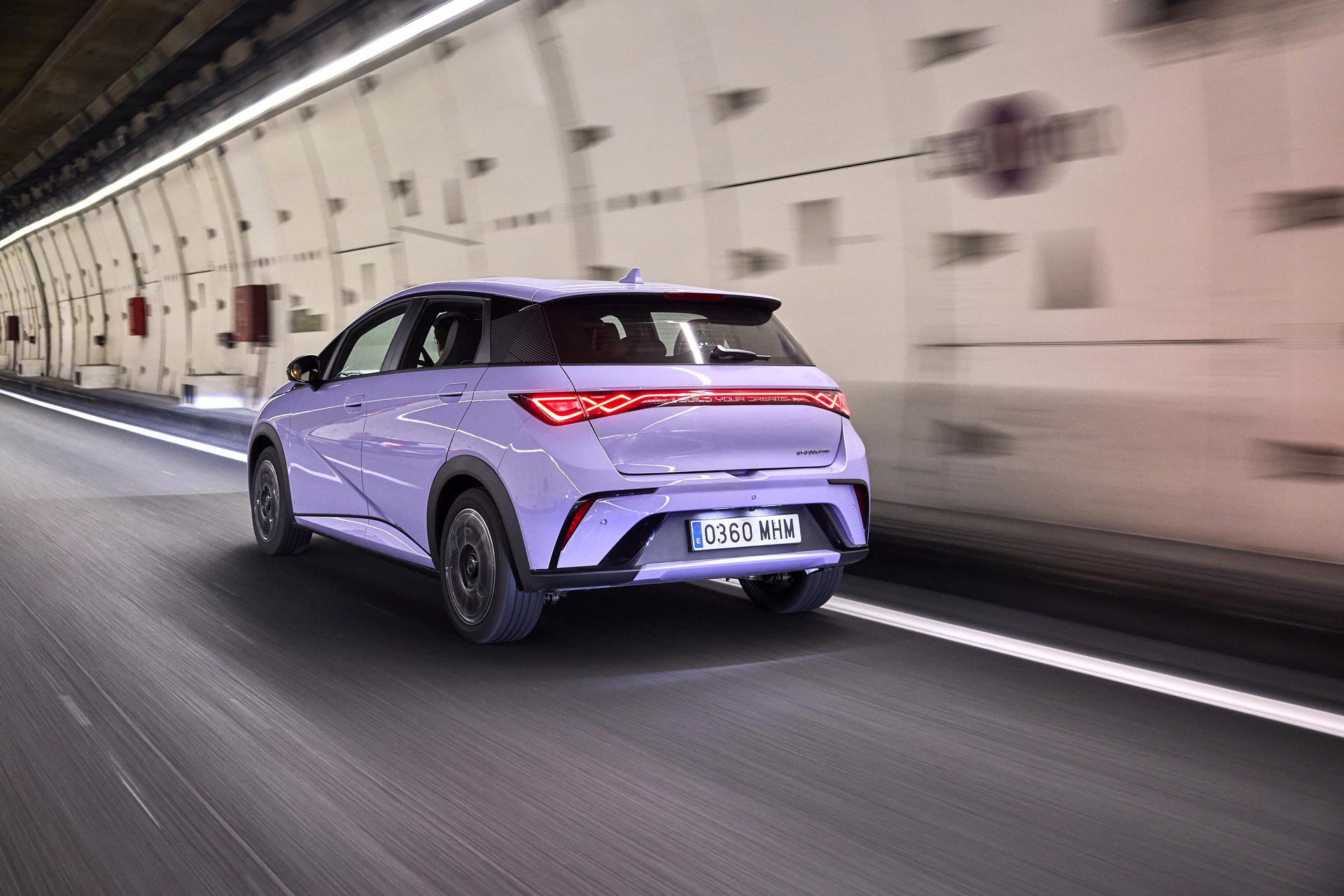
A technical and reasoned comparison between the BYD Dolphin and the Hyundai Kona in the Spanish market: power, range, indicative price, and who each one suits best.
The electric compact segment is enjoying a sweet moment in Spain. The pressure from Chinese manufacturers on the big Asian names has raised an unavoidable question: is it wiser to bet on the value proposition of the BYD Dolphin, or on the industrial maturity of the Hyundai Kona Electric?
Both compete in the same league, both promise zero-emission urban mobility, and both have become barometers of the market. Let’s break them down.
Two philosophies for one segment
The Dolphin is, in essence, the statement of intent of BYD in Europe: a native electric platform (the e-Platform 3.0), Blade lithium iron phosphate battery, and an aggressive approach to pricing. The Kona, meanwhile, is a best-seller converted to electric drive, relying on years on the road, a solid sales network, and an interior finish that remains a benchmark.
The compact electric car comparison has these two models representing opposite archetypes: the newcomer who shakes up the deck and the veteran who reinvents itself.
BYD Dolphin: the technology bet from approximately €36,700
The BYD Dolphin in its 60.4 kWh Comfort version offers very competitive figures: around 200 CV of power, a homologated range close to 430 km, and a Blade battery that stands out for its thermal safety and energy density. Its 4.29-metre body places it right in the heart of the B-SUV/electric compact segment, with an interior that is surprisingly spacious for its exterior dimensions.
| Power kW | Power CV | Top speed | Range | Consumption | Label | Fuel |
|---|---|---|---|---|---|---|
| 150 kW | 200 CV | 160 km/h | ≈430 km | ≈15.9 kWh/100 km | Zero | Electric |
In terms of driving dynamics, the Dolphin prioritises comfort over sportiness: light steering, soft suspension, and an instant 310 Nm of torque that makes it agile in the city. The 12.8-inch rotating central screen and standard equipment (360° camera, air conditioning, electric seats in higher trims) reinforce the sensation of a premium product at a moderate price.
Hyundai Kona: the consolidated benchmark from approximately €30,000
Here an important clarification is needed. The starting spec sheet of the Hyundai Kona we are working with corresponds to the 1.0 TGDi petrol variant, with an ECO label and a recommended retail price of around €30,000. The fully electric version of the Kona —with 48.4 kWh or 65.4 kWh batteries— sits in a higher price bracket, starting above €36,000 on the Spanish market depending on configuration. For consistency with verifiable data, we reflect the official technical sheet available:
| Power kW | Power CV | Top speed | Range | Consumption | Label | Fuel |
|---|---|---|---|---|---|---|
| 90 kW | 120 CV | 180 km/h | — | ≈5.5 l/100 km | ECO | Petrol |
Opinions on the Hyundai Kona Electric agree in highlighting its refinement, its infotainment software (one of the most intuitive in the segment), and a perceived quality that remains above average. It is a car designed for those who value predictability: an extensive workshop network, an 8-year battery warranty, and balanced dynamic behaviour.
Price, range and real cost of use
When it comes to the range and price of the BYD Dolphin, the equation is clear: below an indicative €37,000 you get a 60 kWh battery and a homologated range close to 430 km. The Kona in its petrol version starts lower in RRP, but the cost per kilometre in the medium term —electricity versus fuel, maintenance, taxation— tips the balance towards the electric option for intensive urban profiles.
It is worth remembering that all prices mentioned are the manufacturer’s recommended retail price, without accounting for dealer discounts, active sales campaigns or MOVES plan aid.
And what about the competition in the segment?
The urban electric vehicle segment today is not limited to these two protagonists. Historic brands such as Mitsubishi, a pioneer in electrification with the well-remembered i-MiEV and later with the Outlander PHEV, maintain a presence in Spain with plug-in hybrid offers that indirectly compete for the customer who hesitates between taking the leap to pure electric or staying with an intermediate solution. The philosophy of Mitsubishi —mechanical reliability and moderate pricing— remains a valid argument for those who do not cover great daily distances and seek alternatives to the BYD-Hyundai pairing.
Summary table and verdict
| Model | Power | Range | Indicative price | Label | Score /10 |
|---|---|---|---|---|---|
| BYD Dolphin 60.4 kWh | 200 CV | ≈430 km | ≈€36,700 | Zero | 8.5 |
| Hyundai Kona 1.0 TGDi | 120 CV | — | ≈€30,000 | ECO | 7.8 |
Recommendation by profile
- Urban driver with access to charging: the Dolphin is hard to beat as the best value-for-money electric compact.
- Mixed city-road user without a fixed charging point: the Kona in its thermal or hybrid variant remains a safe bet.
- Those looking for intermediate alternatives: reviewing the Mitsubishi range and its PHEV proposal may offer interesting nuances before deciding.
In the BYD Dolphin vs Hyundai Kona Electric comparison, the Chinese car wins on technology-to-price ratio; the Korean one, on product maturity and network. Choosing one or the other depends less on the car and more on how you use it.
Frequently asked questions
What real range does the BYD Dolphin have in mixed use?
The homologated WLTP range is around 430 km. In real mixed use, owners report figures between 320 and 380 km depending on temperature and driving style.
Does the Hyundai Kona Electric share a platform with the Ioniq 5?
No. The Kona Electric uses a platform adapted from its combustion version, while the Ioniq 5 is based on the 800 V E-GMP architecture, specific to electric vehicles.
What battery warranty does BYD offer on the Dolphin?
BYD guarantees the Blade battery for 8 years or 160,000 km, in line with segment standards.
Are there similar plug-in hybrid alternatives in price?
Yes. Manufacturers such as Mitsubishi maintain PHEV offers that compete in the same price range as these electric cars, providing limited electric range but greater versatility on long journeys.
Technical specifications of this car

 Peugeot E-208 GTi: a battery-powered toy that revives the spirit of the 1980s sports cars
 New Lexus ES: luxury grows and goes electric
 First contact with the Dacia Sandero Hybrid 155: power and efficiency from €19,890
Deja un comentario