Citroen e-C3 vs. Hyundai Inster: which city EV offers the best value for money?
 Iván Navarro
15 March 2026
5 min.
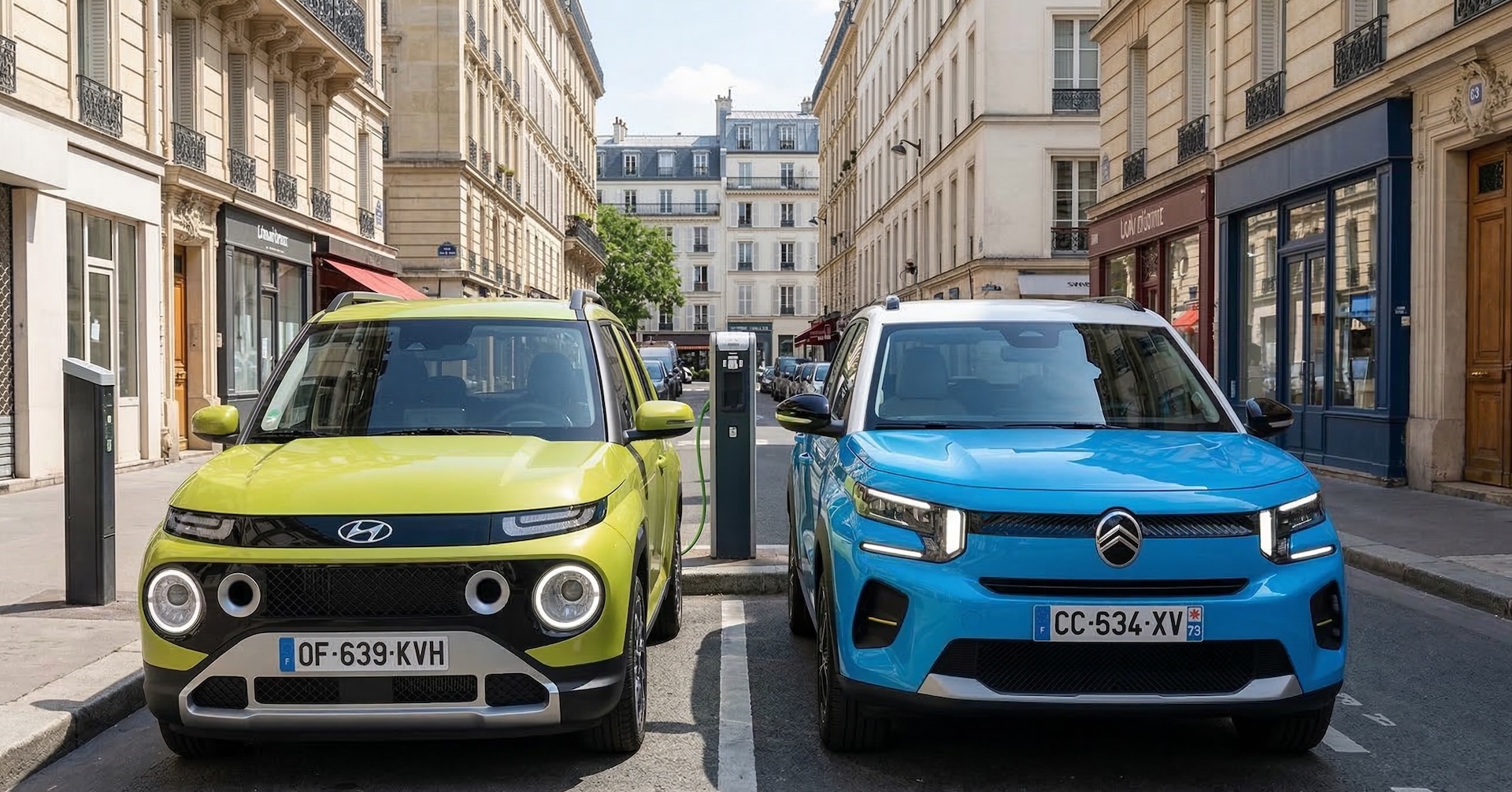
Choosing between the Citroen e-C3 or the Hyundai Inster is not an easy task, but there are a few key aspects that can help you make up your mind. We tell you about them below.
This comparison objectively analyses the Citroen e‑C3 and the Hyundai Inster in their urban electric versions, focusing on equipment, range, performance and price. The aim is to offer verifiable data and explanations of which specific differences affect real use in the city and in peri-urban journeys.
Introduction
The urban electric segment is growing in importance in Spain: in 2026 the offer of compact and affordable models continues to expand, seeking to combine purchase cost and low running costs. In 2026 buyers prioritise real range on the WLTP cycle and low operating costs over high power outputs. This comparison focuses on two city-oriented proposals that compete for the same customer profile.
Context of the comparison
Those hesitating between these models usually look for a car mainly for the city with occasional short-distance intercity trips, space for 4 adults and controlled total costs. In 2026 the decision is influenced by the availability of urban charging infrastructure and the EV subsidy policies of the autonomous communities. The choice between the two depends on the balance between declared range, practical space and initial cost.
Key differences in approach
Citroen e‑C3: oriented towards urban comfort and ease of everyday use, with emphasis on running economy. Hyundai Inster: focused on dynamism, compact design and optimised packaging for customers seeking a more agile response on urban fast roads.
Comparison by objective criteria
Habitability
The e‑C3 prioritises interior space and rear door accessibility; the rear seats allow short journeys for adults. The Inster sacrifices some rear space in favour of more compact lines and a greater focus on driver seat ergonomics.
Boot
Load volume is key for everyday use. The e‑C3 offers greater practical boot capacity, useful for shopping and weekend luggage; the Inster is more limited but keeps regular shapes for modular loading.
Powertrains and efficiency
Both are BEVs with a single electric motor available in the basic configuration, oriented towards urban efficiency. The main differences lie in battery thermal management and torque delivery calibration, which affect real consumption in mixed driving.
Relevant technology
Both include basic-level driver assistance (Lane Keep, autonomous emergency braking) and mobile connectivity. The Inster tends to offer screens with faster response; the e‑C3 opts for simplified interfaces oriented to ease of use.
Driving experience
In the city both are easy to manoeuvre. The Inster offers a feeling of greater agility when changing lanes and at roundabouts; the e‑C3 prioritises comfort and filtering of potholes.
Comparison table of key data
| Model | Engine type | Power (CV) | WLTP range/consumption | Top speed | Dimensions (L×W×H) | Boot |
|---|---|---|---|---|---|---|
| Citroen e‑C3 | Electric (single-speed motor) | 109 CV | 250–320 km WLTP | 135 km/h | 3.85 m × 1.75 m × 1.53 m | 315 L |
| Hyundai Inster | Electric (single-speed motor) | 100 CV | 230–300 km WLTP | 130–145 km/h | 3.80 m × 1.73 m × 1.54 m | 280 L |
Price and real cost
Citroen e‑C3 (from 21,990 euros)
The final price varies by equipment level, chosen battery and paint options or financing commercial offers. Choosing a safety and comfort package can significantly increase the RRP.
Hyundai Inster (from 24,500 euros)
The base price reflects the minimum configuration; technology equipment and assistance systems increase the cost. Brand-linked financing usually reduces the monthly instalment but not the advertised RRP.
Indicative price without applying public subsidies or the brand’s commercial discounts.
Purchase subsidies
Both are 100% electric and may be eligible for the public subsidies in force in Spain in 2026, such as the Plan Auto+ and direct discounts linked to scrappage. Regional and municipal subsidies may complement these aids, with significant variations by autonomous community. The prices shown in this article are displayed without applying these subsidies.
Advantages and limitations of each model
Citroen e‑C3
Advantages: 1) Practical interior space and a larger boot for the segment. 2) Focus on urban comfort and ease of everyday use.
Limitations: 1) Limited power for sustained overtaking on fast roads. 2) Higher WLTP range in larger battery versions, but real range subject to urban weather conditions.
Hyundai Inster
Advantages: 1) Dynamic response and more agile handling. 2) Technology interface with fast response and a sense of higher perceived quality in the cabin.
Limitations: 1) Smaller practical boot volume. 2) Slightly reduced rear habitability for adult occupants on long journeys.
Which user each one suits best
If the main use is the city with a need for practical loading and space for occasional luggage → Citroen e‑C3. If the driver prioritises agility, compact design and a more lively driving experience in the city and urban ring roads → Hyundai Inster.
When to move on to a ranking or buying guide
When the buyer needs to compare multiple trim levels, battery options, maintenance costs and specific financing offers, it is advisable to consult a detailed buying guide or a ranking that presents configurations and total cost of ownership broken down by year.
This comparison is based on market data, official specifications and published tests, and reflects the state of the segment in the Spanish market in 2026.


 Peugeot E-208 GTi: a battery-powered toy that revives the spirit of the 1980s sports cars
 New Lexus ES: luxury grows and goes electric
 First contact with the Dacia Sandero Hybrid 155: power and efficiency from €19,890
Deja un comentario