Is it time to forget about plugs forever and bet on a vehicle powered by a hydrogen fuel cell?
 Iván Navarro
15 March 2026
3 min.
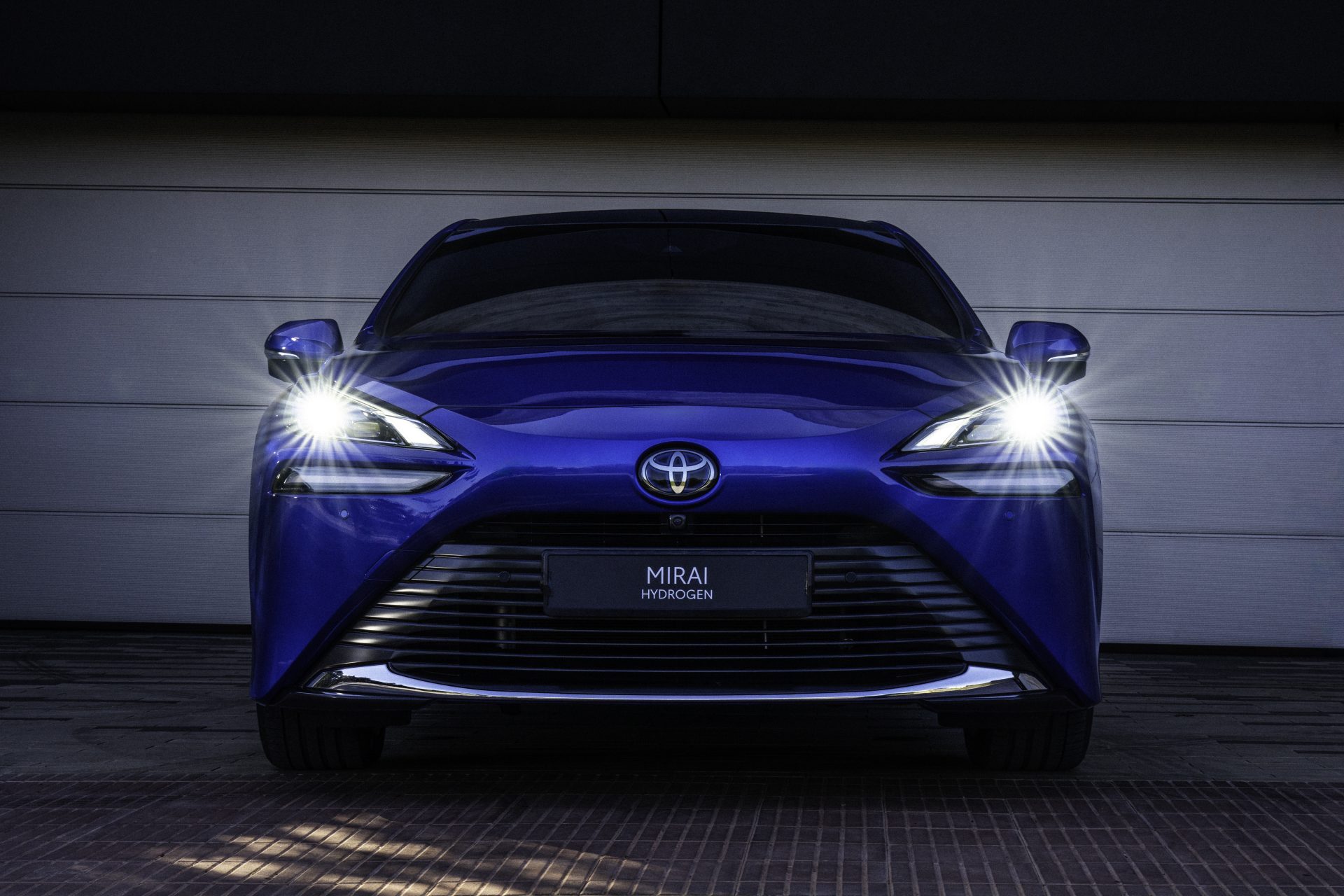
Is the fuel cell electric vehicle really a genuine alternative to the battery electric vehicle? Below we analyse it.
What if, in five minutes and without plugging in, you could drive 600 km? The hydrogen engine is already on the road and forces drivers to rethink the future of refuelling.
Hydrogen is not magic, it is engineering — with real advantages and limitations that determine whether it can or cannot replace plug-in electric vehicles.
Clear advantages: refuelling in 5 minutes, real-world ranges above 500–650 km (WLTP) in models such as the Toyota Mirai or the Hyundai Nexo, and better behaviour in cold climates and for heavy loads.
Critical limitations: the production of green hydrogen is still expensive, efficiency is much lower than that of a BEV, and the network of hydrogen refuelling stations is still very limited in Europe and Spain.
What you need to know:
- Range and refuelling: a real FCEV offers between 500 and 650 km WLTP and refuelling in 3–7 minutes.
- Energy efficiency: green hydrogen drops to around 25–35%, compared with 65–80% for a BEV.
- Fuel cost: today hydrogen costs more per useful kWh than electricity; the price per 100 km is usually higher than for an electric car.
- Infrastructure: pilot networks in specific areas; for long-distance travel it is still safer to rely on the electric charger, except on routes with confirmed hydrogen stations.
Concepts you should be clear about before buying
What does this mean for the driver? If most of your journeys are urban or you have reliable access to fast charging in your area, a BEV remains the most efficient and cheapest option in the short term. If you need to refuel in minutes and drive long routes with heavy loads (vans, lorries, fleets), hydrogen starts to become attractive.
Use cases where hydrogen already fits: heavy transport, intercity buses, logistics on predictable routes, and operators who can invest in their own green hydrogen production.
Technical and economic risks: the production of “green” hydrogen depends on electrolysis powered by renewable electricity; if the grid has a high fossil fuel mix, the climate benefit is smaller. Furthermore, storing H2 in tanks at 700 bar requires expensive materials and maintenance.
Practical recommendation: If you are changing your car now and your mobility is mostly urban or you have access to charging, buy a BEV. If you are part of a fleet that needs less downtime or you work on long routes where hydrogen stations already exist, consider an FCEV as a future-proof investment.
Final conclusion: Over the next 12–36 months we will see more pilots and corridors with hydrogen, greater investment in electrolysers and price drops that will make hydrogen competitive in specific segments. But forgetting about plugs “forever” is still premature: the most likely outcome is coexistence by specialisation: BEVs for private owners and city dwellers; H2 for heavy vehicles and some commercial niches.
If we talk about real mobility, the question is not whether one will knock out the other, but how to combine both technologies to reduce emissions and operating costs. As a driver, it is worth keeping an eye on the opening of hydrogen stations on your route and comparing real costs according to your pattern of use.


 Kia offers an electric range of 10 models, 50 versions and 400 possible combinations
 The seven finalists for the 2027 European Car of the Year (COTY) are exclusively electric
 Peugeot E-208 GTi: a battery-powered toy that revives the spirit of the 1980s sports cars
Deja un comentario