Cupra Formentor e-Hybrid vs Volkswagen Tiguan eHybrid: two souls of the compact PHEV from the VW Group
 Iván Navarro
2 June 2026
6 min.
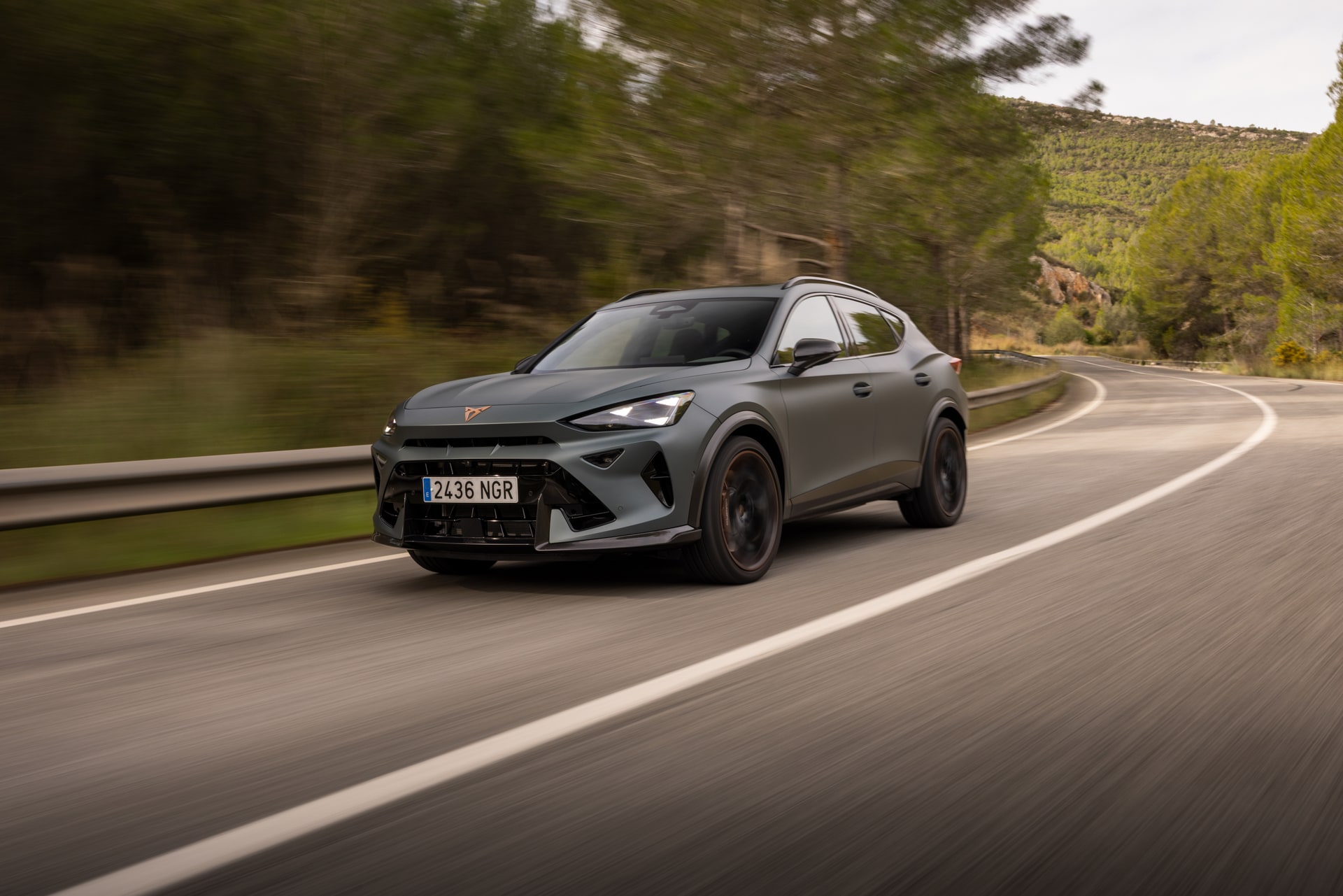
Technical comparison between the Cupra Formentor e-Hybrid 272 CV and the Volkswagen Tiguan eHybrid 204 CV: two compact PHEVs from the VW Group with opposing philosophies for 2026.
The VW Group has decided that partial electrification is not a formality, but an internal battlefield. Within its MQB Evo universe, two compact PHEVs coexist that share platform, batteries and electrical architecture, yet aim at radically different drivers.
The comparison between the Cupra Formentor e-Hybrid and the Volkswagen Tiguan eHybrid is, in reality, a question of identity: latent sportiness or family pragmatism? Both carry the ZERO label, both hover around 120 km of homologated electric range, and both share the same supercharged 1.5 TSI evo2 engine. What changes is the attitude.
Two approaches, one technical platform
The foundation is common: MQB Evo, front-wheel drive, a six-speed DSG gearbox specific to plug-in hybrids, and a lithium-ion battery that the Group has scaled up to 25.5 kWh net. That figure is key, because it marks the generational leap over the consortium’s earlier PHEVs, which stopped at 13 kWh.
The Formentor interprets that foundation with a setup geared towards sporty feel: more direct steering, lowered suspension on the VZ versions and a power distribution that prioritises character. The Tiguan, by contrast, softens everything: longer damping, superior sound insulation and an eHybrid calibration designed so the driver barely notices the transition between combustion and electric power.
Cupra Formentor e-Hybrid VZ 272 CV: from approximately 57,400 €
The Formentor e-Hybrid in its VZ trim is the emotional reading of the PHEV. It combines the 1.5 TSI with an electric motor integrated into the DSG gearbox to deliver 272 CV combined, with immediate response thanks to the electric torque available from low revs. The styling remains the key differentiator of Cupra: triangular headlights, a closed grille with copper accent lighting and a rear with a diffuser that justifies the VZ badge.
On the road, the Formentor VZ plug-in hybrid feels lower and more responsive than any SUV in its segment. The PHEV-specific DSG6 gearbox manages transitions with measured aggressiveness, and the 25.5 kWh battery allows full urban journeys without starting the combustion engine. It homologates just 0.5 l/100 km on the WLTP combined cycle and 10 g/km of CO₂, figures that only make sense if you commit to plugging it in every day.
| Power kW | Power CV | Top speed | Electric range | Consumption | Label | Fuel |
|---|---|---|---|---|---|---|
| ≈200 kW | ≈272 CV | ≈220 km/h | ≈120 km | ≈0.5 l/100 km | ZERO | PHEV (petrol + electric) |
Volkswagen Tiguan eHybrid 204 CV: from approximately 46,300 €
The Tiguan eHybrid with 204 CV is the orderly antithesis of the Formentor. Wolfsburg has built a family SUV that prioritises ride comfort, acoustic insulation and a renewed interior ergonomics, with the new central screen of up to 15 inches and the gear selector moved to the steering column.
The Tiguan eHybrid’s consumption and battery specs reveal a very mature approach: 25.5 kWh of usable capacity, around 120 km of WLTP electric range, 0.5 l/100 km homologated and the ability to charge on direct current up to 50 kW, something unprecedented in a Group PHEV until this generation. That means a coffee break can restore a good part of the electric range, eliminating one of the historic drawbacks of plug-in hybrids.
| Power kW | Power CV | Top speed | Electric range | Consumption | Label | Fuel |
|---|---|---|---|---|---|---|
| ≈150 kW | ≈204 CV | ≈210 km/h | ≈120 km | ≈0.5 l/100 km | ZERO | PHEV (petrol + electric) |
Dynamics: the Formentor sharpens, the Tiguan caresses
On tarmac, the difference is clear. The Formentor VZ calls for corners and punishes the lazy driver with a change of pace that recalls an elevated GTI more than an SUV. The Tiguan eHybrid, on the other hand, rewards anticipatory driving: it rolls quietly, filters joints better and offers a higher, more commanding driving position.
Space and boot
Here the Tiguan regains ground with authority. Its longer wheelbase and squarer body translate into better rear-seat space and a more useful boot for families. The Formentor, with its roofline sloping towards the rear, sacrifices some rear headroom and cargo volume in exchange for a more coupé-like silhouette.
Price and positioning: 11,000 € difference
The gap between the approximately 46,300 € of the Tiguan eHybrid and the 57,400 € of the Formentor VZ e-Hybrid is real and significant. These prices are the manufacturer’s recommended RRP, excluding dealer discounts, occasional sales campaigns and official incentives for electrified vehicles.
The context: Geely presses from outside
No serious analysis of the compact PHEV segment in 2026 can ignore the elephant in the room. Geely has deployed a multi-brand offensive in Spain, with Lynk&Co, Volvo and Zeekr already operating with official dealer networks, and all of them pressure the VW Group from above and below on price. The Lynk&Co 01, for example, plays right in this family PHEV segment with an aggressive subscription approach, and Volvo keeps the XC40 Recharge T5 as the premium benchmark among compact plug-in hybrids.
Geely’s threat is not theoretical: it is the reason the Tiguan eHybrid has doubled its battery and the reason the Formentor keeps pushing its VZ version as an aspirational, non-negotiable argument.
Summary table and rating
| Model | Power | Electric range | Indicative price | Dynamics | Space | Price/performance ratio | Overall score |
|---|---|---|---|---|---|---|---|
| Cupra Formentor e-Hybrid VZ | 272 CV | ≈120 km | ≈57,400 € | 9/10 | 7/10 | 7/10 | 8.2/10 |
| Volkswagen Tiguan eHybrid ‘Más’ | 204 CV | ≈120 km | ≈46,300 € | 7/10 | 9/10 | 9/10 | 8.4/10 |
Verdict: which is the best 2026 family PHEV from the VW Group?
If use is mostly family-oriented, with short daily trips and occasional long journeys, the Tiguan eHybrid is the rational choice: cheaper, just as efficient and with DC fast charging. If you want an SUV with a sporty soul that can also run in electric mode around town, the Formentor VZ justifies the extra cost with character and performance.
Frequently asked questions
What real electric range do the Formentor e-Hybrid and the Tiguan eHybrid offer?
Both homologate around 120 km WLTP thanks to their 25.5 kWh battery. In real use, plan on 90-100 km in summer and about 70-80 km in winter with active heating.
Which has the better price-performance ratio?
The Tiguan eHybrid, with an indicative RRP of around 46,300 €, offers the same electric range and battery as the Formentor for about 11,000 € less. The Formentor VZ is paid for in character and power.
Can they charge on direct current?
The new VW Group PHEV generation, including the Tiguan eHybrid, supports DC fast charging of up to 50 kW, a notable novelty compared with previous generations limited to AC charging.
What alternatives are there outside the VW Group in this segment?
Geely Group brands such as Lynk&Co or Volvo offer competitive PHEV proposals in the C-SUV segment in Spain, with similar electric ranges and aggressive commercial approaches worth comparing before closing the purchase.

 Peugeot E-208 GTi: a battery-powered toy that revives the spirit of the 1980s sports cars
 New Lexus ES: luxury grows and goes electric
 First contact with the Dacia Sandero Hybrid 155: power and efficiency from €19,890
Deja un comentario