Análisis Electric Cars Compact
Four electric models face a challenge: Cover 1,000 km in the shortest time possible. Which one will be the winner?
 Óscar Sanz
8 February 2024
3 min.
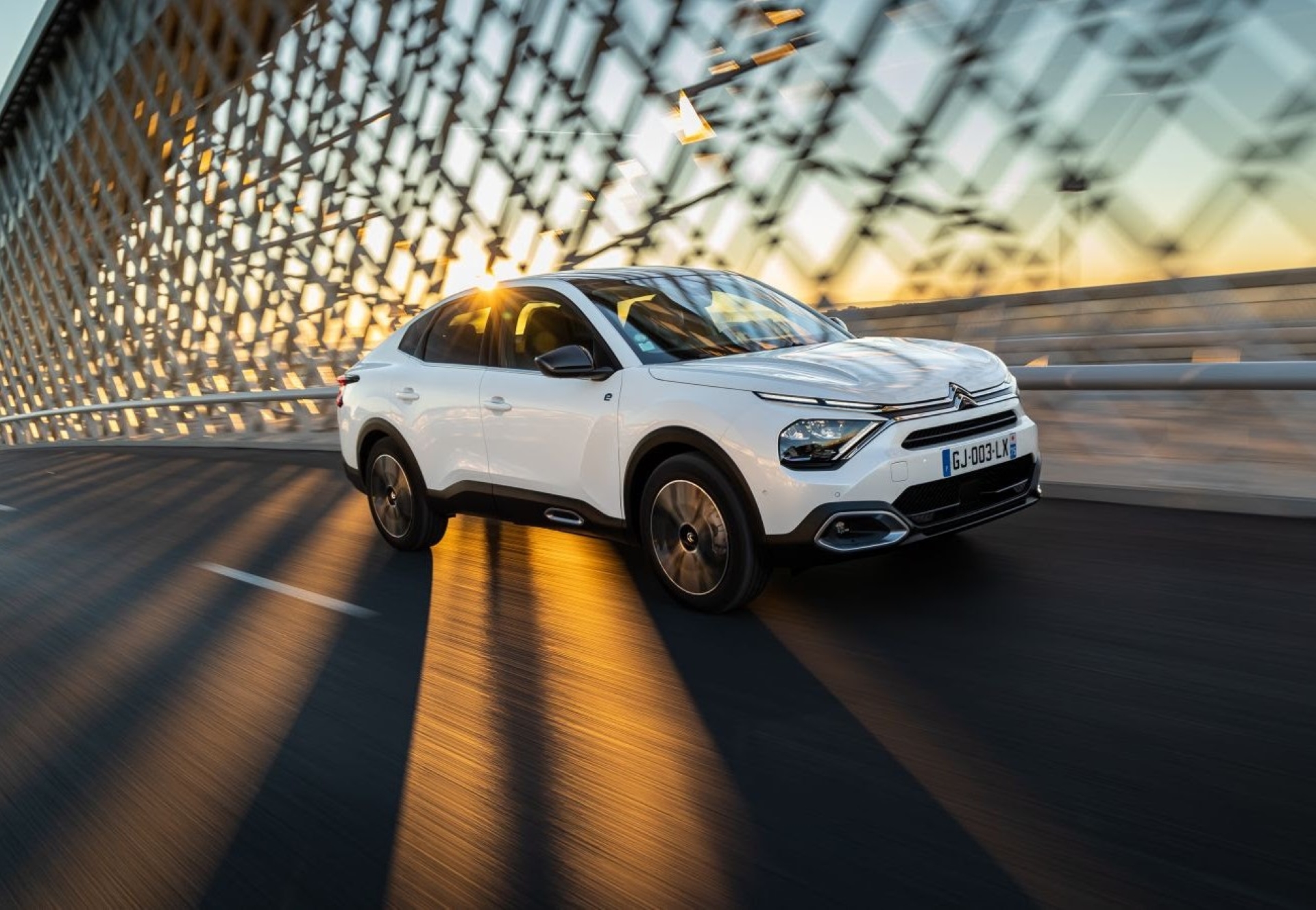
Do you want to know which electric car covers 1,000 km the fastest? Let me give you a spoiler: the Citroen ë-C4 X was the fastest, taking 15 minutes less than its closest rival.
Concern about range and efficiency in electric vehicles is on everyone’s lips. How long will it take to cover 1,000 kilometres in a fully electric vehicle, factoring in charging stops and power? Citroën, in another attempt to demonstrate and resolve this question, teamed up with UTAC, an independent authority in the automotive world, to find out. The challenge was clear: which electric model takes the medal for speed over such a long distance?
The answer left no room for doubt: the fastest model was the Citroen ë-C4 X, with a real-world range of 420 kilometres, it was crowned the fastest in the challenge. This redesigned model was put to the test against heavyweight rivals such as the Renault Mégane, the Volkswagen ID 3 and the MG 4.
Excellence comes from the whole
The secret to the ë-C4 X’s success lies in a perfect combination of well-thought-out technical features. From a compact and lightweight battery to fast charging at 100 kW, through an efficient electric motor and an aerodynamic design, everything in this car is designed to optimise performance. And let’s not forget the new e-ROUTES app, which acts as your digital co-pilot, guiding you in real time so you can enjoy every kilometre worry-free.
And the price? Here’s the best part: the ë-C4 is available from just €199 a month in France, while the ë-C4 X starts at €229 a month. And for those who want the option of electric leasing, the ë-C4 You offers this vehicle for just €129 a month.
What was the challenge?
During the test, carried out on the Mortefontaine circuit at a constant speed of 120 km/h, the Citroën ë-C4 X, MG 4, Renault Mégane and Volkswagen ID 3 were subjected to a recorded cycle of charging and driving. Starting with a 100% charged battery, each vehicle drove the track until the battery reached 10% of its capacity, at which point it stopped to recharge to 80%. This process was repeated until 1,000 km were completed, requiring a total of 5 stops to recharge the batteries at 50 kW and 100 kW charging stations, which explains the variations in charging times.
The test in numbers
Now let’s talk numbers. In the test carried out by UTAC, the ë-C4 X, MG 4, Renault Mégane and Volkswagen ID 3 were subjected to similar conditions. From driving at 120 km/h to recharging at 50 kW and 100 kW stations, everything was monitored in detail.
The results speak for themselves: the ë-C4 X proved to be the most efficient, completing the challenge of covering 1,000 km in just 11 hours and 57 minutes, almost 15 minutes ahead of its closest competitor. How did it achieve this? Thanks to its design and technical features that its rivals still lack:
- Compact battery for reasonable energy consumption.
- Fast charging times with a 100 kW rapid charging speed.
- Efficient electric motor and aerodynamic design.


 The seven finalists for the 2027 European Car of the Year (COTY) are exclusively electric
 Peugeot E-208 GTi: a battery-powered toy that revives the spirit of the 1980s sports cars
 New Lexus ES: luxury grows and goes electric
Deja un comentario