Geely Galaxy E5: The best value for money in its segment?
 Iván Navarro
17 March 2026
8 min.
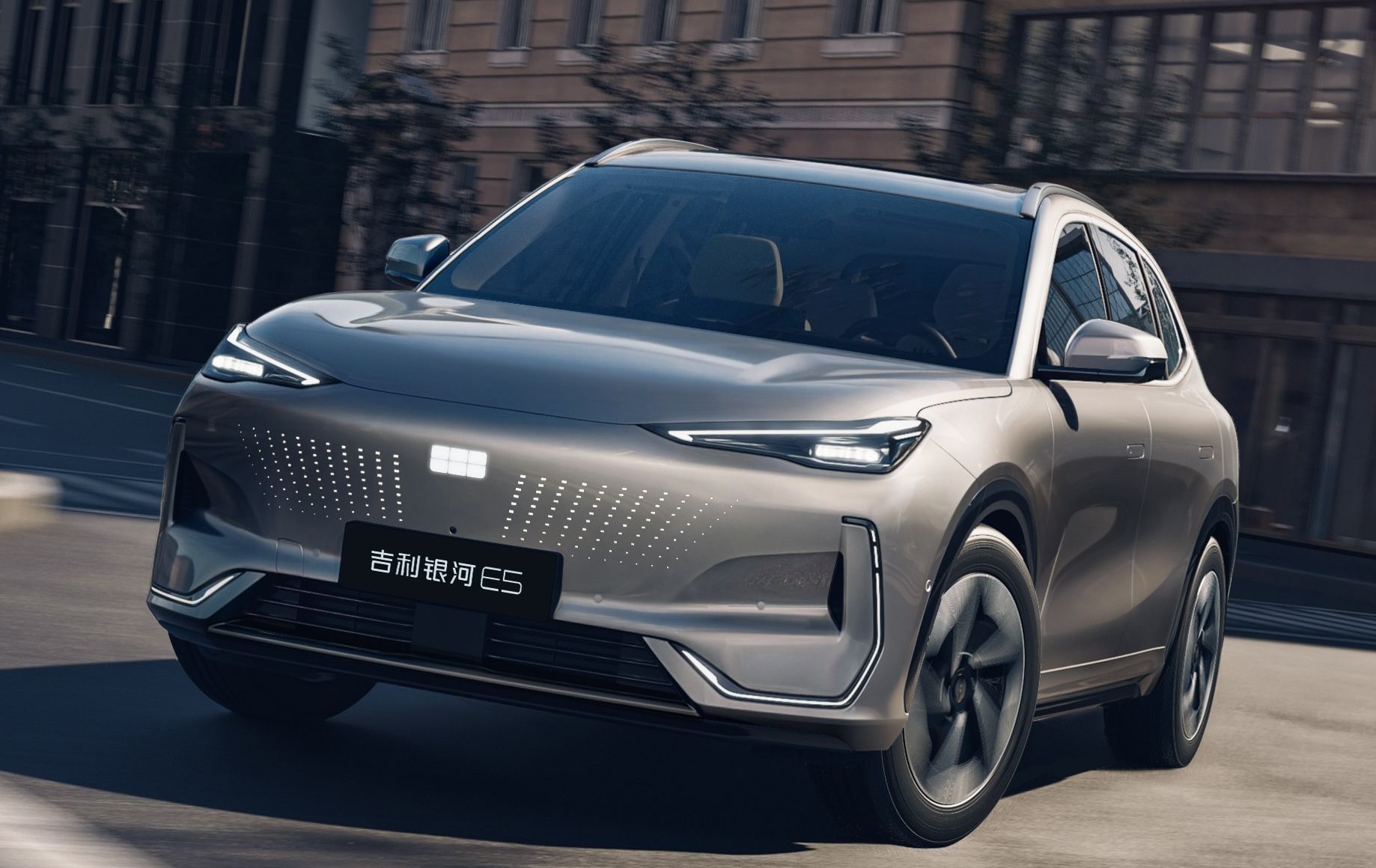
The Geely E5 presents itself as a genuinely interesting alternative for anyone looking for an electric car that offers good range and a good level of equipment, without having to pay the premium that most premium brands demand.
The Geely Galaxy E5 is the Chinese brand’s electric proposal for the compact segment, and it aims to balance performance, interior space and running costs. It is of interest because it places a competitive battery and range in a package with solid finish and technology at a moderate price. In this article we analyse the range of powertrains, real-world performance, interior quality and how it stacks up against direct electric rivals. We also evaluate homologated consumption against real consumption and recommend the version best suited to buyers in Spain. The Geely E5 appears as an alternative to models such as the VolkswagenID.3 or the RenaultMégane E-Tech when you want economy without giving up range and comfort.
What kind of car the Geely Galaxy E5 is and where it sits
The Geely E5 is an electric compact designed for those who need a versatile car for urban use and occasional longer journeys. It sits in the electric C-segment, where it competes with models such as the VolkswagenID.3, the RenaultMégane E-Tech and the MG4. Its value proposition is to offer competitive range, a medium-to-large battery capacity and advanced technology equipment at an entry price below that of some European alternatives. The target customer is the buyer who prioritises total cost of ownership, interior space and good-value technology over a premium brand.
Geely Galaxy E5 in detail: complete technical analysis
Range and powertrains: The E5 is sold in several electric versions with batteries geared towards range (the best seller in the Spanish market combines a battery of around 65–70 kWh with a rear-axle motor producing about 150 kW —approx. 204 CV—). There are also entry versions with a smaller battery and versions focused on balancing range and price. The version recommended for most people is the mid-range battery version, as it offers the better balance between cost and reach.
Performance and consumption: The power of the key version places the E5 in the 180–220 CV bracket, with a top speed limited to around 170 km/h. The homologated WLTP electric consumption of the mid-range version is close to 14–15 kWh/100 km; in real use, combining city and motorway driving, a consumption of around 15–17 kWh/100 km is reasonable to expect, depending on driving style and ambient temperature. The official WLTP range of the mid-range version is around 500–530 km, which places the E5 among the alternatives with the best range for its price.
Behaviour and platform: Built on a platform developed specifically for electric cars, the E5 has a low centre of gravity and a suspension tuned for comfort. In town it is agile and comfortable; on the open road it holds its line without fuss, although it does not aim for a sporty character. The electronic driver aids and regenerative braking are calibrated to prioritise efficiency.
Interior and ergonomics: Perceived quality has improved over previous generations: soft plastics in the visible areas, correct fit and finish and well-shaped seats reinforce the sense of a carefully considered design. The digital instrumentation and the central screen are generously sized and offer modern connectivity; the interface is intuitive, although it may feel less refined than in more expensive European alternatives. The ADAS cover the basic aids (adaptive cruise control, lane keeping assist, emergency braking) and work reliably on well-marked roads.
Space: Practicality is one of its strengths; the rear seats offer good headroom for two adults and the boot measures around 420–470 litres in standard configuration, sufficient for most compact families.
Real consumption and WLTP range: The homologated consumption is around 14–15 kWh/100 km (WLTP), while in real use it usually lands close to 15–17 kWh/100 km. The WLTP range announced for the mid-range version is approximately 500–530 km; in real conditions and with mixed use, it is reasonable to count on 350–450 km depending on route and temperature.
Recommended version: The version with the mid-range battery (65–70 kWh) and 150 kW (≈204 CV) is the most balanced: it offers enough real-world range for regular journeys, good responsiveness and a competitive cost per kilometre.
The good
• Energy efficiency and competitive range for its price.
• Technology and equipment for the money.
• Interior space and boot suited to a compact family.
The not so good
• Interior fit and the quality of some controls below European rivals.
• Behaviour somewhat oriented towards comfort; it lacks some dynamism for those seeking more excitement.
Who this model is for
Buyer profile: families and drivers looking for an electric car with good range, ample equipment and moderate purchase cost. It is ideal for those who value value for money and need a versatile car for town and trips, without demanding a premium character. It also suits fleets that prioritise mileage and efficiency.
Main technical data
| Feature | Figure | Score |
|---|---|---|
| Power | 204 CV | 8.5 |
| Consumption | 14.5 kWh/100 km (WLTP) | 8.8 |
| Top speed | 170 km/h | 8.0 |
| Electric range | ≈520 km (WLTP) | 9.0 |
| Battery | 66 kWh | 8.6 |
| Boot | ≈450 litres | 8.2 |
| Length | 4,605 mm | 7.8 |
| Price from | €31,900 (Spain) | 9.0 |
score out of 10 based on the criteria analysed in this article
Alternatives to the Geely Galaxy E5
VolkswagenID.3 (mid-range version): The ID.3 offers a very refined driving feel and a well-established after-sales ecosystem in Europe. In its mid-range version with a battery of around 58 kWh it performs similarly in power (around 150 kW in some versions), has slightly higher consumption and a price above the E5. It is the option for those who prioritise chassis refinement and service network.
RenaultMégane E-Tech (60 kWh version): It offers a crossover silhouette with good onboard technology and comfortable dynamics. Its power in the higher versions slightly exceeds that of the E5, but its homologated consumption tends to be somewhat higher and its entry price sits above it.
MG4 Long Range: It is an alternative with an aggressive price/range proposition. Its longest-range version offers slightly better efficiency and a marginally lower purchase cost, although the quality of materials and the feeling of finish may be less competitive than the E5’s.
Quick technical comparison against its rivals
| Model | Power | Consumption / range | Top speed | Price | Score |
|---|---|---|---|---|---|
| Geely E5 | 204 CV | 14.5 kWh/100 km / ≈520 km | 170 km/h | €31,900 | 8.9 |
| VolkswagenID.3 | 204 CV | 15.2 kWh/100 km / ≈420 km | 160 km/h | €35,500 | 8.6 |
| RenaultMégane E-Tech | 218 CV | 16.0 kWh/100 km / ≈430 km | 160 km/h | €36,300 | 8.4 |
| MG4 Long Range | 170 CV | 13.9 kWh/100 km / ≈450 km | 160 km/h | €30,500 | 8.7 |
score out of 10 based on the criteria analysed in this article
In this group the Geely Galaxy E5 stands out for balancing range, equipment and price: the best purchase will depend on specific priorities (chassis refinement, service network or upfront cost). For those who value range and cost per kilometre, the E5 is very competitive.
FAQ – Frequently asked questions
What is the real-world range of the Geely Galaxy E5?
The WLTP range announced for the mid-range version is around 500–530 km; in mixed real-world use you could expect between 350 and 450 km depending on speed and conditions.
What electric consumption does the Geely E5 have?
Homologated WLTP consumption is close to 14–15 kWh/100 km; in real conditions it usually lands around 15–17 kWh/100 km.
Which version of the Geely Galaxy E5 is the most recommended?
The version with the mid-range battery (≈66 kWh) and around 204 CV is the most balanced for most users in terms of range, performance and cost.
What is the interior space and boot like?
The cabin is spacious for its segment; the boot offers around 420–470 litres, sufficient for a compact family.
Is it a good buy compared with rivals such as the ID.3 or the Mégane E-Tech?
If range and value for money are the priority, the Geely E5 is a very consistent option. If chassis refinement or a wide service network is what you are after, alternatives such as the ID.3 may weigh more heavily.
What safety equipment does it include?
It includes the basic ADAS: adaptive cruise control, emergency braking, lane keeping assist and parking sensors; their operation is correct within its category.
Quick verdict: why choose the Geely Galaxy E5
Reasons to choose it:
• technical reason: competitive range and interesting efficiency for its price.
• practical reason: interior space and boot suitable for family use.
• economic reason: moderate entry price compared with European alternatives offering similar range.
The Geely Galaxy E5 offers a very attractive technical and practical balance for families and users with daily mileage requirements and regular trips. If you value range and cost per kilometre, and accept an emerging brand’s offer with value for money above the average, the Geely Galaxy E5 deserves consideration on your shortlist.


 Peugeot E-208 GTi: a battery-powered toy that revives the spirit of the 1980s sports cars
 New Lexus ES: luxury grows and goes electric
 First contact with the Dacia Sandero Hybrid 155: power and efficiency from €19,890
Deja un comentario