Guide 2026: The best plug-in hybrid cars for long-distance travel in Spain
 Dani Montesinos
20 April 2026
8 min.
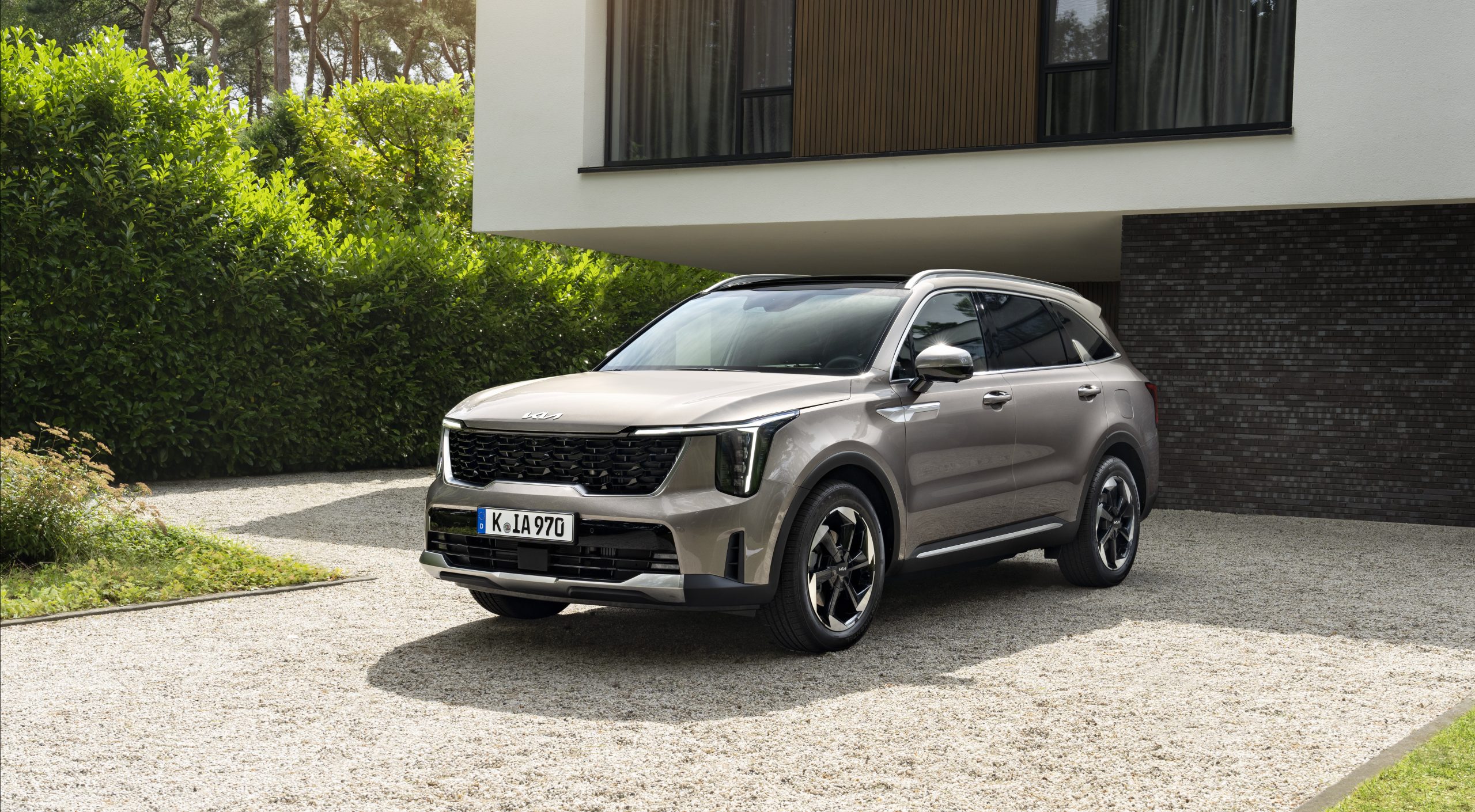
We present a selection of plug-in hybrids that offer a good balance between equipment, features and fully electric range
In 2026 the offer of hybrids designed for travelling has matured: there are plug-in solutions that allow long stretches in electric mode, self-charging hybrids that are more efficient on the road, and SUVs that prioritise comfort and boot space. This guide brings together options that balance real-world range and usability for motorway journeys and inter-urban trips in Spain, showing alternatives with different technical approaches and varied price positioning for different types of journey and families.
Who is this ranking for?
This ranking is based on market data, official specifications and published road tests. It is aimed at those who value range and comfort on long journeys without giving up efficiency; at families who need boot space and stability; and at users who want to combine daily commuting with frequent weekend getaways.
If you drive a lot of kilometres and want to reduce energy spending on long stretches, you will find here models that offer greater electric range or efficient hybrid operation. If you prioritise comfort and luggage space, there are also options designed for trips with passengers and cargo.
What details have we analysed?
We have taken into account market positioning, official technical data such as WLTP electric range for PHEVs or combined power figures, manufacturer-homologated consumption, dimensions and usable space, expected real-world use on long journeys, and the price/technical approach ratio to assess cost per kilometre and versatility.
Ranking of the best hybrid cars for travelling in 2026
Toyota RAV4 Plug-in (from 46,500 €*)
Indicative price without applying public subsidies or the brand’s commercial discounts.
Why it is here: The RAV4 Plug-in combines a higher-capacity battery with a powertrain geared towards everyday electric range and performance sufficient for motorways. Its SUV approach offers loading space and suspensions designed for comfort on long journeys.
Ideal for: Families looking for useful electric range on short trips and the capacity for long journeys without giving up boot space.
Pros:
- Useful electric range for inter-urban travel.
- Chassis set-up geared towards comfort on the road.
- Spacious boot and comfortable rear seats.
Cons:
- Weight and size penalise consumption on very demanding stretches.
- High entry price compared with compact hybrids.
Kia Sorento PHEV (from 49,280 €*)
Indicative price without applying public subsidies or the brand’s commercial discounts.
Why it is here: The Sorento PHEV is a large SUV with room for several passengers and good electric range in mixed use. Its approach offers a balance between low consumption and comfort on long trips, with drivetrain options and cabin configurations designed for travelling.
Ideal for: Family trips with load capacity and mixed journeys combining city and motorway driving.
Pros:
- Spacious cabin and consistent comfort on the motorway.
- Sufficient electric range for long urban journeys.
- Good equipment-to-price ratio in its segment.
Cons:
- Real consumption rises with load and high-speed driving.
- Volume and weight affect agility on secondary roads.
Volvo XC60 Recharge (from 66,450 €*)
Indicative price without applying public subsidies or the brand’s commercial discounts.
Why it is here: The XC60 Recharge offers premium comfort, safety-oriented driver assistance and a plug-in powertrain with practical electric range for daily driving and part of longer trips. Its set-up prioritises stability and acoustic insulation on the motorway.
Ideal for: Those looking for a balance between high comfort, safety and a plug-in option for mixed routes.
Pros:
- Insulation and comfort on long motorway journeys.
- Safety technology and advanced assistance systems.
- Sufficient electric range to reduce urban consumption.
Cons:
- High entry price compared with mainstream rivals.
- Maintenance and spare parts costs above average.
Ford Kuga PHEV (from 33,542 €*)
Indicative price without applying public subsidies or the brand’s commercial discounts.
Why it is here: The Kuga PHEV offers a proven platform, competitive electric range and dynamics geared towards efficiency on the road. It is a solid alternative for those seeking a balance between cost and performance on long journeys.
Ideal for: Drivers who want a versatile compact SUV for inter-urban trips and family getaways.
Pros:
- Balanced behaviour and contained consumption in mixed use.
- Competitive entry price within the PHEV segment.
- Good after-sales network and spare parts availability.
Cons:
- Less premium cabin than higher-priced rivals.
- Electric range varies greatly depending on driving style.
Lexus NX 450h+ (from 68,400 €*)
Indicative price without applying public subsidies or the brand’s commercial discounts.
Why it is here: The NX 450h+ is a PHEV focused on comfort and refinement, offering electric range geared both to daily use and to reducing consumption on trips. Its set-up seeks smoothness and insulation for long journeys.
Ideal for: Users who value ride comfort, quiet running and a well-finished interior on long trips.
Pros:
- Refined on the move and good acoustic insulation.
- Useful electric range to reduce urban consumption.
- High perceived quality in the interior and finishes.
Cons:
- Entry price higher than compact hybrids.
- Rear space and boot less generous than some large rivals.
The prices shown in this ranking are indicative, without applying public subsidies or the brand’s commercial discounts.
Technical comparison
| Model | Range | Power | Consumption | Top speed | Price (€*) |
|---|---|---|---|---|---|
| Toyota RAV4 Plug-in | WLTP: 135 km | 268 CV | 1.4 l/100 km | 180 km/h | 46,500 €* |
| Kia Sorento PHEV | WLTP: 57 km | 194 CV | 6.0 l/100 km | 200 km/h | 49,280 €* |
| Volvo XC60 Recharge | WLTP: 77 km | 335 CV | 2.7 l/100 km | 230 km/h | 66,450 €* |
| Ford Kuga PHEV | WLTP: 56 km | 243 CV | 5.2 l/100 km | 200 km/h | 33,542 €* |
| Lexus NX 450h+ | WLTP: 97 km | 182 CV | 3.2 l/100 km | 200 km/h | 68,400 €* |
These figures are official and taken from the brands’ official websites.
Purchase subsidies in 2026: Plan Auto+ and tax benefits
The Plan Auto+ 2026 replaces previous programmes and establishes a new system of direct subsidies for the purchase of electrified vehicles in Spain. These subsidies aim to prioritise electrification on technical and economic criteria and have state funding for 2026.
Main amounts of the Plan Auto+ 2026
- Direct subsidies of up to 4,500 € for electric passenger cars.
- Up to 5,000 € for light vans in category N1.
- Retroactive effect from 1 January 2026.
- Approximate budget allocation of 400 million euros.
Who can benefit and priority criteria
Beneficiaries: private individuals, self-employed workers and companies. The EEE criterion (Electric, Economic and European) applies, with priority for pure battery electric vehicles (BEV) over plug-in hybrids (PHEV). Vehicles priced below 35,000 € receive the larger subsidy, and those priced between 35,000 € and 45,000 € qualify for a reduced subsidy. There is an additional incentive if the final assembly or the batteries are of European Union origin.
Additional requirements and tax advantages
A mandatory minimum discount of 1,000 € by the dealer applies to transactions linked to the subsidy. In addition, a 15% deduction in personal income tax (IRPF) is provided, up to a maximum of 3,000 €. These tax measures remain in force until 31 December 2026.
Management and possible regional subsidies
Management is coordinated by the Ministry of Industry together with the Autonomous Communities. Additional regional programmes may exist; for example, the Plan Cambia 360 in the Community of Madrid. At the time of writing it has not been officially confirmed whether these regional subsidies are compatible with the Plan Auto+ 2026.
FAQ · The 5 questions everyone asks
What is the real difference between a plug-in hybrid and a self-charging hybrid for travelling?
A PHEV allows you to cover tens of kilometres in fully electric mode, reducing energy costs on short trips; a self-charging HEV optimises consumption on the road but does not offer significant electric range for long stretches without fuel.
Does a PHEV make sense if I drive a lot of kilometres a month on the motorway?
Yes, if you can charge frequently and want to reduce consumption on urban stretches; for continuous long-distance travel, an efficient hybrid or a modern diesel may be more consistent in cost per kilometre if no charging points are available.
Does the WLTP range hold up on motorway journeys?
Normally the WLTP electric range figure is optimistic compared with sustained motorway speeds; on motorways the electric range usually drops, so it is advisable to allow an additional margin.
Should I prioritise power or efficiency for long journeys?
For frequent motorway travel, efficiency and the battery’s energy capacity matter more than maximum power, unless you travel with a full load at high speed with continuous overtaking demands.
How does boot volume affect the choice of a hybrid for travelling?
Boot space determines real usefulness on trips with luggage; some PHEVs sacrifice volume for the battery, so it is worth checking real dimensions and not just the technical sheet.
Expert conclusion
This list shows that in 2026 hybrid options for travelling are mature and suit different uses: from spacious SUVs with significant electric range to compact PHEVs that reduce daily costs. For the buyer, it means choosing according to routine and technical priorities rather than by badge; electric range, space and motorway comfort are the decisive factors.
If you want to stretch your money, first look at the real entry price and what comes as standard. If the model is in high demand, it is usually also easier to resell later. And if you drive a lot of kilometres, energy cost and efficiency matter more than the power figure. If you will not charge often, do not buy from the catalogue: buy according to your routine.


 Kia offers an electric range of 10 models, 50 versions and 400 possible combinations
 The seven finalists for the 2027 European Car of the Year (COTY) are exclusively electric
 Peugeot E-208 GTi: a battery-powered toy that revives the spirit of the 1980s sports cars
Deja un comentario