Guide 2026: The best urban SUVs if you're looking for efficiency and savings on purchase
 Dani Montesinos
18 March 2026
7 min.
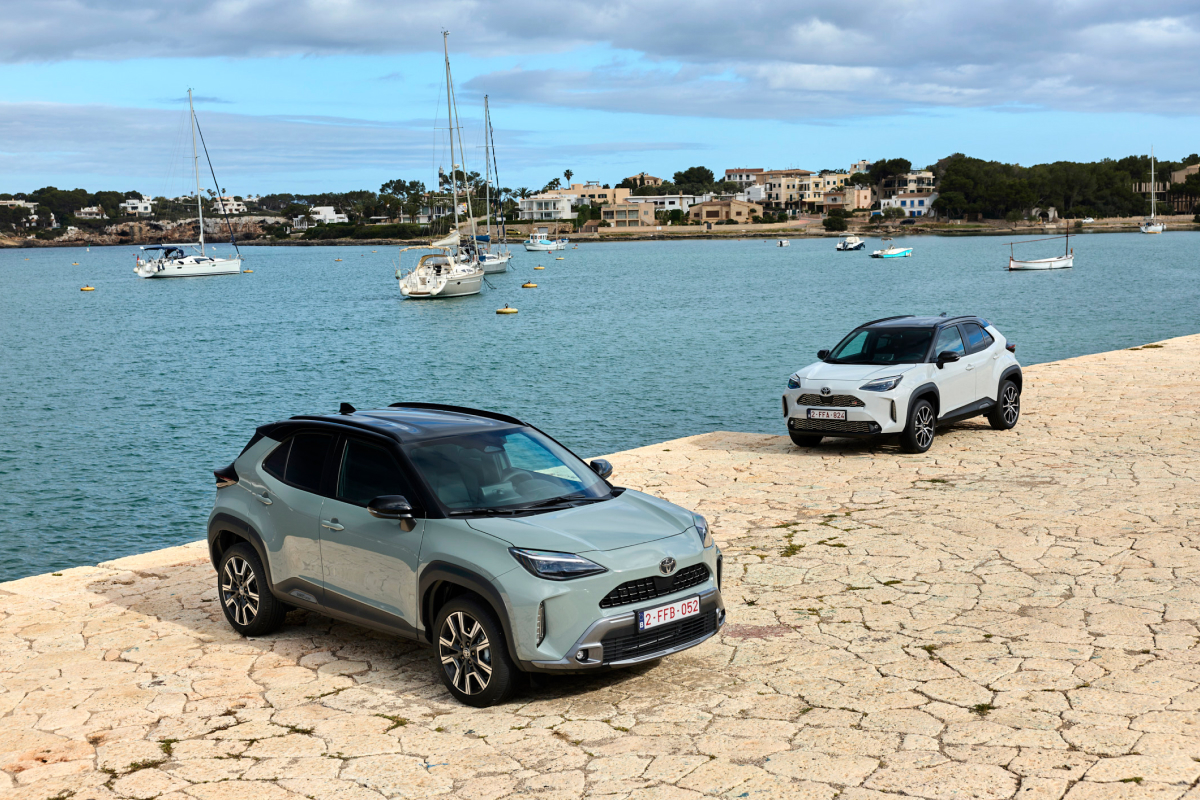
SUVs continue to be on the rise, and here we propose five urban-oriented models that also maintain a good balance between efficiency and cost
The urban SUV market in 2026 is characterised by a wide range of offers that prioritise energy efficiency and cost control. The combination of hybrid, mild-hybrid and petrol and diesel engines optimised for city driving has shifted attention away from purely sporty variants towards more rational solutions. For many buyers in Spain, the questions revolve around real-world range in urban use, running costs and luggage capacity versus interior space. This type of car appeals to those who prioritise low consumption, affordable maintenance and manoeuvrability in urban environments; it is not the best choice for anyone who needs maximum interior space or off-road capabilities.
This buying guide is for…
These urban SUVs are suitable for drivers who mainly make urban and peri-urban journeys, value low fuel consumption and are looking for a modest initial outlay. They suit small families, professionals who alternate between city and short-distance road driving, and users who want a car with a raised driving position without the cost of a large SUV. They are not the ideal option for those who regularly travel with a lot of luggage, need to tow or frequently drive long distances on motorways at high speed, where a traditional compact or a larger SUV may offer better performance.
Common options within the segment
The segment includes proposals focused on price and simplicity, hybrid alternatives geared towards real-world consumption, and versions with more advanced technology equipment. The typical approaches range from light and economical vehicles, to slightly more robust models with better insulation, and hybrid variants that seek to reduce city consumption. The usual trade-offs include extra weight from hybrid systems, maintenance planning for small batteries, and a direct impact on price depending on the trim level and the driver-assistance technology included.
Key criteria for choosing well
Realistic range versus homologated range: checking consumption figures in mixed cycles and real urban use, not just WLTP, helps you anticipate costs. Power and charging speed: for urban cars, a responsive engine at low revs matters and, if electric, efficient home charging. Stability and comfort on the road: suspension and steering calibration influence comfort and consumption on fast roads. Genuinely useful technology: prioritise safety assistants and systems that reduce consumption (energy recovery, driving modes). Total cost of purchase and use: add insurance, maintenance and fuel consumption to the purchase price for a realistic comparison.
It depends on how you drive
If you are a mainly urban driver, you will be less penalised by the price premium of a hybrid thanks to lower consumption and the use of regenerative energy. For those living in cold areas, efficiency can drop; choosing efficient climate control and batteries with thermal management is critical. For frequent medium-distance journeys, a diesel engine or a highly efficient hybrid may make more sense. Practical profile: a driver who values a low cost per kilometre, enough rear seats for children and ease of parking in the city.
Real price: what you should know
The difference between the financed and cash price can be significant because of interest and dealer incentives; it is always advisable to break down the financing cost. Equipment significantly raises the price: safety systems, more sophisticated batteries or transmissions all entail higher rates. Interpret the “from” price correctly: it refers to the basic trim without options and normally without public aid or discounts. The final price varies due to taxes, optional packs and dealer discounts, so the list price is not the amount the buyer will actually pay in a real transaction.
Reference models on the market
Dacia Duster (from €15,000*)
An economical and practical proposition, designed for users who want maximum interior space relative to a modest price. It usually offers simple engines and city efficiency thanks to its optimised power-to-weight ratio.
The best
Price-to-space ratio and low maintenance costs; a good option for tight budgets.
The room for improvement
Limited interior finish and driver-assistance technology compared with more expensive rivals; road consumption can rise compared with lightweight compacts.
Hyundai Bayon (from €17,200*)
A city car focused on efficiency, with modern engines and good active safety equipment, designed for manoeuvrability and low consumption in urban traffic.
The best
A balance between equipment and efficiency, with agile response in urban environments.
The room for improvement
Boot space is somewhat limited compared with alternatives in the same segment; higher trims raise the price noticeably.
Toyota Yaris Cross (from €23,500*)
A hybrid proposition that prioritises low city consumption and a consistently smooth experience for daily journeys; good for those seeking reliability and long-term efficiency.
The best
Very low urban consumption thanks to its hybrid system and a reputation for reliability.
The room for improvement
Higher starting price; rear headroom is tight for tall passengers on long journeys.
Renault Captur (from €20,900*)
Aimed at a balance between comfort and economy, with electrified options and a focus on interior modularity suited to urban use and short trips.
The best
Interior versatility and efficient engine options that reduce real-world consumption.
The room for improvement
Some trim levels and the availability of options can push the final price well above the “from” figure.
Kia Niro Hybrid (from €27,500*)
A compact SUV that focuses on hybrid efficiency and lower consumption in mixed driving; recommended for those who combine city and road driving with a priority on fuel savings.
The best
Fuel economy on mixed routes and good standard safety equipment.
The room for improvement
Base price above some urban rivals, which may dilute its appeal for strict budgets.
Volkswagen T‑Cross (from €21,000*)
A focus on perceived quality and balanced handling; designed for those who value dynamics and comfort with modest city consumption.
The best
Stable handling and ride quality, useful on mixed journeys.
The room for improvement
Relevant equipment usually comes in mid and upper trim levels, raising the final price.
Purchase aid
Purchase aid in 2026: Plan Auto+ and tax benefits. The Plan Auto+ 2026 replaces the previous MOVES programmes and establishes a new system of direct aid for the purchase of electrified vehicles in Spain. The aim is to modulate incentives according to electrification, place of final assembly and vehicle price.
Main amounts under Plan Auto+ 2026
– Direct aid of up to €4,500 for electric passenger cars.
– Up to €5,000 for light vans in category N1.
– Retroactive effect from 1 January 2026.
– Approximate budget allocation of €400 million.
Who can benefit and priority criteria
Beneficiaries: private individuals, self-employed workers and companies. The EEE criterion (Electric, Economic and European) is applied to prioritise battery electric vehicles (BEV) over plug-in hybrids (PHEV). Vehicles priced below €35,000 receive higher aid; between €35,000 and €45,000 the aid is reduced. Maximum incentives apply if the final assembly or the batteries originate in the European Union.
Additional requirements and tax advantages
A mandatory minimum discount of €1,000 from the dealer. A 15% deduction on personal income tax (IRPF) up to a maximum of €3,000. These tax deductions are valid until 31 December 2026.
Management and possible regional aid
Management is coordinated by the Ministry of Industry together with the Autonomous Communities. Additional regional programmes may exist, for example the Plan Cambia 360 in the Community of Madrid. At the time of writing, it is not officially confirmed whether these regional aids are compatible with Plan Auto+ 2026.
Common buying mistakes
Buying only on the “from” price without calculating equipment or financing costs; underestimating the impact of equipment on consumption and on the final cost; not checking real-world consumption in urban environments and assuming that the WLTP figure fully reproduces everyday experience; choosing an engine because it is fashionable without checking your usage pattern (city versus road); ignoring the after-sales service policy and the possible depreciation depending on the engine type.
With this context and the criteria described, the logical next step for the buyer is to compare technical specifications and final prices, applying real aid and discounts, and to consult up-to-date analyses reflecting real consumption and total running costs.

 Peugeot E-208 GTi: a battery-powered toy that revives the spirit of the 1980s sports cars
 New Lexus ES: luxury grows and goes electric
 First contact with the Dacia Sandero Hybrid 155: power and efficiency from €19,890
Deja un comentario