Which car should I buy if I'm looking for an efficient urban hybrid for 2026?
 Dani Montesinos
18 March 2026
8 min.
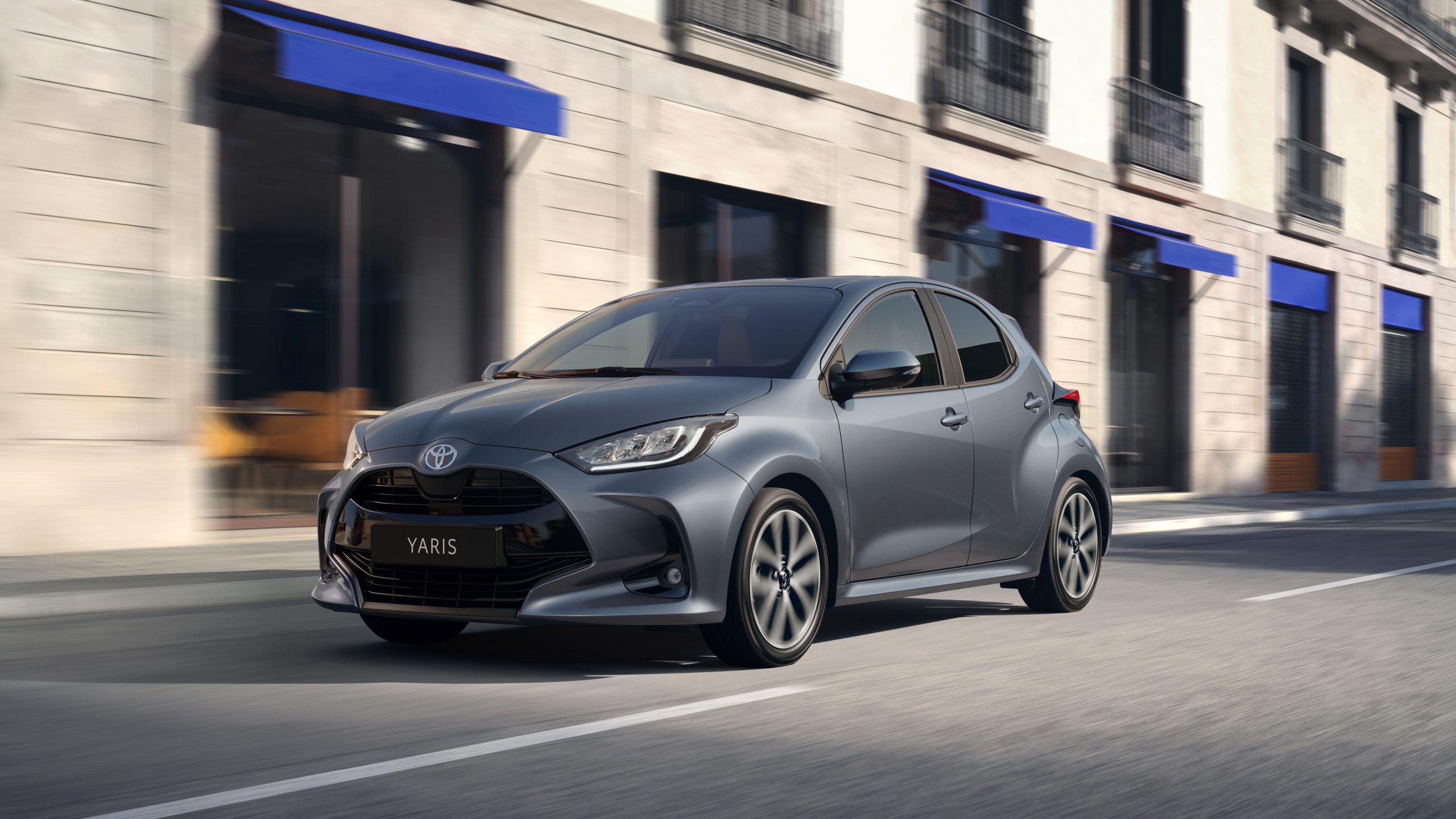
If you’re looking for a small car to get around the city that is also a hybrid, we suggest five efficient yet durable models.
If you’re looking for an efficient urban hybrid to get around mainly in the city in 2026, the choice comes down to compact cars and small crossovers that prioritise low consumption, manoeuvrability and reduced running costs. In recent years the market has pushed manufacturers to optimise non-plug-in hybrid systems: these are solutions that combine a combustion engine with electric motors and compact batteries to recover energy in town and minimise real-world consumption. According to ANFAC, in 2025 electrified vehicles increased their share of the Spanish market, and traditional hybrids maintained an important role in urban journeys, representing a significant portion of the vehicles registered that year. The urban buyer usually looks for a compact size, a practical interior and consumption below 4–5 l/100 km in real mixed use; the average starting price of these models in Spain is around €22,000–27,000 for entry-level versions.
In the city, ease of use is what matters: low consumption in stop-start traffic, an ECO label and contained maintenance costs. Brands such as Toyota, Renault or Hyundai offer mature, proven solutions. You should choose between self-charging hybrids (HEV) if you mainly drive in town, or opt for larger hybrids (compact crossovers) if you need some boot space and ground clearance. The key is to prioritise real consumption and the ECO label for everyday use.
What a efficient urban hybrid
should have
An efficient urban hybrid needs three clear ingredients: a hybrid system optimised for regeneration in town, low real-world consumption in heavy traffic and a size that makes manoeuvring and parking easy. Technologies such as electric drive at low speeds, effective regenerative braking and a gearbox with ratios designed for the city make the difference. In practical terms, look for low homologated WLTP consumption (around 3.5–4.5 l/100 km in the B segment), an ECO environmental label and an entry price that suits everyday use.
In terms of equipment, basic connectivity and driver assistance systems improve the urban experience without inflating the price too much. Do not underestimate the interior space and boot modularity: they can be decisive for small families or mixed use.
Model selection
Toyota Yaris Hybrid
The Toyota Yaris Hybrid remains the benchmark among urban hybrids thanks to its reliability and low consumption. Its self-charging system delivers good figures in dense traffic and smooth response around town. It is an option that prioritises efficiency and reduced running costs.
Why it is a good choice
- Low real-world consumption in town.
- Proven reliability and a wide service network.
- Compact and agile for parking.
Ideal if you are looking for
- Intensive urban use and low operating costs.
- Daily mobility with few motorway kilometres.
| Data | Value |
|---|---|
| Engine | Hybrid |
| Environmental label | ECO |
| Power | from 116 CV |
| Consumption | from 3.9 l/100 km |
| Price from | €22,000 |
Renault Clio E-TECH Hybrid
The Renault Clio E-TECH Hybrid combines a hybrid powertrain with a more refined interior and a setup focused on comfort. Its hybrid system performs well in town, with an electric transition that reduces consumption on short journeys.
Why it is a good choice
- Comfort and good insulation in an urban environment.
- Self-sufficient hybrid system with good energy recovery.
- Practical design and on-board technology.
Ideal if you are looking for
- An urban car with a good balance between comfort and efficiency.
- A versatile car for the city and occasional trips.
| Data | Value |
|---|---|
| Engine | Hybrid |
| Environmental label | ECO |
| Power | 160 CV |
| Consumption | 3.9 l/100 km |
| Price from | €23,000 |
Honda Jazz e:HEV
The Honda Jazz e:HEV stands out for its spaciousness and efficient hybrid system. It is a practical option for those who need more interior space without giving up low consumption in town.
Why it is a good choice
- Notable interior space and modularity.
- Hybrid system with immediate response in town.
- Good visibility and urban manoeuvrability.
Ideal if you are looking for
- An urban hybrid with interior room for people or cargo.
- A combination of practicality and low consumption.
| Data | Value |
|---|---|
| Engine | Hybrid |
| Environmental label | ECO |
| Power | 107 CV |
| Consumption | 4.6 l/100 km |
| Price from | €24,600 |
Hyundai Kona Hybrid
The Hyundai Kona Hybrid offers the greatest ride height and a more versatile driving feel, while keeping reasonable consumption for its size. It is the alternative if you prefer a compact crossover with clinical efficiency in town.
Why it is a good choice
- Elevated driving position and greater versatility.
- Balanced behaviour in town and on the open road.
- Hybrid system with good performance in urban traffic.
Ideal if you are looking for
- More versatility and slightly more boot space without a big rise in consumption.
- An urban car with an SUV look and an ECO label.
| Data | Value |
|---|---|
| Engine | Hybrid |
| Environmental label | ECO |
| Power | 138 CV |
| Consumption | 4.6 l/100 km |
| Price from | €27,500 |
Kia Niro Hybrid
The Kia Niro Hybrid is an ideal alternative if you want a hybrid with space, ergonomics and moderate consumption. Its platform and approach make it well suited to those who prioritise efficiency and comfort in town and on the road.
Why it is a good choice
- A good balance between space and fuel economy.
- Technology and liveability designed for everyday use.
- Competitive consumption in an urban environment.
Ideal if you are looking for
- A practical hybrid for a small family that drives in town.
- A larger boot without sacrificing efficiency.
| Data | Value |
|---|---|
| Engine | Hybrid |
| Environmental label | ECO |
| Power | 138 CV |
| Consumption | 4.5 l/100 km |
| Price from | €25,000 |
Which car to choose based on your situation
If you drive mostly in town
Prioritise cars such as the Toyota Yaris Hybrid or the Honda Jazz e:HEV, which offer low consumption in dense traffic, good manoeuvrability and an ECO label. Look for a compact car with a good turning radius and consumption below 4 l/100 km in real urban use.
If you cover many kilometres
If you mix city driving with frequent road trips, choose solutions with more power and comfort such as the Kia Niro Hybrid or the Hyundai Kona Hybrid, which keep consumption reasonable over long stretches and offer greater stability and boot space.
If you want to save money
Real savings come from consumption and reliability. Models such as the Toyota Yaris Hybrid combine a low cost per kilometre with simple maintenance; always value real-world consumption, not just the homologated figure.
If you want technology
For connectivity and driver assistance, choose well-equipped versions of the Renault Clio E-TECH Hybrid or the Kia Niro Hybrid. Systems such as adaptive cruise control and urban assistance improve safety and comfort.
Interesting alternatives within the same budget
Models such as the Toyota Corolla Hybrid, the Ford Fiesta EcoBoost Hybrid (mild hybrid) or the Kia Rio with a mild-hybrid option are alternatives to consider if you want to adjust your budget or are looking for a different driving feel. Compact PHEVs also appear in this range if you prioritise short intercity journeys.
Frequently asked questions
What advantages does an efficient urban hybrid have over a conventional petrol car?
Urban hybrids reduce consumption and emissions in dense traffic thanks to electric assistance and energy recovery, which also translates into lower cost per kilometre and eligibility for the ECO label.
Are today’s hybrid engines reliable?
Yes. The hybrid platforms of established manufacturers have been on the market for years and have proven reliable and durable, with maintenance comparable to conventional engines.
Is a PHEV worth it for urban use?
A PHEV can be interesting if you charge frequently and make short electric trips; however, for mostly urban use without daily charging, self-charging HEVs are usually more economical and practical.
What consumption can I expect in town?
In intensive urban use, well-optimised hybrids can come in at around 3.5 to 4.5 l/100 km depending on the model and real traffic. Factors such as driving style and traffic density have a significant influence.
What specific maintenance do hybrids require?
Maintenance is similar to that of a conventional vehicle; battery and electrical system checks are added, but regenerative braking and reduced brake wear usually offset costs in the long run.
Expert opinion
Beyond the official figures, the decision on which car to buy depends on real use. For an urban driver seeking efficiency and simplicity, the Toyota Yaris Hybrid is the most rounded option: low consumption, a contained cost per kilometre and an ECO label. If you value interior space and versatility without sacrificing too much efficiency, the Honda Jazz e:HEV or the Kia Niro Hybrid offer more room and comfort. The Renault Clio E-TECH Hybrid balances comfort and on-board technology, while the Hyundai Kona Hybrid is the alternative for those who prefer a higher driving position and slightly more boot space.
If your budget is tight, prioritise real consumption and environmental label over optional equipment: urban consumption and reliability dictate the total cost of ownership. For long mixed journeys, consider hybrids with slightly higher power and good insulation; for pure city use, small and agile models win on operating cost. In any case, compare base and equipped versions, take a test drive in real traffic and check consumption under conditions similar to yours: the right choice will be the one that best combines low consumption, size and ergonomics for your everyday life.


 Peugeot E-208 GTi: a battery-powered toy that revives the spirit of the 1980s sports cars
 New Lexus ES: luxury grows and goes electric
 First contact with the Dacia Sandero Hybrid 155: power and efficiency from €19,890
Deja un comentario