Honda, Toyota and Nissan join forces to promote the use of hydrogen cars in Japan
 Jaime Gomez
23 May 2017
2 min.
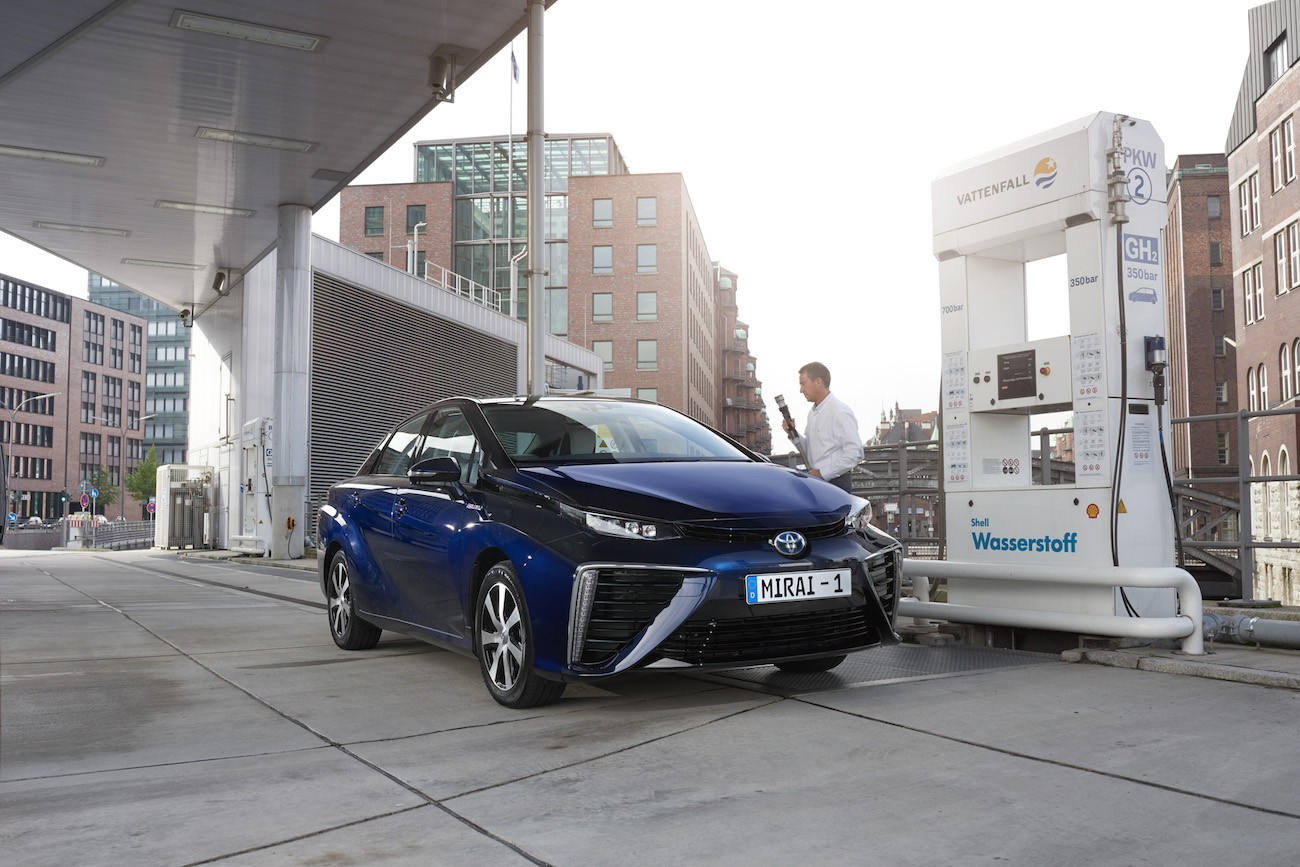
A collaboration agreement between companies in the automotive sector will enable the construction of new hydrogen stations in Japan.
Up to eleven companies, Toyota, Nissan, Honda, JXTG Nippon Oil & Energy, Idemitsu Kosan, Iwatani, Tokyo Gas, Toho Gas, Air Liquide Japan, Toyota Tsusho and the Development Bank of Japan have signed an agreement to collaborate on the large-scale construction of hydrogen refuelling stations so that fuel cell vehicles can be refuelled in Japan and their use can be promoted.
This collaboration is based on an initiative called “All Japan”, whose sole aim is to meet the environmental targets that car manufacturers have set for the coming years. The agreement follows on from the “Strategic Roadmap for Hydrogen and Fuel Cells”, a programme that sets the following targets for the country: 160 operational hydrogen stations and 40,000 fuel cell vehicles in use by 2020.
The agreement highlights the challenges facing hydrogen stations, since fuel cell vehicles are currently at an early stage of commercialisation. To overcome this challenge, the companies involved will carry out their respective roles with the aim of maximising demand for these vehicles and helping to popularise them.
As a concrete proposal for collaboration, the eleven companies are considering the creation of a new company during 2017. Its main objectives would be the ongoing construction of hydrogen stations, their commissioning, the widespread use of fuel cell vehicles and making hydrogen stations economically viable through cost-reduction initiatives.
Another measure to be taken in Japan to help achieve a hydrogen-based society is a legislative review by the national government, which will take a series of steps to improve the efficiency of the fuel cell vehicle.


 Kia offers an electric range of 10 models, 50 versions and 400 possible combinations
 The seven finalists for the 2027 European Car of the Year (COTY) are exclusively electric
 Peugeot E-208 GTi: a battery-powered toy that revives the spirit of the 1980s sports cars
Deja un comentario