How to Choose a 2026 Compact PHEV SUV If Your Garage Has No Wallbox: Charging Keys and Profitability
 Iván Navarro
21 July 2026
6 min.
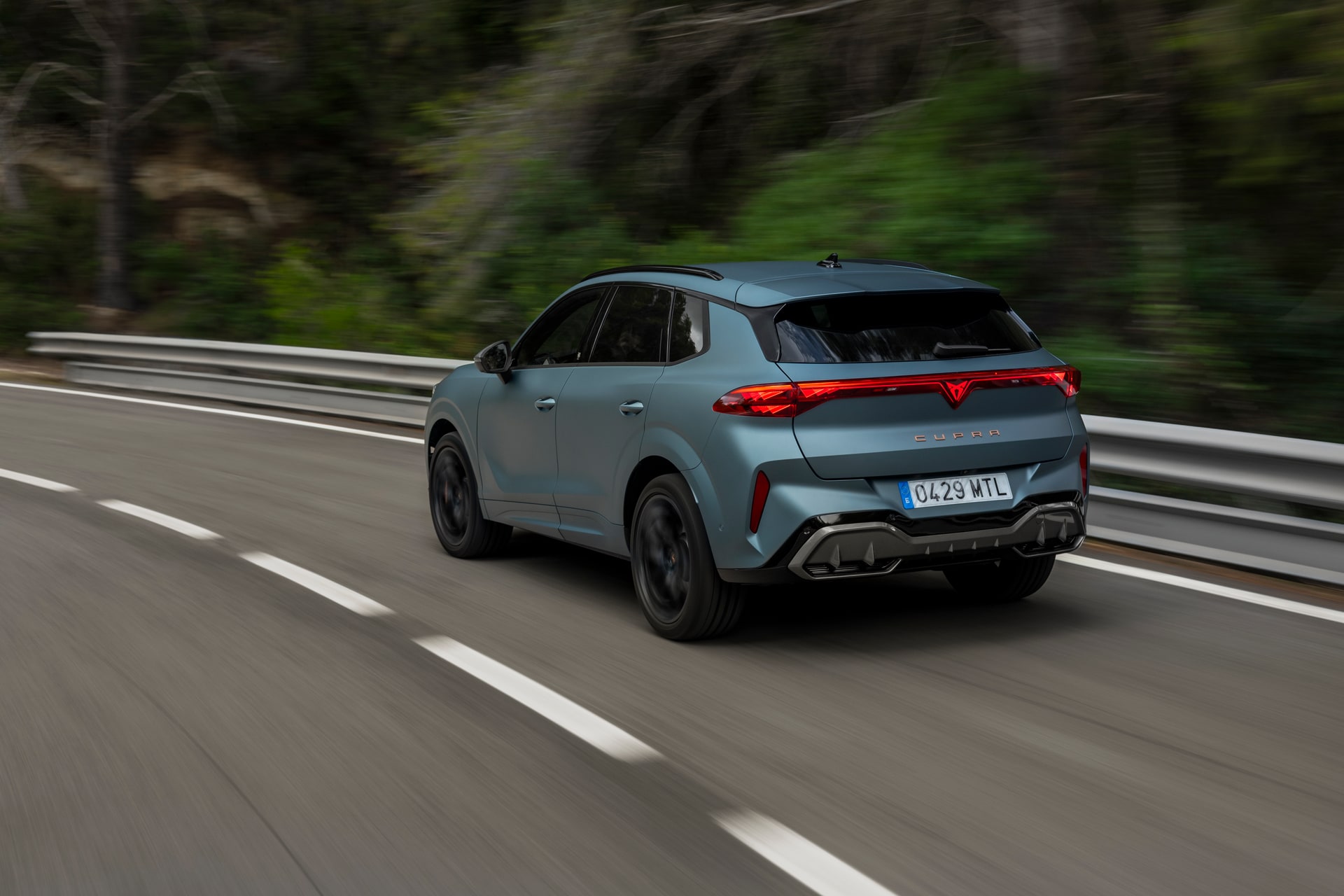
A premium analysis of whether buying a compact plug-in hybrid SUV in Spain without a wallbox makes sense: Schuko charging, real-world profitability and recommended models for 2026.
On paper, buying a compact PHEV SUV in 2026 without a wallbox seems a contradiction. The promise of the plug-in hybrid—driving on electric power every day and relying on the combustion engine only for long trips—rests on home charging infrastructure that many Spanish drivers, especially those with shared community garage spaces or street parking, simply do not have. However, the PHEV segment has matured enough that the question is no longer binary. The right answer starts by understanding what happens when the only available charging point is a traditional Schuko socket.
The real dilemma for the Spanish driver: a PHEV without a private charging point
According to industry data, more than 35% of Spanish households do not have a private parking space where a dedicated charging point can be installed. Yet the compact PHEV SUV is one of the fastest-growing formats. The reason is practical: the CERO environmental label, favourable taxation in major cities, access to ZBE low-emission zones and, in many cases, a net price lower than that of an equivalent electric car. The question is not whether one can live with a compact PHEV SUV without a wallbox, but under what conditions it is worth it.
How does a PHEV actually charge from a household Schuko socket?
A standard household socket delivers 2.3 kW continuously and safely (10 A at 230 V). In practice, the emergency charging cable supplied with the car limits power to 1.8–2.2 kW to avoid overheating in older installations. With current PHEV batteries of between 19 and 25 kWh gross, this means between 6 and 10 hours for a full charge from 10%.
The good news: for a PHEV, that is exactly the overnight window you need. We are not talking about a 77 kWh electric car, where a Schuko socket falls short. We are talking about topping up a modest electric tank every night, taking advantage of off-peak tariffs.
Cost per kilometre on the 2026 off-peak tariff: the calculation nobody makes
With an estimated average off-peak tariff of €0.09/kWh for 2026 and a real-world efficiency of 20 kWh/100 km in EV mode, charging a PHEV from a household socket works out at €1.8 per 100 electric kilometres. Compared with a combined combustion consumption of 7 l/100 km at €1.55/l (€10.85), the saving on an urban journey exceeds 80%. The profitability of owning a plug-in hybrid without a garage therefore depends on three variables: a daily mileage below the electric range, access to a night-time tariff, and the discipline of plugging the car in every night.
Cupra Terramar e-Hybrid — from €44,600
The Terramar is the strongest offering in this segment from the Volkswagen group. Its 19.7 kWh usable battery offers up to 119 km WLTP of electric range, a figure that changes the rules of the game: for many drivers, one weekly Schuko charge is enough.
| Power kW | Power CV | Top speed | EV range | Consumption | Label | Fuel |
|---|---|---|---|---|---|---|
| 200 kW | 272 CV | 220 km/h | 119 km | 0.8 l/100 km | CERO | PHEV |
Volkswagen Tiguan eHybrid — from €46,200
The new Tiguan shares the MQB Evo platform with the Terramar but opts for a more conservative trim. It accepts AC charging up to 11 kW (with a wallbox) and retains the Schuko option without thermal penalty thanks to its active battery management.
| Power kW | Power CV | Top speed | EV range | Consumption | Label | Fuel |
|---|---|---|---|---|---|---|
| 150 kW | 204 CV | 220 km/h | 123 km | 0.4 l/100 km | CERO | PHEV |
Peugeot 3008 Hybrid — from €41,900
The 3008 PHEV maintains a balanced proposition with a 17.8 kWh battery and a clearly urban focus. Its 7.4 kW on-board charger is well suited to overnight Schuko charging.
| Power kW | Power CV | Top speed | EV range | Consumption | Label | Fuel |
|---|---|---|---|---|---|---|
| 165 kW | 225 CV | 225 km/h | 85 km | 1.2 l/100 km | CERO | PHEV |
Kia Sportage PHEV — from €42,000
The Korean model remains one of the best sellers in the segment. Its 13.8 kWh battery is sufficient for daily urban use with straightforward overnight Schuko charging.
| Power kW | Power CV | Top speed | EV range | Consumption | Label | Fuel |
|---|---|---|---|---|---|---|
| 198 kW | 265 CV | 191 km/h | 70 km | 1.1 l/100 km | CERO | PHEV |
Hyundai Tucson PHEV — from €40,800
The technical sibling of the Sportage, the Tucson offers a very similar set-up with a premium interior finish. Battery warranty of 8 years or 160,000 km.
| Power kW | Power CV | Top speed | EV range | Consumption | Label | Fuel |
|---|---|---|---|---|---|---|
| 195 kW | 252 CV | 191 km/h | 62 km | 1.4 l/100 km | CERO | PHEV |
Ford Kuga PHEV — from €39,500
The Kuga has long been a reference for price-to-electric-range ratio. Its 14.4 kWh battery and charger limited to 3.7 kW make it ideal for Schuko: there is no real operational difference between a wallbox and a household socket.
| Power kW | Power CV | Top speed | EV range | Consumption | Label | Fuel |
|---|---|---|---|---|---|---|
| 180 kW | 243 CV | 200 km/h | 69 km | 1.2 l/100 km | CERO | PHEV |
BMW X1 xDrive30e — from €52,300
The plug-in X1 plays in a different league in terms of perceived quality and dynamics. All-wheel drive and 24.3 kWh gross make it the most capable choice for mixed use.
| Power kW | Power CV | Top speed | EV range | Consumption | Label | Fuel |
|---|---|---|---|---|---|---|
| 240 kW | 326 CV | 211 km/h | 97 km | 0.8 l/100 km | CERO | PHEV |
Comparison table: 2026 ranking for use without a wallbox
The score weighs EV range, charger efficiency on Schuko, cost of use and price.
| Model | EV range | CV | Price from | Schuko-compatible | Score |
|---|---|---|---|---|---|
| Cupra Terramar e-Hybrid | 119 km | 272 | €44,600 | Excellent | 9.2 |
| Volkswagen Tiguan eHybrid | 123 km | 204 | €46,200 | Excellent | 9.0 |
| BMW X1 xDrive30e | 97 km | 326 | €52,300 | Very good | 8.7 |
| Peugeot 3008 Hybrid | 85 km | 225 | €41,900 | Good | 8.2 |
| Ford Kuga PHEV | 69 km | 243 | €39,500 | Optimal | 8.0 |
| Kia Sportage PHEV | 70 km | 265 | €42,000 | Good | 7.8 |
| Hyundai Tucson PHEV | 62 km | 252 | €40,800 | Good | 7.6 |
Verdict: when it is worth it and when it is not
The best 2026 plug-in hybrid SUV for someone without a wallbox is the one whose EV range comfortably covers your daily journey. If you drive less than 40 km a day, almost any current PHEV will serve you by plugging in to the Schuko socket every night. If you exceed 80 km a day, look at the Terramar, Tiguan or X1: slow overnight charging is still sufficient because their larger batteries allow partial top-ups without penalising the majority of electric use. Below 15,000 mixed urban-extra-urban km per year, buying a PHEV SUV in 2026 remains profitable even when charging exclusively from a household socket.
FAQ
Can a PHEV SUV be charged from a normal household socket?
Yes. All PHEVs sold in Spain include a Schuko cable as standard or as an option. Charging is slow (1.8–2.2 kW) but sufficient to fully recharge the battery overnight in 5–9 hours depending on the model.
How much does it cost to charge a PHEV at home on the 2026 off-peak tariff?
Between €1.5 and €2.2 per 100 electric kilometres, assuming an off-peak tariff of €0.09/kWh and an average consumption of 20 kWh/100 km in EV mode. Compared with combustion, the saving exceeds 80% in urban use.
Does always charging from a Schuko socket damage the car or the socket?
No, provided the electrical installation is in good condition and the socket is of good quality with an earth connection. The emergency charging cable limits the current precisely to protect the domestic installation.
Which PHEV SUV has the most electric range in 2026?
The Volkswagen Tiguan eHybrid leads with 123 km WLTP, closely followed by the Cupra Terramar e-Hybrid with 119 km. Both share the 19.7 kWh usable battery of the Volkswagen group, the largest in the compact segment.


 Peugeot E-208 GTi: a battery-powered toy that revives the spirit of the 1980s sports cars
 New Lexus ES: luxury grows and goes electric
 First contact with the Dacia Sandero Hybrid 155: power and efficiency from €19,890
Deja un comentario