Ranking 2026: the 8 full hybrid SUVs with the best multimedia system and digital experience
 Dani Montesinos
21 July 2026
7 min.
We analyse eight HEV SUVs on sale in Spain with the best digital experience: screens, connectivity, integration with Google and Apple, and OTA updates.
The full hybrid SUV has stopped being a cautious alternative to become, at many Spanish dealerships, the default choice. But the engine is no longer the only thing being bought: the dashboard, the screen and the cloud behind them weigh as much as —or more than— the horsepower. And that is where the real differences between manufacturers are opening up.
Before getting into it, a note on what we have left out. This comparison does not include any BYD model. The Chinese brand offers hybrid proposals that are interesting on paper, but in our editorial judgement other Asian manufacturers —Japanese and Korean, above all— present HEV powertrains better tuned to European tastes, with cleaner transitions between the combustion and electric engines and lower real consumption in mixed use. It is an editorial decision, not a blanket dismissal. Let’s continue.
How we evaluated the digital experience in 2026 full hybrid SUVs
Counting inches is not enough. A good multimedia system in a connected 2026 full hybrid SUV is judged on five fronts: screen quality (resolution, brightness, touch latency), wireless integration of Android Auto and Apple CarPlay, the depth of connected services (app, telemetry, trip planner), the availability of real OTA updates —not just for the map— and the ergonomics of the whole. Because a poorly organised 14-inch screen is worse than a well-thought-out 10-inch one.
Here are the eight HEV SUVs that, in our view, best pass that test within the Spanish market.
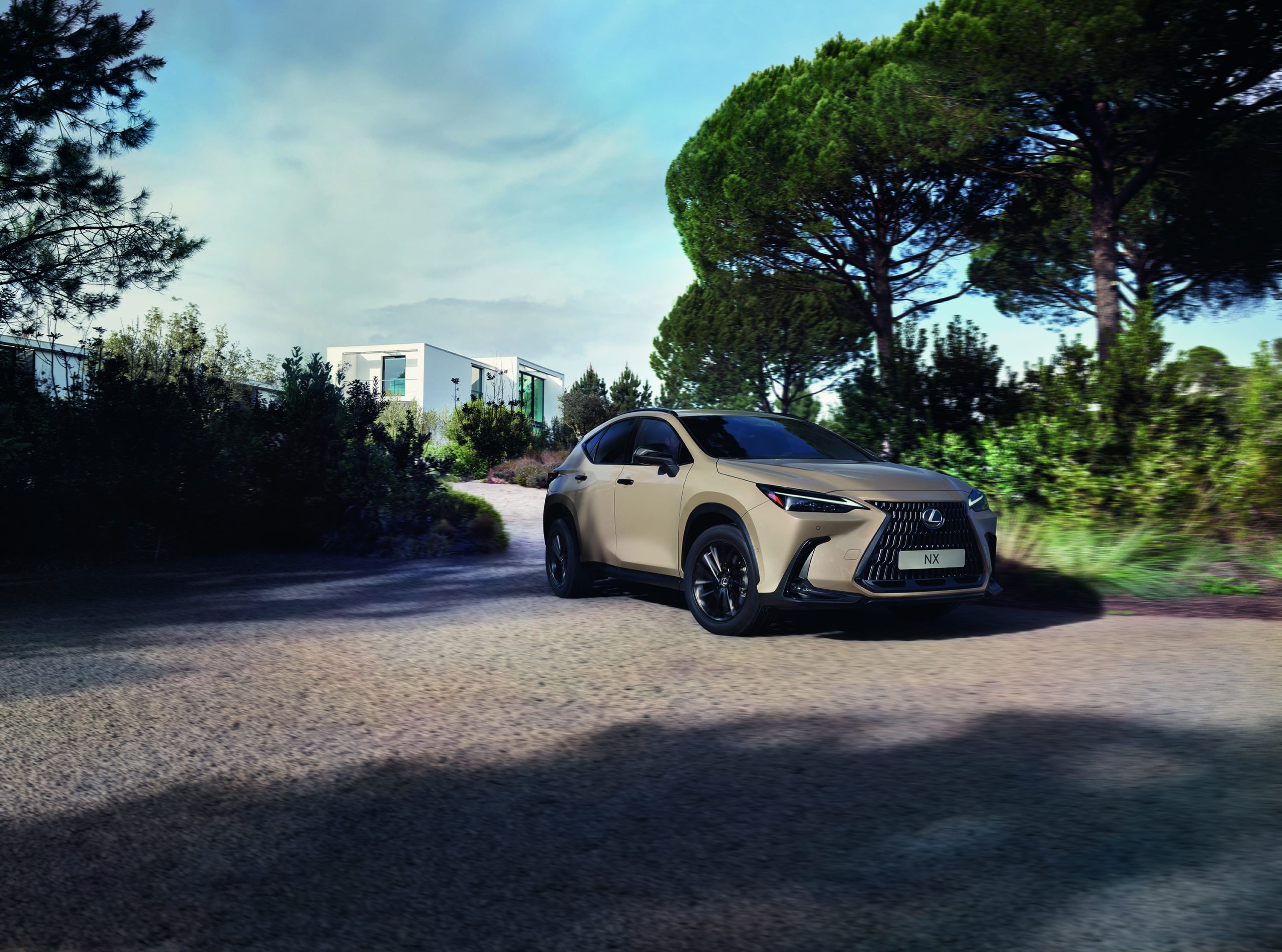
1. Lexus NX 350h — from 54,050 €
The NX remains, in my opinion, the full hybrid with the most balanced digital experience in the premium segment. The 14-inch central screen responds with notably low latency, wireless CarPlay integration works without the dropouts that still plague other rivals, and the “Hey Lexus” voice assistant understands natural commands in Spanish with a fluency that is surprising. OTA updates have become normal and now reach system functions, not just cartography. That said, the climate menu is still buried one level deeper than it should be.
| Power kW | Power CV | Top speed | Range | Consumption | Label | Fuel |
|---|---|---|---|---|---|---|
| 179 kW | 244 CV | 200 km/h | ~950 km | 5.7 l/100 km | ECO | Hybrid |
Toyota RAV42. Toyota RAV4 — from 44,250 €
Toyota has done its homework with the RAV4. The fifth generation debuts a completely new interface, with a cloud-based architecture, OTA updates that arrive consistently, and a MyToyota app that finally lets you manage trips, pre-conditioning and diagnostics without feeling like you are using a 2019 demo. The central screen, up to 12.9 inches, is bright, and voice recognition works offline for the basics. It is not the best screen in the ranking, but it is the most reliable day to day.
| Power kW | Power CV | Top speed | Range | Consumption | Label | Fuel |
|---|---|---|---|---|---|---|
| 136 kW | 185 CV | 180 km/h | ~950 km | 5.4 l/100 km | ECO | Hybrid |
3. Renault Austral E-Tech — from 36,909 €
The Austral is probably the full hybrid SUV with the best screen in the mainstream segment. The OpenR system combines two L-shaped panels —a 12.3″ instrument cluster and a 12″ vertical central display— with Google built in as standard: native Maps, Assistant and Play Store. The difference from a classic CarPlay becomes clear when you plan a Madrid–Cádiz trip with a charging stop: the planner takes into account real-time traffic and the driver’s schedule. Very well resolved.
| Power kW | Power CV | Top speed | Range | Consumption | Label | Fuel |
|---|---|---|---|---|---|---|
| 147 kW | 200 CV | 175 km/h | ~900 km | 4.7 l/100 km | ECO | Hybrid |
Hyundai Tucson4. Hyundai Tucson HEV — from 30,325 €
Hyundai has kept refining the ccIC (Connected Car Integrated Cockpit) until it has become one of the tidiest on the market. Two curved 12.3″ screens, wireless integration with both ecosystems, Bluelink services with remote pre-conditioning, and an app that —at last— does not crash every few minutes. The OTA update is real, although less aggressive than that of Renault.
| Power kW | Power CV | Top speed | Range | Consumption | Label | Fuel |
|---|---|---|---|---|---|---|
| 175 kW | 239 CV | 186 km/h | ~830 km | 5.6 l/100 km | ECO | Hybrid |
5. Kia Sportage HEV — from 27,460 €
It shares its platform with the Tucson, but Kia has taken a different visual route: a single curved piece that groups the instrumentation and multimedia, and a touch bar that switches between climate and multimedia functions depending on how it is pressed. Ingenious, although it does not quite convince me on the move —it requires one glance too many—. The Kia Connect app has improved a great deal and OTA updates arrive regularly.
| Power kW | Power CV | Top speed | Range | Consumption | Label | Fuel |
|---|---|---|---|---|---|---|
| 175 kW | 239 CV | 193 km/h | ~820 km | 5.5 l/100 km | ECO | Hybrid |
Nissan Qashqai6. Nissan Qashqai e-Power — from 32,400 €
The e-Power is a rare case: a petrol engine that always acts as a generator, with the wheels driven solely by electric motors. On screen, the Nissan fits a 12.3″ system with Google built in on the higher trims and wireless CarPlay/Android Auto. The NissanConnect app has gained fine-grained telemetry —instant consumption, trip history— although its OTA updates remain more timid than those of the Korean competition.
| Power kW | Power CV | Top speed | Range | Consumption | Label | Fuel |
|---|---|---|---|---|---|---|
| 140 kW | 190 CV | 170 km/h | ~780 km | 4.4 l/100 km | ECO | Hybrid |
Honda CR-V7. Honda CR-V e:HEV — from 46,645 €
Honda takes its time. The CR-V debuts a 9″ screen —modest in size, but excellent in responsiveness— with wireless CarPlay and Android Auto, and a very clean interface that keeps physical buttons for climate. In a world of giant screens, that is appreciated. The Honda CONNECT connectivity has gained ground, although the OTA catalogue still lags behind the Koreans and the French.
| Power kW | Power CV | Top speed | Range | Consumption | Label | Fuel |
|---|---|---|---|---|---|---|
| 135 kW | 184 CV | 187 km/h | ~870 km | 6.7 l/100 km | ECO | Hybrid |
8. Ford Kuga Hybrid — from 31,076 €
The Kuga closes the ranking with the 13.2″ SYNC 4, a reorganised interface, and reasonably solid FordPass integration. Without being the brightest, it does its job: large screen, correct response, wireless CarPlay and OTA for cartography and some system functions. It sits one step below the leaders in the depth of its connected services.
| Power kW | Power CV | Top speed | Range | Consumption | Label | Fuel |
|---|---|---|---|---|---|---|
| 132 kW | 180 CV | 196 km/h | ~820 km | 5.4 l/100 km | ECO | Hybrid |
Summary table: 2026 HEV SUV ranking by digital experience
| Position | Model | Screen | OTA | Price from | Score /10 |
|---|---|---|---|---|---|
| Lexus NX 350h | 14″ | Yes, extensive | 54,050 € | 9.3 | |
| Toyota RAV4 | 12.9″ | Yes, reliable | 44,250 € | 8.9 | |
| Renault Austral E-Tech | 12″ + 12.3″ | Yes, Google | 36,909 € | 8.8 | |
| Hyundai Tucson HEV | 12.3″ + 12.3″ | Yes | 30,325 € | 8.5 | |
| Kia Sportage HEV | 12.3″ dual curved | Yes | 27,460 € | 8.3 | |
| Nissan Qashqai e-Power | 12.3″ | Partial | 32,400 € | 7.9 | |
| Honda CR-V e:HEV | 9″ | Limited | 46,645 € | 7.6 | |
| Ford Kuga Hybrid | 13.2″ | Partial | 31,076 € | 7.4 |
Frequently asked questions
Which full hybrid SUV has the best multimedia system in 2026?
The Lexus NX 350h leads our ranking thanks to the combination of a 14″ screen, low latency, solid wireless integration and real OTA updates on system functions. In the mainstream segment, the Renault Austral E-Tech is the reference thanks to built-in Google as standard.
What does “self-charging” mean in a hybrid SUV?
It refers to HEVs (Hybrid Electric Vehicles): they recover energy during braking and deceleration to charge the battery, without the need to plug in. All the models in this ranking are HEVs and carry the DGT ECO label.
Which HEV SUVs offer the most OTA updates in Spain?
Lexus, Toyota and Renault are today the ones that deploy remote updates with the greatest regularity and scope —including system functions, not just maps—. Hyundai and Kia follow closely behind.
Is it worth paying for built-in Google over wireless Android Auto?
It depends on use. For long journeys with detailed planning, and for those who live within the Google ecosystem, native integration —like that of the Austral— brings real advantages. For urban use and short trips, a good wireless Android Auto covers 90% of use cases.


 Peugeot E-208 GTi: a battery-powered toy that revives the spirit of the 1980s sports cars
 New Lexus ES: luxury grows and goes electric
 First contact with the Dacia Sandero Hybrid 155: power and efficiency from €19,890
Deja un comentario