Hybrid Cars Comparisons Family SUV
How to Choose a Family Compact PHEV SUV for the City in 2026: Boot Space, Rear Seats and Real-World Consumption
 Iván Navarro
27 July 2026
5 min.
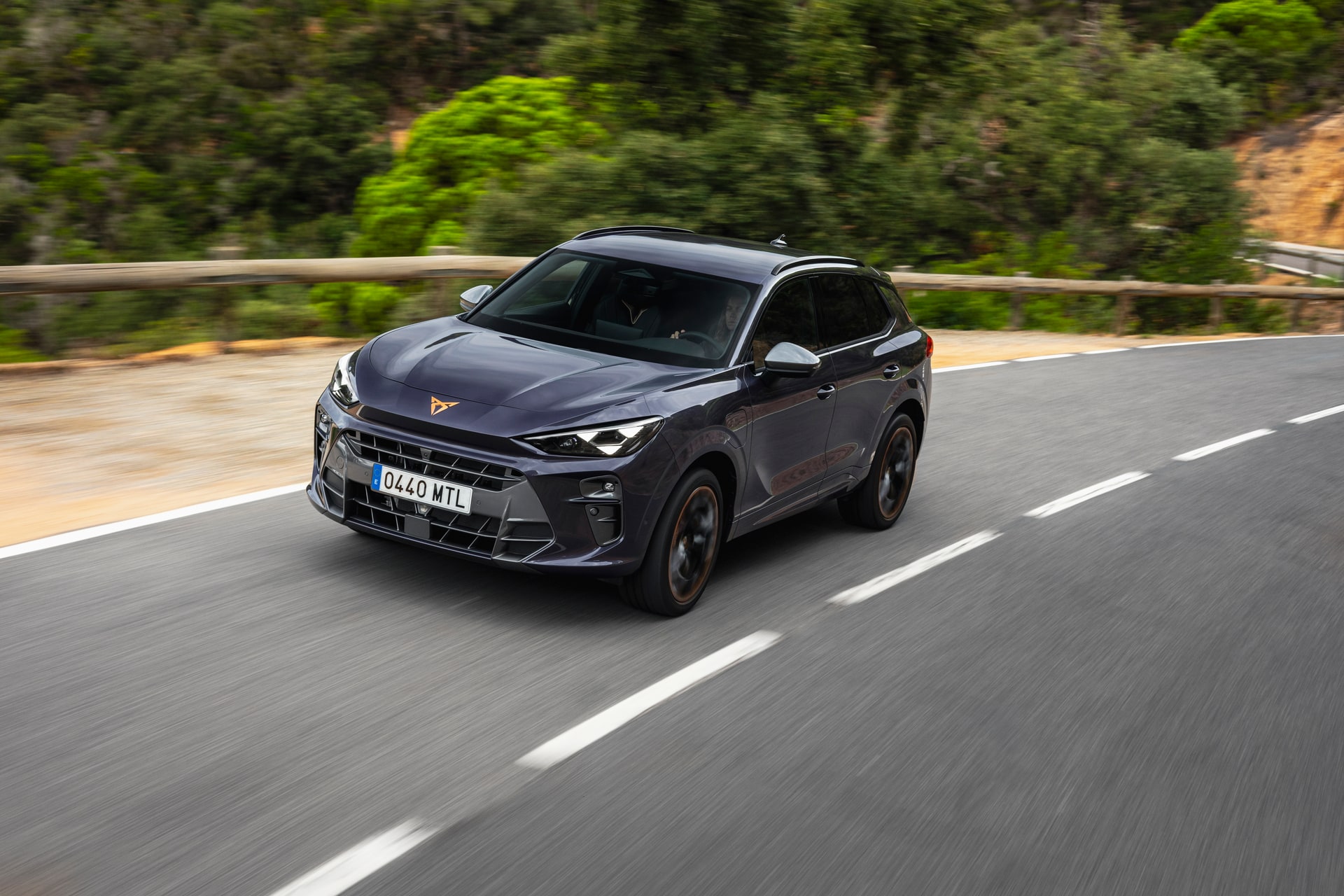
Buying a 2026 family compact PHEV SUV in Spain is no longer an act of eco-faith: it is a technical decision with very measurable consequences every morning when you leave the garage. Three children, two car seats, a folded pushchair and the May bank-holiday trip to Asturias either fit or they don’t, depending on three specific figures: real boot litres, usable width between wheel arches and usable kWh of the electric package. Everything else, DGT label included, is a consequence.
Why does a PHEV make sense for an urban family in 2026?
The plug-in hybrid remains the only format that combines a CERO label, unrestricted access to the ZBEs of Madrid and Barcelona, and range without anxiety for 800 km of motorway. For a family doing 40-50 km a day and plugging in overnight, the cost per kilometre drops to around 2-3 €/100 km in urban use. The condition is obvious: you must be able to charge at home or at work. Without that premise, the PHEV loses its raison d’être and it is worth looking at conventional hybrids.
What changes compared with a traditional family SUV?
The battery is almost always housed under the rear floor, which normally reduces boot space by between 80 and 150 litres compared with the equivalent petrol version. The fuel tank usually shrinks to 42-45 litres and the weight rises by 200-300 kg. All of this affects dynamics, consumption in extended mode and, above all, habitability.
Real boot space with the battery: the figure that matters
Forget the catalogue figure measured up to the roof. What counts is the volume below the parcel shelf with the battery occupying the double floor. In a PHEV SUV with a large boot we are talking about 400 usable litres; below 350, a cabin suitcase already starts to get in the way.
Width between rear wheel arches and centre seats
If you are going to fit two Isofix seats plus a booster in the centre, measure with a tape: you need at least 140 cm between panels. The centre seat must have a three-point seatbelt and an adjustable head restraint, not a decorative cushion.
Homologated versus real electric range
The practical rule for 2026: deduct 25-30% from the WLTP figure in winter with the climate control on. A PHEV homologated at 85 km delivers 60-65 real km; one rated 100 km WLTP drops to 70-75 km. Sufficient for daily use, tight for the weekend.
Real consumption with a depleted battery
Here lies the Achilles’ heel. The real consumption of a plug-in hybrid SUV without charge is around 6.5-8.5 l/100 km in the city and 7-9 l/100 km on the motorway at 120. Models with DCT gearboxes running at high revs and those towing more than 1,900 kg are penalised.
AC charging: why 7.4 kW makes the difference compared with 3.7 kW
Charging at 3.7 kW means 5-6 hours to fill a 20 kWh battery. At 7.4 kW it drops to 2.5-3 hours, which allows useful top-ups during dinner or a Saturday nap. In 2026 it is a requirement, not an extra.
Cupra Formentor e-Hybrid — from 44,500 €
The Cupra Formentor e-Hybrid is the option for those who want dynamics before volume. 204 or 272 CV, a 19.7 kWh battery and about 115 km WLTP. A 345-litre boot, tight. The DSG gearbox is lively and the steering precise.
| Power kW | Power CV | Avg. speed | EV range | Consumption | Label | Fuel |
|---|---|---|---|---|---|---|
| 150 kW | 204 CV | 210 km/h | 115 km | 0.8 l/100 km | CERO | PHEV |
Peugeot 3008 Hybrid — from 42,900 €
The Peugeot 3008 Hybrid bets on the i-Cockpit, outstanding materials and a serene drive. 195 CV, a battery of around 17.8 kWh and about 85 km WLTP. A 520-litre boot with the plug-in package, one of the best in the segment.
| Power kW | Power CV | Avg. speed | EV range | Consumption | Label | Fuel |
|---|---|---|---|---|---|---|
| 143 kW | 195 CV | 225 km/h | 85 km | 1.3 l/100 km | CERO | PHEV |
Kia Sportage PHEV — from 41,700 €
The Kia Sportage PHEV combines 265 CV, all-wheel drive and seven years of warranty. A 13.8 kWh battery for about 70 km WLTP, enough for urban use. A 540-litre boot, the segment benchmark even with the battery fitted.
| Power kW | Power CV | Avg. speed | EV range | Consumption | Label | Fuel |
|---|---|---|---|---|---|---|
| 195 kW | 265 CV | 191 km/h | 70 km | 1.1 l/100 km | CERO | PHEV |
Hyundai Tucson PHEV — from 40,900 €
The Hyundai Tucson PHEV shares its mechanics with the Sportage but offers a more striking design and an interior with a double curved screen. 265 CV, 4WD as standard on the PHEV and 558 litres of boot. Here the physical climate controls earn practical points.
| Power kW | Power CV | Avg. speed | EV range | Consumption | Label | Fuel |
|---|---|---|---|---|---|---|
| 195 kW | 265 CV | 191 km/h | 70 km | 1.4 l/100 km | CERO | PHEV |
Ford Kuga PHEV — from 39,500 €
The Ford Kuga PHEV is the most affordable and one of the most efficient in extended electric mode. 243 CV, a 14.4 kWh battery and about 69 km WLTP. A sliding boot and some of the widest rear seats in the segment.
| Power kW | Power CV | Avg. speed | EV range | Consumption | Label | Fuel |
|---|---|---|---|---|---|---|
| 178 kW | 243 CV | 200 km/h | 69 km | 1.2 l/100 km | CERO | PHEV |
Family PHEV SUV comparison: summary table with score
Weighted score taking into account boot space, EV range, estimated real consumption, AC charging and price.
| Model | CV | Boot | EV range | AC charging | Price from | Score |
|---|---|---|---|---|---|---|
| Cupra Formentor e-Hybrid | 204 | 345 l | 115 km | 7.4 kW | 44,500 € | 7.8 |
| Peugeot 3008 Hybrid | 195 | 520 l | 85 km | 7.4 kW | 42,900 € | 8.4 |
| Kia Sportage PHEV | 265 | 540 l | 70 km | 7.2 kW | 41,700 € | 8.9 |
| Hyundai Tucson PHEV | 265 | 558 l | 70 km | 7.2 kW | 40,900 € | 9.0 |
| Ford Kuga PHEV | 243 | 411 l | 69 km | 3.7 kW | 39,500 € | 7.9 |
Final checklist before signing
- Boot ≥ 400 litres below the parcel shelf with the battery installed.
- AC charging of 7.4 kW (rule out 3.7 kW if you will charge away from home).
- EV range ≥ 70 km WLTP to ensure 50 real km in winter.
- Centre rear seat with a three-point seatbelt.
- Home wallbox arranged before delivery.
Frequently asked questions
Which family PHEV SUV has the largest boot?
The Hyundai Tucson PHEV with 558 litres and the Kia Sportage PHEV with 540 litres lead the segment. The Peugeot 3008 Hybrid is the best middle option with 520 litres.
How much does a PHEV consume without battery charge?
Between 6.5 and 8.5 l/100 km in real mixed use with the battery depleted. On the motorway at 120 km/h it can rise to 8-9 l/100 km because of the extra weight of the system.
What is the best family plug-in hybrid SUV 2026 for value for money?
The Ford Kuga PHEV for its entry price and the Kia Sportage PHEV for the balance between power, boot space and its seven-year warranty.
Is a compact plug-in SUV worth it for the city if I can’t charge at home?
No. Without daily home or workplace charging, the extra cost and extra weight do not pay off. In that scenario, a conventional hybrid performs better.


 Kia offers an electric range of 10 models, 50 versions and 400 possible combinations
 The seven finalists for the 2027 European Car of the Year (COTY) are exclusively electric
 Peugeot E-208 GTi: a battery-powered toy that revives the spirit of the 1980s sports cars
Deja un comentario