ES90 Volvo Sedans Electric Cars
The Volvo ES90 goes on sale in the South Korean market
 Javier Cantagalli
27 July 2026
2 min.
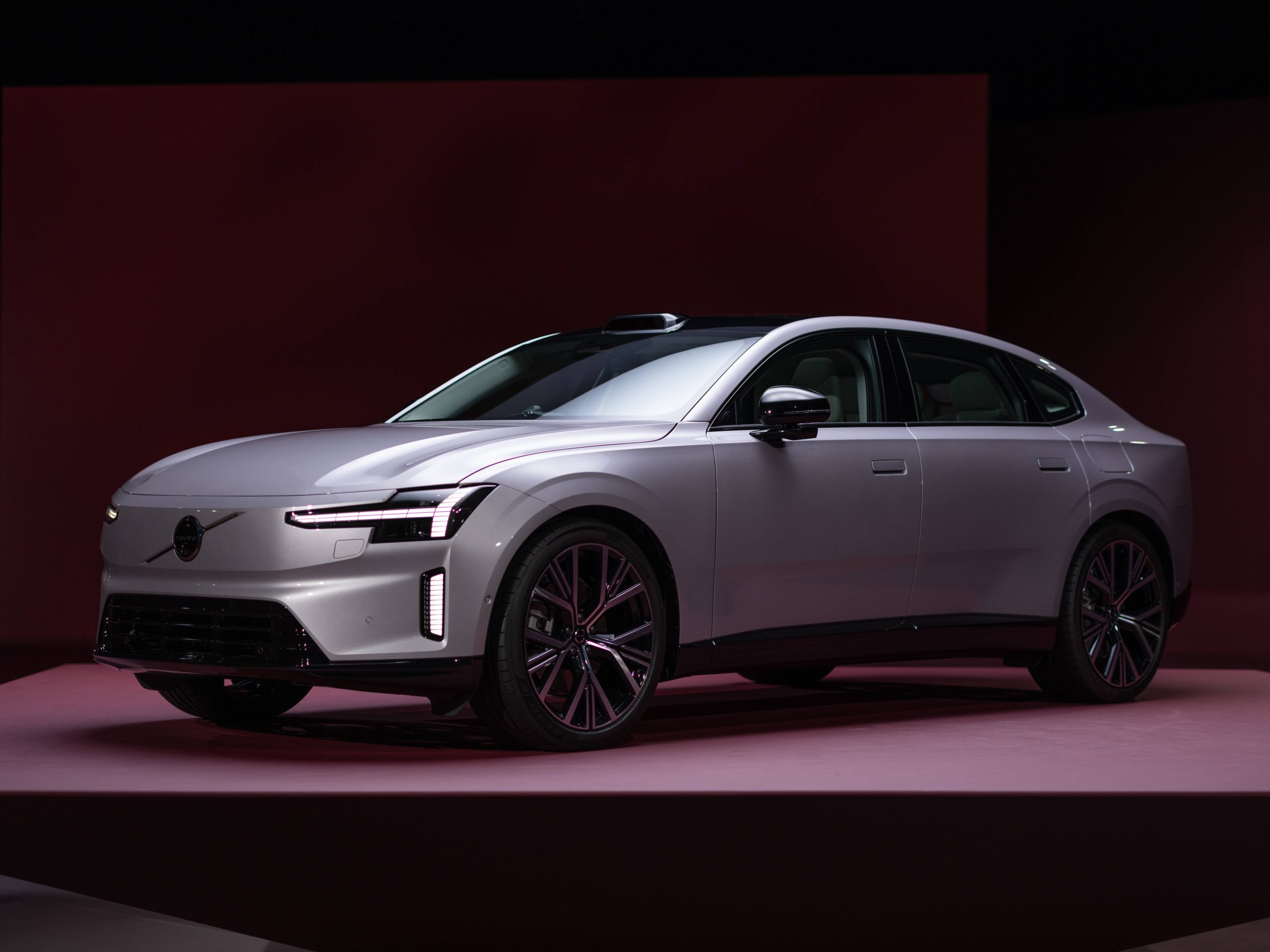
The Volvo ES90 was officially presented in Spain last June, and the first deliveries took place about six months later.
Volvo has started selling the ES90 in South Korea, the electric saloon flagship of the brand alongside the EX90 SUV. The Swedish manufacturer, owned by Chinese giant Geely, offers this model there in three configurations to choose from, with a starting price of 72.94 million South Korean won. At the current exchange rate, that works out to roughly 43,500 euros.
The ES90 is positioned as a premium alternative to rivals such as the Mercedes-Benz EQE or the BMW i5. In this regard, it is worth noting that the entry-level version of this electric saloon is especially competitive in the South Korean market, particularly when compared with what it costs in other markets such as Europe, where it is on sale for just over 70,000 euros. That represents a difference of almost 30,000 euros. This pricing strategy reflects the importance that Volvo attaches to the ES90 within its premium electrification plan in South Korea.
According to the company itself at the ES90 presentation event held in Seoul, the sales target that Volvo has set for this model in the South Korean market is around 3,000 units per year. The company considers this achievable thanks to the highly aggressive pricing policy it has adopted.
At Volvo they state that the ES90 represents the culmination of their vision for electrification and next-generation technologies in their premium range. The brand describes it as a model that combines the elegance of a saloon, the practicality of a fastback and the spaciousness of an SUV.
Technical specifications to consider
The ES90 is the first Volvo to feature an 800-volt architecture and the second model from the brand built on the SPA2 platform. In South Korea, as in other markets, it will be sold in three variants: Single Motor Extended Range, Twin Motor all-wheel drive and Twin Motor Performance. The entry-level version features a rear motor delivering 245 kW and 480 Nm, capable of reaching 100 km/h from a standstill in just 6.6 seconds. The intermediate Twin Motor offers 330 kW and 670 Nm, with a time of 5.4 seconds in the same sprint. At the top of the range, the Twin Motor Performance version, with 500 kW and 870 Nm, completes the 0-100 km/h sprint in just four seconds. All versions are electronically limited to a top speed of 180 km/h.
Among its technical specifications, also noteworthy are a wheelbase of 3,102 mm, a WLTP range of up to 706 km in the Twin Motor version, and a maximum charging power of 350 kW, made possible by its 800-volt architecture.
Technical specifications of this car

 Peugeot E-208 GTi: a battery-powered toy that revives the spirit of the 1980s sports cars
 New Lexus ES: luxury grows and goes electric
 First contact with the Dacia Sandero Hybrid 155: power and efficiency from €19,890
Deja un comentario