Hyundai KIA Kodiaq Nissan RAV4 Santa Fe Skoda Sorento Toyota X-Trail Hybrid Cars Family Buying Guides SUV
How to Choose a Family Hybrid SUV with the Best Value for Money in 2026: Consumption, Space and Total Cost
 Iván Navarro
18 August 2026
6 min.
Choosing a family hybrid SUV in 2026 is more like solving an equation than falling in love with a model. You have to weigh real consumption, space for three child seats or seven seats, total cost over five years and, increasingly, whether a plug-in hybrid is worth it compared with a conventional one. Let’s go step by step.
Why is the family hybrid SUV still the most rational choice in 2026?
Electric cars are advancing, yes, but the hybrid, whether conventional or plug-in, remains the sensible answer for a family that does a bit of everything: school runs during the week, a monthly weekend trip and the occasional Madrid–Alicante drive in summer. It needs no home charger, it performs well on the motorway and it keeps an ECO or CERO label depending on the case. For many households, it is today the least committal middle ground.
What defines the best family hybrid SUV of 2026?: real consumption, habitability and total cost
Three variables matter most. The first is real consumption, measured on mixed journeys rather than the brochure WLTP figure. The second is usable habitability: width between wheel arches, length of the rear bench, and whether a third row is genuinely usable. The third is the total cost of ownership over 5 years (purchase, fuel, insurance, maintenance, depreciation). An SUV that saves €800 a year on petrol but loses 20% more value in four years is not a bargain.
HEV, PHEV or mild hybrid: which technology suits your use?
- Mild hybrid (MHEV): forget it if you’re looking for serious savings. It helps a little, not much more.
- Full hybrid (HEV): the king of urban and mixed use. No plug, no surprises.
- PHEV: shines if you have a plug at home and daily trips of 30–50 km. Without a plug, it’s a heavy and expensive hybrid to maintain.
Real consumption vs WLTP: what to expect in town, on the road and on long journeys
In town, a well-tuned HEV averages 4.8–5.5 l/100 km in real conditions. On the motorway at 120 km/h, that rises to 6.5–7.5 l/100 km. PHEVs, once the battery is depleted and running in petrol mode, tend to consume more than an equivalent HEV because of the weight of the battery. Keep that in mind.
Usable space: boot, second row and the 7-seat option
A benchmark family hybrid SUV should offer at least 500 litres with five seats in use. If you’re looking for a 7-seat hybrid SUV, a usable third row starts in cars measuring 4.80 m and up.
Total cost of ownership over 5 years: the metric almost nobody calculates properly
Add the purchase price minus the estimated residual value after 5 years, fuel (15,000 km/year at real consumption), fully comprehensive insurance, official maintenance and tyres. The result is sometimes surprising: a model that costs €3,000 more at the outset can work out cheaper overall if it holds its value better on resale.
The most balanced family hybrid SUVs on sale in Spain in 2026
Toyota RAV4 Hybrid (from €43,500)
The benchmark of the segment and, to my taste, the safest choice if you value reliability. Real consumption of 5.3 l/100 km without effort, a thoroughly proven powertrain and an extensive service network. The interior is a step behind European rivals in terms of feel, admittedly.
| Power kW | Power CV | Top speed | Range | Consumption | Label | Fuel |
|---|---|---|---|---|---|---|
| 136 | 183 | 180 km/h | ~1,000 km | 4.9 l/100 km | ECO | Hybrid |
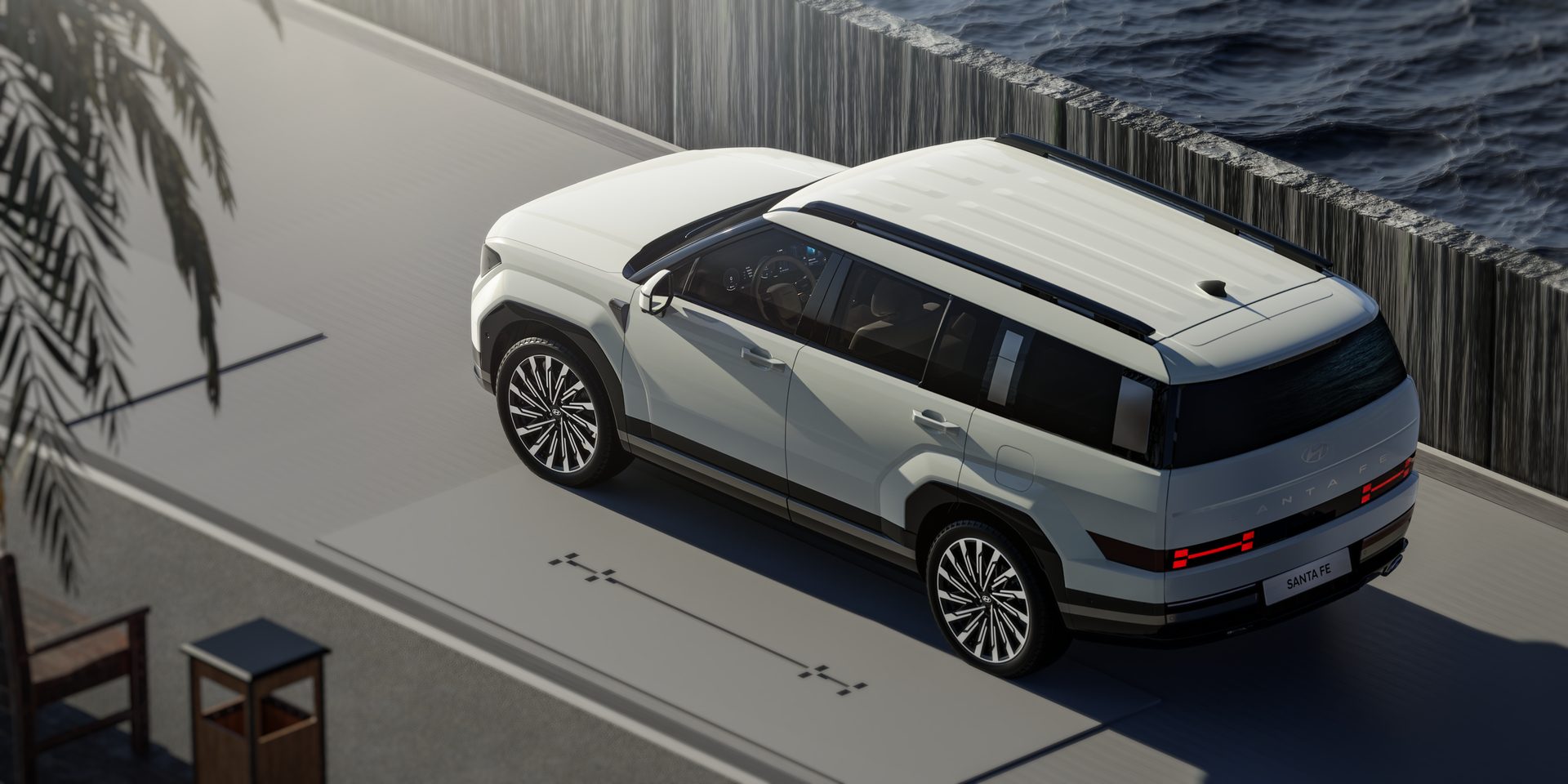
Hyundai Santa Fe (from €46,500)
Genuine seven seats, a commanding presence and a noticeable leap in perceived quality over the previous generation. The HEV version is the logical choice for most; the PHEV only if you charge at home.
| Power kW | Power CV | Top speed | Range | Consumption | Label | Fuel |
|---|---|---|---|---|---|---|
| 175 | 239 | 187 km/h | ~950 km | 6.3 l/100 km | ECO | Hybrid |
Kia Sorento PHEV (from €52,900)
The family plug-in hybrid SUV with the most going for it if you charge at home: 57 km of real electric range, three rows of seats and a good warranty. It is heavy, and the boot with seven seats in use is tight.
| Power kW | Power CV | Top speed | Range | Consumption | Label | Fuel |
|---|---|---|---|---|---|---|
| 212 | 288 | 193 km/h | ~900 km | 1.6 l/100 km (WLTP) | CERO | PHEV |
Nissan X-Trail e-Power (from €41,200)
A curious technical solution: the petrol engine only generates electricity, and the wheels are always driven by the electric motor. It is enjoyable in town; on the motorway, consumption rises more than expected.
| Power kW | Power CV | Top speed | Range | Consumption | Label | Fuel |
|---|---|---|---|---|---|---|
| 150 | 204 | 180 km/h | ~900 km | 6.1 l/100 km | ECO | Hybrid |
Skoda Kodiaq (from €44,800)
The most rational of the German-Czech group. Family-oriented to the core, with optional seven seats, a huge boot and a PHEV version with respectable electric range. The ergonomics are appreciated after three days of use.
| Power kW | Power CV | Top speed | Range | Consumption | Label | Fuel |
|---|---|---|---|---|---|---|
| 150 | 204 | 210 km/h | ~950 km | 1.6 l/100 km (WLTP) | CERO | PHEV |
Peugeot 5008 Hybrid (from €40,700)
Seven seats, i-Cockpit and a design that still works. As an HEV it does the job; the boot with the third row folded is among the largest in the segment.
| Power kW | Power CV | Top speed | Range | Consumption | Label | Fuel |
|---|---|---|---|---|---|---|
| 107 | 145 | 190 km/h | ~950 km | 5.7 l/100 km | ECO | Hybrid |
Jaecoo 7 SHS (from €32,990)
The wildcard that breaks the mould on price. Plug-in, five seats, generous equipment and a homologated electric range that, in real use, more than covers the daily commute. We already analysed it in detail in our review of the Jaecoo 7.
| Power kW | Power CV | Top speed | Range | Consumption | Label | Fuel |
|---|---|---|---|---|---|---|
| 205 | 279 | 180 km/h | ~1,200 km | 1.0 l/100 km (WLTP) | CERO | PHEV |
2026 hybrid SUV comparison: value for money and score
| Model | Price from | Real consumption | Seats | Label | 5-year cost* | Score |
|---|---|---|---|---|---|---|
| Toyota RAV4 | €43,500 | 4.9 l | ECO | Low | 9.0 | |
| Hyundai Santa Fe | €46,500 | 6.3 l | 7 | ECO | Medium | 8.5 |
| Kia Sorento PHEV | €52,900 | 2.5 l** | 7 | CERO | Medium-high | 8.2 |
| Nissan X-Trail e-Power | €41,200 | 6.1 l | 5/7 | ECO | Medium | 7.8 |
| Skoda Kodiaq | €44,800 | 2.4 l** | 7 | CERO | Medium | 8.7 |
| Peugeot 5008 | €40,700 | 5.7 l | 7 | ECO | Medium | 8.0 |
| Jaecoo 7 SHS | €32,990 | 2.0 l** | CERO | Low | 8.8 |
*Indicative estimate at 15,000 km/year. **PHEV with regular charging.
Recommendations by budget and usage profile
- Up to €35,000 — urban/mixed use: the Jaecoo 7 SHS is the most disruptive proposal if you’re going to charge it.
- €35,000–45,000 — traveller without a plug: RAV4. Full stop.
- €45,000–55,000 — large family: Santa Fe or Kodiaq. If you charge at home, PHEV; if not, HEV.
- Mostly urban use with ZBE zones: any PHEV with a CERO label justifies the extra cost.
There are more interesting names below €35,000 worth keeping on your radar, as we covered in our comparison of hybrid SUVs with the best value for money.
Grants and taxation: Plan Auto+ and other considerations
The Plan Auto+ is the current framework for purchase grants in Spain, with specific conditions for plug-in hybrids and electric vehicles. Check the official website before signing: the amounts and requirements change, and you should have the up-to-date figure in hand. The CERO label also opens doors in ZBE low-emission zones and regulated parking, which matters more in Madrid or Barcelona than it might seem.
Frequently asked questions
Which family hybrid SUV consumes the least in real life?
Among HEVs, the Toyota RAV4 is the benchmark with 5.3 l/100 km in real mixed use. Among PHEVs, any model with daily charging can drop below 3 l/100 km if the usual journey is short.
Is a family plug-in hybrid SUV worth it without a home charger?
No, unless you have charging at work. Without frequent recharging, the PHEV behaves like a heavy hybrid that consumes more than an equivalent HEV and does not take advantage of its tax or usage benefits.
What is the best 7-seat hybrid SUV in 2026?
The Hyundai Santa Fe HEV and the Skoda Kodiaq lead the list for real third-row habitability, boot space and overall balance. The Kia Sorento PHEV is the best option if you want a CERO label with seven seats.
How much does a hybrid actually save compared with an equivalent petrol car over 5 years?
At 15,000 km/year and current fuel prices, the average saving is around €2,500–3,500 over five years for an HEV. For a PHEV with home charging and short trips, it can exceed €5,000.
Technical specifications of the cars in this article


 Kia offers an electric range of 10 models, 50 versions and 400 possible combinations
 The seven finalists for the 2027 European Car of the Year (COTY) are exclusively electric
 Peugeot E-208 GTi: a battery-powered toy that revives the spirit of the 1980s sports cars
Deja un comentario